India 2026 NGO Energy Access: Solar Street Lighting, CSR Grants and MRV
By Sudarshan Karweer · sudarshan@growthifye.com · +91 84510 99371 (Call / WhatsApp) · 2026-09-09
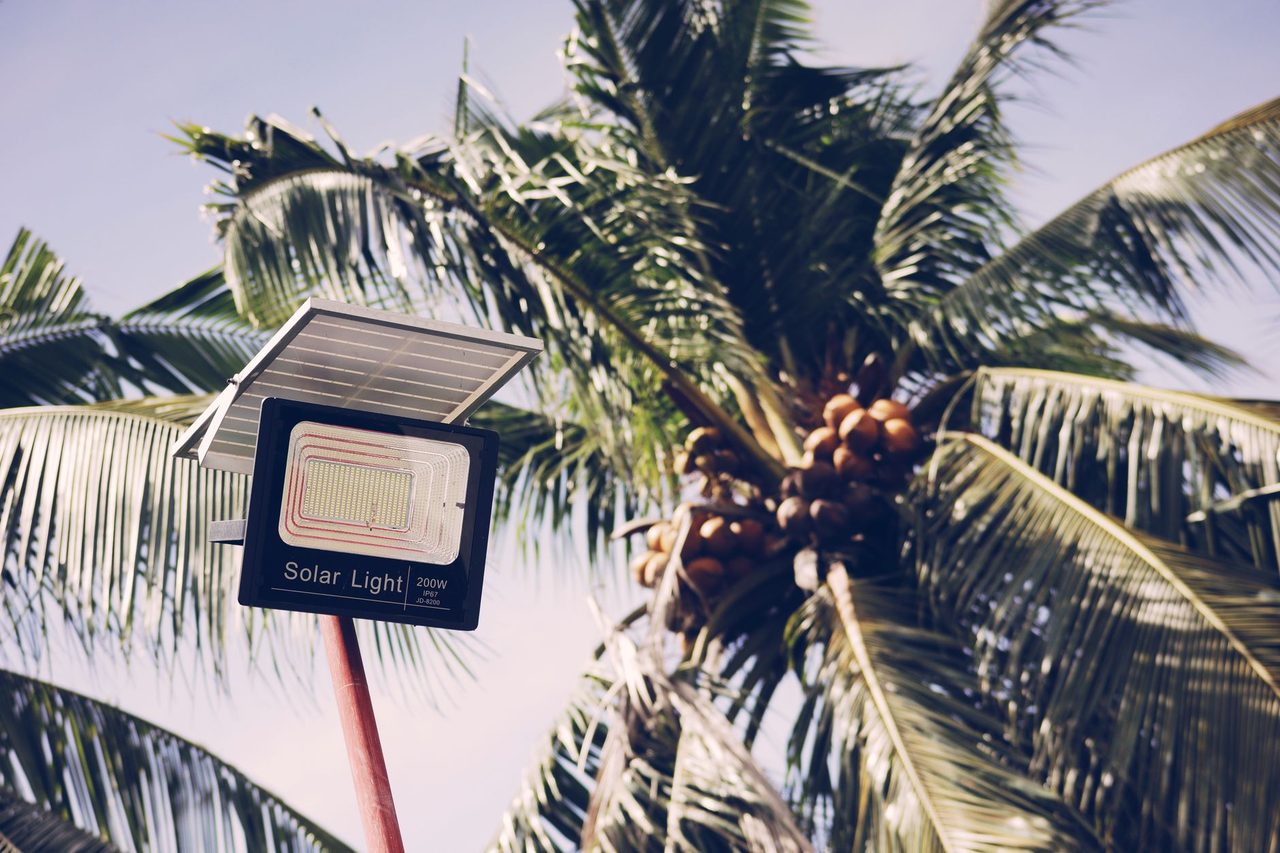
Photo: Nothing Ahead on Pexels
Solar street lighting remains one of the most visible NGO energy-access interventions in India, but it is also one of the most misunderstood. In 2026, many CSR and grant-funded programmes still focus on lamp counts rather than lighting service levels, uptime, theft resilience, battery replacement planning and measurable public-benefit outcomes. For Indian corporates, NGOs, EPC players, district authorities and impact funders, that approach is no longer adequate.
A properly designed rural solar street lighting programme can improve evening mobility, road safety, access to markets, public-space use by women and children, and the operating window of community infrastructure. But impact depends on site selection, technical standards, O&M contracts, governance and rigorous monitoring. For advisory firms and delivery partners, the question is not whether solar street lights are “good”; it is whether the intervention is the highest-value use of CSR or grant capital in a specific geography, and whether it can be implemented to a service standard that survives beyond the first audit visit.
This article sets out how NGO-led solar street lighting programmes should be structured in India in 2026, with practical guidance on sizing, procurement, financing, MRV and community ownership.
Why solar street lighting still matters in 2026
Grid expansion has improved significantly, yet many villages, peri-urban settlements, tribal habitations and hamlets continue to face poor quality public lighting. In several districts, feeders may exist but street-lighting infrastructure is absent, damaged, unmetered, or financially unsustainable for gram panchayats. In flood-prone, forest-edge, hilly and aspirational districts, standalone solar street lighting remains relevant because it avoids trenching, reduces dependence on local utility billing cycles and can be deployed quickly.
The strongest use cases in 2026 are not generic “village beautification” projects. They are targeted installations around:
- Internal village roads with high pedestrian use after sunset
- School approaches, hostels and anganwadi perimeters
- Primary health centres, sub-centres and ambulance access roads
- Weekly markets and rural haat zones
- Water points, sanitation blocks and community institutions
- Bus stops, ferry points and last-mile mobility nodes
- Settlement clusters with women-led livelihood activity in evening hours
For corporates deploying CSR funds under Schedule VII themes linked to rural development, gender inclusion, health and safety, solar street lighting can fit, but only if the programme logic is explicit. This is where Program design & theory of change becomes essential: the intervention should map a clear chain from lighting assets to usage, safety, time savings, service access and local economic activity rather than rely on anecdotal claims.
The technical design mistakes that keep repeating
A large share of underperforming systems in India fail for predictable reasons. NGOs and CSR teams often procure on lowest upfront cost per pole. That usually leads to poor battery chemistry choices, weak foundation design, underpowered luminaires, no remote diagnostics and no funded maintenance protocol.
In 2026, a robust specification for standalone solar street lights in rural and semi-rural India should typically consider the following:
- LED luminaire rating commonly in the 9 W to 24 W range depending on road width, mounting height and lux target
- PV module sizing often in the 75 Wp to 180 Wp range for single-light systems, adjusted for autonomy and local solar resource
- Battery preference increasingly shifting to LiFePO4 due to longer cycle life and lower maintenance versus legacy lead-acid systems
- Battery autonomy commonly designed for 2 to 3 nights minimum, with more in high-rainfall or low-winter-irradiance zones
- Pole height typically 5 m to 7 m for village roads and public nodes
- Corrosion protection, tamper-resistant battery enclosures and theft-resistant fasteners
- Dusk-to-dawn controller logic with dimming profiles, motion-sensing in low-footfall zones, and low-voltage protection
- Foundations designed for local wind speeds, soil conditions and monsoon saturation
As a practical benchmark, all-in installed costs for quality rural standalone systems in 2026 can vary significantly by specification and location, but many bankable projects land roughly in the range of INR 18,000 to INR 38,000 per light point. Lower quotes should trigger scrutiny, especially if they exclude civil works, transportation to remote sites, spares, commissioning, data logging or battery replacement reserves.
Where village roads require more uniform illumination, clustered designs or DC micro-distribution from a central solar-battery block may sometimes offer better economics than completely standalone poles. However, centralised systems introduce cable theft and outage concentration risk. Site conditions should determine the architecture.
Funding structures: CSR grants work, but only with lifecycle budgeting
Solar street lighting is usually financed through CSR grants, philanthropic support, district convergence or a hybrid of all three. The common budgeting error is funding capex but not the full lifecycle. A street light programme without O&M funding is not an energy-access programme; it is deferred e-waste.
For 2026 project structuring, a more disciplined funding stack includes:
- Initial capex for equipment, transport, civil works, installation and commissioning
- Minimum 3 to 5 years of O&M, preferably under a performance-linked annual maintenance contract
- Spare inventory allocation, often 2% to 5% of installed component value for controllers, luminaires and hardware
- Battery replacement reserve based on chemistry and expected duty cycle
- Community engagement and handover costs
- Digital monitoring and periodic field verification budget
- Insurance where theft, storm damage or conflict risk is material
Typical annual O&M provisions may range around 3% to 6% of initial capex depending on remoteness, monitoring intensity and service-level commitments. Battery replacement planning is critical. Even with LiFePO4, real field life depends on thermal stress, controller quality and depth of discharge. A project sponsor should identify whether future replacements sit with the NGO, panchayat, CSR donor, EPC provider or a village energy committee.
This is where CSR funding pipelines and Grant & philanthropic fundraising can materially improve programme durability. Rather than depending on a one-year sanction, NGOs can aggregate anchor corporate support with follow-on philanthropic funding for O&M, MRV and expansion phases. Multi-donor pooling is particularly useful when a district-wide deployment crosses multiple villages but no single donor wants full exposure.
Governance, ownership and the panchayat question
The biggest governance issue in street-lighting programmes is ownership ambiguity. If the panchayat believes the NGO owns the assets, routine care is neglected. If the EPC believes handover ends all obligations, failures remain unresolved. If the CSR donor expects annual photo documentation to substitute for service verification, system performance degrades silently.
A viable governance framework should clarify:
- Asset ownership at commissioning
- Custody of site records, warranties and serial numbers
- Fault-reporting channels and response-time commitments
- Roles for panchayat, self-help groups, school committees or village volunteers
- Procedures for relocation, damage, theft and end-of-life disposal
- Escrow or ring-fenced provisions for battery replacements where feasible
In many states, panchayats are wary of accepting assets that create future financial burdens. Therefore, pre-installation consultations should explicitly discuss who pays for post-warranty repairs and whether local own-source revenue, user contributions, district support or sponsor commitments are available. Without that clarity, non-functional lights often accumulate after year two or year three.
Compliance & governance is especially important when projects sit at the intersection of CSR, local government approvals and public-space infrastructure. Pole siting near roads, schools and health facilities may require local permissions, utility clearances in some cases and geotagged asset records. NGOs should not treat these as secondary paperwork items.
What good MRV looks like for solar street lighting
Many NGO street-light programmes still report only the number of poles installed. That is not credible MRV in 2026. Since these systems generally displace darkness, kerosene or weak grid-powered public lighting rather than large diesel loads, carbon benefits exist but are not the only, or even primary, impact metric. The stronger case is public-value MRV.
A practical Impact measurement & MRV framework should capture five dimensions.
First, technical performance:
- Installed capacity, luminaire wattage and battery specifications
- Commissioning date and geotagged coordinates
- Nightly runtime target, for example 10 to 12 hours depending on season and dimming profile
- Uptime percentage by asset and by cluster
- Fault incidence and mean time to repair
Second, lighting service quality:
- Lux levels at ground points at commissioning and periodic rechecks
- Coverage of key routes, institutions and public nodes
- Seasonal performance during monsoon and winter
Third, social-use outcomes:
- Pedestrian footfall after sunset at baseline and post-installation
- Women’s perception of safety on lit routes
- Increase in evening operating hours for shops, SHG activity or local services
- Use of public facilities such as water points and sanitation blocks after dark
Fourth, financial and operational sustainability:
- O&M expenditure versus budget
- Number of unresolved faults beyond SLA threshold
- Battery-health trend and replacement events
- Community contribution, if any, toward upkeep
Fifth, environmental and material stewardship:
- Estimated avoided kerosene or grid electricity where relevant
- Proper disposal or recycling pathway for replaced batteries and electronic waste
For rural public-lighting assets, remote monitoring can be useful but should be chosen carefully. Integrated IoT hardware raises capex and can fail in harsh conditions. In some programmes, quarterly physical verification combined with geotagged night photographs and sample lux testing can be more cost-effective than full telemetry. The right MRV architecture depends on programme scale. A 100-light cluster can be monitored differently from a 5,000-light district portfolio.
Economic appraisal: when does solar street lighting beat grid extension?
The answer depends on distance to serviceable grid infrastructure, local utility responsiveness, theft risk and panchayat finances. If a location already has reliable poles and wiring, solar retrofits may not be the best use of grant capital. But where electrified public-lighting circuits would require new poles, cabling, metering, trenching and recurring bills, standalone solar systems can be economically superior.
A simple comparison in 2026 might look like this:
- Standalone solar street light capex: INR 22,000 to INR 32,000 for a durable mid-spec system in accessible rural locations
- Annualised O&M and reserve cost over 5 to 7 years: often INR 1,500 to INR 3,500 per light per year depending on battery assumptions and service levels
- Grid-based lighting alternative: lower luminaire cost in some cases, but with pole/cable extension, connection cost, meter issues, recurring electricity bills and outage exposure
For panchayats with weak revenue collection, the predictability of prepaid lifecycle funding often outweighs lower theoretical grid capex. However, if a state scheme or utility offers functioning public-lighting support with stable supply, hybrid decisions may be more rational than blanket solarisation.
Project developers and lenders should note that solar street lighting is not usually a conventional project-finance asset class. It is programme finance. The investable unit is the portfolio of assets plus governance and MRV, not the individual pole. That is why developer participation works best when bundled with long-term maintenance, district deployment capability and measurable outcome reporting.
How NGOs, developers and corporates should build scalable programmes
The strongest deployment model in 2026 is a cluster-based programme at block or district level rather than one-off village donations. Aggregation improves procurement quality, standardises O&M, reduces logistics cost and produces a more defensible impact dataset.
A scalable programme typically follows this sequence:
- Baseline mapping of dark spots, institutions, traffic flows and vulnerable-use areas
- Technical design by site category instead of one uniform specification
- Community and panchayat consultation before final siting
- Competitive vendor selection with weighted scoring for performance, not just price
- Installation with geotagging, commissioning tests and asset labelling
- O&M SLA activation from day one
- Quarterly monitoring and annual impact review
- Mid-course correction on dimming settings, pole placement and repair systems
Corporate & utility partnerships can also expand programme value. Utilities may not fund standalone solar assets directly in every case, but coordination with local distribution entities can reduce siting conflicts, support village-level integration planning and identify locations where future grid improvements may alter asset strategy.
For CSR sponsors, the central strategic question is this: should solar street lighting be a standalone intervention, or part of a wider community-energy package? In many geographies, the latter creates stronger outcomes. Street lights combined with solarised drinking water points, health sub-centres, livelihood loads or clean-cooking access can produce more visible and durable social returns than lighting alone. But where safety and night mobility are the primary constraints, a dedicated public-lighting programme remains justified.
What the market should expect in the next 12 to 24 months
In 2026 and into 2027, three market shifts are likely.
First, CSR donors will ask for tighter evidence. Photo-heavy reports with weak uptime data will increasingly fail internal scrutiny.
Second, LiFePO4-based systems with better electronics and smarter dimming will become the default in quality-conscious programmes, even if upfront capex is slightly higher.
Third, district-scale aggregation will grow as NGOs and advisory firms move from “asset donation” logic toward managed energy-access portfolios with lifecycle accountability.
For developers and EPCs, this means margins will increasingly depend on reliability, service reach and reporting capability, not just procurement arbitrage. For NGOs, it means stronger technical diligence is no longer optional. For policymakers, it means public-lighting CSR projects should be encouraged only where they complement, rather than substitute for, accountable public-infrastructure planning.
Solar street lighting is still a valid NGO energy-access tool in India. But in 2026, the market should stop treating it as a simple, low-risk CSR purchase. It is a public-energy service that needs proper engineering, realistic financing and credible MRV.
If your organisation is planning a rural or community solar lighting programme, contact Growthifye’s advisory desk to structure a bankable deployment model, strengthen donor readiness and build measurable long-term impact.
Explore Growthifye's related capabilities
This analysis connects directly to our advisory practice: Program design & theory of change · CSR funding pipelines · Grant & philanthropic fundraising · Compliance & governance.
About the author

Chief Executive Officer, Growthifye — With over 23 years in management consulting, Sudarshan has taken businesses from concept to scale — building and scaling new-age digital and energy businesses.
- 23+ years in management consulting
- EY alumnus
- Led large-scale BESS programmes, capital raises and advisory mandates
Want this analysis applied to your project?
Talk to our team