India 2026 NGO Energy Access: Solar Irrigation, FPOs, CSR Funding and MRV
By Sudarshan Karweer · sudarshan@growthifye.com · +91 84510 99371 (Call / WhatsApp) · 2026-09-08
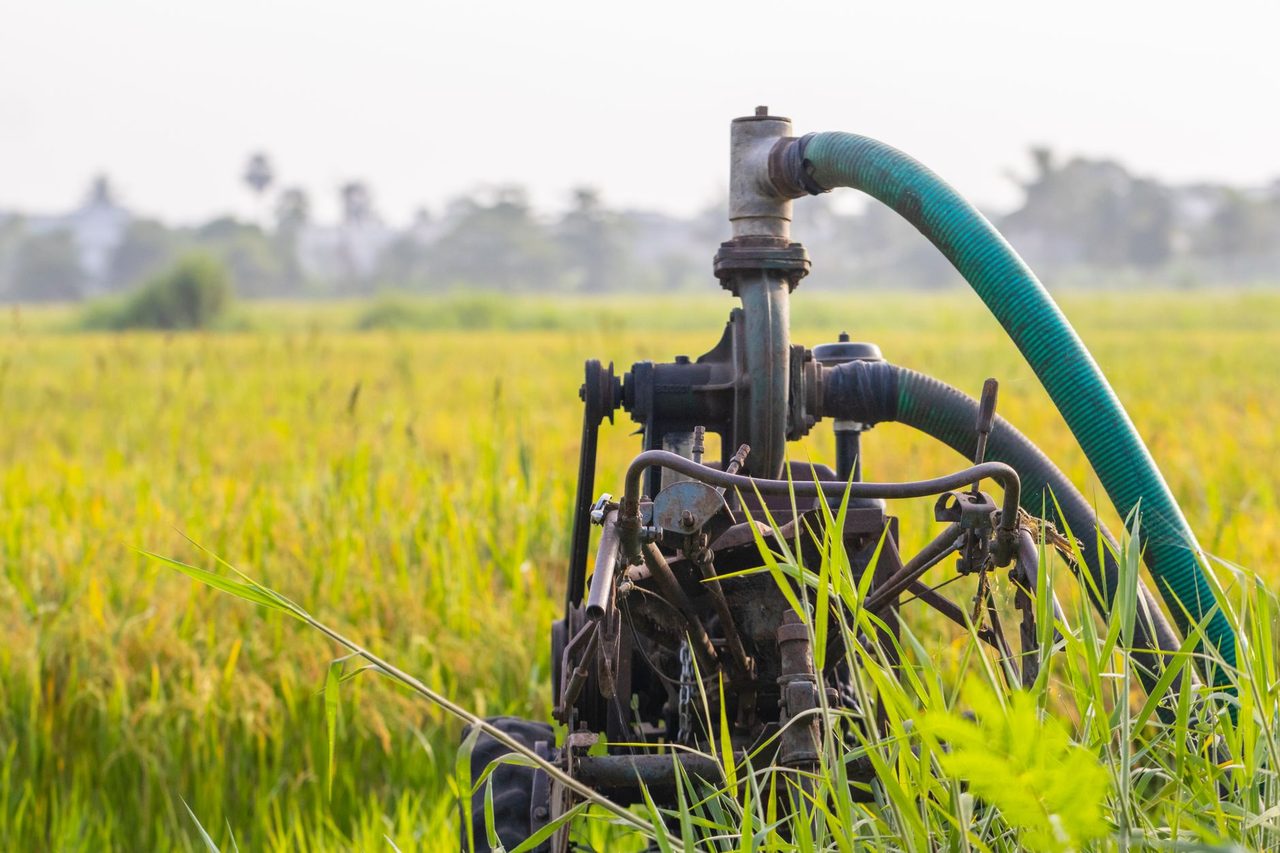
Photo: Pixel Senses on Pexels
India’s distributed energy-access agenda is shifting from one-off asset donation toward service-led infrastructure that improves incomes, water productivity and climate resilience. In that context, solar irrigation is one of the most practical NGO-led interventions for rural India in 2026, especially where diesel pumping is still expensive, feeder supply is unreliable, and farmer producer organisations (FPOs), self-help groups (SHGs) or water user groups can operate shared assets.
For NGOs, CSR teams, developers and lenders, the opportunity is not merely to install solar pumps. The stronger model is to design community irrigation services with clear demand aggregation, groundwater safeguards, productive-use planning, digital monitoring and auditable impact reporting. This matters because many CSR-funded rural energy projects underperform when they stop at procurement and installation. Solar irrigation works best when programme design addresses ownership, pumping hours, seasonal utilisation, tariff collection, O&M accountability and crop-linked cash flows.
This article sets out a practical 2026 framework for NGO energy-access programmes built around solar irrigation in India, with a focus on shared systems, FPO participation, CSR finance and impact measurement.
Why solar irrigation is a strong NGO energy-access theme in 2026
India still has millions of irrigation-connected farmers facing high diesel expenditure, erratic grid availability or long waiting periods for new agricultural connections. Even where agriculture feeders exist, daytime supply quality remains uneven across states and seasons. For smallholders, especially in tribal, rain-fed and aspirational districts, this directly limits crop intensity, vegetable cultivation and water access during critical growth windows.
Solar irrigation addresses a real operating-cost pain point:
- Diesel pumping can cost roughly Rs 18-28 per kWh-equivalent depending on engine efficiency, loading, diesel prices and maintenance.
- Grid-powered farm supply is often low-cost to the end user, but access delays, power cuts and poor voltage create hidden losses in yield and irrigation scheduling.
- Standalone solar pumping, once installed, offers very low marginal energy cost, typically dominated by routine O&M and pump replacement reserves.
For NGOs and CSR sponsors, solar irrigation has another advantage: outcomes are tangible and measurable. A well-designed programme can track:
- Acreage irrigated
- Diesel displaced
- Cropping intensity increase
- Farmer income uplift
- Women’s time savings where water hauling or pump operation burdens are reduced
- Water-use efficiency improvements where micro-irrigation is bundled
- Emissions reduction through fuel displacement
That makes solar irrigation more compelling than generic village electrification donations with weak utilisation metrics.
Which deployment models are working in India
The old model was one pump per beneficiary. In 2026, that model remains relevant in some geographies, but NGO programmes increasingly prefer pooled or service-based structures because they improve utilisation and governance.
The most practical structures are:
- Individual smallholder solar pump with partial grant support
- Community borewell plus solar pump operated by a water user group
- FPO-owned solar irrigation asset serving multiple member farmers on a pay-per-hour or pay-per-acre basis
- SHG-managed lift irrigation for vegetable clusters
- NGO-facilitated solar irrigation service entrepreneur model, where a local operator sells water to nearby farmers
Among these, FPO-owned and community-managed models are particularly useful for CSR and philanthropic capital because they create shared infrastructure and wider beneficiary reach.
A typical community-scale design in 2026 might include:
- 5 HP to 10 HP DC or AC solar pump
- 4 kWp to 9 kWp PV array depending on total dynamic head and daily water requirement
- Borewell, open well or surface-lift source integration
- Elevated tank or ground storage where direct pumping does not match irrigation timing
- HDPE pipeline network to nearby fields
- Basic smart controller with remote monitoring
Indicative capex ranges in 2026 vary by state, water source, civil works and distribution layout, but practitioners commonly see:
- 3 HP solar pump systems: around Rs 2.2 lakh to Rs 3.2 lakh
- 5 HP systems: around Rs 3.2 lakh to Rs 4.8 lakh
- 7.5 HP to 10 HP systems with community piping and storage: around Rs 5.5 lakh to Rs 11 lakh
- Lift irrigation schemes with larger distribution and civil works: often Rs 10 lakh to Rs 30 lakh+
These figures are programme-planning ranges, not tender benchmarks. Final costs depend on module type, pump efficiency, static water level, pipeline length, structure design, logistics and after-sales obligations.
Policy and subsidy landscape NGOs must account for
The main national policy anchor remains PM-KUSUM, especially Component B for standalone solar agriculture pumps and Component C for solarisation of grid-connected agriculture pumps. However, NGO and CSR-led projects need careful interpretation because not every beneficiary or geography fits directly within state implementation windows.
In 2026, the practical policy checklist includes:
- PM-KUSUM state implementation status and beneficiary category rules
- State agriculture department norms on pump capacity and approved vendors
- Groundwater extraction restrictions in over-exploited blocks
- DISCOM rules where feeder-connected or grid-interactive agriculture assets are contemplated
- Panchayat or minor irrigation permissions for community water infrastructure
- CSR Schedule VII fitment under rural development, environmental sustainability, livelihood enhancement, health or education-linked infrastructure
For NGO-led projects, subsidy stacking can be useful but must be structured carefully. Typical funding stack options include:
- Central and state subsidy under eligible pump schemes
- CSR top-up for farmer contribution gaps
- Philanthropic grant support for distribution lines, storage, drip irrigation or training
- Soft debt or livelihood credit for FPOs or producer collectives
- Carbon or results-based climate finance in selective cases, though transaction costs must be justified
A common mistake is to design programmes that rely on uncertain subsidy disbursement timing. In reality, state-level implementation can face vendor empanelment delays, site verification bottlenecks and beneficiary paperwork gaps. NGOs should therefore build working-capital buffers or phased deployment plans.
This is where Program design & theory of change becomes critical. The energy asset should be linked to a clear livelihood pathway: which crops, what acreage, what irrigation frequency, what market channel, what farmer margins, and what institutional actor collects and manages user fees.
How to make the economics work for shared irrigation
A shared solar irrigation system is viable when annual utilisation is high enough and fee collection is disciplined. The strongest business cases come from vegetable clusters, seed production belts, horticulture, nurseries, fodder cultivation and mixed cropping systems where irrigation timing materially affects yields and marketable output.
A simple example helps.
Assume a 5 HP solar pump with total installed project cost of Rs 4.2 lakh, serving 20 acres across 18 farmers through an FPO. If 50% of capex is met through subsidy and 25% through CSR support, the financed balance becomes manageable for the collective.
Illustrative stack:
- Total capex: Rs 4.2 lakh
- Subsidy: Rs 2.1 lakh
- CSR grant: Rs 1.05 lakh
- FPO contribution or debt: Rs 1.05 lakh
If annual O&M, administration and reserve provisioning total Rs 28,000 to Rs 40,000, the FPO can recover costs through seasonal irrigation service charges. Depending on crop and local diesel-displacement economics, water service pricing may fall in ranges such as:
- Rs 80-150 per pumping hour for nearby fields
- Rs 250-600 per irrigation event for small plots
- Rs 2,500-6,000 per acre per season for planned irrigation packages
These are illustrative ranges only. Actual pricing should reflect local willingness to pay, diesel alternative cost, water-table conditions and crop gross margins.
Compared with diesel pumping, farmers often save meaningfully on energy cost while gaining timelier irrigation. For the FPO, a shared-service model can create a small but stable cash flow if utilisation is planned over two or three crop cycles rather than a short monsoon-adjacent window.
Bankability improves when the irrigation asset is bundled with:
- Drip or sprinkler systems to reduce water demand
- Crop planning support for higher-value produce
- Aggregation and offtake through the FPO
- Input financing or warehouse linkages
- Mobile-based booking and payment records
For lenders and CSR committees, that integrated model is far easier to defend than a standalone pump donation.
Risk management: groundwater, governance and O&M
Solar irrigation is not automatically sustainable. The biggest concern is groundwater over-extraction. Any NGO energy-access strategy in 2026 must recognise that cheap daytime pumping can worsen aquifer stress if programme targeting is weak.
A robust screening framework should include:
- Block-level groundwater category review using CGWB and state data
- Source sustainability assessment before borewell-dependent designs
- Preference for surface-lift, community tanks, check-dam recharge zones or water-abundant geographies where feasible
- Mandatory micro-irrigation for water-stressed areas
- Crop advisories discouraging water-intensive cultivation where inappropriate
Operational risks are equally important:
- Pump oversizing leads to poor economics
- Weak civil works increase downtime
- Community assets fail when no one owns tariff collection
- Theft and vandalism remain live issues in remote sites
- Inverter, controller and motor failures are often underestimated in grant budgets
Good project design therefore needs:
- Clear asset ownership documents
- O&M contracts for at least 3-5 years where possible
- Spare-parts and service response commitments in vendor contracts
- Designated village operator or FPO manager
- Escrow-like maintenance reserve from user fees
- Remote monitoring for generation, run-hours and fault alerts
For many NGO portfolios, Compliance & governance is as important as engineering quality. Asset registers, beneficiary records, geotagged sites, subsidy documentation, vendor due diligence and financial controls matter because CSR auditors increasingly ask for proof that infrastructure exists, works and serves the intended users.
MRV: what serious CSR and philanthropic funders expect in 2026
Measurement has evolved from counting pumps installed to verifying service delivery and livelihood outcomes. In 2026, a credible MRV framework for solar irrigation should combine technical, social, environmental and financial indicators.
At minimum, project dashboards should capture:
- Installed capacity in kWp and pump HP
- Water source type and command area
- Daily and seasonal run-hours
- Estimated cubic metres pumped, based on pump curves and operating data
- Number of farmers served, including women farmers and tenant farmers where relevant
- Acreage irrigated by season
- Diesel litres displaced or grid energy offset where baseline is established
- Crop yield and crop diversification outcomes
- Net income change at farmer level
- Uptime and fault-resolution time
- User-fee collection rate
For CSR boards, the strongest outcomes are not avoided emissions alone. They want development impact. That means the narrative should link energy access to livelihood resilience, nutrition, local employment, reduced irrigation uncertainty and more stable household cash flow.
This is where Impact measurement & MRV should be designed at proposal stage, not after commissioning. If baseline data on diesel use, irrigation frequency, cropping pattern and farmer income is missing, post-project claims become weak. Practical NGO programmes now increasingly use:
- Baseline and endline farmer surveys
- GIS and geotagged installation records
- IoT or datalogger-based pump performance data
- Seasonal agronomy tracking through field partners
- FPO transaction data where produce aggregation exists
A high-quality MRV system also helps future scale-up. Once utilisation and income effects are evidenced across 20-50 sites, larger CSR pools, institutional donors and blended-finance partners become more comfortable supporting expansion.
How NGOs, developers and corporates should structure projects now
The best solar irrigation programmes in India are built through partnerships rather than one-off procurement cycles. Roles should be explicit from day one.
A practical structure is:
- NGO: community mobilisation, beneficiary identification, inclusion safeguards, field coordination
- Technical advisor/EPC: resource assessment, hydraulic design, procurement specifications, QA/QC, commissioning and O&M plan
- CSR funder: capex support, implementation milestones, outcome reporting requirements
- FPO/SHG/water user group: local ownership, fee collection, scheduling and grievance handling
- Market partner or agri-value-chain actor: crop offtake and farmer monetisation support
This is where Corporate & utility partnerships can create stronger results. For example, a corporate CSR programme may fund shared irrigation in supply-chain districts, while a utility or state nodal ecosystem supports feeder data, village energy planning or scheme convergence. The intervention then stops being an isolated solar asset and becomes part of a rural productivity strategy.
For developers entering this segment, the key is to avoid overengineering while maintaining reliability. For lenders, diligence should focus less on module price and more on utilisation assumptions, governance quality and repayment or maintenance mechanisms. For policymakers, the lesson is that community-owned solar irrigation can complement state schemes if groundwater rules, quality control and post-installation support are taken seriously.
What a bankable 2026 pipeline looks like
A pipeline attractive to CSR sponsors and mission-driven capital usually has the following features:
- Districts selected on irrigation need, livelihood potential and hydrogeological suitability
- Standardised technical configurations with room for local adaptation
- FPO or community institution already active and financially functional
- Pre-identified co-funding channels, including scheme convergence where available
- O&M and MRV budget embedded from the start
- Clear year-1 and year-2 utilisation plan tied to crops and farmer demand
- Replicable documentation pack for approvals, implementation and audits
As the sector matures, the winning organisations will be those that can move from pilot language to portfolio language: cost per beneficiary, cost per acre irrigated, diesel displacement per rupee invested, incremental farm income, and uptime across seasons. That is how solar irrigation becomes an investable energy-access category rather than a collection of small rural projects.
For NGOs and CSR teams looking to deliver energy access with measurable agricultural impact, solar irrigation deserves priority in 2026. The model is proven enough to scale, but only if programme architecture is disciplined: right site, right water source, right community institution, right tariff logic, and right MRV.
If your organisation is planning a rural energy-access or CSR portfolio around community irrigation, FPO livelihoods or clean-energy agriculture, contact Growthifye’s advisory desk to evaluate project design, funding strategy, implementation structure and measurable impact outcomes.
Explore Growthifye's related capabilities
This analysis connects directly to our advisory practice: Program design & theory of change · CSR funding pipelines · Grant & philanthropic fundraising · Compliance & governance.
About the author

Chief Executive Officer, Growthifye — With over 23 years in management consulting, Sudarshan has taken businesses from concept to scale — building and scaling new-age digital and energy businesses.
- 23+ years in management consulting
- EY alumnus
- Led large-scale BESS programmes, capital raises and advisory mandates
Want this analysis applied to your project?
Talk to our team