India 2026 NGO Energy Access: Health Centres, Schools and CSR-Backed DRE
By Sudarshan Karweer · sudarshan@growthifye.com · +91 84510 99371 (Call / WhatsApp) · 2026-08-28
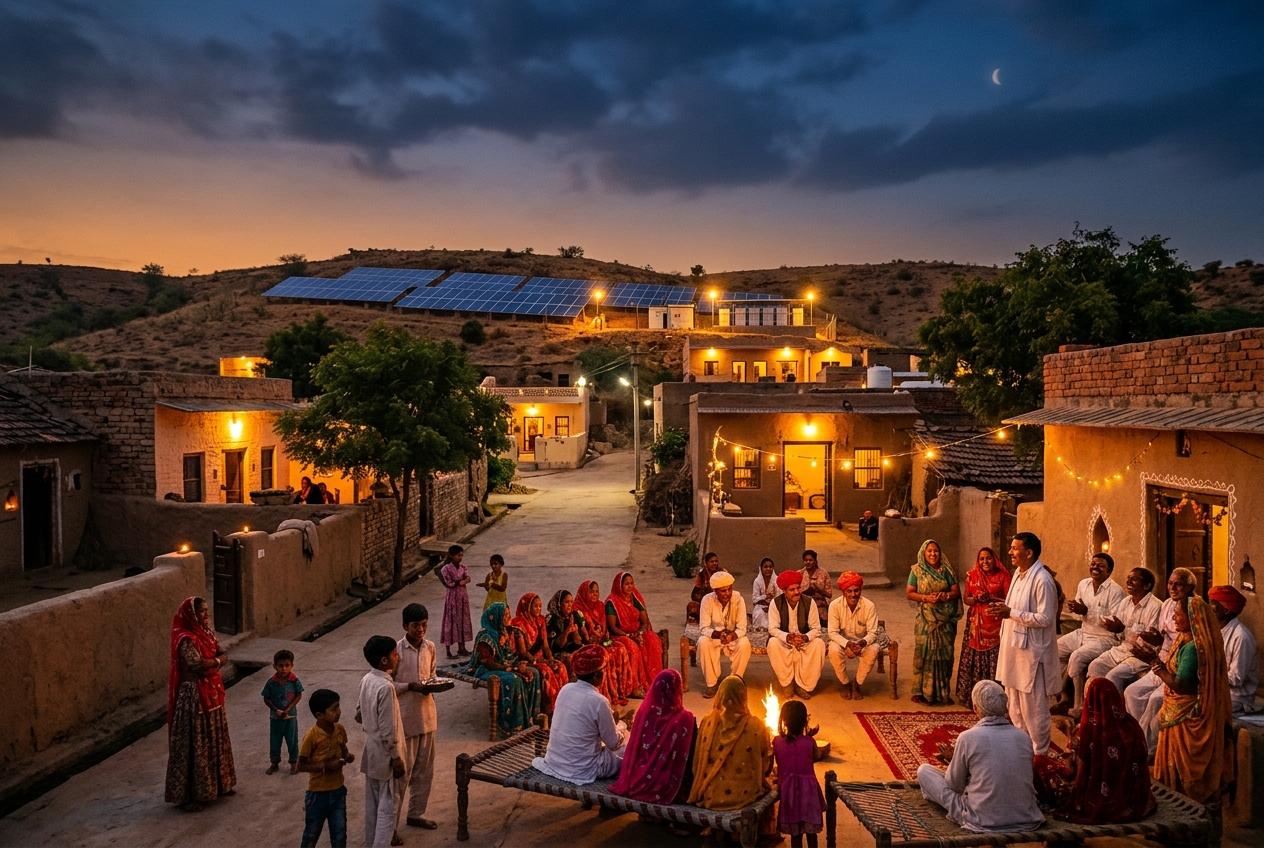
India’s NGO energy-access market is moving beyond generic household electrification. In 2026, one of the strongest and least crowded opportunities is reliable distributed renewable energy for public-service institutions: primary health centres, sub-centres, health and wellness centres, anganwadis, government schools, hostels, and tribal residential facilities. For NGOs, foundations, corporates and district administrations, these sites offer a clearer use case than many household programmes: power reliability directly affects vaccine storage, maternal care, digital education, water pumping, thermal comfort and clean cooking.
For investors, EPC firms, utilities and policymakers, this institutional angle matters for another reason. These projects can be designed around measurable service outcomes, aggregated procurement, predictable demand profiles and stronger monitoring than dispersed retail programmes. That makes them well suited for CSR allocations, philanthropy, challenge funds and selective blended structures, even where user tariffs are low or zero.
This article examines how NGO-led energy access for health centres and schools can be structured in India in 2026, what the typical technical and commercial numbers look like, where the policy and funding hooks sit, and how to avoid the implementation failures that still affect too many donor-funded DRE assets.
Why institutions are a better NGO energy-access entry point in 2026
Institutional loads in rural India are not always large, but they are mission critical. A village school may need lighting, fans, ICT loads, smart-class equipment and water pumping. A primary health centre may require refrigeration, lighting for deliveries, sterilisation support loads, basic lab devices, communications equipment and cooling. Even when a grid connection exists, the problem is often poor supply quality, frequent outages, low voltage, transformer failure or diesel dependence.
Compared with household-focused programmes, institutional DRE has five practical advantages:
- Clear social-use case linked to public-service delivery
- Easier stakeholder mapping because the site owner is usually a government department or local authority
- Better asset security than dispersed household systems
- More straightforward aggregation across a district or state
- Easier outcome monitoring through uptime, energy logs and service indicators
In many states, a rural school or PHC is already spending indirectly on unreliable energy through diesel, inverter battery replacement, spoilage, cancelled services or lost teaching hours. If an NGO programme quantifies these losses properly, a solar-plus-storage intervention becomes easier to justify to CSR committees and grant-makers.
What project configurations look like on the ground
The right system design depends on load criticality rather than headline kW capacity. A school that operates six hours a day can often work with a simpler daytime solar configuration plus limited evening backup. A health facility needs continuity during outages and night operations, so storage sizing and protected critical circuits are far more important.
Indicative 2026 ranges seen in Indian rural institutional DRE projects are:
- Anganwadi or small learning centre: 1-2 kW solar with 3-5 kWh battery
- Government primary school: 3-10 kW solar with 5-20 kWh battery depending on ICT and water loads
- Kasturba Gandhi Balika Vidyalaya or tribal hostel: 10-30 kW solar with 20-80 kWh battery and kitchen-energy integration
- Health sub-centre or health and wellness centre: 2-5 kW solar with 5-15 kWh battery for lighting, refrigeration and diagnostics
- Primary health centre: 10-25 kW solar with 20-60 kWh battery, critical-load segregation and optional diesel hybridisation
Indicative all-in 2026 capex ranges vary by state, logistics and battery chemistry, but practitioners should budget approximately:
- Rooftop/institutional solar without storage: Rs 42,000-58,000 per kW for smaller rural packages
- Lithium battery storage: Rs 13,000-18,000 per kWh installed for small-to-mid institutional systems
- Hybrid control, wiring upgrades and critical-load panel segregation: 8-15% of system cost
- Remote monitoring and data logger package: Rs 15,000-60,000 per site depending on telemetry needs
In practice, a 5 kW school system with 10 kWh storage may land in the Rs 4.5-6.5 lakh range. A 20 kW PHC system with 40 kWh storage and electrical retrofits may land in the Rs 20-32 lakh range. These are not low-ticket charity purchases; they are infrastructure assets and should be procured, engineered and maintained accordingly.
For clean cooking, the angle is different but increasingly relevant for hostels, anganwadis and school meal programmes. Electric cooking is still site-specific because of demand spikes and weak rural feeders, but improved biomass systems, pellet-based community cooking, biogas where feedstock is reliable, and LPG-linked efficiency upgrades remain practical. For CSR-funded institutional programmes, the better framing is often “clean energy for cooking and nutrition services” rather than a narrow stove donation model.
Funding architecture: CSR first, but with tighter project logic
Institutional energy access fits naturally within CSR because it intersects education, healthcare, environment and rural development. Under Schedule VII-linked CSR spending approaches commonly used in India, school and health energy programmes can be justified through public infrastructure support, environmental sustainability and community development outcomes. But in 2026, corporate boards are asking harder questions about asset ownership, additionality, utilisation and post-installation maintenance.
That means NGOs need a more rigorous funding architecture than a one-time equipment grant.
A workable stack usually includes:
- CSR capex contribution for solar, storage and site upgrades
- Philanthropic grant for programme management, beneficiary engagement and training
- State or district departmental convergence for permissions, roof access and O&M responsibility
- Optional OEM warranty support and annual maintenance contract for 3-5 years
- MRV budget line, typically 3-7% of programme cost, rather than an afterthought
For multi-site portfolios, pooled procurement can reduce capex by 6-12% versus fragmented site-by-site buying, especially where modules, inverters, batteries and monitoring hardware are standardised. District clustering also cuts logistics and service-call costs.
The main reason programmes underperform is not lack of donor appetite. It is weak transaction design. NGOs often underestimate the importance of baseline load studies, sanctioned-load records, roof-condition assessments, earthing quality, internal wiring condition, department approvals and responsibility for battery replacement after year five or seven.
This is where a more bankable project-preparation approach matters. Growthifye’s experience in Program design & theory of change and CSR funding pipelines is particularly relevant for converting a social-purpose concept into a technically scoped, financeable portfolio with clear outputs and outcomes.
Procurement and contracting models that reduce failure risk
The default donation model remains common: donor funds capex, EPC installs, institution receives asset. It is simple, but it often fails on O&M accountability. In 2026, stronger programmes are using variants of the following structures:
- Capex grant + 5-year O&M contract bundled into one tender
- Capex grant + performance-linked retention, with 10-15% payment withheld against uptime and reporting milestones
- Portfolio framework tender across 25-200 sites with standard technical specifications
- Tripartite MoU among NGO, district department and implementing agency clarifying ownership and maintenance responsibility
- Service-level agreement with remote monitoring, preventive maintenance visits and response times for critical sites like PHCs
For health assets, uptime commitments should be tied to critical circuits, not total site generation. A system may produce enough monthly units but still fail if the vaccine refrigerator or labour-room lighting is not prioritised during outages. Tender documents should require:
- Critical-load mapping
- n- Battery autonomy assumptions for night operation
- Black-start capability where needed
- Surge handling for refrigeration and pumps
- Lightning protection and earthing standards
- Remote monitoring with fault alerts
- Local technician training and escalation matrix
For schools, designers should also address seasonal demand. Fan loads and exam-period evening use can materially affect battery duty cycles. Water pumping, computer labs and digital classrooms should be separately metered or estimated so that systems are not undersized.
Policy alignment and public-system convergence in 2026
Institution-focused NGO energy access is easier to scale when aligned with existing public programmes rather than treated as parallel charity infrastructure. In 2026, the strongest convergence opportunities are with:
- National Health Mission and state health infrastructure strengthening efforts
- Samagra Shiksha-linked school infrastructure support
- Aspirational Blocks and district-level development planning
- Tribal affairs department hostels and residential schools
- Women and child development facilities such as anganwadis
- Jal Jeevan Mission-linked pumping or water-service reliability at institutions
While PM Surya Ghar is household-oriented and many state net-metering frameworks are better suited to larger urban consumers, institutional rooftops in rural public buildings can still leverage state rooftop policies where legal ownership, meter configuration and department permissions are clear. In many cases, however, the practical objective is resilience and backup rather than export revenue.
Electricity tariffs also shape the value proposition. Rural public institutions may face low notified tariffs, but headline tariff is not the full story. If a PHC is paying Rs 6-8 per kWh equivalent once diesel substitution, spoilage avoidance and outage losses are counted, solar-plus-storage economics become stronger than utility-bill analysis alone suggests. For schools, avoided inverter replacement, reduced diesel use and improved instructional continuity can justify systems even where direct bill savings are modest.
Developers and lenders should note that these are not conventional merchant projects. The investability comes from portfolio aggregation, donor commitment, measurable public-service outcomes and credible O&M structures, not from standalone project IRR in the usual C&I sense.
MRV that matters: move from installed capacity to service outcomes
Too many NGO energy projects still report only capacity installed and beneficiary counts. That is not enough in 2026. Sophisticated CSR teams and philanthropic funders want evidence that the system works, is used and creates durable outcomes.
For institutional energy-access portfolios, the minimum MRV framework should include:
- Baseline energy access condition: grid hours, outage frequency, diesel use, appliance functionality
- Technical outputs: kW installed, kWh generated, battery cycles, uptime of critical circuits
- Financial outputs: diesel savings, maintenance savings, avoided spoilage or outage-related costs
- Service outcomes: vaccine cold-chain continuity, night deliveries supported, school digital-learning hours enabled, kitchen service continuity
- Social safeguards: inclusion, local training, grievance resolution, asset misuse prevention
- Emissions reporting: estimated diesel displacement and grid-emission reduction assumptions
Remote monitoring should not be treated as a dashboard vanity feature. It is essential for exception-based maintenance and donor confidence. Even a simple platform that captures generation, battery SOC, outage events and alarm history can materially improve portfolio performance.
For programmes seeking long-term credibility, independent audits on a sample basis are worth budgeting. Site photos, signed service logs and beneficiary stories are useful, but they do not replace machine data and structured verification. Growthifye’s capability in Impact measurement & MRV can help NGOs and corporates build a reporting architecture that satisfies both programme teams and audit committees.
Common pitfalls and how to avoid them
The same operational problems recur across institutional energy-access programmes in India:
- Systems sized on rough estimates rather than real load measurement
- Batteries drained by unplanned appliances added after commissioning
- Government building roofs in poor structural condition
- No spare-parts plan for remote districts
- O&M budgets missing from donor approval notes
- Transfer of staff leading to poor system use and weak accountability
- Energy assets installed without integration into departmental operations
The fixes are practical:
- Conduct short-duration load logging at representative sites before tendering
- Standardise appliance lists and lock non-critical additions without approval
- Include structural and electrical safety screening in site selection
- Maintain district-level spare inventory for inverters, charge controllers and protection gear
- Ring-fence 3-5 years of AMC funding at sanction stage
- Train not only end users but also district engineers and administrators
- Build simple site-level SOPs in local language
Another key discipline is segmentation. Do not bundle every institution into one design. Anganwadis, PHCs, schools and hostels have different operational windows and load priorities. A portfolio approach should standardise procurement where possible, but not oversimplify technical design.
Why this matters for C&I players, developers and utilities
At first glance, this may appear peripheral to mainstream renewable-energy markets. It is not. Institutional NGO energy access can create adjacent opportunity for EPC firms, OEMs, monitoring providers, DRE developers, DISCOM-facing service firms and impact-aligned lenders.
For developers, these programmes build execution capacity in harder geographies, often leading to relationships with district administrations and corporate CSR platforms. For manufacturers and EPCs, aggregated institutional procurement can create stable volume in the 1-30 kW segment, where channel quality is often inconsistent. For utilities and policymakers, resilient public-service loads can reduce diesel dependence and improve social outcomes without waiting for perfect feeder reliability.
There is also a reputational and strategic angle. Corporate energy users increasingly want social-impact projects connected to their decarbonisation narrative, but with tangible local benefits and measurable outcomes. A well-designed school and PHC energy-access portfolio can meet that requirement far better than a fragmented donation campaign.
In 2026, the winners in this space will not be those who promise the highest number of villages covered. They will be the organisations that can identify the right public-service institutions, package them into technically coherent portfolios, secure departmental convergence, procure quality systems, and report performance with discipline.
For NGOs and donors, that means treating rural institutional energy not as charity hardware, but as community infrastructure with health, education and resilience returns. For the energy sector, it is a serious delivery vertical that deserves better project preparation, stronger data and more professional execution.
If your organisation is evaluating school, hostel, PHC or anganwadi energy-access programmes in India, contact Growthifye’s advisory desk to structure the funding, technical design, partnerships and MRV approach needed for bankable, high-impact delivery.
Explore Growthifye's related capabilities
This analysis connects directly to our advisory practice: Program design & theory of change · CSR funding pipelines · Grant & philanthropic fundraising · Compliance & governance.
About the author

Chief Executive Officer, Growthifye — With over 23 years in management consulting, Sudarshan has taken businesses from concept to scale — building and scaling new-age digital and energy businesses.
- 23+ years in management consulting
- EY alumnus
- Led large-scale BESS programmes, capital raises and advisory mandates
Want this analysis applied to your project?
Talk to our team