India 2026 NGO Energy Access: Clean Cooking for Institutions, CSR and MRV
By Sudarshan Karweer · sudarshan@growthifye.com · +91 84510 99371 (Call / WhatsApp) · 2026-08-31
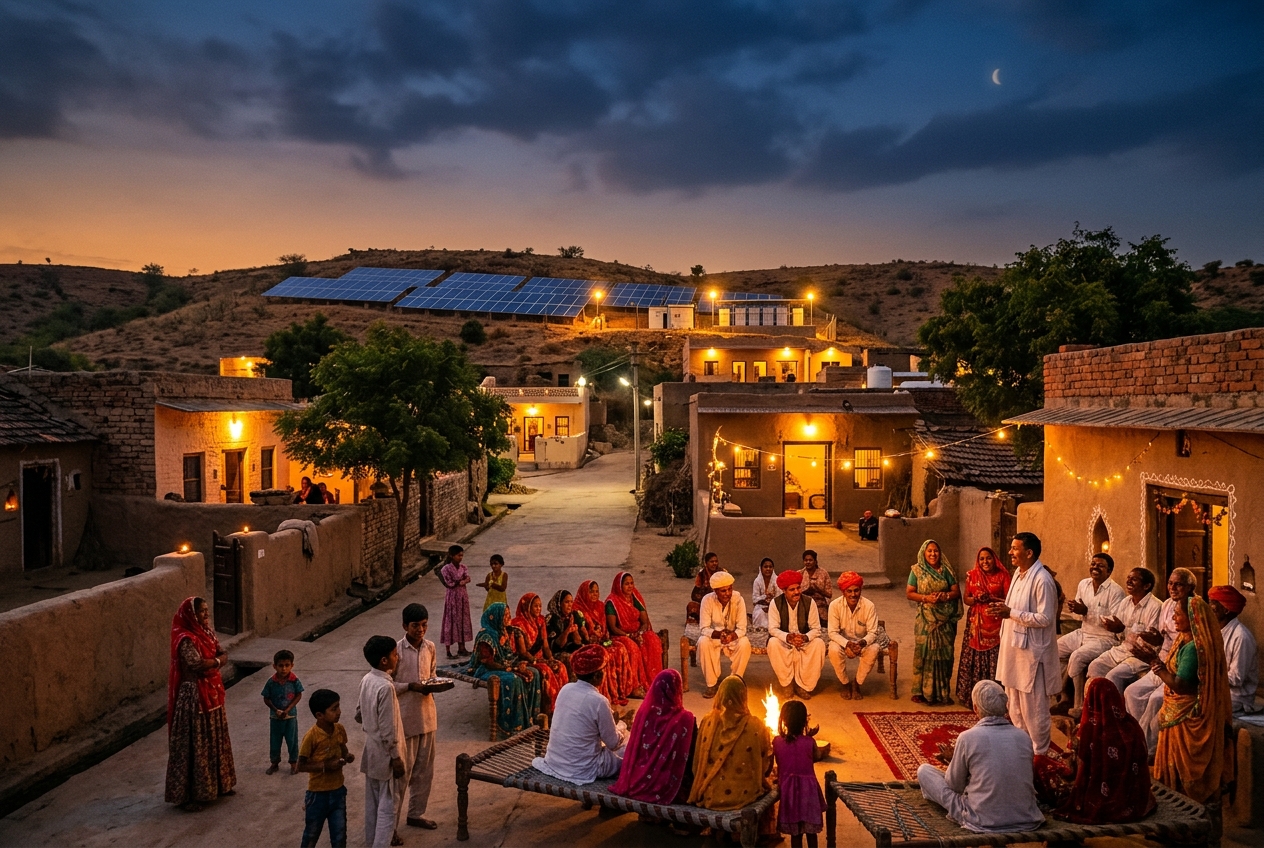
India’s NGO energy-access market is often discussed through solar lighting, mini-grids and productive-use appliances. In 2026, however, institutional clean cooking deserves far more attention. Community kitchens, ashramshalas, tribal hostels, old-age homes, shelter homes, anganwadi cluster kitchens, residential schools, orphanages and faith-run feeding centres consume large amounts of LPG, firewood, dung cake and, in some districts, diesel-backed thermal energy for meal preparation. For NGOs, corporate CSR teams, district administrations and development financiers, these sites offer a practical pathway to combine energy access, health outcomes, women’s welfare, emissions reduction and measurable operating savings.
The commercial case is stronger than many assume. Cooking loads are daily, predictable and easy to meter compared with fragmented household demand. Meal counts are auditable. Fuel displacement can be quantified. Kitchens are tied to public-service outcomes, making them suitable for CSR and philanthropic support. They also create a natural bridge between thermal energy planning, rooftop solar, electrical upgrades, battery backup, induction or electric pressure cooking, biogas, biomass pellets and impact reporting.
This article sets out how institutional clean-cooking programmes can be structured in India in 2026, what technologies are bankable, where economics work, how MRV should be designed, and how NGOs can build investable portfolios rather than one-off demonstrations.
Why institutional clean cooking is a separate market segment
Most clean-cooking conversations in India still focus on households. That is important, but institutional kitchens behave differently from household kitchens in four critical ways.
- Demand is concentrated: one kitchen may cook 150 to 5,000 meals per day.
- Procurement is centralised: NGOs, trusts or local administrations usually control equipment decisions.
- Payment discipline is stronger: fuel budgets are planned annually and linked to institutional operations.
- Impact is easier to verify: meal volumes, kitchen hours, staff exposure and fuel invoices can be tracked.
A 300-student hostel kitchen using 8 to 12 commercial LPG cylinders per month may spend roughly Rs 18,000 to Rs 35,000 monthly depending on state taxes, transport and cylinder type. A larger community kitchen serving 1,500 to 2,000 meals daily can spend Rs 60,000 to Rs 2 lakh per month on LPG, biomass or mixed fuels. Sites using purchased firewood may not look expensive in accounting terms, but they often carry hidden costs: labour for fuel handling, soot-related maintenance, heat stress, poor indoor air quality, longer cooking times and inconsistent food quality.
For funders, this means project outcomes can be measured across three layers:
- Energy economics: reduction in delivered cooking-energy cost per meal
- Welfare outcomes: lower smoke exposure, reduced drudgery, improved kitchen conditions
- Climate outcomes: displacement of non-renewable biomass, diesel or inefficient LPG consumption where technology improves thermal efficiency
This is where well-structured Program design & theory of change becomes essential. A kitchen upgrade is not just equipment replacement; it is an operating-model intervention that changes procurement, training, maintenance, safety and data collection.
Which technologies are viable in 2026
There is no single winning technology. In India’s 2026 institutional segment, the most bankable projects are hybrid rather than ideological. The correct choice depends on meal count, local fuel supply, grid quality, kitchen workflow, vessel size and the institution’s ability to maintain assets.
The practical options include:
- Commercial induction cooking for boiling, rice, dal, milk and reheating
- Electric pressure cookers for hostels, schools and smaller community kitchens
- Steam-based electric cooking systems for larger facilities
- Biogas from kitchen waste, canteen waste, cattle dung or wet organic feedstock
- Biomass pellet stoves for sites with unreliable grids and organised pellet supply
- Improved institutional biomass cookstoves where full fuel switching is not immediately viable
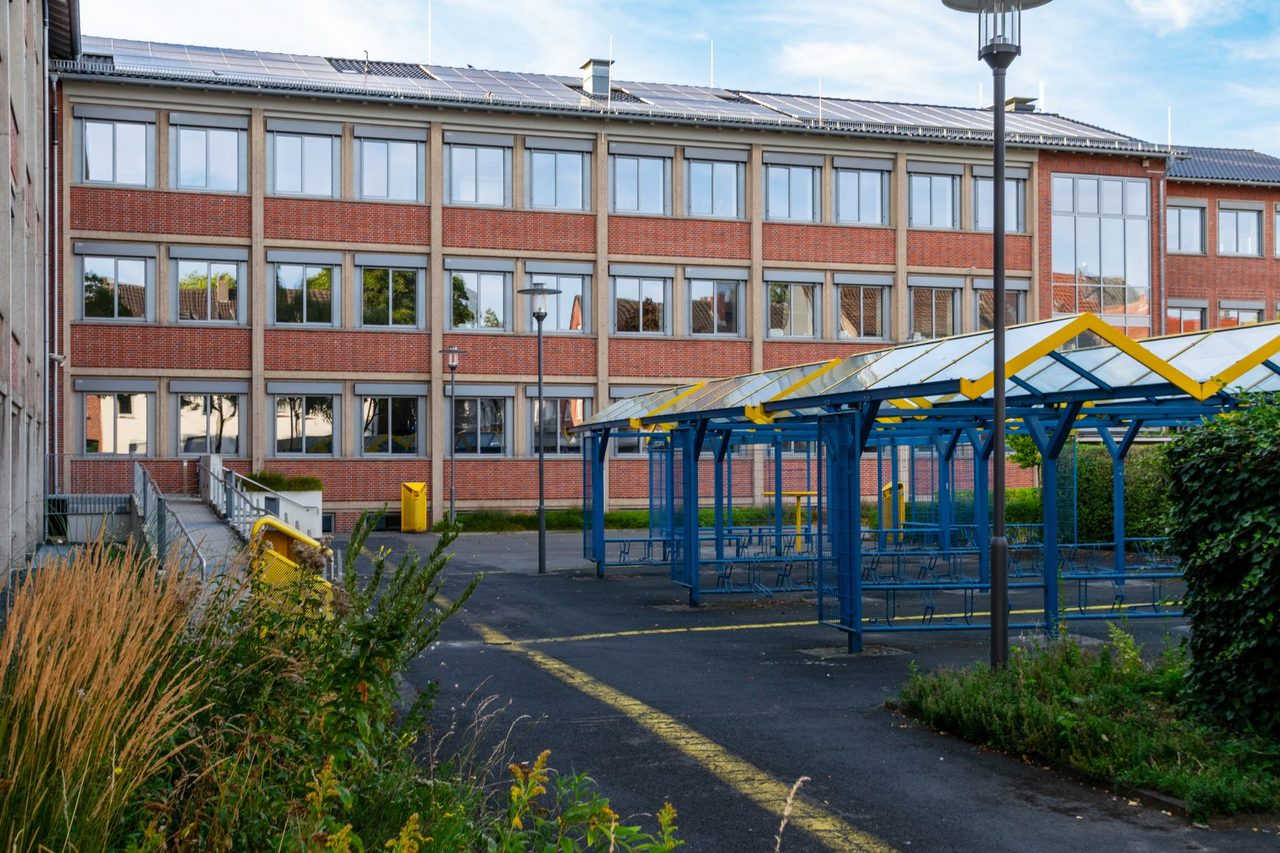
- Solar-electric integration through rooftop PV to offset daytime cooking loads where feasible
Induction and electric cooking are gaining ground because commercial electricity tariffs in some states remain competitive when matched with efficient appliances and solar offset. In 2026, institutional low-tension or commercial tariffs commonly fall in the Rs 6.5 to Rs 9.5 per kWh range before demand charges and local surcharges, while high-tension consumers may see blended costs in a comparable or lower band depending on load factor and open-access strategy. For kitchens with daytime preparation and available rooftop space, solar can materially reduce the effective electricity cost for part of the cooking load.
A simple comparison helps. If an induction system delivers roughly 85% to 90% end-use efficiency, while an LPG setup may deliver around 45% to 60% useful thermal efficiency depending on burner quality and vessel practice, then electric cooking can be viable even before accounting for cleaner kitchens and lower maintenance. For bulk boiling applications, electric steam systems may show especially attractive economics where fuel logistics are difficult.
Biogas works best where feedstock is reliable and the kitchen is large enough to justify digester operations. Typical candidates include gaushalas with attached hostels, ashrams, religious feeding centres, residential schools with wet waste collection and peri-urban welfare campuses. But biogas projects fail when feedstock discipline, slurry management and operator training are weak. NGOs should not treat digesters as symbolic assets.
Biomass pellets can be useful for remote tribal institutions where LPG delivery is costly and the grid is poor. However, the business case depends entirely on pellet supply assurance within a reasonable delivered price range. If pellet prices move above local thresholds due to transport or seasonal scarcity, institutions revert to firewood quickly. In most states, a dependable pellet supply chain and annual maintenance contract are more important than the stove itself.
Financial structuring: where CSR, grants and carbon fit
Institutional clean cooking usually needs blended capital, especially in the first portfolio cycle. Few NGOs can ask hostels or welfare homes to fund full capex upfront, even where payback is attractive. The finance stack in 2026 often combines three components.
- Capex support from CSR or philanthropy
- Limited beneficiary contribution or operating budget commitment
- Performance-linked disbursement tied to utilisation and verified fuel displacement
A small institutional electric-cooking retrofit for a 200- to 400-beneficiary facility may cost Rs 3 lakh to Rs 12 lakh depending on wiring upgrades, panels, battery support, appliance mix and kitchen layout. A larger steam or hybrid system can range from Rs 15 lakh to Rs 60 lakh or more. Biogas-linked systems vary widely but often require Rs 8 lakh to Rs 40 lakh once civil works, gas handling, safety systems and training are included.
The strongest CSR programmes are not written as appliance donation schemes. They are written as operational transformation programmes with multi-year monitoring. That matters for Schedule VII alignment, board approvals, utilisation certificates and ongoing sponsor confidence. Corporate funders increasingly ask for measurable outcomes per rupee deployed, and kitchens provide a clear metric architecture:
- Meals served per day
- Fuel cost saved per month
- Cooking time reduced per batch
- Smoke exposure proxies or indoor air-quality improvements
- Tonnes of fuel displaced annually
- Estimated emissions reduction
- Uptime and equipment utilisation rates
This is a segment where CSR funding pipelines can be built portfolio-first. Instead of pitching one hostel or one ashram at a time, NGOs should aggregate 20 to 100 institutions across a district, denomination, tribal belt, education network or thematic programme. Aggregation reduces procurement cost, standardises training, improves AMC contracting and creates a credible MRV dataset that attracts repeat funding.
Carbon revenue can be additive in selected cases, especially where projects displace non-renewable biomass or inefficient baseline fuels at scale and where monitoring architecture is credible from day one. But carbon should not be the primary underwriting assumption for smaller portfolios. Issuance timelines, methodology selection, verification cost and baseline integrity can erode viability if the programme is too fragmented. In most early-stage NGO portfolios, carbon is best treated as upside or a second-cycle scaling mechanism rather than the first cheque.
Designing an MRV system that lenders and CSR teams trust
Many NGO energy-access programmes underperform because monitoring is anecdotal. Institutional clean cooking allows much better discipline. A credible MRV framework in 2026 should combine digital usage data, operating records and periodic field validation.
At minimum, project developers should capture:
- Baseline fuel type, quantity, cost and purchase frequency
- Kitchen operating hours and average daily meal counts
- Appliance-wise connected load and expected duty cycle
- Monthly electricity consumption attributable to cooking
- LPG cylinder purchases or biomass use after intervention
- Downtime logs and maintenance tickets
- User training records and safety incidents
For electric systems, sub-metering the cooking circuit is strongly recommended. A class-1 accuracy meter with remote data logging is now inexpensive relative to total project cost and substantially improves confidence. For LPG displacement, monthly invoice collection is essential. For biomass and firewood baselines, weighbridge records, standardised bundle weights or supervised stock measurements should be established before commissioning.
Where NGOs are seeking larger institutional funding, Impact measurement & MRV should go beyond energy metrics. Useful outcome indicators include:
- Kitchen staff absenteeism trends
- Time saved in fuel handling and stove cleaning
- Improvement in meal punctuality for schools and hostels
- Reduction in black carbon-heavy cooking practices where relevant
- Number of women workers trained in safe electric or gas operations
If the programme covers public or quasi-public facilities, district-level dashboards can be used to compare sites by cost per meal, uptime, emissions intensity and maintenance frequency. This helps identify whether underperformance is due to appliance sizing, poor wiring, operator behaviour or weak vendor support.
Policy and implementation issues to watch in India in 2026
The policy environment supports cleaner institutional energy, but implementation remains state-specific. NGOs and funders should check four issues before approving a portfolio.
First, electricity tariff category matters. Some institutions are billed under commercial tariffs even when they provide welfare services. This can materially affect electric-cooking economics. A pre-feasibility should verify tariff category, sanctioned load, historical bills, power quality and transformer constraints.
Second, electrical safety upgrades are often underestimated. Many kitchens need internal rewiring, earthing correction, MCB or MCCB upgrades, distribution-board redesign and load balancing before electric cooking can be deployed safely. These costs must be included in capex from the start.
Third, food-service schedules matter. If the main cooking cycle occurs during daytime hours, rooftop solar can offset a portion of electric cooking demand. In some states, net billing and behind-the-meter consumption economics are more favourable for self-use than for export, making daytime institutional kitchens attractive solar companions. Typical rooftop solar capex in 2026 for institutional systems can still fall in the broad range of Rs 38,000 to Rs 52,000 per kW depending on size, structure and BOS scope, though remote or specialised campuses may be higher.
Fourth, local O&M capability is decisive. A technically elegant kitchen fails quickly if spare parts, vessel compatibility, control-panel service and user training are weak. Procurement should specify response times, preventive maintenance visits, operator manuals in local language and named escalation contacts.
A practical portfolio model for NGOs and corporate partners
For organisations looking to scale, a district or state portfolio model is more effective than isolated projects. A workable 2026 approach is to create a 30-site to 75-site pipeline split into standard typologies.
- Type A: small hostels and shelter homes, 100 to 300 meals/day
- Type B: residential schools and tribal institutions, 300 to 1,000 meals/day
- Type C: community or faith kitchens, 1,000+ meals/day
- Type D: campuses with feedstock potential for biogas
Each type should have a standard technical package, capex band, O&M protocol and MRV template. This reduces engineering time and allows faster sponsor approvals. It also supports better vendor competition because EPC and equipment suppliers can price repeatable designs rather than bespoke one-offs.
A robust implementation cycle typically includes:
- Portfolio screening and fuel-bill benchmarking
- Electrical and kitchen energy audits
- Technology matching and capex estimation
- Sponsor structuring across CSR, grants and beneficiary budgets
- Vendor selection with service-level commitments
- Commissioning, training and safety certification
- Twelve- to twenty-four-month monitored operations
This is also an ideal domain for Corporate & utility partnerships. Utilities can support load assessments, transformer planning and awareness around safe electric cooking; corporate funders can support capex and monitoring; NGOs can manage community interface, training and field supervision.
What success looks like by 2027
A successful institutional clean-cooking portfolio should not be judged by installation count alone. By 2027, the strongest programmes will demonstrate four things.
- High utilisation: kitchens actually use the new system daily, not ceremonially
- Financial durability: monthly fuel and maintenance economics remain favourable
- Replicability: standard packages can be deployed to similar sites quickly
- Verifiable impact: savings and social outcomes are documented well enough for repeat funding
For India’s NGO energy-access sector, institutional clean cooking is one of the few areas where development impact and operational discipline can align. The demand is real, the baseline pain points are visible, the intervention is measurable and the financing story is understandable to CSR committees and philanthropic funders. The key is to move beyond donation logic and build monitored, portfolio-scale delivery models with sound engineering, realistic tariffs and accountable O&M.
If your organisation is evaluating institutional clean cooking, rural solar integration or portfolio-level NGO energy access in India, contact Growthifye’s advisory desk to structure the pipeline, financing and MRV roadmap.
Explore Growthifye's related capabilities
This analysis connects directly to our advisory practice: Program design & theory of change · CSR funding pipelines · Grant & philanthropic fundraising · Compliance & governance.
About the author

Chief Executive Officer, Growthifye — With over 23 years in management consulting, Sudarshan has taken businesses from concept to scale — building and scaling new-age digital and energy businesses.
- 23+ years in management consulting
- EY alumnus
- Led large-scale BESS programmes, capital raises and advisory mandates
Want this analysis applied to your project?
Talk to our team