Co-located Solar Plus BESS in India 2026: Sizing, Tariffs and Grid-Interconnection
By Sudarshan Karweer · sudarshan@growthifye.com · +91 84510 99371 (Call / WhatsApp) · 2026-09-08
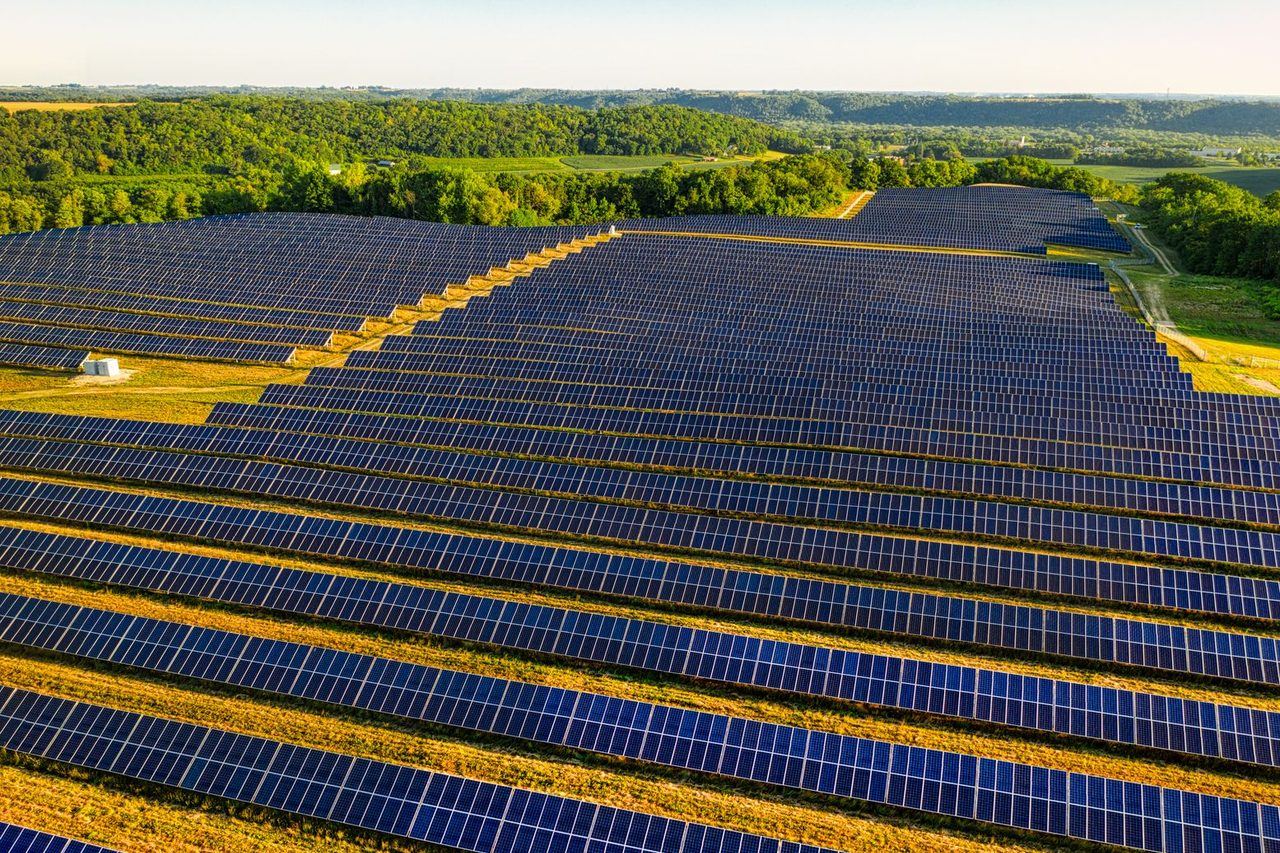
India's storage market is no longer only about standalone BESS tenders, ancillary services, or pumped hydro. In 2026, one of the most commercially relevant themes is co-located solar plus BESS: a single site where solar generation and battery storage are designed together to shape output, reduce curtailment, improve capacity utilisation of evacuation assets, and deliver a firmer power product.
This is a different problem from merchant BESS, VGF-backed standalone storage, or RTC portfolios stitched together across states. Co-located projects live or die on engineering choices made at bid stage: DC oversizing, inverter loading ratio, point of interconnection, battery duration, charging source rules, augmentation path, and how the dispatch profile is written into the PPA or energy service agreement. For Indian C&I buyers, developers, lenders, utilities and policymakers, this structure deserves separate attention because its economics are often better than a standalone battery, but only when the plant is sized for the actual use case.
Why co-located solar plus BESS is getting traction in 2026
Three forces are pushing this model into the mainstream.
First, solar tariffs remain structurally competitive, but buyers increasingly want delivery windows rather than pure energy volumes. Many commercial and industrial consumers now prefer late-evening support, smoother intra-day output, and lower deviation from scheduled drawal. A plain vanilla solar OA plant does not provide that.
Second, grid congestion and curtailment risk remain material in several renewable-rich corridors. A battery on the same site can absorb generation that would otherwise be clipped by AC limits, scheduling constraints, or temporary evacuation bottlenecks. This is especially relevant where developers are using higher DC:AC ratios, typically 1.35 to 1.60 for utility-scale solar, and want to monetise midday surplus.
Third, network and permitting realities still matter. Compared with a geographically separate battery, co-location can simplify land aggregation, pooling substation design, internal evacuation, and control architecture. It can also improve the utilisation of expensive interconnection infrastructure if the injection profile is shaped intelligently.
In recent bid discussions across utility and C&I segments, a co-located solar plus BESS project is often being evaluated against three alternatives:
- standalone solar with lower tariff but weaker time-value
- n- standalone BESS with no captive low-cost charging source
- portfolio-level RTC/FDRE structures using multiple technologies and locations
The co-located option usually wins when the buyer values a defined evening block, when grid export capacity is constrained, or when curtailment economics justify storing clipped solar instead of adding more evacuation capacity.
Start with the use case, not the battery duration
A persistent market mistake is to ask whether the project should use a 2-hour, 4-hour or 6-hour battery before defining the revenue logic. In practice, the battery duration must follow the service requirement.
For Indian projects in 2026, the most common co-located use cases are:
- solar output shifting from 11:00-15:00 into 18:00-22:00
- ramp-rate control and shaped injection to meet a contracted schedule
- reducing curtailment and clipping losses on a high-DC-ratio plant
- C&I peak-demand reduction combined with open-access energy supply
- hybrid tariff bids where firmness or delivery window affects evaluation
These use cases imply very different battery sizing outcomes.
If the objective is only clipping recovery from a solar plant with DC oversizing, the battery may be relatively small in power terms but cycled frequently during high-irradiance hours. For example, a 100 MWac solar plant with a DC:AC ratio of 1.5 may experience significant clipping during a limited number of hours and months. A battery sized at 25 MW / 50 MWh or 30 MW / 60 MWh might recover a meaningful share of clipped energy, but the exact value depends on site irradiance, inverter loading, temperature profile, and seasonal shape.
If the objective is evening shaping for a utility or C&I offtaker, the battery often needs to be larger. A 100 MWac solar plant designed to guarantee, say, 35-40 MW delivery during 18:00-22:00 cannot be sized with generic rules of thumb. Developers must model seasonal surplus available for charging, monsoon variability, inverter dispatch limits, and round-trip efficiency. In many western and southern Indian locations, a project attempting a meaningful four-hour evening block from solar-only charging may require a battery in the range of 40-60 MW with 160-240 MWh, plus some acceptance that monsoon months need fallback provisions or reduced guaranteed delivery.
That is why serious sizing starts with hourly simulation, not brochure assumptions. Inputs should include:
- 15-minute or hourly solar resource data across P50, P75 and P90 cases
- DC and AC plant configuration
- degradation of modules and cells
- battery usable depth of discharge and augmentation plan
- round-trip efficiency at site conditions
- auxiliary load and HVAC impact
- contracted delivery window and shortfall penalties
- state or central scheduling and deviation settlement assumptions
A project that looks attractive at P50 can become fragile at P90 if the dispatch promise is too aggressive.
The real economics: tariff uplift versus added capex and losses
In 2026, co-located solar plus BESS economics in India are improving, but they are not automatic. The core question is whether the tariff uplift, avoided charges, or additional contracted volume justify the battery capex, augmentation, and energy losses.
For orientation, utility-scale standalone solar tariffs remain highly competitive, often in the broad range of about Rs 2.3-3.0/kWh depending on location, ISTS status, project specifics and bid conditions. Once a battery is co-located and used to shift energy into higher-value windows, the delivered tariff for the shaped product can rise materially. In many current evaluations, the all-in levelised cost of the shifted energy may land roughly in the Rs 4.0-6.5/kWh band, though this varies sharply by battery duration, cycling assumptions, financing cost, and whether the battery is used only for time-shifting or also for clipping recovery and grid services.
For C&I buyers, the comparison is not against raw solar tariff alone. It is against the avoided cost of evening grid procurement, demand charges, power purchase from exchange-linked sources, diesel backup displacement, and reliability benefits. In several states, a well-structured open-access solar plus BESS supply can still be competitive with effective industrial landed tariffs during peak periods, especially for consumers facing Rs 7-10/kWh equivalent evening supply costs from the grid after accounting for time-of-day effects and demand components.
For developers, the most underappreciated value driver is not always arbitrage. It is better utilisation of the interconnection and higher contractability of the solar asset. If adding storage converts a commodity solar project into a dispatch-shaped product with better offtake certainty, the risk-adjusted return can improve even if the nominal battery IRR alone appears modest.
Still, investors should test at least five sensitivities:
- battery capex and replacement trajectory
- annual cycles and calendar degradation
- charging source restrictions and any grid-charging cost exposure
- curtailment assumptions before and after storage
- debt terms linked to technology and offtake structure
A common error is to spread battery capex over too much “high-value” energy. Once round-trip losses, monsoon undercharging, reserve margin and degradation are included, the actual annual shifted volume is often lower than early-stage decks suggest.
Interconnection, charging source and chargeability can decide viability
One of the most practical 2026 issues in India is not battery chemistry or EMS sophistication. It is whether the project is allowed to charge the battery the way the financial model assumes, and what network charges apply when it does.
There are three broad structures in the market:
- battery charged only from co-located solar behind the interconnection point
- battery charged primarily from solar but with limited grid charging allowed
- battery treated more flexibly, with substantial grid charging for optimisation
Each has different implications for approvals, metering, scheduling, tariffs and taxes. A behind-the-meter or tightly co-located configuration can simplify the logic if the contract is based on renewable energy shifting only. But once grid charging is introduced, questions arise on transmission charges, wheeling, additional surcharges, cross-subsidy implications in OA cases, and how renewable attributes are treated.
For ISTS-connected projects, developers also need to examine whether the chosen configuration aligns with prevailing central regulations and bid documents on hybrid and storage treatment. For intrastate projects, state-specific approaches matter even more. Some states are more operationally comfortable with hybrid metering and dispatch than others.
This is where project design must be integrated across engineering, regulatory and commercial workstreams. The single-line diagram, meter placement, SCADA philosophy and PPA definitions should be developed together. If the legal contract says one thing and the energy accounting system measures another, disputes are inevitable.
Lenders increasingly ask detailed interconnection questions such as:
- Is the battery charged exclusively from renewable generation or partially from grid imports?
- How are import and export meters configured?
- Can the AC evacuation system support simultaneous solar export and battery charge/discharge modes?
- What is the dispatch hierarchy in constrained conditions?
- Are there hidden transformer, reactive power, or auxiliary consumption constraints?
A project that ignores these details may reach COD but underperform against its contracted profile.
Bankability hinges on dispatch promises, degradation planning and contract design
Co-located solar plus BESS is bankable in India, but only if the dispatch obligation is realistic and the asset-management plan is explicit.
The first bankability issue is overcommitment. Developers sometimes promise a flat evening supply profile based on first-year battery performance without fully reserving for cell degradation, HVAC stress, monsoon charging deficits, and module degradation. A better practice is to contract a profile with clearly defined seasonal bands, availability metrics and permitted shortfall tolerances.
The second issue is augmentation strategy. In most serious cases, lenders will expect a view on when and how capacity augmentation occurs. This can be handled through:
- upfront oversizing of battery energy capacity
- scheduled augmentation in specific years
- contract structures that allow some performance decline within defined bands
Each route changes capex timing and DSCR profile. The right choice depends on tariff structure and debt sculpting.
The third issue is warranty and performance alignment. Battery warranties are often written around throughput, retention and operating conditions. If the PPA assumes one dispatch pattern but the warranty economics suit another, the sponsor carries hidden risk. For example, daily deep cycling for aggressive evening shifting may consume warranty throughput faster than anticipated.
The fourth issue is interface risk across OEM, PCS supplier, EMS vendor, solar EPC and O&M contractor. Co-located plants need a control philosophy that prioritises contractual output, not isolated subsystem optimisation. A battery that performs well in FAT can still create operational disputes if plant-level controls are not integrated.
For lenders and utility buyers, the most financeable contracts usually specify:
- delivery window and schedule methodology
- charging-source rules
- energy accounting approach
- deemed-generation or curtailment treatment
- battery availability and response requirements
- degradation and augmentation obligations
- liquidated damages linked to measurable outputs, not vague firmness claims
Where this works best in India
Not every solar site should add a battery. Co-location tends to work best under one or more of the following conditions:
- high solar resource with regular midday clipping on a constrained AC export design
- meaningful evening tariff premium or avoided procurement cost
- land and interconnection already secured, making incremental storage cheaper to integrate
- offtaker values shaped delivery more than lowest headline solar tariff
- state or utility procurement structure recognises time-value or firmness
In 2026, western and southern states with strong solar resource, active C&I markets and recurring peak-value opportunities are particularly relevant. But site-level conditions matter more than state-level headlines. A mediocre interconnection can destroy the value of a well-priced battery, while a strong evacuation point can make moderate-duration storage highly profitable.
The message for policymakers is equally clear: co-located storage can reduce curtailment, improve renewable utilisation and support local grid balancing, but only if metering, scheduling and chargeability frameworks are unambiguous. The market does not need generic encouragement as much as it needs implementable rules.
A disciplined advisory approach is now essential
In the current Indian market, co-located solar plus BESS should not be treated as a simple add-on to a solar project. It is a distinct infrastructure product with intertwined design, regulatory and financing decisions. The best projects are being built from the dispatch requirement backward: define the offtake value, simulate realistic charging energy, design the interconnection accordingly, and only then optimise battery power and duration.
For C&I buyers, the right question is not “How much does the battery add per kWh?” It is “What landed peak-period cost, reliability improvement and schedule control does the integrated project deliver?” For developers, the key question is not “Can we include storage?” but “Can we contract and finance the shaped output without overcommitting?” For lenders, the focus should be on whether the performance model, interconnection design and contractual framework are truly consistent.
As 2026 procurement becomes more time-sensitive and grid-aware, co-located solar plus BESS will likely be one of the most important middle-ground products between plain solar and full RTC portfolios.
If you are evaluating a co-located solar plus storage project, contact Growthifye's advisory desk for project sizing, tariff modelling, interconnection review, feasibility and lender-grade assessment.
About the author

Chief Executive Officer, Growthifye — With over 23 years in management consulting, Sudarshan has taken businesses from concept to scale — building and scaling new-age digital and energy businesses.
- 23+ years in management consulting
- EY alumnus
- Led large-scale BESS programmes, capital raises and advisory mandates
Want this analysis applied to your project?
Talk to our team