Merchant BESS in India 2026: Revenue Stacking, Degradation and Bankability
By Sudarshan Karweer · sudarshan@growthifye.com · +91 84510 99371 (Call / WhatsApp) · 2026-09-13
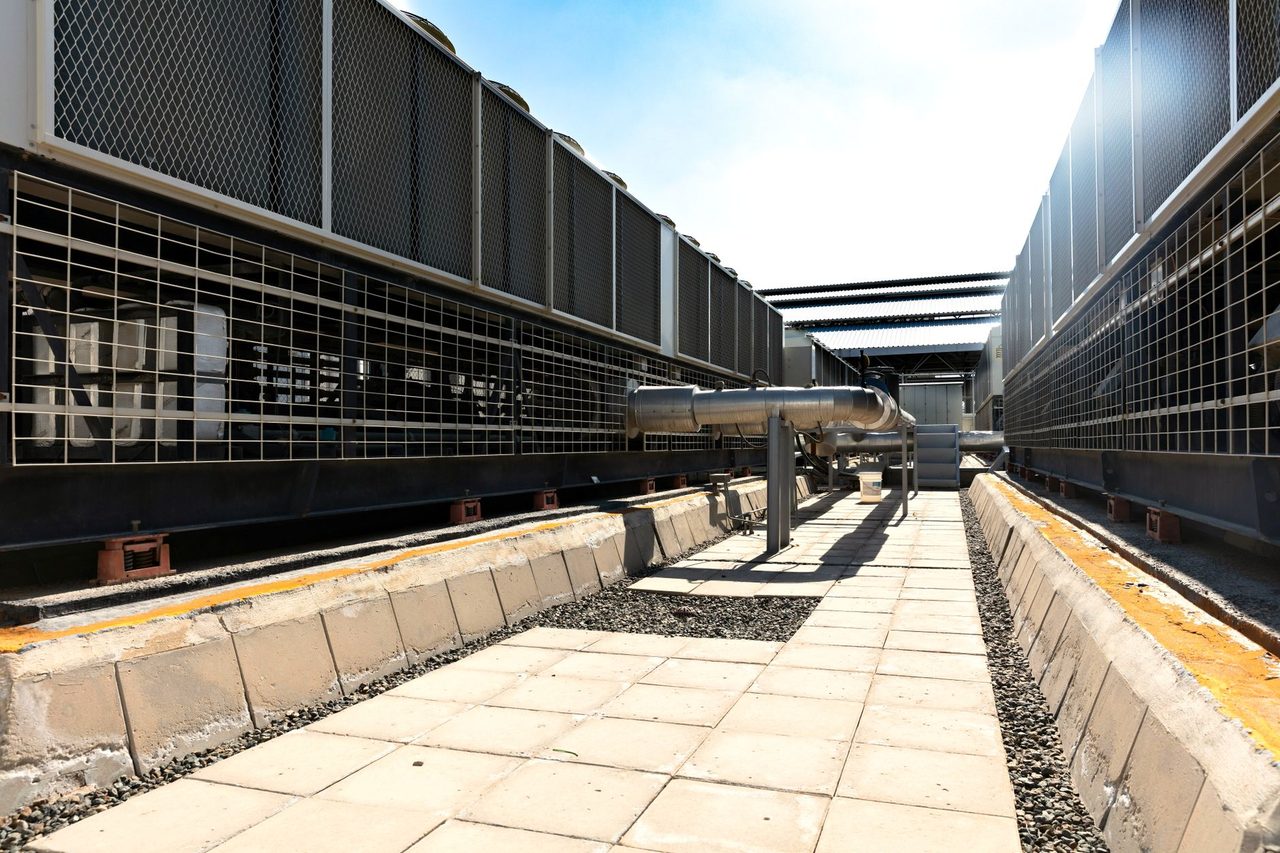
Photo: Tayssir Kadamany on Pexels
India’s battery story in 2026 is moving beyond single-use cases. The next commercial question is merchant BESS: can standalone or flexibly contracted battery assets earn enough from multiple markets to be financeable without relying only on one fixed tolling or capacity-style payment?
For developers, the attraction is obvious. A battery that can switch between energy arbitrage, ancillary services, peak management, congestion support and bilateral utility arrangements should, in theory, produce higher returns than an asset locked into one narrow revenue stream. For lenders and utilities, the concern is equally obvious: stacked revenues are only as good as the dispatch rights, metering architecture, settlement rules, degradation assumptions and contractual protections underneath them.
This article looks at merchant BESS in India in 2026 from a practitioner lens: what revenue streams are real, where the numbers can work, what degradation does to dispatch economics, and why many projects that look attractive in deck-level modelling still fail basic bankability tests.
What “merchant BESS” means in India in 2026
In the Indian market, merchant BESS does not always mean fully uncontracted storage taking pure market risk. In practice, there are three broad structures:
- Pure merchant: the battery earns primarily from exchange-linked price spreads, ancillary services, and short-tenor bilateral opportunities with no long-term fixed revenue floor.
- Hybrid merchant: a portion of capacity is reserved under a tolling, utility services, or capacity-availability arrangement, while the balance is optimised into market-based revenues.
- Merchant-overlay model: the battery is attached to a generation or open-access portfolio and earns incremental revenue by reshaping injections, reducing imbalance, avoiding DSM exposure, or serving C&I peaks.
In India, the fully pure-merchant model remains the hardest to finance in 2026. Most bankable discussions are around hybrid merchant structures, especially where 30% to 70% of annual revenue can be linked to contracted or quasi-contracted cash flows.
The reason is simple. Indian battery projects still face a relatively high cost of debt, limited operating history under market-based dispatch, and evolving market rules for ancillary and balancing services. If the project relies on one heroic assumption on future spreads, most lenders will either size debt very conservatively or refuse long-tenor financing altogether.
Revenue stacking: which streams are credible today
Revenue stacking is not a slogan. It is a dispatch hierarchy problem. Every battery can only charge or discharge once at a given time, and every cycle spent on one revenue stream is unavailable for another. The main task in modelling is to determine not just gross revenue from each service, but the mutually feasible net portfolio.
In 2026, the most credible Indian revenue streams for a merchant or semi-merchant BESS are the following:
- Day-ahead and real-time market arbitrage on power exchanges
- Ancillary services, especially fast-response balancing products as market design evolves under system operator frameworks
- Deviation reduction and schedule shaping for RE portfolios
- Peak shaving and demand-charge reduction for large C&I consumers where behind-the-meter or dedicated-wire structures are possible
- Short-duration evening support under utility bilateral contracts
- Network support or congestion-relief arrangements in specific locations, if backed by utility payment structures
Not all of these are available to every project. Location, interconnection voltage, metering scheme, scheduling rights, offtake structure and state-level implementation matter more than generic national headlines.
As a working benchmark, a 2-hour utility-scale BESS in a high-volatility node may target annual gross revenues in the broad range of Rs 8 lakh to Rs 16 lakh per MW-month under an aggressively stacked strategy. But after accounting for round-trip losses, auxiliary consumption, cycle limits, degradation reserve, market fees, availability guarantees and dispatch conflicts, the investible net realised value may compress materially.
For many projects, a more prudent underwriting range remains closer to Rs 6 lakh to Rs 11 lakh per MW-month equivalent in the early operating years, unless there is a firm contractual component improving cash-flow visibility.
That difference between gross and underwritten revenue is where most spreadsheet optimism dies.
Arbitrage math: spreads alone rarely carry the full project
A common mistake is to assume that average evening prices minus average afternoon prices equal battery revenue. That is not how real arbitrage works.
The battery only monetises spreads after:
- Charging cost at the actual charging interval
- Round-trip efficiency losses, often 82% to 90% AC-to-AC depending on system design and operating regime
- Variable O&M and augmentation reserve
- Dispatch constraints such as minimum state-of-charge buffers
- Missed opportunities caused by co-optimisation with other services
Take a 100 MW / 200 MWh BESS. Suppose it charges at an average landed cost of Rs 3.20 per kWh and discharges into a peak window averaging Rs 6.20 per kWh. On a simple gross basis, the spread is Rs 3.00 per kWh. But at 86% AC round-trip efficiency, the effective delivered charging cost becomes about Rs 3.72 per discharged kWh even before variable costs. If market fees, auxiliary use and variable wear reserve add another Rs 0.20 to Rs 0.35 per kWh, net contribution falls to roughly Rs 2.13 to Rs 2.28 per discharged kWh.
Now apply realistic throughput. If the battery cycles 280 to 320 equivalent full cycles a year, annual arbitrage contribution might be meaningful, but not necessarily enough to support aggressive debt leverage on a standalone basis. Arbitrage is important, but for most Indian projects in 2026 it is stronger as one layer of value than as the sole pillar of financeability.
This becomes even more important when everyone builds the same evening-discharge strategy. As more batteries enter the system, the very spreads they chase can compress. Merchant models must therefore include spread cannibalisation scenarios, not just a static forward curve.
Degradation is not an accounting footnote
Battery degradation is still under-modelled in many Indian project appraisals. In merchant applications, degradation is central because dispatch intensity and depth of discharge directly shape both revenue and replacement capex.
Developers often quote end-of-life retention numbers such as 70% or 80% after a given number of cycles or years. But a bankable model needs a more granular view:
- Calendar degradation versus cycle degradation
- Temperature effects at site conditions
- Impact of partial cycling versus deep cycling
- C-rate chosen for the project and its influence on wear
- Warranty throughput caps and operating windows
- Efficiency decline over time
- Augmentation timing and cost
For example, a battery designed for 1 cycle per day equivalent may look highly profitable if pushed to 1.5 cycles per day during volatile months. But that strategy can accelerate throughput consumption and trigger earlier augmentation. If augmentation capex in year 6 or 7 is not fully budgeted, the project’s apparent equity IRR can be overstated by several percentage points.
In 2026, EPC-linked battery package pricing in India may broadly vary by chemistry, duration, integration scope, import content and warranty structure, but many utility-scale systems still require careful augmentation planning if developers expect heavy merchant cycling. Even when initial capex is competitive, underestimating augmentation can be more damaging than overpaying modestly upfront for a better thermal and controls architecture.
Lenders increasingly ask a basic question: who controls dispatch, and how does that dispatch interact with warranty conditions? If an optimiser chases every short-term spread and burns through throughput limits, the cash-flow upside can be offset by a hard asset-value downside.
Bankability: what lenders will actually scrutinise
Merchant BESS may be commercially interesting, but debt sizing will remain conservative unless the project answers five bankability questions convincingly.
First, is there a floor revenue component?
A project with at least one anchored revenue leg, such as utility availability payment, contracted capacity reservation, or a minimum offtake framework, is far easier to leverage than one depending entirely on exchange spreads and uncertain ancillary clearing.
Second, how robust is the dispatch model?
Lenders do not want a black-box optimiser with heroic assumptions. They want scenario-tested dispatch logic showing:
- Price spread compression cases
- Lower ancillary utilisation cases
- Curtailment or charging restrictions
- Forced outage assumptions
- State-of-charge reserve policies
- Warranty-compliant operating ranges
Third, what is the metering and settlement architecture?
In Indian projects, revenue leakage often begins with metering boundaries and scheduling rights. If the battery participates in multiple use cases, the project documents must clearly define:
- Who has dispatch priority
- How charging energy is accounted for
- How losses are allocated
- What happens during grid outage or communication failure
- Whether settlement systems can support the stacked structure without dispute
Fourth, what is the augmentation strategy?
Debt providers increasingly look for a dedicated augmentation reserve, either cash-funded over time or embedded within sponsor support assumptions. A project that ignores this issue may still close, but usually on weaker leverage or costlier terms.
Fifth, is the counterparty and regulatory risk understood?
Even merchant projects are not free from counterparty exposure. Exchanges, utilities, SLDC procedures, scheduling coordination, and policy changes all affect realised revenue. A robust appraisal should distinguish between market risk and implementation risk; in India, the latter is often underestimated.
For many 2026 transactions, lenders may still prefer DSCRs that are stronger than those tolerated in contracted solar or wind, especially where merchant revenues exceed half of the base case. Debt tenors may also remain shorter unless there is a strong contracted floor or sponsor balance-sheet support.
Where merchant BESS may work best in India
Merchant BESS is not equally attractive everywhere. Some project contexts are materially better than others.
The first strong use case is a battery located near volatile price nodes with reliable market access and minimal charging constraints. The second is a battery integrated with an existing RE portfolio where it can reduce deviation costs and capture arbitrage without needing a fully standalone merchant thesis. The third is a hybrid utility arrangement where the battery provides contracted support for defined windows while retaining some merchant upside during unreserved periods.
C&I-linked structures can also work, especially for consumers facing high demand charges, backup-power costs, or variable time-of-day tariffs. In such cases, the battery’s value is not only exchange arbitrage but tariff optimisation and reliability support. However, these structures require careful analysis of state open-access rules, standby charges, banking conditions, and behind-the-meter versus front-of-meter classification.
Developers should also be realistic about duration choice. In 2026, 2-hour systems remain the most common reference point for market participation, but they are not automatically optimal. A 1-hour battery may produce better returns in fast-response services, while a 3-hour or 4-hour system may better align with utility support windows or deeper evening peaks. Duration should come from dispatch economics and contract design, not habit.
A practical underwriting framework for developers and investors
Before taking a merchant BESS project to investment committee, developers should test the project under a disciplined framework.
- Base case should use conservative spread assumptions, not one exceptional quarter
- Ancillary revenues should be haircut for market-evolution uncertainty
- Annual throughput must align with warranty terms and augmentation plan
- Charging-energy sourcing should be clearly priced and contractually feasible
- Curtailment, outage and communication-failure cases should be modelled explicitly
- Tax, duties, replacement parts and inverter availability should be reflected in lifecycle cost
- Debt case should assume lower revenue stacking success than sponsor case
A good practical rule is to underwrite only those revenue streams you can explain line-by-line to a cautious lender and an operational asset manager. If the model depends on perfect dispatch, unrestricted charging, persistent wide spreads, and zero settlement friction, it is not a financeable merchant strategy; it is a presentation.
In India, merchant BESS will grow, but not because optimism alone says it should. It will grow where project design, interconnection, controls, contracting and market access are engineered around realistic revenue capture. The winners will not be the developers with the highest headline IRR. They will be the ones who understand degradation, dispatch conflict, settlement detail and downside cases early enough to structure around them.
That is the difference between a battery that trades well in theory and one that survives lender diligence, operating reality and a changing market in 2026.
If you are assessing a merchant or hybrid BESS opportunity, contact Growthifye’s advisory desk for project-specific support on sizing, revenue modelling, grid integration, lender diligence and bankable structuring.
About the author

Chief Executive Officer, Growthifye — With over 23 years in management consulting, Sudarshan has taken businesses from concept to scale — building and scaling new-age digital and energy businesses.
- 23+ years in management consulting
- EY alumnus
- Led large-scale BESS programmes, capital raises and advisory mandates
Want this analysis applied to your project?
Talk to our team