Battery Swapping Circularity in India 2026: Residual Value, EPR and Financing
By Sudarshan Karweer · sudarshan@growthifye.com · +91 84510 99371 (Call / WhatsApp) · 2026-09-08
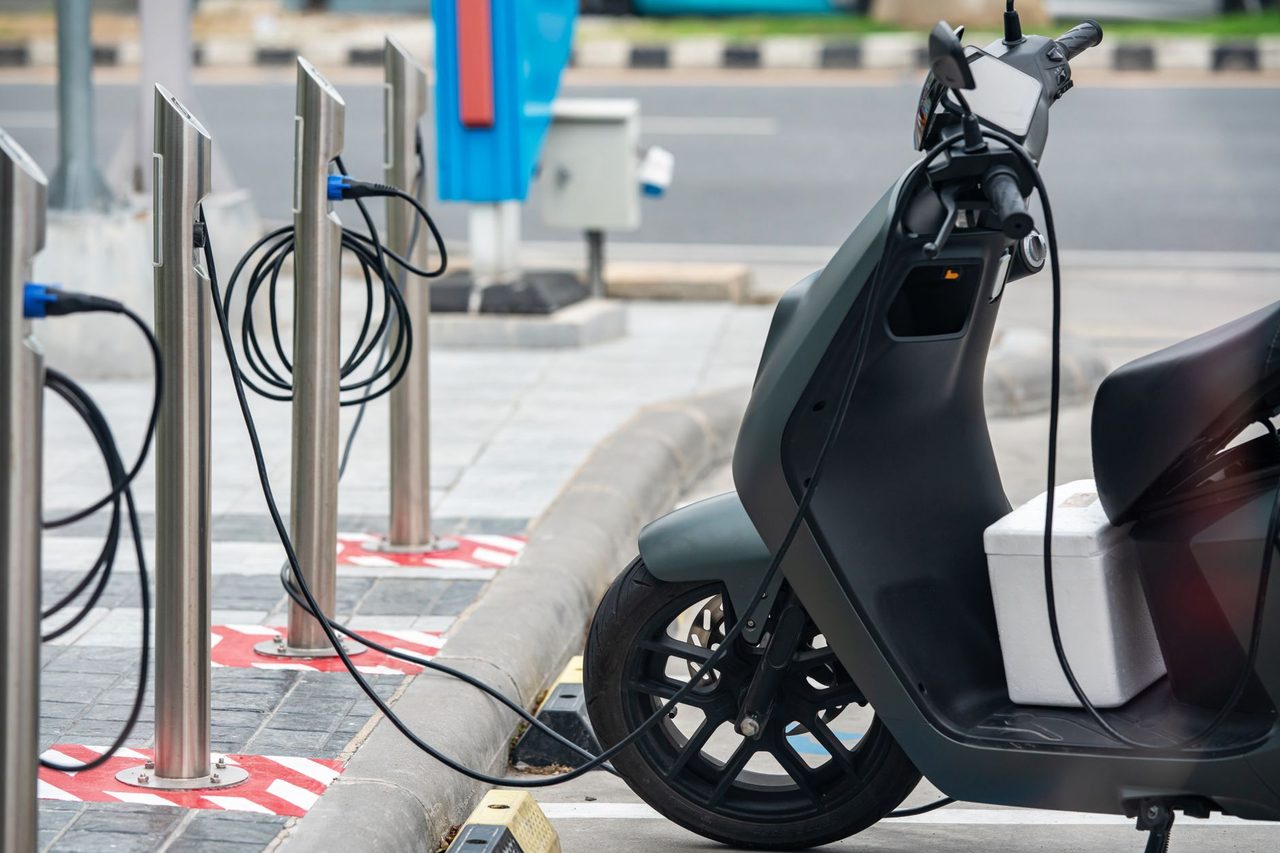
Photo: panumas nikhomkhai on Pexels
India’s battery-swapping market is usually discussed through customer convenience, fleet uptime and charging-speed advantages. In 2026, that view is too narrow. For operators, OEMs, lenders and policymakers, swapping is increasingly a circularity business with direct implications for EPR liabilities, residual-value capture, second-life deployment and recycling margins.
The strategic question is no longer whether swapping can support e-mobility growth. The sharper question is whether a swapping network can be designed so that batteries remain traceable, monetisable and financeable from first deployment to end-of-life. In practical terms, the winners will be the platforms that can control data, standardise pack intake, route assets between first-life and second-life channels, and contract recycling recovery in a way that reduces total lifecycle cost.
For Indian C&I fleet users, logistics companies, last-mile operators, two- and three-wheeler OEMs, urban utilities and lenders, this matters now because battery costs still dominate EV economics, while EPR enforcement is becoming more operationally real. A swapping operator that manages circular flows well can improve asset utilisation, reduce replacement cost volatility and present a more bankable operating model. A poorly structured operator can end up with opaque battery health data, higher compliance costs and stranded inventory.
Why battery swapping is now a circularity infrastructure play
India’s EV growth in 2026 is concentrated in commercial two-wheelers, three-wheelers, small urban fleets and selected delivery corridors where high daily utilisation favours swapping. In these segments, battery ownership is frequently separated from vehicle ownership. That changes everything from a circularity perspective.
Because the operator often owns or controls the battery pool, it also controls:
- serialised asset tracking
- charging history and usage intensity data
- swap frequency and route behaviour
- withdrawal criteria for weak packs
- handoff into refurbishment, repurposing or recycling
This is materially different from dispersed retail ownership. In a dispersed market, collection rates are uncertain and pack histories are incomplete. In a swapping network, the operator can create a closed-loop chain by design. That makes swapping one of the strongest pathways for industrial-scale battery circularity in India.
There is also a unit-economics angle. For many operators, battery depreciation and replacement reserve can represent 25% to 40% of lifecycle service cost depending on chemistry, utilisation, financing terms and salvage assumptions. A modest improvement in residual-value realisation can therefore move EBITDA more than a small increase in swap tariff.
Illustratively, if a two- or three-wheeler swapping operator procures LFP packs at Rs 55,000 to Rs 90,000 per pack equivalent, and improves end-of-first-life realisation from 8% to 18% of initial value through better grading and downstream contracts, that can recover an additional Rs 5,500 to Rs 9,000 per pack. Across a 20,000-pack network, the impact is not trivial.
Residual value is the core financial lever, not a side assumption
Most Indian swapping business plans still underwrite battery assets with simplistic depreciation curves. In reality, residual value in 2026 depends on four operational variables:
- state-of-health at withdrawal
- chemistry and form factor standardisation
- availability of authenticated performance data
- certainty of second-life or recycling offtake
Without those, salvage values are usually discounted aggressively by lenders and investors. In many underwriting models, lenders assume near-scrap outcomes unless there is documented routing into reuse or recycling backed by contracts.
A practical framework for battery residual value in swapping looks like this:
- Grade A withdrawal: packs with sufficient health for direct redeployment in lower-duty mobility or controlled stationary pilots
- Grade B withdrawal: packs suitable for module-level refurbishment or second-life stationary aggregation
- Grade C withdrawal: packs sent directly to recycling based on safety, degradation or economics
Indicative 2026 value bands can vary significantly by chemistry and documentation quality. For a standardised LFP swap pack, a documented and test-verified Grade B pathway may deliver 12% to 22% of original pack value equivalent, while direct recycling realisation may sit closer to 5% to 12% depending on recoverable materials, freight, pre-processing losses and recycler commercial terms. NMC-based packs can show different economics due to metal value, but collection, handling and safety costs can also be higher.
The point is simple: residual value is not “market luck”. It is engineered through pack design, data quality and channel strategy. This is where capabilities such as End-of-life fleet audits and Reverse logistics become commercially relevant rather than merely compliance-oriented.
EPR strategy for battery-swapping operators is operational, not just legal
Under India’s Battery Waste Management Rules and the evolving compliance architecture around traceability, producer obligations and registered recyclers, EPR for swap-linked batteries needs to be mapped contractually from day one. In practice, many operators still leave ambiguity between OEM, battery lessor, platform operator and fleet aggregator.
That ambiguity creates three immediate problems:
- duplicate or disputed compliance responsibility
- weak collection and return controls for damaged or retired packs
- uncertain recycling credit and documentation flows
In 2026, operators need a clear answer to three questions.
First, who is the obligated entity for each battery cohort? This should be explicit in OEM supply agreements, battery leasing contracts and user terms.
Second, who controls the digital evidence chain? Swap records, battery IDs, service logs, retirement triggers and recycler receipts need to be reconciled in one auditable system.
Third, who captures the economic value from compliance-linked recovery? Depending on the contract structure, the recycler, producer or operator may seek that upside.
For Indian platforms scaling across multiple states, weak EPR architecture can add meaningful cost. Non-standard collection, disputed ownership and delayed retirements can raise reverse-logistics and handling cost by Rs 1,500 to Rs 4,000 per pack in fragmented networks. That is before considering the cost of temporary hazardous storage, failed recoveries or rejected recycler batches.
By contrast, a structured EPR compliance approach can reduce leakage and improve channel control. Operators that serialise every pack, define chain-of-custody procedures and pre-negotiate recycler service levels are in a better position to manage total lifecycle economics. This is where Growthifye’s EPR compliance and Circularity reporting capabilities align well with bankability and operating performance.
The hidden bottleneck: standardisation, diagnostics and retirement triggers
The circularity case for swapping weakens quickly when battery fleets are too heterogeneous. Many networks in India still carry multiple form factors, connector types, BMS variants and chemistry mixes due to OEM partnerships and phased procurement. That may help market expansion, but it complicates every downstream circular step.
Heterogeneity affects:
- swap-station inventory planning
- SOH benchmarking across cohorts
- refurbishment economics
- second-life aggregation feasibility
- recycler pre-processing efficiency
A circularly efficient swapping business therefore needs standardisation discipline. This does not necessarily mean one single pack architecture across all use cases. But it does mean limiting avoidable variation and building diagnostics around defined cohorts.
Retirement triggers are equally important. Too many operators withdraw packs either too late, after safety and customer-experience issues emerge, or too early, sacrificing first-life value. In 2026, mature operators are moving toward data-based retirement protocols combining:
- usable capacity thresholds
- internal resistance trends
- thermal event history
- cycle count adjusted for depth-of-discharge patterns
- field failure rates by cohort
For urban commercial fleets, first-life withdrawal for swap packs may occur around 70% to 80% SOH depending on duty cycle, service commitments and economics of replacement. But that threshold should not be generic. It should be linked to service-level agreements, route profile and expected second-life value.
This is one area where Second-life battery applications should be considered before the first battery is even deployed. If a pack format has no credible reuse outlet, the operator may need a different depreciation reserve and recycler arrangement from the start.
Second-life routing can improve economics, but only in narrow use cases
There is enthusiasm around second-life, but the Indian market in 2026 still requires realism. Not every withdrawn swap battery should go into stationary storage. Testing, repacking, fire-safety design, warranty allocation and system integration costs can erase the apparent value quickly.
Where second-life may work best from swap networks:
- small behind-the-meter backup systems for telecom, retail and light commercial loads
- low-C-rate applications with limited cycling intensity
- DC-coupled pilot systems with strict monitoring controls
- narrow use cases where footprint is less constrained and replacement tolerance is higher
Where second-life is often overstated:
- high-availability commercial BESS with strict performance guarantees
- utility-scale applications requiring standardised large-format blocks
- projects where insurance and warranty support are weak
Indicatively, repurposing costs for small-format mobility batteries can range from Rs 3,000 to Rs 10,000 per kWh equivalent depending on testing depth, module sorting, enclosure redesign, controls and safety systems. If the resulting second-life asset cannot secure a strong tariff or capacity value, direct recycling may be the superior option.
This is why operators should avoid assuming second-life upside across 100% of retired inventory. In lender models, a conservative filtered approach is better: allocate only a portion of expected retirements to reuse, and tie that assumption to actual test yields and signed offtake channels.
What lenders and investors will look for in 2026
Financiers are no longer satisfied with headline EV growth or station-count expansion. For a swap platform seeking debt or structured capital, circularity controls increasingly influence credit quality because they affect both operating risk and recovery value.
Key diligence questions include:
- Is battery ownership unambiguous across the network?
- Are SOH and event data independently auditable?
- Are retirement and quarantine protocols documented?
- Is there a contracted recycler or reuse partner with capacity and compliance track record?
- Does the model use realistic salvage assumptions by battery cohort?
- How are EPR costs and benefits allocated?
- Are damaged-pack transport and storage procedures compliant and insured?
A lender will also examine whether swap revenues are carrying the business alone, or whether the operator is relying on unsupported residual-value assumptions to make debt-service metrics work. If DSCR is viable only because salvage is modelled at aggressive levels, the structure is weak.
For sponsors, the implication is clear. Circularity planning should be embedded in procurement, data architecture and contracts, not added after scale-up. A more financeable platform generally has:
- standardised battery cohorts
- auditable performance data at pack level
- pre-agreed recycler and logistics arrangements
- conservative residual-value assumptions with upside-sharing mechanisms
- a documented EPR and chain-of-custody process
A practical playbook for Indian swapping networks
For operators, OEMs and fleet platforms building or scaling in 2026, the circularity playbook is straightforward.
Start with ownership and obligation mapping. Every battery batch should have clear assignment of title, operating control, maintenance responsibility and EPR obligation.
Standardise where possible. Reducing form-factor and BMS complexity pays off across service, retirement and recycling.
Build data for bankability. Capture cycle behaviour, thermal history, capacity fade and fault events in a structured, retrievable format. This data is the bridge between first-life monetisation and end-of-life value.
Define retirement lanes early. Not every battery needs the same end path. Create clear routing criteria for redeployment, second-life testing and recycling.
Contract downstream capacity. Do not wait for inventory to pile up. Secure recycler throughput, pricing formulas, turnaround times and documentation standards in advance.
Model conservatively. Use base-case salvage values that reflect real Indian recovery conditions, logistics costs and test yields. Treat second-life as selective upside, not a universal assumption.
For policymakers and utilities, battery swapping also deserves to be recognised as a structured collection and circularity mechanism, not just an EV service model. Networks with high traceability and controlled asset ownership can materially improve collection efficiency and compliance outcomes compared with fragmented ownership models.
For C&I users and fleet buyers, the due-diligence lens should broaden beyond swap convenience and energy price. Ask whether the operator has a credible plan for pack replacement, retirement, EPR and circular recovery. Those factors affect long-term tariff stability and service reliability.
India’s battery-swapping sector in 2026 sits at an important transition point. The next phase of value creation will come less from adding stations and more from managing battery assets through their full lifecycle. Operators that treat circularity as core infrastructure can lower lifecycle cost, improve compliance readiness and become easier to finance. Operators that treat end-of-life as an afterthought will likely see margin pressure rise as fleets age and compliance expectations tighten.
If your organisation is evaluating battery-swapping economics, lifecycle contracting or downstream circularity strategy, contact Growthifye’s advisory desk. We help clients structure practical pathways across Module & battery recycling, EPR compliance, reverse-logistics design and circular-value-chain execution.
Explore Growthifye's related capabilities
This analysis connects directly to our advisory practice: End-of-life fleet audits · Second-life battery applications · Module & battery recycling · EPR compliance.
About the author

Founder & CEO, Growthifye — engineering and financing India's clean-energy transition.
Want this analysis applied to your project?
Talk to our team