Banking in Open Access PPAs India 2026: Charges, Caps and Corporate Strategy
By Sudarshan Karweer · sudarshan@growthifye.com · +91 84510 99371 (Call / WhatsApp) · 2026-09-12

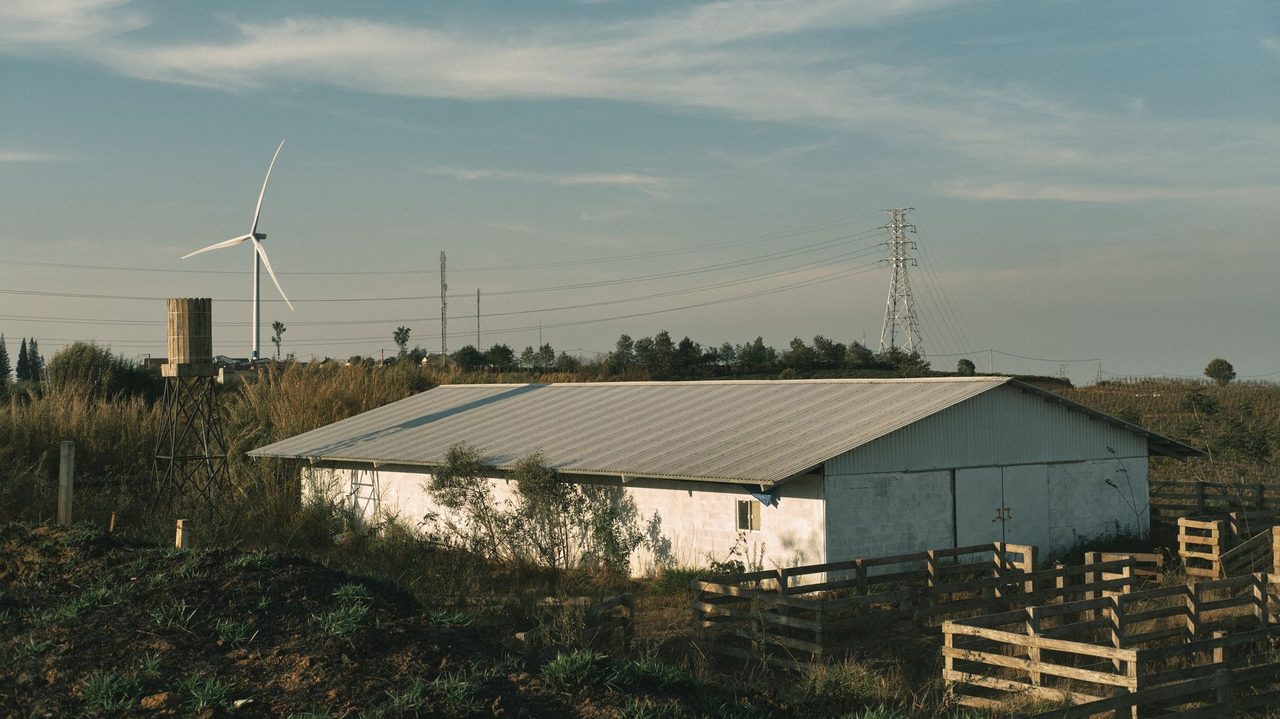
Photo: "Beyond India by Shubham Thakur" on Pexels
Open access banking in India has shifted from a minor clause to a first-order commercial variable for corporate renewable procurement. In 2026, many commercial and industrial buyers are discovering that the difference between a viable and non-viable solar or wind open access transaction is not only the headline PPA tariff, but the exact banking framework applied by the state regulator, the discom and the SLDC. Banking percentages, monthly drawdown windows, banking charges, settlement periods and treatment of unutilised units now have a direct effect on landed cost, profile matching and contract design.
This article looks specifically at banking in open access and corporate PPAs in India in 2026. It does not revisit the broader third-party versus group captive comparison or generic landed-cost waterfalls. Instead, it focuses on how banking mechanics alter economics, risk allocation and sourcing strategy for C&I consumers, developers and lenders.
Why banking matters more in 2026
For most as-generated renewable PPAs, generation and consumption do not perfectly coincide. Solar-heavy portfolios oversupply during midday and under-supply during evening peaks. Wind can generate strongly during monsoon nights when some industrial loads are lower. Banking allows surplus injected energy to be adjusted against later consumption, reducing forced sale at low rates and improving effective renewable utilisation.
In practice, the value of banking in 2026 has increased for five reasons:
- Several states have tightened banking windows from annual to monthly settlement.
- Banking charges have moved upward in multiple jurisdictions, often expressed as a percentage energy retention or a paise per kWh levy.
- Time-of-day differentiated consumption has become more relevant as C&I consumers try to reduce peak discom procurement.
- Hybrid and FDRE procurement is growing, but many buyers still rely on plain as-generated solar or wind structures where banking remains central.
- Discom scrutiny of open access transactions has intensified, especially where banking effectively shifts low-value daytime energy into high-value evening consumption.
A 20 MW solar OA project supplying a manufacturing unit with 35-40% daytime coincidence can look attractive at a base PPA tariff of Rs 3.10-3.40/kWh. But if banking is capped tightly, settled monthly and charged at 8-10%, the delivered savings versus HT tariff may compress materially. In some cases, a seemingly cheap tariff becomes more expensive than a hybrid or partial RTC alternative once banking losses are modelled correctly.
What banking means in an open access PPA
Banking allows surplus energy injected into the grid in one time block or billing period to be set off against consumption in a later period, subject to applicable regulations. In the Indian OA context, four elements must be checked with precision:
- Eligibility: whether banking is allowed for third-party sale, captive or group captive users, and whether cross-state or only intra-state projects qualify.
- Quantum: the percentage of injected energy that can be banked, if any cap applies.
- Period: whether adjustment is allowed within the same day, same month or financial year.
- Charges and settlement: what the consumer pays for banking and how unutilised banked energy is treated at the end of the settlement cycle.
These points sound administrative, but they drive economics. For example, if a state permits only same-month banking with end-of-month deemed lapse or low-rate settlement, a consumer with weekend shutdowns or seasonal load swings may lose a significant part of solar output. Conversely, where monthly banking exists with reasonable carry-forward and manageable charges, the same project can achieve a much higher effective self-utilisation rate.
Key regulatory patterns seen across states in 2026
There is no single national banking regime for all corporate OA transactions. Banking remains heavily state-specific despite the broader push toward market access and renewable procurement reforms. In 2026, market participants generally see four broad banking patterns across Indian states.
1. Restrictive banking states
These states either disallow banking for certain OA categories, provide only narrow banking rights, or impose high charges and unfavourable settlement. Typical characteristics include:
- Banking only up to one billing cycle
- No carry-forward beyond month-end
- Banking charge expressed as 8-12% energy deduction or equivalent
- Unutilised energy compensated at pooled purchase cost, APPC-like rates or not materially compensated
For solar-led C&I buyers, these states often punish low coincidence procurement unless the consumer has strong daytime load.
2. Moderate banking states
These states allow monthly banking with some flexibility and clearer adjustment procedures. Typical structures include:
- Monthly banking allowed subject to availability
- Banking charge around 2-8%
- Adjustment against energy charges but not all fixed components
- Settlement of unutilised banked units at a specified avoided-cost or average-power-purchase basis
Such states remain workable for industrial users with stable weekday load and decent daytime demand.
3. Favourable banking states for intra-state C&I
Some states continue to offer relatively practical banking frameworks for specific technologies or user classes. Features may include:
- Broader monthly adjustment rights
- Lower banking deduction
- Relatively transparent SLDC/discom processes
- Better alignment between billing and scheduling treatment
These states continue to attract developer pipelines for captive and third-party industrial supply, although policy durability remains a concern.
4. Banking-lite or no-banking strategy states
In several markets, participants are adapting by not relying on banking at all. Instead, they design procurement around high coincidence, behind-the-meter optimisation, hybrid shaping or market-backed balancing. In these states, the PPA is structured to minimise dependence on banked units rather than fight the regulator’s direction of travel.
The economics: how banking changes landed cost
Corporate buyers often focus on the generation tariff and visible open access charges such as wheeling, transmission and cross-subsidy surcharge. Banking is sometimes treated as a secondary line item. That is a mistake.
Consider a simplified 2026 example for an intra-state 10 MW solar open access project:
- PPA tariff: Rs 3.20/kWh
- Transmission and wheeling with losses converted to cost impact: Rs 0.45/kWh delivered equivalent
- SLDC and other OA administration impact: Rs 0.05/kWh
- CSS and AS, where applicable after exemptions or category treatment: Rs 1.20/kWh
- Banking charge: 8% energy deduction
- Coincidence of generation with consumer load before banking: 42%
- Additional useful utilisation enabled by banking: 38%
- Residual surplus settled at low compensation: 20%
Without proper banking, the consumer may effectively use only 42% of generation in valuable time periods. With banking, useful utilisation may rise to 80%, but only after paying the energy retention cost and suffering month-end spill. Once this is modelled, the effective landed cost of usable renewable energy can increase by Rs 0.20-0.60/kWh compared to a simplistic model that assumes full adjustment.
Now compare that to a hybrid project quoted at Rs 4.25-4.60/kWh with better profile matching and lower spill. On paper, solar looks cheaper. After banking-adjusted utilisation is applied, the hybrid may produce lower delivered cost per effectively consumed kWh.
That is why serious buyers now require hour-by-hour simulation using at least 12 months of interval demand data. This is where Demand & ToD analysis and Landed-cost management become critical. A monthly average energy model is no longer good enough for 2026 approvals and procurement decisions.
The most important banking clauses to negotiate in PPAs and transaction documents
Banking is partly regulatory, but commercial documents still matter. Buyers and developers should not assume that the state order alone protects them. The PPA, energy account assumptions, scheduling protocol and change-in-law provisions must clearly allocate banking-related risk.
Key clauses to focus on include:
- Assumed banking framework at bid stage
- Tariff reopener or economic adjustment if banking rules worsen materially
- Deemed generation or relief events where evacuation is available but injection/accounting is constrained administratively
- Settlement treatment for curtailed or stranded surplus units
- Scheduling responsibility and revision rights
- Metering hierarchy if discom, SLDC and generator accounts differ
- Force majeure versus regulatory change treatment for banking withdrawal
Developers often seek to pass all banking risk to the offtaker, especially in third-party sale models. C&I buyers should resist blanket language that says all changes in applicable OA regulations are buyer risk without qualification. If the project viability is premised on a stated banking assumption, then regulatory deterioration should trigger renegotiation mechanics, pass-through caps or at least transparent cost-sharing.
From a lender perspective, banking volatility now influences debt sizing and DSCR comfort. If the project’s cash flows rely on a utilisation assumption that is achievable only under current banking rules, lenders will increasingly apply haircuts unless robust contractual protections exist.
Banking strategy by consumer type
Not all C&I consumers should value banking the same way. The right sourcing strategy depends on load shape, operating calendar and tariff benchmark.
Continuous-process industries
Sectors such as metals, chemicals, foundries and large process manufacturing with relatively flat 24x7 demand can often absorb a large share of as-generated renewable output. For them:
- Banking is useful but not always the primary value driver
- Wind or solar-wind hybrid can reduce residual mismatch
- Monthly banking may be sufficient if load is steady
- Night consumption may justify wind-heavy portfolios
Daytime industrial consumers
Textiles, food processing and some engineering facilities with high day-shift operations may still benefit strongly from solar OA. For them:
- Banking supports weekend and holiday surplus adjustment
- Monthly end-spill can be manageable if plant load factor is stable
- Good scheduling discipline can materially improve value capture
Commercial campuses and data-linked consumers
Office parks, IT campuses and certain digital infrastructure loads often have very different daily and seasonal patterns. For them:
- Pure as-generated solar with weak banking can underperform
- Hybrid, storage-backed or diversified supply blocks may be better
- Time-of-day retail tariff comparison is essential before signing
Multi-site corporate buyers
Enterprises with multiple HT connections in one state should explore whether load aggregation, allocation design or entity-level sourcing can improve use of banked energy, subject to regulatory feasibility. This is a Sourcing strategy question, not just a tariff question.
What buyers should do before signing in 2026
A practical pre-signing checklist for corporate buyers should include the following:
- Map 15-minute demand data for at least the last 12 months, preferably 24 months.
- Build season-wise coincidence analysis for solar, wind or hybrid generation profiles.
- Identify state-specific banking rules from the latest effective regulations, orders and utility procedures, not only old market assumptions.
- Convert banking deductions, losses and spill into an effective paise per consumed kWh impact.
- Test downside scenarios: no banking, lower cap, higher charge, monthly spill, delayed approvals.
- Compare as-generated OA with hybrid OA, partial contracted demand retention and even shorter-tenor supply structures.
- Align legal drafting with regulatory assumptions and include a clear change-in-law matrix.
- Check whether the economics work after RPO treatment, attribute ownership and any balancing cost, not just base energy rate.
Many buyers still ask for bids using only annual consumption and sanctioned demand. That is insufficient. The right process should include interval data diagnostics, state charge verification and commercial sensitivity analysis before any LOI is issued. Competitive developer selection should be based on delivered-value modelling, not merely the lowest quoted tariff.
Policy direction: where banking may go next
The broad policy direction in India suggests that unrestricted banking for open access users is unlikely to expand significantly. Regulators and discoms increasingly view generous banking as a commercial subsidy from the grid, especially when daytime renewable injection is later offset against higher-value evening consumption. As more solar capacity is added and duck-curve effects intensify, banking terms may tighten further or shift toward more granular settlement.
That does not mean OA is becoming unworkable. It means procurement must evolve. In 2026 and beyond, we expect the market to respond in four ways:
- More hybrid and shaped-supply products instead of plain standalone solar
- Greater use of merchant balancing or exchange-linked top-up structures
- Stronger focus on load matching and site-level demand redesign
- More sophisticated PPA structuring & negotiation around regulatory drift
For policymakers, the balancing challenge is real. Overly restrictive banking can discourage efficient renewable procurement by creditworthy C&I consumers. Overly generous banking can transfer system costs to discoms and non-participating consumers. The most durable framework is likely one that allows transparent, priced banking linked to actual system cost rather than ad hoc administrative restriction.
For utilities, clarity matters as much as stringency. Unclear settlement logic, inconsistent energy accounting and procedural delays create more market friction than a plainly stated charge that participants can price in.
Bottom line for 2026 corporate PPA decisions
In India’s 2026 open access market, banking should be treated as a core design variable alongside tariff, CSS, wheeling and approval timelines. The right question is no longer, “Is the PPA tariff cheap?” It is, “What is the effective delivered cost after real banking rules, actual load shape and probable regulatory drift?”
Buyers with strong daytime coincidence may still unlock substantial savings from straightforward solar OA. Buyers with peaky, seasonal or multi-shift loads may need hybridisation, tighter scheduling or alternate contract structures. Developers that can present transparent banking-adjusted economics will win better counterparties and stronger lender confidence.
If your organisation is evaluating open access or corporate PPA options, contact Growthifye’s advisory desk for a practical review of banking risk, state-specific viability and transaction design.
Explore Growthifye's related capabilities
This analysis connects directly to our advisory practice: Demand & ToD analysis · Sourcing strategy · Competitive developer selection · PPA structuring & negotiation.
About the author

Chief Executive Officer, Growthifye — With over 23 years in management consulting, Sudarshan has taken businesses from concept to scale — building and scaling new-age digital and energy businesses.
- 23+ years in management consulting
- EY alumnus
- Led large-scale BESS programmes, capital raises and advisory mandates
Want this analysis applied to your project?
Talk to our team