VGF for BESS in India 2026: Project Economics, Bid Strategy and Bankability
By Sudarshan Karweer · sudarshan@growthifye.com · +91 84510 99371 (Call / WhatsApp) · 2026-09-16

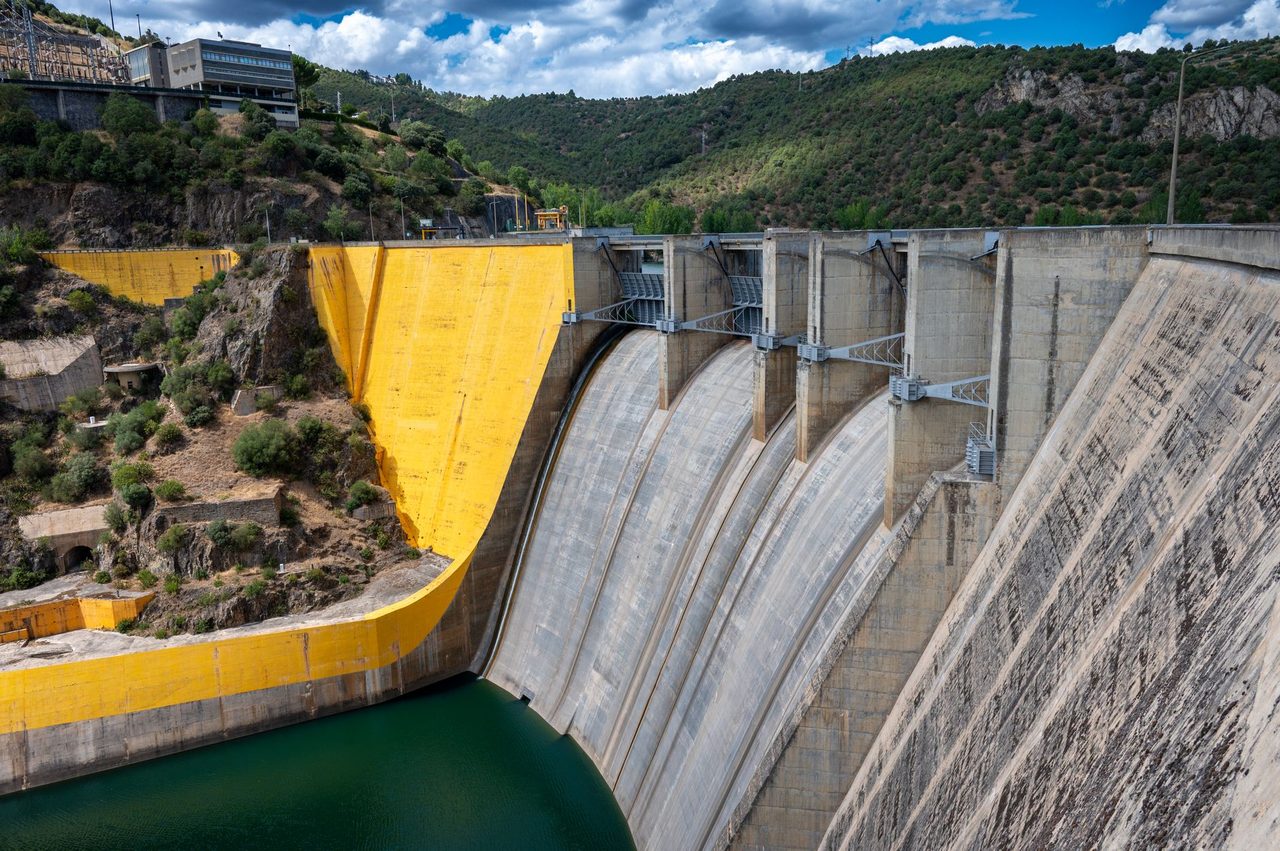
Photo: Willian Justen de Vasconcellos on Pexels
Battery energy storage in India has moved from pilot-scale curiosity to a central procurement category for utilities, system planners and hybrid developers. In 2026, the conversation is no longer whether storage is needed. The practical question is how to procure it at tariffs and risk allocations that are financeable. In that discussion, viability gap funding, or VGF, has become one of the most important policy tools.
For Indian developers, lenders, DISCOMs, C&I buyers and policymakers, VGF is not merely a subsidy line item. It changes bid behaviour, delivered tariffs, debt sizing, reserve requirements and ultimately whether a BESS project can survive real operating conditions after commissioning. That is especially true in a market where storage revenues are still shaped by evolving ancillary-service rules, state payment risk, augmentation needs and dispatch uncertainty.
This article looks at how VGF for BESS works in India in 2026, where it helps, where it can distort bidding, and what lenders and sponsors should diligence before calling a project bankable.
Why VGF matters for BESS in India in 2026
Standalone and co-located battery storage still face a basic problem in India: the grid value of storage is clear, but monetisation is often incomplete or fragmented. A utility may need peak shaving, renewable integration, ramp support, congestion relief and reserve capability from the same asset, yet the tender may pay only for one contracted service. That creates a gap between system value and contracted revenue.
VGF is intended to bridge part of that gap by reducing upfront capital burden. In 2026, this matters because turnkey BESS capex, while lower than two years ago, is still substantial once one includes:
- battery containers and cells
- PCS and transformers
- EMS/SCADA and cybersecurity stack
- land and civil works
- evacuation and interconnection facilities
- fire suppression and safety systems
- spares and O&M set-up
- IDC, contingency and taxes
For utility-scale projects in India, all-in installed costs can still vary widely depending on duration, cell chemistry, import dependence, HVAC philosophy, duty structure, warranty terms and augmentation assumptions. A 2-hour system may land in a materially different capex band than a 4-hour system even before financing costs are considered. In practical bid models in 2026, developers often evaluate project economics over 12 to 15 years with explicit degradation and augmentation modelling rather than assuming flat usable capacity.
When VGF covers a portion of capex, annual fixed cost recovery falls. That can lower quoted storage tariffs, improve minimum DSCR, or both. But the real impact depends on how the tender defines output obligations, availability, charging energy responsibility, penalties, and pass-throughs.
How VGF changes storage economics in practice
The simplest way to think about VGF is as a reduction in sponsor-plus-debt funding required at COD. If a project with an all-in capex of Rs 220 crore for a 100 MW / 200 MWh system receives 20% effective support on eligible capex, the funded base may reduce by roughly Rs 44 crore, subject to scheme rules and disbursement conditions. That reduction can materially alter levelised storage charges.
In Indian bid models, the tariff impact of VGF is driven by five variables:
- eligible capex definition
- timing of VGF disbursement
- debt sizing and lender treatment of subsidy receipts
- performance obligations linked to subsidy retention
- augmentation capex not covered by VGF
A common modelling mistake is to treat VGF as a clean reduction in project cost without adjusting lender assumptions. In reality, lenders may haircut the benefit if disbursement is back-ended, conditional, exposed to compliance risk, or if subsidy clawback provisions are poorly understood. If VGF is received after COD milestones, bridge financing costs must be captured. If disbursement depends on verified performance over time, sponsors need liquidity buffers.
The second mistake is to under-model augmentation. Battery systems do not deliver nameplate energy indefinitely. Depending on warranty structure and dispatch intensity, sponsors may need augmentation in year 5, 6 or 7 to maintain contracted energy output. If VGF lowers initial capex but the contract effectively pushes augmentation risk entirely onto the developer, some apparent tariff competitiveness may be illusory.
For illustration, consider a stylised 2-hour utility BESS with the following broad assumptions:
- contracted term: 12 years
- round-trip efficiency assumption in the financial model: 86% to 89% AC-across-life, depending on augmentation
- debt tenure: 10 to 12 years
- interest cost: low double digits for many projects, depending on sponsor strength and offtaker profile
- annual availability requirement: often high, with liquidated damages for shortfall
- charging energy supplied by buyer or separately contracted by seller
Without VGF, the annual revenue requirement may force quoted tariffs into a range that many utilities still view as expensive relative to short-duration alternatives. With VGF, that tariff can drop enough to clear tenders, but only if dispatch assumptions are realistic and the cell warranty is aligned with use case.
Bid strategy: where aggressive bidding goes wrong
India’s 2026 BESS tenders are increasingly competitive. VGF can intensify that competition by encouraging bidders to extrapolate future capex declines, overstate operational flexibility, or underprice augmentation and replacement costs.
Three bidding errors are now common.
First, sponsors may bid as if every cycle will be economically monetised. That is dangerous. A utility-contracted BESS may not be dispatched exactly as the ideal financial model assumes. Charging windows may compress. Grid outages may reduce throughput. Must-run renewable behaviour may change local charging economics. Auxiliary loads in hot climates may be higher than desktop assumptions.
Second, bidders often underweight payment risk. A low tariff supported by VGF still fails if receivables stretch materially. For projects with state utility exposure, payment security structure remains central. Letter of credit mechanics, escrow support, rebate-for-early-payment provisions and termination compensation need the same scrutiny as the storage asset itself.
Third, some bidders quote based on beginning-of-life capability while the contract effectively requires near-flat delivered capacity deep into the term. If the technical schedule is aggressive and augmentation under-budgeted, the project may win the tender and still destroy equity returns later.
A serious bid strategy in 2026 should test at least the following downside cases:
- lower actual dispatch than base case
- higher auxiliary consumption in summer conditions
- delayed charging energy availability
- slower VGF reimbursement
- one-year augmentation delay or cost escalation
- inverter or HVAC replacement capex above OEM estimate
- tighter degradation warranty claim thresholds than expected
- payment delays from the offtaker
Developers who win on tariff alone but fail these cases may find themselves unable to reach financial close on acceptable terms.
What lenders will ask before calling a VGF-backed BESS bankable
Lenders in India are more comfortable with storage in 2026 than they were in 2024, but they are still selective. A VGF-backed BESS project will typically face diligence across technical, contractual and policy dimensions.
From a lender’s perspective, the key questions are straightforward.
Is the contracted revenue fixed enough to support debt service, or is it too dependent on uncertain dispatch or market revenues?
Is the VGF disbursement unconditional after clearly defined milestones, or is there meaningful policy/process uncertainty?
Can the project maintain contracted output with prudent augmentation, and is that augmentation fully budgeted in the model?
How robust is the warranty package when translated into lender cash flow language rather than OEM brochure language?
What happens if the battery underperforms for reasons that are not cleanly covered by liquidated damages?
In 2026, lenders generally prefer projects with:
- central-agency or otherwise stronger offtake counterparties
- transparent charging-energy arrangements
- conservative augmentation assumptions
- proven integrator and EMS capabilities
- well-defined performance testing methodology
- strong payment security and termination compensation
- site and evacuation readiness before major debt drawdown
Debt providers also increasingly examine the interaction between safety compliance and insurability. Fire detection architecture, thermal propagation mitigation, spacing norms, water availability, emergency response protocol and OEM incident history now matter to credit committees. A tariff that looks attractive on paper can become unattractive if insurance exclusions, deductibles or business interruption assumptions are not realistically captured.
Policy and tender design issues policymakers should fix
VGF can accelerate storage deployment, but poor tender design can erase much of its benefit. The most useful policy lesson from recent rounds is that subsidy support works best when the contract structure is simple, measurable and aligned with actual grid needs.
Policymakers and procurers should focus on five design points.
First, define the service clearly. Is the buyer procuring capacity availability, guaranteed discharge during a specified peak window, renewable firming support, or multi-use grid services? Ambiguity creates disputes and defensive pricing.
Second, align technical obligations with battery physics. If contracts demand high availability, high throughput and tight performance guarantees simultaneously, but without compensation for corresponding wear, bidders will either overprice or underbid and suffer later.
Third, standardise treatment of charging energy. Whether charging energy is supplied by the procurer, reimbursed through pass-through, or procured by the developer has major tariff consequences. Inconsistent tender language here remains a major source of avoidable confusion.
Fourth, reduce VGF disbursement uncertainty. Complex claim procedures and slow milestone verification can increase financing cost enough to offset part of the intended support.
Fifth, improve payment security. Even a well-subsidised project is not investable if collections are persistently delayed.
There is also a broader system-planning issue. BESS should not be procured in isolation from transmission constraints, renewable build-out, local load shape and ancillary-service needs. India will get better value if storage procurement is tied more explicitly to locational grid need rather than simply headline MW targets.
Utility, C&I and developer implications in 2026
For utilities, VGF-backed BESS can be an effective way to procure flexibility without accepting the full first-mover cost of storage. But the cheapest quoted tariff is not always the lowest system cost. Utilities should test whether the project can actually deliver at the hours and cycling profile the grid needs.
For C&I consumers, VGF matters indirectly. Subsidised utility-scale storage can influence evening power costs, open-access scheduling strategies and renewable balancing charges over time. Large C&I buyers exploring round-the-clock supply, high-renewable supply portfolios or resilience-led storage should watch how VGF shapes the benchmark tariff for front-of-the-meter storage.
For developers, 2026 is a year when execution discipline matters more than presentation decks. The market is rewarding sponsors who can connect policy interpretation, battery engineering, dispatch modelling and finance documentation into one coherent offer. In storage, those pieces cannot be separated.
A robust development approach should include:
- use-case-specific battery sizing, not generic duration selection
- explicit degradation and augmentation model tied to dispatch profile
- site heat-load and auxiliary-consumption analysis
- interconnection and evacuation diligence before final tariff lock-in
- payment security review and receivables sensitivity
- insurance and safety compliance embedded into capex and O&M budgets
- subsidy disbursement timing built into financing plan
This is where many projects still fail. Teams optimise the initial bid tariff but do not close the loop between technical design and financing covenant compliance. In a VGF-supported market, that gap becomes even more costly because developers may assume the subsidy itself creates bankability. It does not. It only improves the starting point.
The bottom line on VGF for BESS in India
VGF is helping India accelerate battery storage adoption in 2026, and it is materially improving the tariff viability of many projects. But its success depends on disciplined modelling and better contracts, not on subsidy alone.
For developers, the winning strategy is not the lowest nominal bid. It is the lowest bid that still survives degradation reality, augmentation cost, dispatch uncertainty and payment delays.
For lenders, the right approach is to analyse VGF as one component of cash flow strength, not a substitute for credible technical and contractual foundations.
For utilities and policymakers, the next step is to design tenders that pay for the service actually needed, reduce ambiguity on charging energy and subsidy mechanics, and preserve enough project viability for serious long-term investors to stay in the market.
India’s storage build-out will increasingly depend on this balance. If VGF is paired with disciplined tender design and realistic project underwriting, BESS can move from policy-supported procurement to a mature, bankable infrastructure class.
If you are evaluating a VGF-backed BESS project, preparing a bid, or reviewing storage bankability and lender sensitivities, contact Growthifye’s advisory desk for project-specific support.
About the author

Chief Executive Officer, Growthifye — With over 23 years in management consulting, Sudarshan has taken businesses from concept to scale — building and scaling new-age digital and energy businesses.
- 23+ years in management consulting
- EY alumnus
- Led large-scale BESS programmes, capital raises and advisory mandates
Want this analysis applied to your project?
Talk to our team