
Pumped Hydro Storage in India 2026: Project Economics, Siting and Bankability
By Sudarshan Karweer · sudarshan@growthifye.com · +91 84510 99371 (Call / WhatsApp) · 2026-09-17
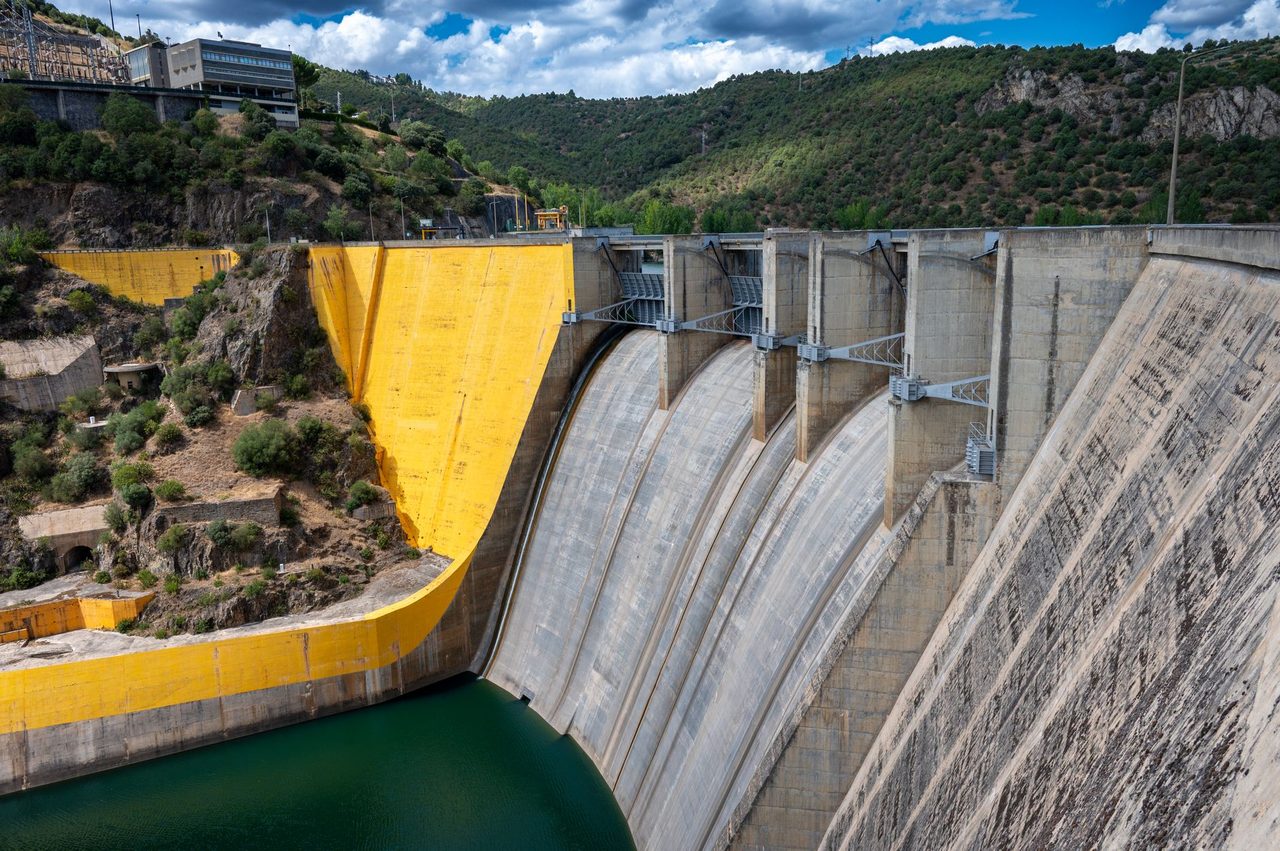
Photo: Christian Palau on Pexels
India’s storage debate in 2026 is heavily focused on batteries, but pumped hydro storage (PHS) is moving from policy talking point to a credible long-duration asset class. For utilities managing evening ramps, for developers building FDRE and RTC portfolios, and for lenders looking at duration risk beyond 2–4 hour batteries, pumped hydro deserves a sharper commercial lens.
Unlike battery energy storage systems, PHS is not a modular procurement exercise. It is a civil, hydrology, permitting and transmission project wrapped around an energy arbitrage and capacity-value case. That means the biggest mistakes happen before financing: weak site screening, optimistic round-trip assumptions, underpriced geological risk, poor monsoon operating assumptions, and tariff models that ignore fixed-cost recovery.
This article looks at pumped hydro in India in 2026 from a practitioner’s perspective: where the economics work, what typical capex and tariff ranges look like, how developers should evaluate sites, what DISCOMs and offtakers should ask for, and why bankability depends less on headline storage duration and more on execution discipline.
Why pumped hydro is back in India’s 2026 storage mix
India’s power system now faces three parallel realities:
- Solar is abundant and cheap in energy terms, especially in midday hours.
- Evening peak firmness is increasingly scarce and expensive.
- Multi-hour balancing needs are growing as renewable penetration rises across states.
In this context, PHS is attractive for five reasons.
First, it offers longer duration than many battery tenders. While most battery procurements in India still cluster around 2-hour and 4-hour discharge windows, pumped hydro can be designed for 6, 8, 10 or even 12 hours depending on reservoir size, hydraulic head and turbine configuration.
Second, asset life is materially longer. Electro-mechanical components need refurbishment over time, but a well-executed PHS plant can operate over several decades. For utilities and lenders, that changes residual-value assumptions in a useful way.
Third, imported cell-price volatility matters less. PHS has substantial domestic civil works content and a different supply chain structure than lithium-ion systems.
Fourth, PHS can provide both energy shifting and grid support services if configured and dispatched correctly. That includes peak support, reserve contribution and renewable integration support, subject to market design and scheduling rules.
Fifth, state and central policymakers increasingly view PHS as a strategic complement to battery storage, especially for long-duration balancing and seasonal resilience.
That said, not every proposed project is economically or technically credible. In India, the spread between a good and bad PHS site is much larger than the spread between a good and bad battery EPC package.
Where pumped hydro fits better than BESS
PHS should not be treated as a substitute for every battery use case.
BESS remains stronger where the requirement is:
- Fast response and sub-second performance
- Limited land and fast deployment timelines
- Urban or industrial siting flexibility
- 1–4 hour arbitrage or ancillary-services optimisation
- Modular capacity addition in phases
PHS is better suited where the requirement is:
- 6+ hour shifting capacity
- Daily cycling for evening peak support at utility scale
- Renewable-energy smoothing over longer blocks
- Capacity adequacy support in high-RE states
- Large connected loads with strong evacuation access nearby
In practical Indian terms, PHS becomes especially relevant for:
- State utilities facing deep solar trough-to-peak ramps
- FDRE developers trying to reduce overbuild of wind and solar
- System planners seeking non-fossil peaking alternatives
- Large multi-GW renewable parks with transmission backbone access
A key commercial insight in 2026 is this: PHS usually competes not against standalone solar tariffs, but against the delivered cost of firmness. That means the benchmark is a composite alternative, such as solar plus battery plus overbuild, or thermal balancing cost, or market purchases during peak blocks.
2026 project economics: capex, duration, tariff logic
Indian PHS economics vary sharply by site type, especially between closed-loop and open-loop concepts, brownfield augmentation versus greenfield development, and projects with existing hydro infrastructure versus entirely new civil works.
As a broad 2026 working range, developers and lenders are evaluating utility-scale PHS capex around Rs 7 crore/MW to Rs 11 crore/MW for better-quality sites, with difficult terrain, tunnelling complexity, water-management infrastructure and remote transmission pushing costs above this range. On an energy-capacity basis, the effective Rs/kWh depends heavily on duration. An 8-hour project naturally looks more competitive than a 4-hour design on an energy basis, but only if the market pays for those extra discharge hours.
Typical variables driving capex include:
- Net hydraulic head and associated civil complexity
- Reservoir construction or adaptation requirement
- Geological conditions and tunnelling risk
- Distance to transmission interconnection
- Land acquisition and rehabilitation obligations
- Water conveyance design and pumping equipment selection
- Environmental and forest clearances
Round-trip efficiency assumptions in Indian models often fall in the 70% to 80% range at plant level, though many early-stage decks still use unrealistic top-end values without accounting for auxiliary load, seasonal operating constraints, part-load behaviour and real dispatch inefficiencies. For conservative underwriting, lenders typically want a more grounded net-delivered efficiency case.
Construction periods are also much longer than BESS. A realistic greenfield PHS timeline can stretch to 4–6 years or more depending on permitting, tunnelling, contracting strategy and transmission readiness. This has major implications for IDC, revenue start date and refinancing assumptions.
How should tariffs be thought about?
PHS rarely works on simple levelised energy cost logic alone. The recovery structure usually needs to reflect a mix of:
- Fixed-cost recovery for large upfront civil and electro-mechanical investment
- Variable operating cost and pumping-energy cost
- Capacity value during peak periods
- Arbitrage spread between charging and discharging windows
- Reliability and firmness value to the offtaker
If charging power comes from low-cost surplus solar or from contracted off-peak energy, the delivered peaking tariff can look competitive versus alternatives. But if charging energy is procured at volatile market prices without a disciplined dispatch strategy, project economics weaken quickly.
In many 2026 scenarios, the relevant question is not “What is the PHS tariff?” but “What is the all-in delivered cost per firm peak unit after charging losses, fixed recovery and dispatch constraints?” That number can vary significantly by state, season and procurement structure.
For developers modelling utility tenders, a useful sanity test is whether the project still clears under lower-than-expected peak spreads, delayed COD and one-year construction slippage. If the answer is no, the base case is too aggressive.
Site selection: the make-or-break factor
For pumped hydro, site selection is the project.
An apparently attractive topographic concept can fail because of one fatal flaw: weak geology, inadequate water assurance, forest diversion complexity, social opposition, difficult access logistics or expensive transmission interconnection.
A serious 2026 site-screening framework should assess at least the following.
- Head potential: Higher net head generally improves output per unit of water and can reduce reservoir size requirements, but may increase civil complexity.
- Reservoir configuration: Existing reservoirs or disturbed sites can improve feasibility. New reservoirs increase cost and permitting burden.
- Geological quality: Rock conditions, tunnelling risk and slope stability are central to capex and schedule certainty.
- Water availability and operating regime: Projects must test not just annual water presence but operational availability through dry months, evaporation impacts and competing water uses.
- Land and habitations: Resettlement exposure can derail schedules and social licence.
- Forest and environmental constraints: Wildlife, protected areas and biodiversity sensitivities can materially alter risk.
- Grid interconnection: Distance to pooling station, substation bay availability and transmission strengthening costs matter as much as reservoir engineering.
- Monsoon operability: Sedimentation, flood management and seasonal access need to be designed into both civil planning and O&M strategy.
India has a long pipeline of announced PHS interest, but only a fraction of sites are likely to mature into bankable projects. Developers who lock up acreage without rigorous screening may create option value on paper, but not financeable assets.
For utilities and offtakers, this means one thing: do not evaluate PHS proposals purely on promised MW and storage hours. Ask for a site-readiness matrix with permits, geology status, land status, transmission pathway and construction critical path.
Contracting models and offtake structures in India
PHS monetisation in India is still evolving, and project bankability depends on matching asset characteristics with contract design.
The most credible routes in 2026 include:
- Long-term utility procurement for storage-backed peak supply
- FDRE or RTC portfolios using PHS as part of firmness architecture
- Capacity-style contracts where availability during specified peak windows is valued explicitly
- Hybrid structures combining fixed availability payments and variable energy settlement
- State utility ownership or quasi-regulated recovery in select cases
A pure merchant PHS case is still difficult in most Indian contexts because long construction periods and high upfront capex need stronger revenue visibility than short-term spreads alone can offer. Merchant upside may support returns, but usually does not replace the need for an anchor contract.
For DISCOMs, key commercial questions include:
- Who bears pumping-energy price risk?
- Is availability measured on MW, MWh or specified discharge block performance?
- What happens in low-hydrology or restricted reservoir-operation periods?
- Are transmission charges and losses fully reflected in delivered-cost comparison?
- Does the tariff structure reward actual peak support or only installed capacity?
For C&I buyers, standalone PHS procurement is less common than utility-scale or portfolio-backed structures, but large industrial groups may still have indirect exposure through round-the-clock renewable contracts, open-access firming products or utility tariffs shaped by storage procurement.
Bankability: what lenders will scrutinise in 2026
Lenders do not underwrite pumped hydro like a battery project, and they should not.
In 2026, the strongest lender concerns typically include:
- Geological uncertainty and quantity variation risk
- Permitting and land-acquisition delays
- Counterparty strength and tariff pass-through logic
- Transmission connectivity certainty at COD
- Water-use rights and competing-use risk
- EPC packaging strategy across civil and electro-mechanical lots
- DSCR resilience under commissioning delay and lower dispatch spreads
- O&M capability for long-life hydro-mechanical assets
One recurring weakness in sponsor models is overconfidence on schedule. A 12- to 18-month delay can materially change project IRR because of higher IDC, deferred revenue and covenant pressure. Financing structures should stress-test this explicitly.
Another issue is performance definition. Battery projects usually come with clearer degradation and augmentation frameworks. PHS needs equal rigour on guaranteed output, pumping consumption, start-stop flexibility, outage assumptions and seasonal restrictions.
From a lender’s perspective, the best projects tend to have:
- Advanced site investigation before full financial commitment
- Conservative geology and hydrology assumptions
- Clearly allocated EPC interface risk
- Transmission planning aligned with the plant timeline
- Revenue contracts that recognise capacity value, not just energy volume
- Sponsors with hydro, tunnelling or major-infrastructure execution experience
What policymakers and developers should do next
If India wants pumped hydro to become a serious complement to BESS rather than a cycle of MoUs and delayed projects, policy and project development discipline both need to improve.
For policymakers:
- Standardise procurement frameworks that value long-duration storage explicitly
- Clarify scheduling, dispatch and settlement treatment for storage-backed supply
- Speed up coordinated approvals across water, environment, forest and transmission agencies
- Improve transparency on identified potential sites and their real readiness levels
- Support transmission planning around credible storage clusters
For developers:
- Start with ruthless site filtering, not capacity announcements
- Build tariff models around delivered peak value, not generic LCOE comparisons
- Stress-test pumping-energy cost and spread compression
- Engage lenders early on civil-risk allocation and permit critical path
- Avoid assuming all storage hours are equally monetisable
For DISCOMs and utilities:
- Compare PHS against alternatives on delivered firmness cost, not standalone energy price
- Demand detailed site, schedule and interface-risk disclosure in bids
- Structure contracts that reward availability when the grid needs it most
The biggest takeaway for 2026 is simple. Pumped hydro can become one of India’s most important long-duration storage options, but only where project design respects physical reality and market structure. The winning projects will not be the ones with the largest announced MW, but the ones with credible geology, disciplined contracting, realistic pumping economics and financeable offtake.
If your team is evaluating a pumped hydro opportunity, storage procurement strategy or firm-power pathway in India, contact Growthifye’s advisory desk for project-screening, techno-commercial review and bankability support.
About the author

Chief Executive Officer, Growthifye — With over 23 years in management consulting, Sudarshan has taken businesses from concept to scale — building and scaling new-age digital and energy businesses.
- 23+ years in management consulting
- EY alumnus
- Led large-scale BESS programmes, capital raises and advisory mandates
Want this analysis applied to your project?
Talk to our team

