Transmission Losses for RE Evacuation in India 2026: ISTS Charges, Design and Yield
By Sudarshan Karweer · sudarshan@growthifye.com · +91 84510 99371 (Call / WhatsApp) · 2026-09-09
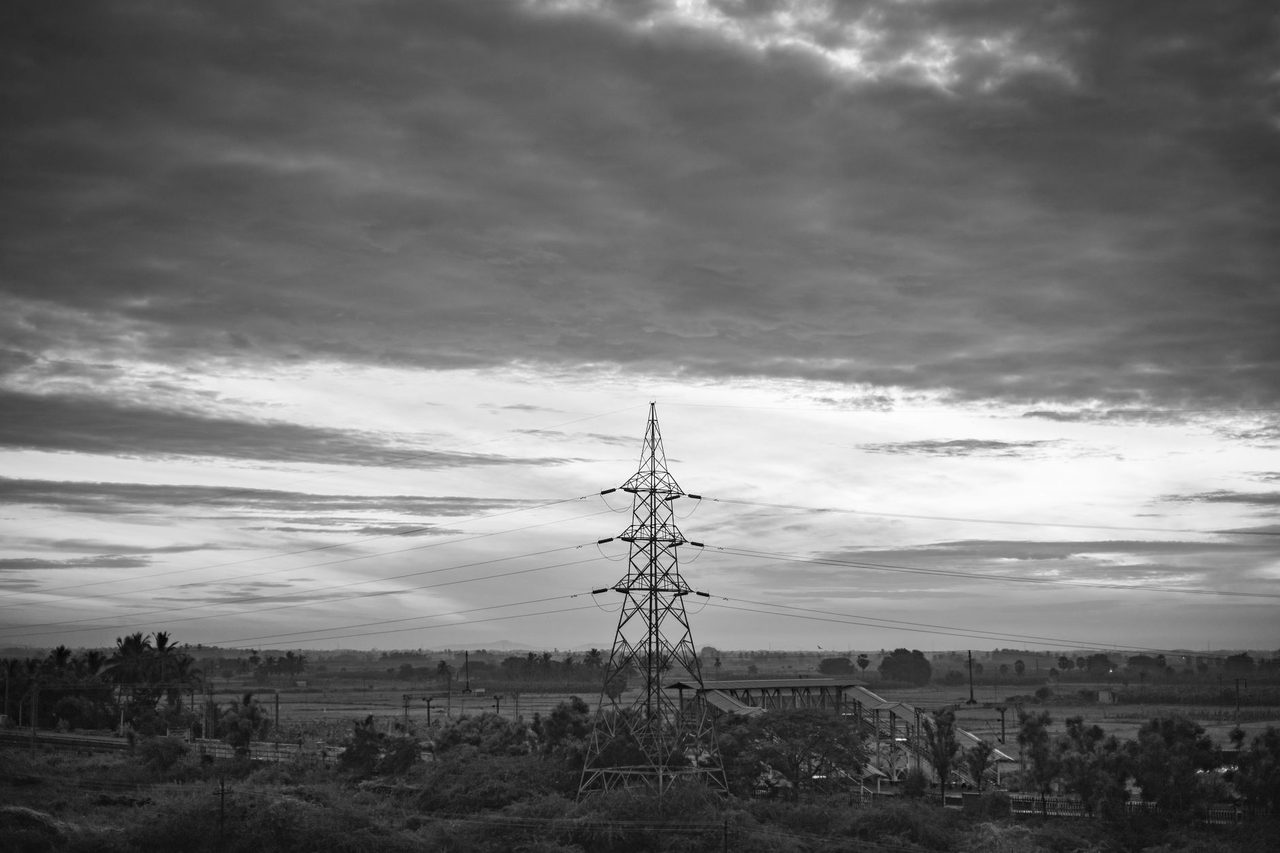
India’s renewable pipeline is now large enough that transmission losses can no longer be treated as a generic spreadsheet assumption. In 2026, for utility-scale solar, wind, hybrid and RTC projects, the way power is evacuated across ISTS and state networks directly affects delivered energy, tariff competitiveness, merchant upside, banking assumptions and debt sizing. For C&I buyers procuring via open access, losses also shape landed power cost and savings versus DISCOM supply. For lenders, poor loss assumptions can overstate net generation and DSCR.
This article focuses on a practical question: how should developers, offtakers, utilities and financiers evaluate transmission losses for renewable-energy evacuation in India in 2026? The answer sits at the intersection of grid topology, voltage level, distance to pooling, network loading, scheduling accuracy, and the specific charging framework applicable to the project.
Unlike topics such as STATCOM sizing or short-circuit strength, transmission losses often appear less technical. In practice, they are one of the most commercial elements of transmission engineering because every 1% loss changes annual saleable energy. On a 300 MW solar project with a 26% CUF, 1% additional loss can mean roughly 6.8 GWh less delivered energy annually. At a realised tariff of Rs 2.80/kWh, that is about Rs 1.9 crore per year in revenue impact before considering scheduling deviations and balancing costs.
Why transmission losses matter more in 2026
Three market shifts have made transmission-loss analysis a front-end project decision rather than a post-award adjustment.
First, projects are being built in resource-rich but network-constrained zones. High-irradiance and high-wind corridors in Rajasthan, Gujarat, Karnataka, Andhra Pradesh and Tamil Nadu continue to attract capacity, but evacuation paths are getting longer and more crowded. In many cases, the nearest strong interconnection is not the most economic one if aggregate losses and system reinforcement requirements are properly priced.
Second, hybrid and firm-power structures are growing. With solar-wind-storage combinations, delivered energy patterns differ by hour and season. Losses are not uniform across the day. When evacuation assets are more heavily loaded in specific time blocks, incremental losses rise. That matters for RTC tenders, FDRE structures, peak-power supply and merchant optimisation.
Third, C&I procurement has become more sophisticated. Open-access consumers now compare not only generation tariff but also wheeling charges, cross-subsidy surcharge, additional surcharge where applicable, transmission charges and loss adjustments. A project that appears cheaper at busbar can be less competitive at delivery point after losses and network charges.
The loss stack developers should model
For Indian RE projects, “transmission loss” is not one number. It is a stack of technical and commercial elements that should be separated in the model.
- Internal electrical losses within the plant: inverter, transformer, collector system and auxiliary consumption
- Dedicated evacuation line losses from plant switchyard to pooling substation or grid substation
- Pooling/substation transformation losses
- ISTS or state transmission loss allocation, as applicable to scheduling and settlement
- Distribution-level losses for open-access delivery where relevant
- Deviation-related commercial impacts caused by inaccurate scheduling under constrained network conditions
A common error is to assume a flat 1.5% to 3% loss from plant to interconnection and stop there. That is insufficient for 2026-era projects, especially those with long 220 kV or 400 kV dedicated lines, hybrid dispatch patterns or inter-state sale.
For example, a 50 km 220 kV double-circuit evacuation line for a 250 MW solar project can have materially different technical losses versus a 400 kV evacuation arrangement, even if the higher-voltage option requires larger up-front capex. The lower-loss option may improve lifetime energy delivery enough to justify the investment, particularly for high-CUF hybrids.
ISTS losses, state losses and delivered tariff
In practical project evaluation, stakeholders must distinguish between physical losses and commercial loss allocation. The project may inject power at one point, while settlement frameworks apply notified loss factors or system-level allocations for accounting and billing.
For inter-state renewable sale, the commercial position depends on the project structure, point of injection, point of drawal, access approvals and the prevailing rules governing transmission charges and losses. Developers should not assume that a central tender structure and a C&I open-access structure will face the same outcome.
The main questions to test in 2026 are:
- Is the project using ISTS for sale across states or a state network for intra-state supply?
- What is the approved connectivity configuration and voltage level?
- Are there dedicated assets owned by the developer, TBCB licensee, CTU or STU?
- How are transmission losses applied in scheduling, energy accounting and final settlement for the chosen route?
- Does the offtake structure pass through losses to the buyer, or is the seller bearing delivered-energy risk?
For C&I consumers, this can significantly alter landed power cost. If a consumer is evaluating solar open access at an ex-bus tariff of Rs 3.10/kWh, and aggregate network losses plus charges push effective delivered cost upward by 20 to 40 paise/kWh, the savings versus industrial grid tariff can narrow materially in states where open-access surcharges remain meaningful.
For utility-scale developers bidding into SECI, NTPC or state tenders, even a 0.5% to 1.0% misestimate of net deliverable energy can change IRR enough to matter in competitive auctions where quoted tariffs may cluster within 5 to 15 paise/kWh.
Engineering choices that reduce loss exposure
Loss optimisation starts before connectivity application. It is not just an O&M issue.
1. Voltage-level selection
The choice between 132 kV, 220 kV and 400 kV evacuation should be based on power transfer requirement, route length, expected future augmentation and system strength. Higher voltage generally reduces current and I2R losses, but capex rises due to towers, insulation, bay equipment, transformers and switchyard complexity. The right answer depends on lifecycle economics, not just initial EPC cost.
For large hybrids above 300 MW or renewable parks designed for staged expansion, 400 kV evacuation may often outperform a lower-voltage option on delivered-energy basis over the asset life, especially if the route is long and loading is sustained over more hours of the year.
2. Conductor and line configuration
Conductor size, bundle configuration, line length and thermal profile all affect resistance and therefore losses. Under-designed lines can save capex on day one but erode revenue every year. With 2026 commodity prices still keeping a close eye on aluminium and steel cost volatility, some developers are tempted to optimise too aggressively on conductor sizing. That should be resisted if the project depends on high annual offtake utilisation.
3. Transformer design and loading
Substation transformers contribute no-load and load losses. Choice of transformer rating, impedance and efficiency class matters. Overloaded transformers not only incur higher losses but can reduce operational flexibility during contingencies. For projects expecting future augmentation, the transformer strategy should be coordinated with evacuation phasing.
This is where Growthifye’s HV/EHV substation design capability becomes commercially relevant: transformer-bay architecture, bus arrangement, future bay provision and operating margins all influence both losses and curtailment risk.
4. Reactive power management
Poor power factor control increases current flow and losses. While reactive-power planning is often treated as a separate compliance topic, it also has a direct loss implication. Over long evacuation routes, poor VAR management can increase losses and voltage instability. Developers should evaluate inverter capability, capacitor/reactor strategy and dynamic support needs in an integrated manner.
5. Pooling and aggregation layout
For park developers and large C&I portfolios, the location of internal pooling substations can materially change collector-system losses. A layout that minimises cable length and balances feeder loading can reduce annual losses without major complexity. The same principle applies to wind clusters with geographically dispersed turbines.
What lenders and investors should diligence
In 2026, serious energy-yield diligence should include a transmission-loss review, not just a plant-generation estimate.
Lenders should ask for:
- Single-line diagram showing all transformation stages from plant to injection point
- Dedicated line length, conductor type, voltage level and expected loading profile
- Loss assumptions separated by internal plant, dedicated evacuation and external network allocation
- Sensitivity cases for 0.5%, 1.0% and 1.5% higher aggregate losses
- Curtailment and congestion assumptions kept distinct from pure electrical losses
- Energy settlement logic under the applicable access and sale framework
A recurring problem in financing is that consultants may use conservative irradiation or wind assumptions, but optimistic transmission losses. That creates a mismatch in downside modelling. In debt sizing, the proper question is not only P50 and P90 generation; it is P50 and P90 delivered generation at settlement boundary.
For a 500 MW hybrid project selling 1.8 to 2.0 TWh annually, a 1% error in delivered energy assumption can affect annual revenue by Rs 5 crore to Rs 7 crore depending on tariff structure. That is large enough to change reserve-account sizing or covenant headroom.
Policy and regulatory context to watch in India
Transmission planning for RE in India remains shaped by the expansion of ISTS, Green Energy Corridor investments, CTU/STU connectivity processes, GNA implementation and state-level open-access frameworks. But from a project economics standpoint, parties should monitor four recurring items in 2026.
- Any revision in transmission charges and loss treatment affecting renewable projects, especially where exemptions, waivers or transitional provisions are time-bound
- Evolving GNA-linked system augmentation that may shift practical congestion and hence operational loss profiles on heavily loaded corridors
- State commission orders on open-access charges and energy accounting, particularly for C&I structures
- Scheduling, forecasting and DSM-related changes that influence commercial outcomes when delivered energy differs from schedule
Developers often pay attention to charge waivers but underweight losses. Both must be assessed together. A route with favourable charge treatment but high physical or allocated losses may still be less attractive than an alternative connection strategy.
A practical framework for project developers and C&I buyers
For developers, the right sequence is straightforward:
- Screen multiple interconnection options, not just the nearest bay
- Model lifecycle delivered energy under each option
- Compare capex increase versus annual loss reduction
- Overlay commercial transmission charges, loss allocation and curtailment risk
- Lock these assumptions before tariff bid or PPA execution
For C&I buyers and portfolio aggregators:
- Evaluate energy at delivery point, not merely generator busbar
- Check whether PPA guarantees injection energy or delivered energy
- Test hourly shape after losses for daytime, peak and non-solar periods
- Reconcile transmission assumptions with open-access approvals and settlement practice
For utilities and policymakers, transparent treatment of losses supports better procurement outcomes. If projects are compared solely on busbar tariff without realistic delivered-energy adjustments, the system may select seemingly cheaper assets that are less efficient in actual supply terms.
These are precisely the situations where rigorous Power system studies help. Load flow, reactive-power assessment, evacuation alternatives and contingency-based operating review should feed directly into bid strategy and financing, not remain standalone engineering reports.
The 2026 takeaway
Transmission losses are not a minor technical footnote in renewable-energy projects. In India’s 2026 market, they are a first-order variable affecting tariff, open-access savings, hybrid economics, debtability and grid integration quality. As transmission corridors become more congested and projects move farther from load centres, the cost of simplistic assumptions rises.
The best-performing projects will be those that treat evacuation design as part of commercial strategy: choosing the right voltage, line design, substation configuration and settlement structure early enough to shape bids and contracts. Whether you are a developer preparing connectivity, a lender reviewing downside cases, a C&I buyer comparing landed tariffs, or a policymaker looking at system efficiency, the discipline is the same: model delivered energy accurately and engineer losses down where the economics justify it.
If you are evaluating a new RE evacuation scheme, transmission upgrade or open-access supply structure, contact Growthifye’s advisory desk for project-specific support on technical-commercial loss assessment, connectivity strategy and bankable transmission planning.
Explore Growthifye's related capabilities
This analysis connects directly to our advisory practice: Power system studies · HV/EHV substation design · Transmission line engineering · Protection, control & SCADA.
About the author

Chief Executive Officer, Growthifye — With over 23 years in management consulting, Sudarshan has taken businesses from concept to scale — building and scaling new-age digital and energy businesses.
- 23+ years in management consulting
- EY alumnus
- Led large-scale BESS programmes, capital raises and advisory mandates
Want this analysis applied to your project?
Talk to our team