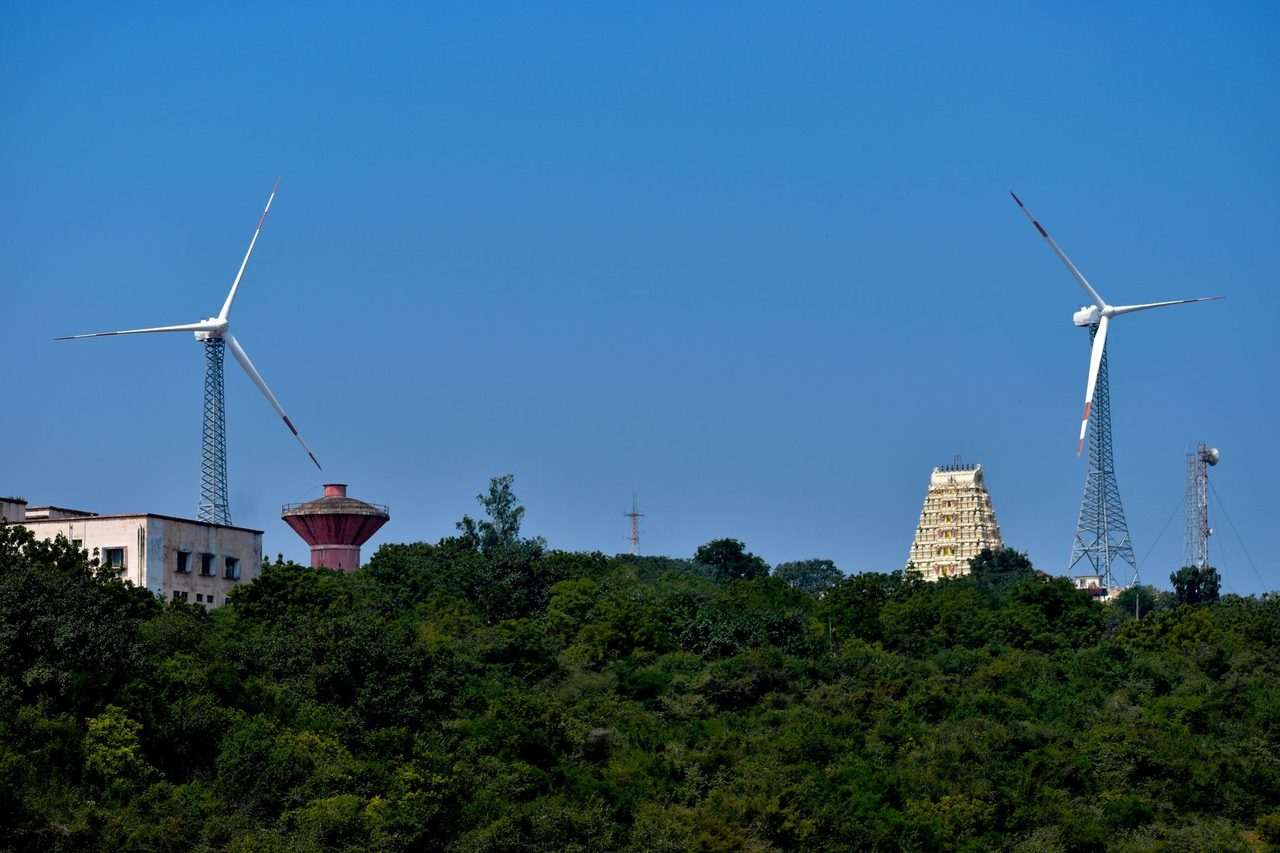
Dynamic Line Rating for RE Evacuation in India 2026: ISTS Capacity, Costs, Grid Codes
By Sudarshan Karweer · sudarshan@growthifye.com · +91 84510 99371 (Call / WhatsApp) · 2026-09-14
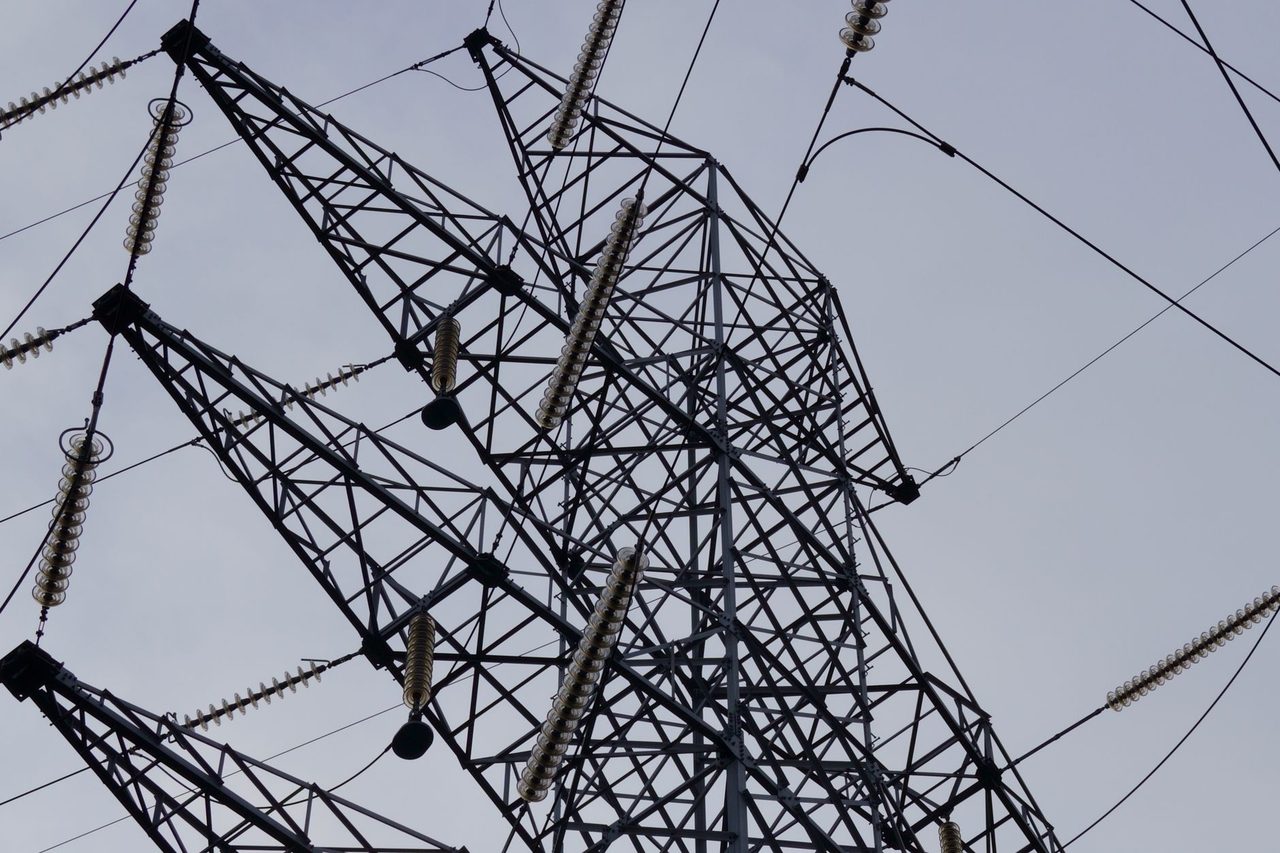
Photo: Budget Bizar on Pexels
India’s renewable build-out is now moving faster than transmission augmentation in several corridors. For developers, C&I buyers, utilities and lenders, the practical question in 2026 is no longer whether more ISTS and intrastate lines are needed. It is how to extract more usable capacity from existing assets while new bays, substations and lines work through approvals, right-of-way and construction cycles. That is where dynamic line rating, or DLR, deserves serious attention.
DLR is a method of determining the real-time current-carrying capacity of an overhead transmission line based on actual weather and conductor conditions rather than conservative static assumptions. In plain terms, a line that may be statically rated at a certain ampacity for a high-heat, low-wind scenario can often safely carry more power during cooler, windier or lower-solar-loading periods. For renewable evacuation, especially from wind-heavy and hybrid corridors, that difference can be commercially material.
For India, DLR is not a universal substitute for new transmission. It will not resolve every GNA bottleneck, fault level limit or substation bay constraint. But in the right corridor, with the right monitoring, forecasting, dispatch integration and operating discipline, it can add 5% to 20% usable transfer capacity on critical stretches, defer capex, reduce curtailment, and improve project bankability.
This article examines where DLR fits in India’s 2026 transmission context, what it costs, how it interacts with ISTS planning and grid codes, and what stakeholders should test before treating it as firm evacuation capacity.
Why DLR matters for India’s 2026 RE evacuation problem
India’s transmission planning framework has become more sophisticated with General Network Access, renewable energy zone planning, and green energy corridor expansion. Yet ground-level constraints remain familiar:
- generation capacity in some renewable clusters is being awarded faster than line augmentation is commissioned
- right-of-way for new 400 kV and 765 kV lines remains uncertain in multiple states
- substation readiness and bay availability often lag project COD targets
- weather-correlated generation creates short, sharp transfer peaks that static line ratings do not capture efficiently
- lenders are scrutinising curtailment assumptions more closely, especially for merchant, open-access and hybrid projects
Static line ratings are intentionally conservative. They assume ambient temperature, solar radiation and wind conditions that protect the conductor under adverse situations. For system security, that conservatism is useful. For renewable integration, it can also leave latent capacity unused for large parts of the year.
A wind-rich corridor is the classic DLR use case. High wind generation tends to coincide with higher conductor cooling, meaning the same line may safely carry more current exactly when generation peaks. Some solar corridors also benefit during non-peak ambient conditions, though the DLR uplift is usually less dramatic during hot, high-irradiance afternoons unless local wind conditions are favourable.
In an Indian context, DLR is most relevant where:
- an existing EHV corridor is thermally constrained for part of the year
- the binding limitation is conductor temperature or sag, not stability or substation equipment rating
- renewable injections are weather-sensitive and correlated with conductor cooling
- a new line or reconductoring is 18 to 36 months away
- system operators can operationalise variable ratings in dispatch and outage planning
How dynamic line rating works in practice
A static line rating typically uses fixed assumptions for ambient temperature, wind speed, wind angle, solar heating and conductor properties. DLR replaces these assumptions with measured or modelled values, then recalculates allowable ampacity in real time or near real time.
A DLR deployment usually includes:
- weather stations along the corridor measuring ambient temperature, solar radiation, wind speed and wind direction
- conductor condition monitoring through direct temperature sensors, sag/tension sensors, or line-mounted devices
- communications systems to move field data securely to the control centre
- rating engines that calculate dynamic ampacity based on recognised thermal models
- EMS/SCADA integration for operator visibility and alarm logic
- forecasting tools to estimate line ratings several hours ahead for scheduling and market operations
There are two broad approaches.
- Indirect DLR uses weather measurements and conductor models to infer line capacity.
- Direct DLR measures conductor temperature, sag or tension more explicitly.
In India, developers and utilities should not think of DLR as a sensor procurement exercise. The hard part is operational integration. If the SLDC, RLDC or transmission owner cannot trust the rating, cannot see it in time, or cannot convert it into dispatch action, the commercial value of DLR falls quickly.
This is why DLR projects need sound Power system studies as well as practical control-room procedures. The uplift on one line section may simply shift congestion to a downstream transformer, reactor, bus section or another line. A corridor-level view is essential.
Where DLR can and cannot unlock capacity
DLR can be powerful, but only when the thermal limit of the overhead line is actually the constraint. Many evacuation problems in India are caused by a different bottleneck.
DLR is a good candidate when:
- the congested element is an overhead 220 kV, 400 kV or 765 kV line
- conductor sag clearance is manageable and validated
- tower geometry and conductor condition are well documented
- historical loading often approaches static thermal limits
- weather diversity along the line can be measured adequately
- there is a clear curtailment or congestion cost to avoid
DLR is a poor fit or only a partial fit when:
- the real limit is transformer MVA capacity at the pooling or ISTS substation
- line terminal equipment such as CTs, CVTs, disconnectors, breakers or wave traps have lower ratings than the conductor
- transient or voltage stability, not thermal capacity, is the binding issue
- short-circuit duty at the receiving end is already near equipment limits
- communications and telemetry reliability are weak
- the corridor includes cables, where thermal behaviour is different and often less flexible
For example, a 400 kV evacuation line from a renewable park may show thermal headroom under DLR, but if the connected 400/220 kV ICT is already close to its operational ceiling or the receiving bus has reactive constraints, the incremental line capacity may not translate into incremental dispatch. Similarly, if N-1 security under GNA requires reserve margin elsewhere, operators may still cap injections below DLR-based thermal capability.
This is why corridor diagnostics should include:
- seasonal load flow studies
- contingency analysis under N-1 and credible outage scenarios
- voltage profile and reactive reserve checks
- terminal equipment rating validation
- conductor ageing and clearance verification
- operating philosophy review with control centres
Cost ranges and economics in India
In 2026, DLR remains far cheaper than building a new EHV line, but it is not costless and should not be pitched as a universal low-capex fix.
Indicative cost ranges for India vary widely by voltage level, route length, terrain, communications architecture and redundancy requirements. Market-checked practitioner estimates for an operationally credible DLR deployment are broadly as follows:
- basic weather-station-led monitoring on a limited corridor: Rs 8 lakh to Rs 20 lakh per monitored location
- line-mounted or conductor-condition sensors: Rs 15 lakh to Rs 40 lakh per critical span or section, depending on technology and redundancy
- communications, gateways, integration and cyber-hardening: Rs 30 lakh to Rs 2 crore at corridor level
- EMS/SCADA, analytics and visualisation integration: Rs 25 lakh to Rs 1.5 crore
- annual O&M, calibration, data services and software support: roughly 8% to 15% of initial system cost
For a meaningful pilot on a constrained 220 kV or 400 kV corridor, all-in capital outlay can easily land in the Rs 1.5 crore to Rs 6 crore range. For larger multi-section or strategic ISTS corridors with redundancy and dispatch integration, costs can go higher.
That still compares favourably against the capital cost and timeline of a new line bay, reconductoring package, or greenfield EHV line. A new 400 kV line project can involve capex in tens to hundreds of crores plus long permitting and ROW cycles. If DLR can defer that capex by even two to three years while reducing renewable curtailment, the economics can be compelling.
Value can come from several sources:
- avoided or deferred capex on line uprating or parallel corridors
- lower renewable curtailment and better CUF realisation
- higher dispatch confidence for open-access and merchant projects
- improved transfer utilisation during wind or hybrid peak windows
- reduced congestion management costs for system operators
However, DLR value should be discounted where the operational uplift is non-firm. Lenders will ask whether the additional transfer capability is dependable enough to support debt sizing. In most cases, prudent financing treatment is to count only a conservative portion of DLR benefit unless there is an accepted operational track record and clear dispatch protocol.
Regulatory and grid-code considerations in 2026
India does not yet treat DLR as a magic override to planning norms. Any use of dynamic ratings must sit within the broader framework of CEA technical standards, Grid Code obligations, CTUIL/Central Transmission Utility processes, and state or regional operational procedures.
The practical compliance questions in 2026 are:
- who owns the rating methodology and accepts it operationally
- whether the RLDC/SLDC and transmission licensee can act on dynamic ratings for scheduling and real-time operation
- how ratings are validated, archived and audited
- what fallback rating applies if sensors fail or communications are lost
- whether outage planning and contingency analysis incorporate variable ratings consistently
Developers should also note that connectivity approval, GNA assumptions and PPA-linked evacuation commitments are generally built around more conventional planning standards. A project cannot simply claim higher evacuation entitlement because a line may run above static rating on favourable weather days. The commercial use of DLR depends on system operator acceptance and network-wide consistency.
For utilities and transmission owners, governance matters:
- define approved thermal models and calibration rules
- specify minimum data quality and availability thresholds
- maintain cybersecurity and communications redundancy
- document conservative fallback static ratings
- create alarm thresholds and operator actions for rating reductions
The most credible DLR programmes are those embedded in Protection, control & SCADA environments with clear operator workflows, not standalone dashboards that no one dispatches against.
What developers, C&I buyers and lenders should diligence
If you are a renewable developer relying on DLR-enabled corridors, the right question is not “Is DLR installed?” It is “How much firm and operationally usable transfer headroom does DLR create under the hours that matter to my project?”
A practical diligence checklist includes:
- identify the actual congested element in the evacuation path
- test whether thermal rating is the binding limit versus voltage, stability or transformer capacity
- obtain historical loading, curtailment and seasonal weather correlation data
- review DLR methodology, sensor placement and communications redundancy
- verify RLDC/SLDC or utility operating acceptance
- understand fallback behaviour during telemetry loss or maintenance
- model revenue impact using P50, P75 and stress cases for DLR availability
- check whether insurance, EPC and O&M scopes cover DLR interfaces where relevant
For C&I consumers sourcing power through open access, DLR matters indirectly. If it reduces congestion and curtailment on a renewable supplier’s corridor, it can improve actual energy delivery and contract performance. But buyers should avoid over-crediting DLR in supply planning unless the supplier demonstrates stable evacuation access.
For lenders, a few underwriting principles are sensible:
- treat DLR as an enhancer, not a substitute for basic evacuation adequacy
- haircut projected uplift unless there is proven corridor history
- insist on sensitivity cases with static fallback ratings
- align debt covenants and DSCR assumptions with realistic curtailment risk
- verify responsibility for DLR system maintenance and data availability
Implementation roadmap for Indian transmission stakeholders
A sensible DLR rollout in India should start with corridor selection, not technology selection. The highest-value candidates are congested renewable corridors where thermal constraints are frequent, weather-driven uplift is material, and operational agencies are willing to integrate the ratings.
A practical implementation sequence is:
- screen corridors using historical SCADA loading, curtailment events and renewable injection profiles
- identify the binding asset and rule out non-thermal bottlenecks
- perform baseline thermal and contingency studies
- select direct and indirect sensing architecture based on terrain and risk
- validate conductor condition, clearances and terminal equipment ratings
- integrate with control-room systems and define fallback procedures
- run shadow mode before enabling operational use
- measure actual uplift, forecast accuracy and curtailment reduction
For many owners, a pilot-first strategy is better than a network-wide roll-out. One or two well-chosen corridors can reveal whether DLR forecasts are reliable enough for dispatch and whether the uplift justifies broader deployment.
In parallel, transmission planners should compare DLR against alternatives:
- reconductoring with HTLS conductors
- series compensation where appropriate
- transformer augmentation or additional bays
- reactive support additions
- revised operating procedures and remedial action schemes
- new line construction under conventional planning
In some cases, DLR is the best bridge solution until permanent augmentation arrives. In others, HTLS reconductoring or substation expansion may produce more dependable value.
The bottom line for 2026
Dynamic line rating is one of the more practical near-term tools for squeezing extra renewable evacuation capacity from India’s existing transmission network. It is especially relevant where wind and hybrid generation coincide with thermal headroom that static ratings fail to recognise. In the right corridor, DLR can reduce curtailment, improve asset utilisation and defer larger capex.
But DLR is not a planning shortcut. It cannot solve a bay shortage, transformer bottleneck, voltage instability or poor coordination between field telemetry and dispatch. Its value depends on corridor physics, operating acceptance and disciplined integration with planning and control systems.
For developers and investors, the winning approach is evidence-based: identify the real constraint, quantify the seasonal uplift, test fallback cases, and ensure the operational chain from sensor to dispatch actually works. For utilities and policymakers, DLR can become a valuable part of the 2026 renewable integration toolkit if deployed with robust governance and corridor-level engineering.
Growthifye supports clients across transmission planning, evacuation strategy, Power system studies and implementation coordination for renewable energy projects in India. If you are evaluating a constrained corridor, DLR readiness, or a broader evacuation-risk strategy, contact Growthifye’s advisory desk.
Explore Growthifye's related capabilities
This analysis connects directly to our advisory practice: Power system studies · HV/EHV substation design · Transmission line engineering · Protection, control & SCADA.
About the author

Chief Executive Officer, Growthifye — With over 23 years in management consulting, Sudarshan has taken businesses from concept to scale — building and scaling new-age digital and energy businesses.
- 23+ years in management consulting
- EY alumnus
- Led large-scale BESS programmes, capital raises and advisory mandates
Want this analysis applied to your project?
Talk to our team