STATCOM for RE Evacuation in India 2026: ISTS Design, Costs and Compliance
By Sudarshan Karweer · sudarshan@growthifye.com · +91 84510 99371 (Call / WhatsApp) · 2026-09-08
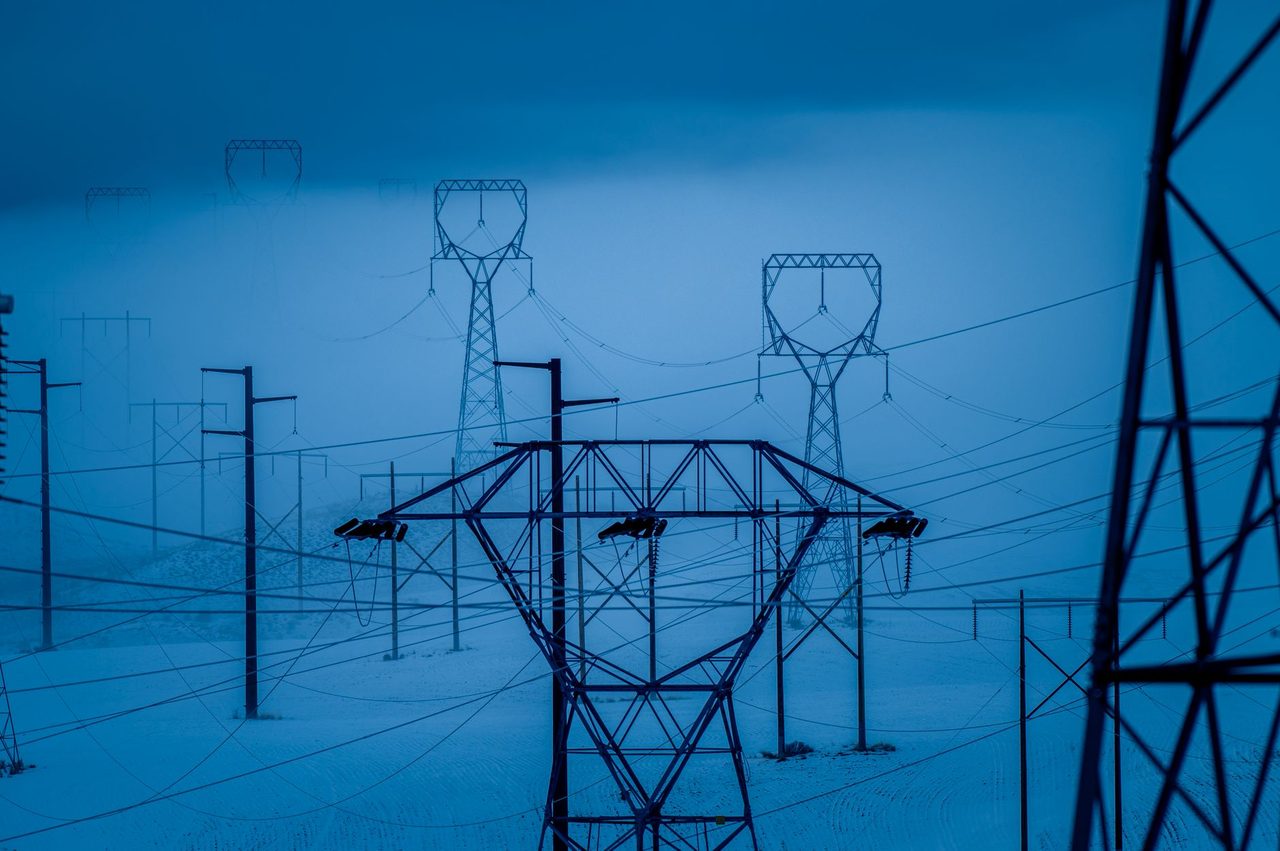
Photo: Frank Cone on Pexels
India’s renewable pipeline is no longer constrained only by land, modules, turbines or offtake. In 2026, one of the most persistent bottlenecks is voltage control at the evacuation interface. As inverter-based generation rises across solar parks, wind clusters and hybrid projects, transmission planners and developers are being forced to solve the same practical question earlier in the project cycle: when is a STATCOM necessary, how large should it be, who should own it, and what does it do to project cost and schedule?
For projects connecting to the Inter-State Transmission System (ISTS), pooling substations, renewable energy zones and green energy corridor assets, that question has become central to connectivity, compliance and bankability. This is especially true in high-RE states such as Rajasthan, Gujarat, Tamil Nadu, Karnataka and Andhra Pradesh, where weak-grid pockets, long EHV lines and clustered injection can create fast voltage swings, poor dynamic reactive response and curtailment risk.
This article looks at STATCOM planning for renewable evacuation in India in 2026, with a developer and lender lens. It focuses on the practical issues: why static compensation is often not enough, how sizing is approached, typical capex ranges, approval interfaces, and how to avoid overbuilding or under-specifying the asset.
Why STATCOMs are becoming critical for RE evacuation
A STATCOM is a dynamic reactive power device based on voltage source converter technology. Unlike mechanically switched capacitors or reactors, it can inject or absorb reactive power rapidly, helping hold bus voltage during system disturbances and normal operating swings.
In India’s 2026 transmission context, the driver is straightforward. Renewable-rich nodes often face all four of the following at once:
- Large solar injection during low local demand hours
- Long 220 kV, 400 kV or 765 kV evacuation corridors with high charging reactive power
- Fast ramps caused by cloud cover, evening drop-off or wind variability
- Lower short-circuit strength at remote pooling points relative to installed inverter capacity
Under these conditions, bus voltages can move outside planning comfort bands even before formal limits are breached. During high generation and low demand, voltages can rise because of line charging and capacitor-heavy systems. During faults or major switching events, voltage recovery may be slow unless dynamic reactive support is available.
That is why central and state transmission planners increasingly specify dynamic compensation packages at RE pooling stations and major substations. These are often combinations of:
- STATCOM
- MSC/MSR banks
- Bus reactors or line reactors
- Harmonic filters where required
- Control integration with station automation and load dispatch instructions
For utility-scale RE developers, the issue is not academic. Without adequate dynamic reactive support in the evacuation scheme, projects can face:
- Additional conditions in connectivity approval
- n- Constraints in generation scheduling at peak injection hours
- Requirement for plant-level controller retuning
- Delayed commissioning because study outcomes change after detailed design
- Lender concern over grid-related curtailment and performance assumptions
Where STATCOMs fit in ISTS and green energy corridor planning
In India, STATCOM deployment for renewable evacuation typically appears at one of three levels.
First, at central transmission substations on the ISTS network, particularly 400 kV and 765 kV nodes receiving power from large renewable clusters. These are usually planned by transmission utilities under system strengthening packages.
Second, at state transmission or green energy corridor substations where multiple developers inject power into a common pool. These nodes may need dynamic support because local network strength is inadequate for the aggregate inverter base.
Third, at dedicated developer-owned pooling substations or collector interfaces, especially for large hybrid or round-the-clock projects with a single evacuation corridor and tight grid-code obligations.
The ownership boundary matters commercially. A 300 MVAr STATCOM at a CTU or STU substation may sit inside the transmission scheme and be socialised through transmission charges, subject to regulatory approval. A plant-side STATCOM, by contrast, may land directly in project capex and become part of the financing package.
Developers should therefore test this boundary early during application for connectivity, GNA-linked evacuation planning and bay allocation discussions. In several 2025-26 cases, the difference between transmission-scheme compensation and developer-provided compensation has shifted project economics by several crore per 100 MW.
This is also where rigorous Power system studies become valuable. A generic assumption that “the grid will handle voltage control” is no longer sufficient in RE-heavy zones.
When fixed capacitors and reactors are not enough
A common project mistake is to rely too heavily on steady-state reactive compensation. Capacitor banks and reactors are essential, but they are not substitutes for dynamic support where voltage dips, fault ride-through performance and fast recovery are the real concern.
In 2026, planners generally look beyond simple power-factor correction and ask how the system behaves during:
- Three-phase and single-phase faults on nearby EHV lines
- Switching of long 400 kV line sections
- Sudden loss of a major RE block in the same corridor
- Simultaneous response of many inverter-based resources using similar control settings
- Weak-grid operation with low short-circuit ratio at the point of interconnection
A mechanically switched reactor may help control overvoltage under light-load conditions, but it will not deliver sub-cycle dynamic reactive injection. Similarly, an inverter plant may advertise reactive capability, yet practical delivery depends on active power loading, control margins, internal collection system losses and OEM settings.
That is why transmission utilities increasingly distinguish between:
- Plant-level inverter reactive capability
- Station-level steady-state compensation
- Grid-node dynamic support through STATCOM or synchronous condenser-type solutions
For most solar and wind evacuation cases in India, STATCOMs are preferred over synchronous condensers on cost, footprint, response speed and maintenance profile, though synchronous condensers may still be examined in specific high-inertia or very weak-grid situations.
How STATCOM sizing is actually approached in 2026
There is no credible rule of thumb that works across all projects. Still, the market often starts with broad screening ranges before detailed simulation.
For large RE pooling nodes, initial discussion ranges commonly seen are:
- 100 to 150 MVAr for moderate 220/400 kV pooling needs
- 150 to 300 MVAr for large 400 kV renewable pooling substations
- 2 x 250 MVAr or similar modular arrangements for major ISTS nodes handling multi-GW injection
But these numbers mean little without context. Proper sizing depends on:
- Short-circuit level at the interconnection bus
- Installed and phased RE capacity in the node
- X/R characteristics of connected lines and transformers
- Presence of line reactors, bus reactors and switched compensation
- Grid code voltage and reactive performance requirements
- Fault ride-through envelope expected from connected RE generators
- Future network augmentation already approved but not yet commissioned
In practice, the study sequence should include:
- Load-flow analysis across seasonal and time-block scenarios
- Voltage sensitivity assessment for high and low generation cases
- Contingency assessment for line and transformer outages
- Dynamic simulations for credible faults and voltage recovery
- Harmonic and resonance screening, especially where multiple converters are clustered
- Controller interaction checks where several STATCOMs and plant inverters may respond together
This work cannot be reduced to a vendor sizing note alone. Independent Power system studies are often needed so developers, lenders and utilities are working from the same assumptions.
Typical cost ranges and project impact in India
By 2026, the all-in cost of a utility-grade STATCOM package in India varies significantly by voltage level, MVAr size, redundancy, land conditions, civil scope and control integration. As a practical market range:
- Smaller grid-connected packages may start around Rs 0.45 crore to Rs 0.65 crore per MVAr
- Mid-sized utility packages often fall around Rs 0.40 crore to Rs 0.55 crore per MVAr
- Very large packages can achieve better unit economics, though total integration cost remains substantial
For a 150 MVAr installation, developers and planners may therefore be evaluating a broad capex envelope of roughly Rs 60 crore to Rs 85 crore depending on scope split. For 300 MVAr class systems, total project cost can move well above Rs 120 crore when associated bay works, transformers, control building interfaces, protection modifications, spares, taxes and commissioning support are added.
The capex is only part of the story. The project impact also includes:
- 8 to 14 months of equipment and system delivery depending on OEM slot availability
- Additional time for design approvals, model validation and interface engineering
- Land and layout adjustments at already constrained substations
- Protection, control & SCADA integration effort at transmission nodes
- O&M contracts and response obligations over the project life
For lenders, the key issue is whether the compensation scheme is fully captured in the base case before financial close. If a project reaches credit approval assuming only standard switchyard capex but later receives a dynamic compensation requirement, DSCR assumptions may tighten quickly.
Compliance, studies and approval interfaces developers should watch
By 2026, developers cannot treat reactive support as a late-stage EPC matter. It sits at the intersection of connectivity approval, transmission planning, grid-code compliance and commissioning studies.
The practical interfaces typically include:
- Connectivity application conditions from CTU/STU
- CEA technical standards and planning criteria
- Central and state load dispatch expectations for voltage management
- OEM model submission for renewable plant and compensation device controls
- Site-specific simulation requirements before charging and synchronization
What often goes wrong is fragmentation. The transmission utility may study the node with generic RE models, while the developer’s EPC uses plant assumptions that differ from the utility case. The result is disagreement on whether a STATCOM is needed or what its rating should be.
Developers should therefore lock the following early:
- Exact interconnection topology and future bay arrangement
- Commissioning phase-wise injection profile, not just ultimate capacity
- Validated RMS and EMT models where called for
- Division of reactive responsibility between plant inverters and grid-node compensation
- Voltage set-point hierarchy among plant controller, STATCOM controller and SLDC/RLDC instructions
Where the substation scope is developer-owned, coordinated HV/EHV substation design becomes critical because the STATCOM is not an isolated skid purchase. It affects bus layout, control room interfaces, auxiliary supply philosophy, cable routing, protection schemes, earthing, fire systems and construction sequence.
Strategy choices: developer-owned, utility-provided or phased deployment
In commercial terms, there are three broad strategies.
The first is utility-provided dynamic compensation at the common transmission node. This is often the most efficient system-wide solution, but only if the implementation timeline is certain. Developers must be careful about assuming that a planned transmission asset will be ready exactly when generation is ready.
The second is developer-owned compensation at the plant or pooling station. This provides schedule control, but pushes capex and technical risk onto the project. It may still be the right answer for large captive corridors, hybrid plants or projects where commissioning certainty is worth the added cost.
The third is phased deployment. Here, the project begins with a smaller STATCOM or a combination of switched compensation plus reserved space and interfaces for later dynamic augmentation. This can be sensible where early-stage studies show manageable conditions initially but weaker performance after downstream renewable additions.
However, phased deployment must be handled carefully. Under-sizing in phase 1 can create repeat outages, retesting and avoidable retrofit cost. Over-sizing from day one, on the other hand, may burden tariff competitiveness unnecessarily.
For C&I buyers and open-access consumers, this matters because evacuation-related capex ultimately feeds delivered power cost. A project with hidden grid-support expenditure may appear competitive on headline tariff but can lose that edge once transmission-linked capex, IDC and delay costs are properly allocated.
What a bankable STATCOM decision looks like
A bankable approach in 2026 has a few clear characteristics.
- The compensation need is identified before final bid or financial close, not after award
- Sizing is backed by scenario-based studies, not just generic planning norms
- Ownership and cost allocation are contractually clear
- Equipment lead time is embedded in the commissioning schedule
- Models, protection logic and SCADA interfaces are aligned across utility, EPC and OEM teams
- Future expansion at the node has been considered, at least qualitatively
The best outcomes usually come when developers integrate transmission engineering, connectivity planning and financing assumptions from the beginning instead of treating them as separate workstreams. That is particularly important in high-RE corridors where one additional study comment can reshape both capex and COD.
India’s transmission buildout will continue to expand under renewable-led planning, but the physical network alone will not solve voltage stability challenges. Dynamic reactive support is becoming a core part of RE evacuation architecture, and STATCOM decisions are now central to whether projects connect smoothly, comply consistently and stay bankable.
If your project is evaluating ISTS or state-transmission evacuation, voltage-control risk should be on the same table as land, tariff and module strategy. Growthifye’s advisory desk can help with transmission planning, Power system studies, HV/EHV substation design and connectivity strategy. Contact the team to discuss your project pipeline and grid-readiness roadmap.
Explore Growthifye's related capabilities
This analysis connects directly to our advisory practice: Power system studies · HV/EHV substation design · Transmission line engineering · Protection, control & SCADA.
About the author

Chief Executive Officer, Growthifye — With over 23 years in management consulting, Sudarshan has taken businesses from concept to scale — building and scaling new-age digital and energy businesses.
- 23+ years in management consulting
- EY alumnus
- Led large-scale BESS programmes, capital raises and advisory mandates
Want this analysis applied to your project?
Talk to our team