Short-Circuit Levels for RE Evacuation in India 2026: ISTS, Substations, Compliance
By Sudarshan Karweer · sudarshan@growthifye.com · +91 84510 99371 (Call / WhatsApp) · 2026-09-05
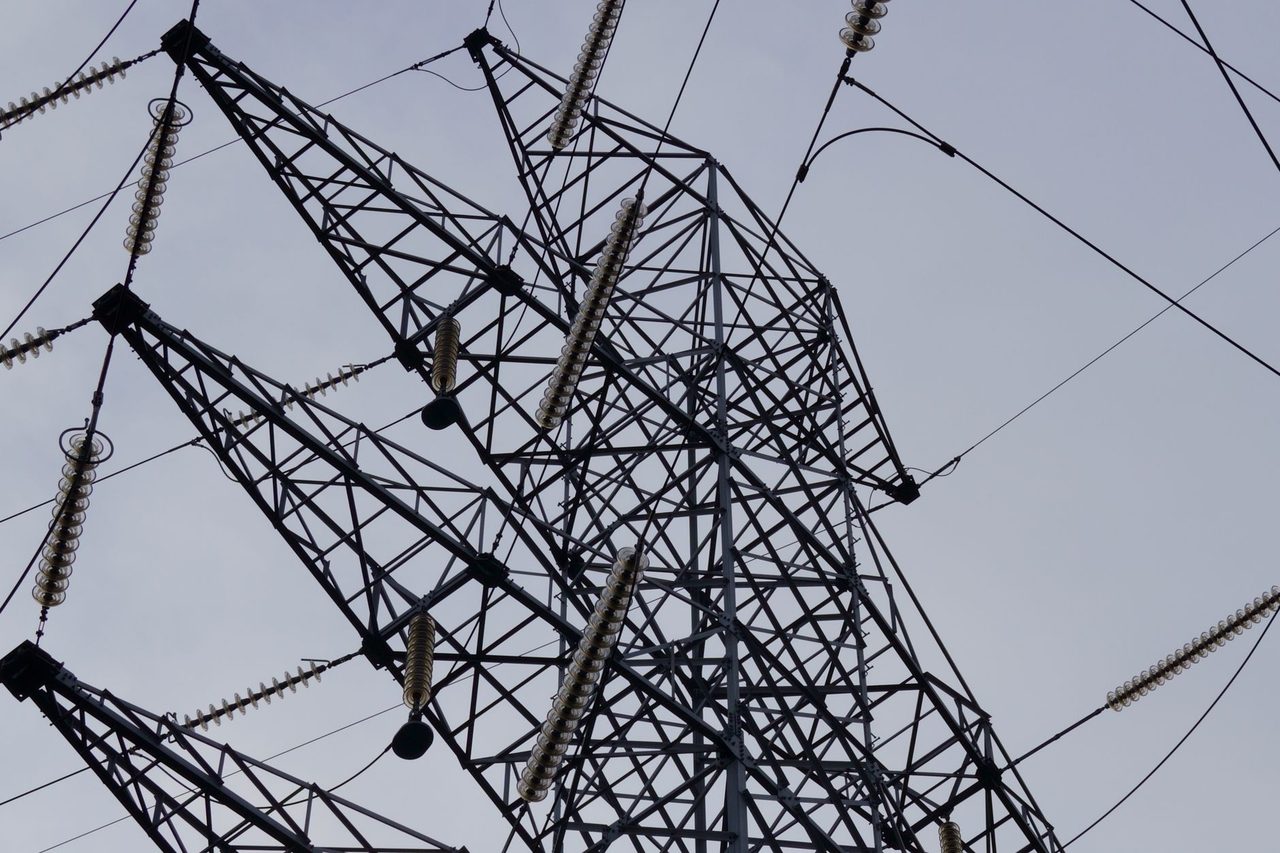
India’s renewable build-out is pushing a less-discussed transmission constraint into the foreground in 2026: short-circuit level management. For many solar, wind and hybrid projects, evacuation planning is still framed around corridor availability, GNA, bay allocation, reactive power and grid-code compliance. But at several high-growth nodes, the immediate question is simpler and more constraining: can the substation and connected network safely withstand the fault current after your project is energised?
For developers, lenders and utilities, this matters because fault level is not an academic study output. It drives circuit-breaker ratings, busbar design, equipment replacement needs, protection settings, phasing of connectivity approvals and in some cases whether a proposed interconnection point remains viable at all. A project can have land, PPA, module supply and transmission path visibility, yet still face delay or redesign if the final short-circuit study shows the fault duty crossing equipment limits.
This article explains how fault levels are assessed for renewable evacuation in India in 2026, where the risks are emerging, what numbers stakeholders should examine, and how to convert study findings into a practical design and bankability plan.
Why short-circuit levels are becoming a bigger issue in 2026
India’s inter-state and intra-state transmission systems have expanded rapidly to integrate utility-scale renewable energy, storage and hybrid capacity. Every new line, transformer, bus coupler, synchronous source, STATCOM-linked strengthening package and network reinforcement can improve transfer capability while also changing network strength and fault contribution.
At a high level, short-circuit level at a bus is the prospective fault MVA the system can deliver under a defined fault condition. In practical terms, higher fault level means higher fault current, and that can stress breakers, CTs, isolators, busbars and associated equipment beyond their rated interrupting or short-time withstand capability.
In the renewable context, three 2026 trends are relevant:
- More RE pooling at a smaller set of strong ISTS nodes, including 220 kV and 400 kV pooling arrangements feeding larger transmission corridors
- Network strengthening through additional lines and transformer capacity that can raise fault contribution from the broader grid
- Growing co-location of inverter-based resources with storage, synchronous condensers in select cases, and nearby conventional generation influences that change local fault behaviour
While inverter-based resources typically contribute lower and shorter-duration fault current than synchronous machines, that does not eliminate the problem. Fault level at the point of interconnection is determined by the entire surrounding network, not only the new solar or wind plant. A bus that already sits near 90% to 100% of breaker duty can become non-compliant with even modest network changes elsewhere.
This is why transmission utilities and planners are tightening scrutiny on fault-duty calculations during connectivity processing, augmentation planning and substation expansion.
What exactly is studied for RE evacuation fault levels
For an RE evacuation scheme, short-circuit assessment is usually embedded in a wider package of Power system studies. The objective is to confirm that the proposed connection does not create equipment duty exceedance under present and future operating scenarios.
The standard study scope typically includes:
- Three-phase fault current at the proposed point of interconnection
- Single line-to-ground fault levels where relevant for protection and earthing checks
- Maximum and minimum fault level cases
- Existing system condition versus with-project condition
- Near-term and horizon-year cases, often aligned to transmission planning assumptions
- Sensitivity to parallel lines, transformer additions, nearby generation and outage configurations
- Breaker interrupting duty and busbar short-time withstand check
- Impact on protection settings and relay coordination margins
For 220 kV, 400 kV and 765 kV systems, developers should not look only at the bus fault current number in kA. They should also ask:
- What equipment is already installed and what are its nameplate limits?
- Are the limits based on symmetrical breaking current only, or do making current and peak withstand also matter in the scenario?
- Is the utility checking today’s topology only, or a planned topology after approved augmentations?
- Does the study include future RE injections already in the queue?
These details can decide whether the answer is “connect now,” “connect after augmentation,” or “connect only with a different pooling arrangement.”
The equipment ratings and thresholds stakeholders should watch
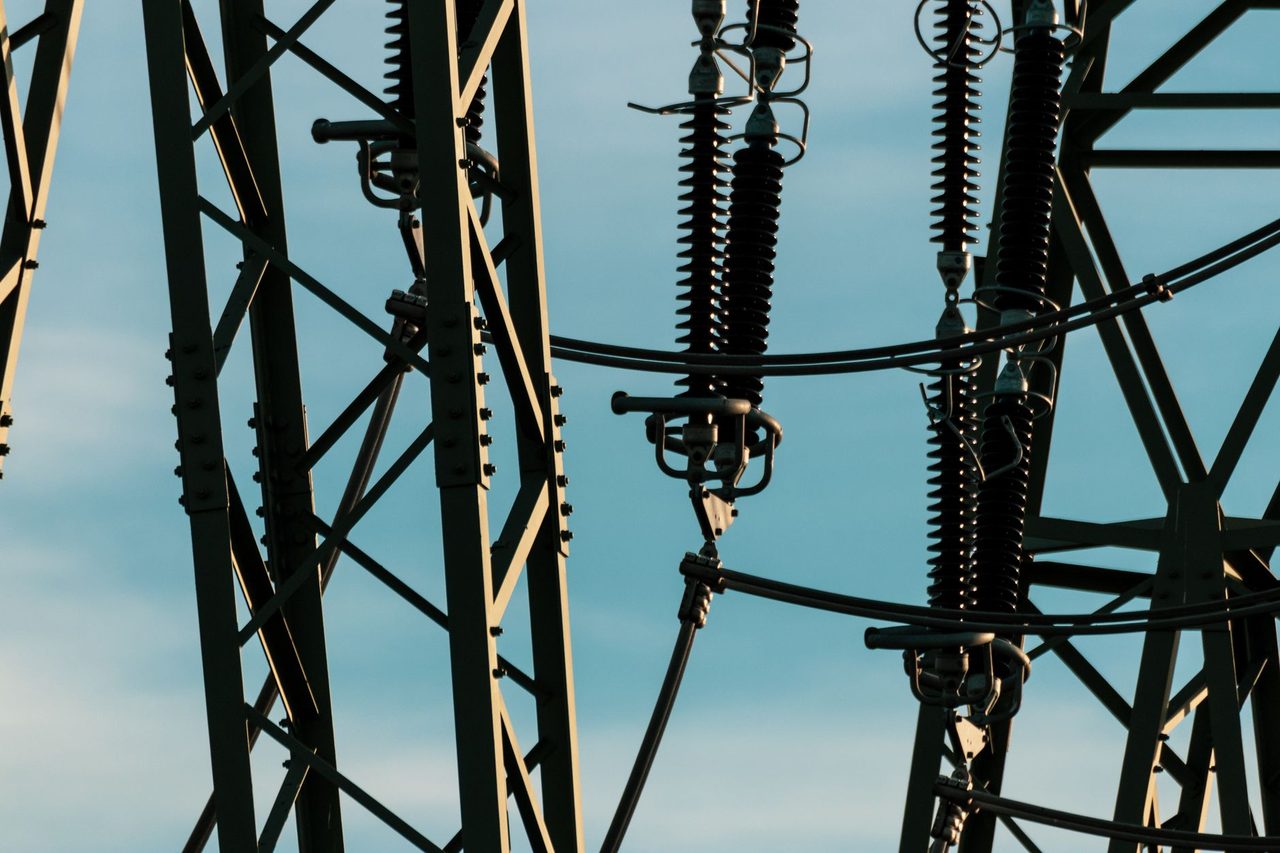
In India, many EHV substations historically use breaker ratings such as 31.5 kA, 40 kA or 50 kA depending on voltage level, age and network context. In high-growth renewable corridors, the practical issue often arises where older 220 kV or 400 kV switchgear was adequate for the original grid but is now getting closer to its interrupting-duty ceiling.
Illustratively:
- A 220 kV bus with 31.5 kA breakers has limited headroom if planned network additions materially raise prospective fault current
- A 400 kV yard with 40 kA equipment may still be adequate today but become constrained under a horizon-year topology with added transformers and parallel sources
- Bus sections can see different duty depending on coupler status, line outages and generation dispatch patterns
Stakeholders should interpret these numbers carefully. A bus showing 29 to 30 kA on a 31.5 kA breaker is not “safe enough” merely because it remains below the label in one snapshot. Utilities often need margin for modelling uncertainty, future system evolution and transient conditions. If a project enters a node with very low headroom, any later strengthening package may trigger replacement of multiple bays or bus sections.
Indicative cost implications can be material:
- Replacing a single EHV circuit breaker may run into several crore rupees depending on voltage class, OEM, outage complexity and associated retrofit scope
- Upgrading an entire 220 kV bay involves not just the breaker but CTs, support structures, protection changes, civil modifications and outage planning
- At 400 kV level, bay augmentation or switchyard reconfiguration can have a significantly larger CAPEX and approval footprint
- If a constrained bus cannot be upgraded easily, a new GIS/AIS extension, alternate pooling substation or line rerouting may be required
For developers, this can shift evacuation cost by 5% to 20% or more relative to the original interconnection estimate, depending on the degree of upstream works externalised to the project or transmission licensee.
How fault-level risk affects approvals, schedule and bankability
The project-finance consequence of fault-level risk is underappreciated. On paper, short-circuit studies are technical due diligence items. In practice, they can move COD.
Typical delay pathways in 2026 include:
- Connectivity granted subject to system strengthening, but strengthening scope is not frozen early
- Utility identifies breaker-duty exceedance after detailed studies rather than at concept stage
- Existing substation retrofit needs planned outages that do not align with the renewable project schedule
- Allocation of augmentation cost between developer, STU/CTU or transmission SPV remains unclear
- Protection redesign is needed because changed fault currents alter relay grading margins and breaker failure logic
For lenders, the key question is whether the evacuation package includes only dedicated lines and bays, or also hidden upstream fault-level remediation. If the latter is not contractually mapped, contingency budgets may be understated.
A prudent financing checklist should cover:
- Latest approved short-circuit study report and revision date
- Base case and horizon-year network assumptions used in the study
- Equipment duty headroom at the interconnection bus and adjacent sections
- Confirmed responsibility matrix for augmentation costs
- Outage and commissioning window needed for retrofit works
- Whether the EPC scope includes interface engineering at the utility substation
- Whether a change in interconnection point would trigger fresh approvals or schedule reset
This is especially important for hybrid and RTC-oriented projects where delay to one evacuation element can hold back the full contracted capacity.
Design responses: what can actually be done when fault levels are high
Once fault-level stress is identified, the response is rarely one-size-fits-all. The right solution depends on whether the issue sits at the plant switchyard, pooling substation, STU node or ISTS substation.
Common response options include:
- Shifting the interconnection to another bus or voltage level with more duty headroom
- Splitting evacuation across multiple buses or substations
- Phasing capacity injection so that connectivity is staged alongside network augmentation
- Reconfiguring bus arrangement or sectionalisation to manage fault contribution in credible operating states
- Replacing over-stressed breakers and associated primary equipment
- Adding reactors or other network elements where system studies justify them, though these are not generic cures for all fault-duty issues
- Coordinating future topology assumptions with CTU/STU so that the selected solution remains viable beyond initial energisation
At the project level, this often requires close integration between Transmission line engineering and substation design teams. For example, a developer may initially prefer the nearest 220 kV node to minimise line length. But if that node needs major breaker retrofits while a slightly farther 400 kV node offers cleaner headroom and lower long-term curtailment risk, the total project economics may favour the latter despite a higher dedicated line CAPEX.
Similarly, evacuation from large solar-wind-storage parks may benefit from early review of pooling transformer configuration and bay phasing, not just final interconnection capacity. A design that is optimised only for day-one injection may become expensive if the second phase later triggers avoidable bus-duty exceedance.
What policymakers and utilities should prioritise in high-RE states
For policymakers, fault-level management is a planning-quality issue as much as an engineering one. As renewable parks, manufacturing loads, storage and transmission reinforcements cluster, the system needs more transparent publication of network constraints beyond simple available capacity statements.
Useful 2026 actions include:
- Publishing node-wise equipment duty headroom at major evacuation substations where feasible
- Flagging substations under watch for breaker-duty exceedance in planning documents
- Standardising study assumptions across CTU, STUs and developers to reduce conflicting results
- Linking connectivity milestones to clearly defined upstream augmentation triggers
- Building replacement and retrofit packages into corridor planning earlier rather than after queue build-up
For utilities, a practical improvement is to move fault-level screening earlier in the connectivity workflow. Developers should know at application or in-principle stage whether a node has limited short-circuit headroom. Discovering this only after bay planning and route surveys wastes months.
There is also a case for harmonising how future system conditions are considered. If one authority studies only current topology while another insists on a horizon-year fully built network, project decisions can become inconsistent. In fast-evolving RE zones, horizon-year checks are essential because a bus that appears compliant today may not stay compliant by the scheduled COD.
A practical decision framework for developers and C&I buyers
Even C&I buyers should care about this issue when procuring power from open-access or group captive renewable projects. If evacuation risk is understated, supply timelines and commercial operation can slip.
A practical framework is:
- Check whether the selected interconnection node is in a high-growth renewable cluster
- Ask for the latest fault-level and connectivity study summary, not just the sanction letter
- Verify whether any substation augmentation is a dependency for full-capacity injection
- Assess whether the project budget includes bay extension, protection modifications and utility interface works
- Stress-test COD against outage availability for upstream retrofit
- Review whether alternate evacuation paths exist if the preferred node becomes constrained
For developers, the most bankable approach is to integrate short-circuit assessment at pre-bid or pre-land-lock stage, not after major project commitments. A relatively small upfront study budget can save substantial redesign cost later.
In 2026, the winning evacuation strategy is no longer just shortest line, fastest bay or lowest quoted connectivity charge. It is the option that remains technically compliant under realistic future network conditions, carries clear responsibility for augmentation works, and preserves schedule certainty.
Short-circuit levels will increasingly separate paper-ready projects from actually deliverable projects. As India scales solar, wind, hybrid and storage capacity, fault-duty headroom at key substations will become a decisive parameter in transmission planning, commercial negotiation and lender diligence.
If your project is evaluating ISTS or state-grid connectivity, Growthifye’s advisory desk can help with feasibility screening, Power system studies, interconnection risk review and implementation planning. Contact Growthifye to assess fault-level constraints early and de-risk your evacuation pathway.
Explore Growthifye's related capabilities
This analysis connects directly to our advisory practice: Power system studies · HV/EHV substation design · Transmission line engineering · Protection, control & SCADA.
About the author

Chief Executive Officer, Growthifye — With over 23 years in management consulting, Sudarshan has taken businesses from concept to scale — building and scaling new-age digital and energy businesses.
- 23+ years in management consulting
- EY alumnus
- Led large-scale BESS programmes, capital raises and advisory mandates
Want this analysis applied to your project?
Talk to our team