Short-Circuit Levels for RE Evacuation in India 2026: Fault Duty, Costs, Grid Design
By Sudarshan Karweer · sudarshan@growthifye.com · +91 84510 99371 (Call / WhatsApp) · 2026-09-05
India’s renewable build-out is no longer constrained only by corridor capacity, bay availability or GNA sequencing. In 2026, an equally material issue is emerging across several transmission pockets: short-circuit level management. As more ISTS nodes, pooling substations, STATCOM-rich corridors, synchronous generation pockets and strong 400 kV/765 kV interconnections develop, fault duty at key buses can approach or exceed equipment ratings. That directly affects renewable evacuation design, substation capex, commissioning timelines and financing risk.
For renewable developers, C&I offtakers sourcing ISTS-linked power, lenders assessing completion risk, and utilities planning evacuation packages, short-circuit levels are now a practical commercial issue, not just a study item. A project may have transmission access on paper, but if the connecting substation needs higher-rated breakers, bus reconfiguration, fault current limiting measures or revised study assumptions, the real energisation path can shift by quarters.
This article explains what short-circuit levels mean in the Indian transmission context, why they matter more in 2026, where the main risk points sit, what studies and design choices are typically required, and how to budget for the resulting capex and schedule implications.
Why short-circuit level is now a front-line evacuation issue
A short-circuit level, usually expressed in MVA or fault current in kA, indicates the electrical strength of the grid at a bus and the magnitude of current that may flow during a fault. In simple terms, the stronger and more interconnected the system, the higher the potential fault current. That is beneficial up to a point because stronger nodes help voltage control and system stability. But once fault duty nears the interrupting or withstand capability of switchgear and associated equipment, that strength becomes an asset with an engineering cost.
In India, this matters because renewable injection is increasingly clustering around strong transmission nodes rather than weak radial endpoints. Large solar parks, hybrid complexes and storage-linked projects are being planned near 400 kV and 765 kV substations connected to multiple ISTS corridors. In some regions, evacuation schemes are also tying together state transmission systems, central transmission assets and private generation substations more tightly than before.
The result is that fault levels can rise over time even if your own project is inverter-based and contributes less fault current than a thermal or hydro unit. The issue is systemic. New lines, interconnecting transformers, synchronous condensers, conventional generators, and network reinforcement can all increase fault duty at a common bus.
For project sponsors, that creates four recurring questions:
- Is the proposed interconnection bus within breaker and busbar fault duty limits?
- Will planned system strengthening before COD push the node above current ratings?
- Who bears the cost if a bay or breaker specification changes after grant of connectivity?
- Can the project still meet scheduled commissioning if fault-level mitigation is required?
These are no longer theoretical concerns. They affect bid strategy, EPC scope, lender due diligence and interface management with CTU, STU and substation owners.
Where fault duty risk shows up in Indian RE projects
The highest risk is usually not at the project collector system itself. It typically arises at the evacuation interface: the 220 kV, 400 kV or 765 kV bus where the renewable project ties into the network. In 2026, the following situations deserve close attention:
- 400 kV pooling substations connected to multiple incoming ISTS lines and ICTs
- 765/400 kV substations in high-growth renewable states where several transmission packages are being commissioned in parallel
- Existing substations with legacy 40 kA or 50 kA breaker populations facing incremental network strengthening
- Grid nodes close to large thermal stations, hydro complexes or synchronous condensers
- Urban or industrial load centres where strong meshing already creates elevated fault currents
- Renewable hubs where BESS, solar and wind projects are all seeking common interconnection infrastructure
In practice, many developers focus heavily on transfer capability, line loading and voltage compliance during connectivity planning. Fault duty screening often gets less management attention until detailed studies are underway. That is a mistake. A node may look attractive because it has strong evacuation and lower curtailment risk, but the same electrical strength can create switchgear constraints.
Another 2026 issue is timing mismatch. A developer may base assumptions on the present bus configuration, but by the time the project is ready for synchronisation, other transmission augmentations may already be energised. A bus that was below its fault limit at application stage can edge closer to rating by commissioning stage.
Equipment ratings, design implications and what can change late
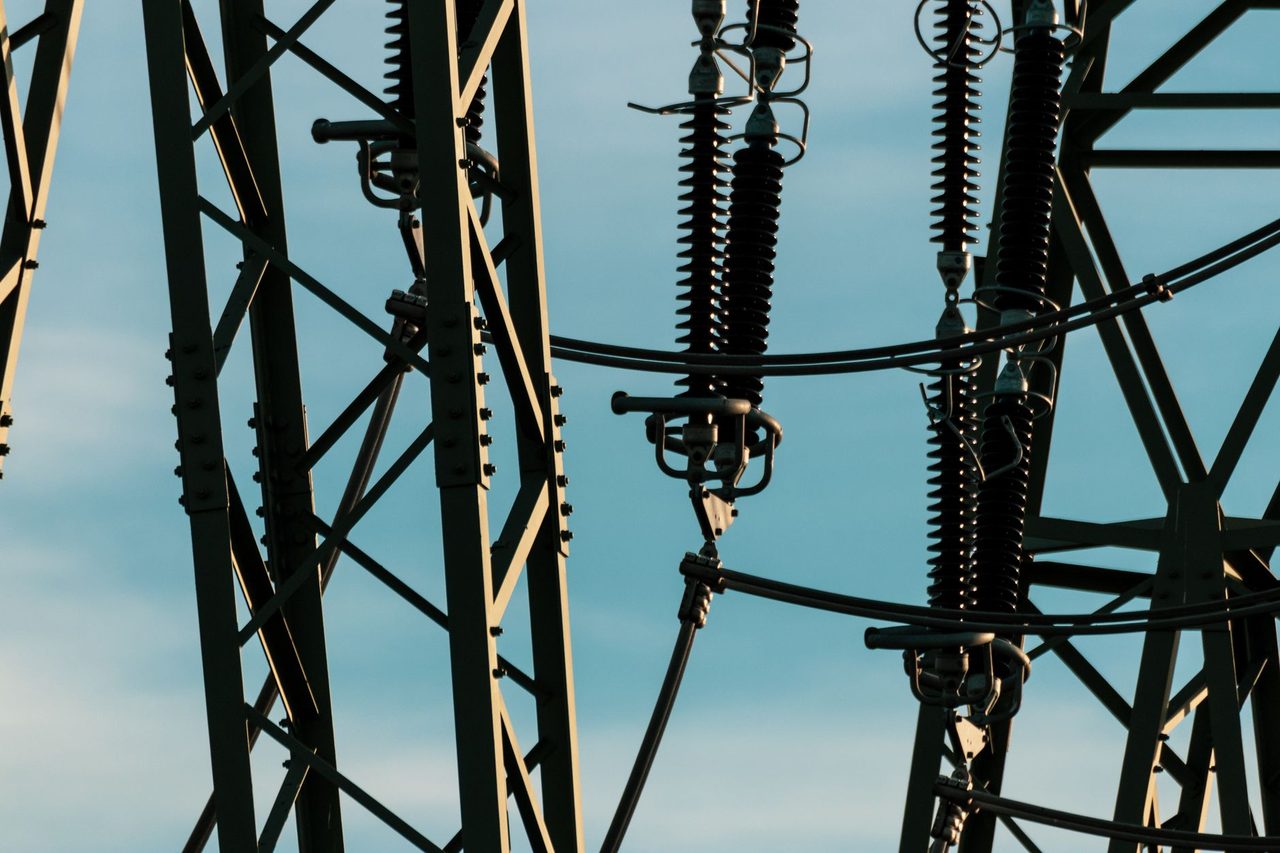
At transmission substations, the immediate concern is whether primary equipment can safely make, carry and interrupt the prospective fault current. This includes:
- Circuit breakers
- Disconnectors and earthing switches
- Busbars and connectors
- Current transformers and support structures
- Surge arresters and insulation coordination margins
- GIS or AIS bay equipment depending on configuration
Across Indian 220 kV and 400 kV installations, breaker fault current ratings commonly sit in the range of 40 kA, 50 kA or 63 kA, depending on design basis and procurement standard. At higher system voltages and stronger nodes, moving from one rating class to another can materially change capex, lead time and equipment availability.
The practical implications are significant:
- A 400 kV bay initially assumed with 40 kA equipment may need 50 kA or 63 kA specification.
- Retrofit inside an existing substation may require bus section changes, outage planning and interface approvals.
- GIS-based upgrades can be especially time-sensitive because extension compatibility depends on OEM design and existing layout.
- Higher fault-duty equipment can alter foundation loads, clearances, procurement lead times and testing requirements.
For greenfield pooling substations, fault level assessment should influence the design basis from day one. For brownfield connectivity, it is even more important because replacement or uprating in an operational yard is slower and costlier than greenfield provision.
Indicative capex impact in 2026 can be meaningful. While costs vary by OEM, voltage class, insulation type and package size, developers should expect that moving to a higher breaker duty class at 400 kV may add several tens of lakhs per bay, and in constrained brownfield situations the all-in cost impact can run much higher once outages, civil modifications, control integration and spares are included. If a substation-wide mitigation or bus reconfiguration is required, the exposure can move into multi-crore territory.
That is why fault duty is not merely a utility problem. It can alter the economics of evacuation infrastructure and therefore project IRR.
Study scope developers and lenders should insist on in 2026
A robust connectivity package should not stop at load flow and reactive power assessment. It should include disciplined short-circuit review under present and future network scenarios. At minimum, stakeholders should ask for:
- Three-phase and single-line-to-ground fault calculations at the interconnection node
- Minimum and maximum fault level cases
- N-0 and relevant N-1 topology assumptions where network configuration materially affects fault duty
- Sensitivity to nearby transmission projects, ICT additions and generation commissioning
- Equipment rating comparison against interrupting and short-time withstand capability
- Scenario timing aligned to likely project COD, not just application date network
For hybrid plants and storage-linked projects, model assumptions also need to be consistent with current Indian grid study practice. Inverter-based resources generally contribute lower sustained short-circuit current than conventional synchronous machines, but vendor-specific controls, fault ride-through settings and current injection behaviour still matter for protection performance and study conclusions.
This is where experienced Power system studies become commercially valuable. The objective is not only compliance filing. It is to identify whether the preferred node remains viable after considering expected grid evolution over the next 12 to 36 months.
Lenders should independently test this issue during technical due diligence. A common mistake in financing is to treat transmission availability as binary: either the bay exists or it does not. In reality, substation readiness depends on rating adequacy as much as physical completion. If breaker replacement or fault-limiting works are pending, the bay is not truly ready for risk-free energisation.
Mitigation options and their trade-offs
Once elevated short-circuit level is identified, there is no single standard remedy. The correct response depends on whether the issue is local to a specific bay, systemic across the substation, or linked to broader network strengthening. Common options include:
- Selecting an alternate interconnection node with lower fault duty
- Using higher-rated switchgear for new bays or greenfield substations
- Reconfiguring bus sections or splitting buses to limit fault contribution paths
- Staggering energisation sequence of associated transmission elements
- Replacing legacy breakers at critical locations
- Introducing current-limiting reactors in selected applications
- Revising transformer or line connection philosophy where technically feasible
Each option has trade-offs.
An alternate node may reduce fault duty but increase line length, losses and right-of-way complexity. Higher-rated equipment may solve the local issue but raise procurement cost and lead time. Bus splitting can lower fault level but may affect operational flexibility and future expansion. Reactor-based limitation works in specific cases but adds losses, voltage implications and protection complexity.
From a bankability perspective, the key is clarity on responsibility. If the renewable developer is building a dedicated pooling substation and line up to the delivery point, higher-rated equipment can often be incorporated into its own scope. But where the limitation sits inside an existing CTU/STU substation, mitigation requires coordinated planning, outage windows and clear cost allocation.
This makes early interface management critical across developers, transmission licensees and EPC contractors. It also underlines why HV/EHV substation design decisions should not be divorced from network study updates.
Cost, schedule and contractual implications in 2026
In 2026, transmission equipment supply chains are better than the worst congestion seen earlier in the decade, but high-voltage switchgear and brownfield outage slots still remain schedule-sensitive. That means short-circuit related design changes can hurt both capex and COD certainty.
Developers should stress-test the following commercial exposures:
- Additional switchgear capex for higher fault-duty class
- Extended engineering cycle due to revised calculations and approvals
- Brownfield outage dependency for replacement or retrofit
- SCADA, relay and interlocking modifications after equipment changes
- Delay in charging permissions if final as-built study differs from initial submission
- Liquidated damages risk under PPA, EPC and financing agreements if COD slips
A one- to three-month delay due to transmission interface redesign is not unusual if the issue is caught late. In more complex brownfield cases, the impact can be longer, especially where the mitigation depends on utility shutdown planning or package-level procurement rather than developer-controlled works.
Contract strategy matters. EPC scopes should define whether fault level reassessment up to COD is included, what assumptions govern equipment rating selection, and how change orders are handled if utility study results change after award. Lenders should seek conditions precedent around final connectivity clearances and rating adequacy, not just provisional interconnection letters.
For C&I consumers buying power from ISTS-based renewable projects, these issues can affect commencement of supply and open access scheduling. A delayed generator COD or transmission readiness gap can push contracted energy delivery, with knock-on effects on power procurement planning and renewable purchase targets.
What policymakers and utilities should prioritise
At system level, rising fault duty is a by-product of welcome network strengthening. The answer is not to avoid strong grids. It is to improve planning transparency and standardisation.
Three policy and utility actions would materially reduce execution risk:
- Publish node-wise planning signals on emerging fault-level constraints at major renewable interconnection substations
- Align connectivity approvals with forward-looking fault studies tied to expected commissioning windows
- Standardise technical responsibility and cost allocation rules where existing utility substations require uprating due to cumulative network growth
The Indian market has already learned that queue visibility, GNA clarity and bay readiness are essential for renewable scale-up. Fault level transparency should now join that list. Better disclosure reduces speculative applications, helps developers choose the right node, and improves lender confidence.
Utilities and transmission planners should also build future-proofing into new renewable evacuation assets. In several high-growth pockets, the marginal capex of specifying stronger equipment upfront may be lower than repeated brownfield uprating later. That approach is especially relevant for substations expected to anchor multiple renewable phases or storage additions.
Finally, protection philosophy should be reviewed in parallel with fault-level evolution. Changes in network strength and equipment ratings often require corresponding updates in relay settings, breaker failure logic and disturbance recording strategy. This is where integrated engineering across Protection, control & SCADA and substation design becomes important.
The practical takeaway for developers and lenders
In 2026, renewable evacuation planning in India must move beyond a single question: can power be evacuated? The better question is: can power be evacuated at the intended bus, by the intended date, within the fault-duty envelope of the actual equipment that will be in service at COD?
That requires a more disciplined workflow:
- Screen short-circuit levels before freezing the interconnection node
- Use future network scenarios, not just current topology
- Match study assumptions to realistic COD timing
- Check actual equipment ratings and brownfield retrofit constraints
- Allocate cost and schedule risk explicitly in contracts
- Revalidate before procurement and again before commissioning
Projects that do this early can avoid avoidable redesign, capex shocks and energisation delays. Projects that ignore it may discover too late that a strong grid connection is not the same thing as a ready grid connection.
If you are evaluating an ISTS or state-transmission evacuation plan, Growthifye’s advisory desk can help with Power system studies, HV/EHV substation design and connectivity risk review. Contact Growthifye to assess fault-duty exposure, design options and bankable mitigation pathways for your project.
Explore Growthifye's related capabilities
This analysis connects directly to our advisory practice: Power system studies · HV/EHV substation design · Transmission line engineering · Protection, control & SCADA.
About the author

Chief Executive Officer, Growthifye — With over 23 years in management consulting, Sudarshan has taken businesses from concept to scale — building and scaling new-age digital and energy businesses.
- 23+ years in management consulting
- EY alumnus
- Led large-scale BESS programmes, capital raises and advisory mandates
Want this analysis applied to your project?
Talk to our team