
Second-Life BESS in India 2026: Economics, Use Cases and Circular Project Structuring
By Sudarshan Karweer · sudarshan@growthifye.com · +91 84510 99371 (Call / WhatsApp) · 2026-09-17
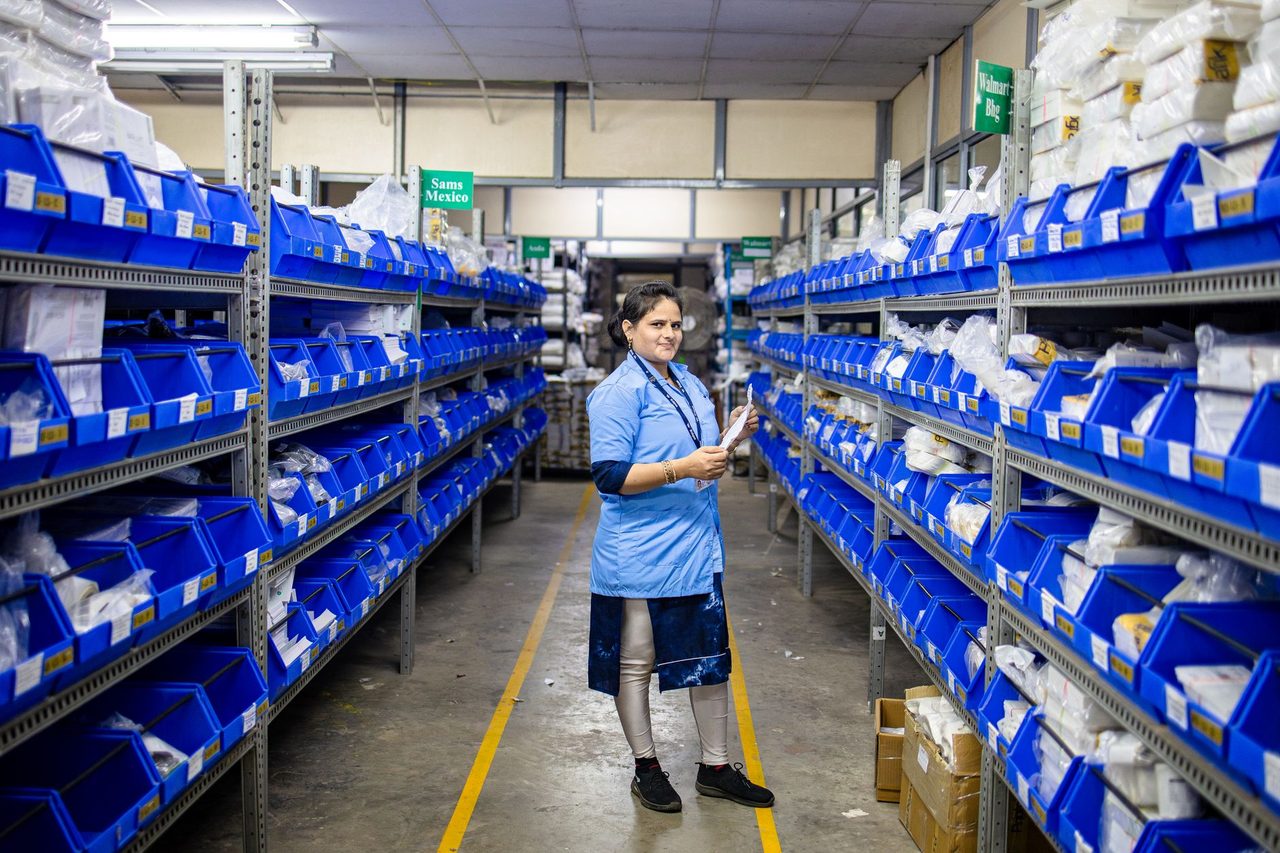
Photo: EqualStock IN on Pexels
India’s storage market in 2026 is no longer discussing battery circularity as a distant sustainability theme. It is now a project-development issue. As electric two-wheelers, three-wheelers, buses, telecom assets and early stationary storage systems begin generating a larger pool of retired lithium-ion packs, the next commercial question is clear: which batteries should be recycled immediately, and which should first move into second-life BESS applications?
For Indian C&I consumers, renewable developers, utilities and lenders, second-life battery energy storage systems sit at the intersection of cost reduction, circularity compliance and supply-chain strategy. But the headline idea that “used EV batteries are cheaper storage” is incomplete and often misleading. In practice, second-life systems succeed only when the application window, safety architecture, degradation profile, integration design and contractual allocation of risk are all matched properly.
This article examines second-life BESS in India in 2026 from a practitioner lens: the viable use cases, cost benchmarks, policy touchpoints, technical filters, procurement structures and bankability issues that matter now.
Why second-life BESS is gaining traction in India
India’s battery ecosystem is scaling on three fronts at once:
- EV battery deployment is rising across 2W, 3W, bus and commercial fleet segments
- Grid-scale and behind-the-meter BESS procurement is accelerating with solar and hybrid projects
- EPR compliance and circularity reporting expectations are increasing for OEMs, fleet operators and energy platforms
That creates an important commercial middle zone between first use and final recycling. Many retired batteries still retain 65% to 85% state of health depending on chemistry, duty cycle, thermal history and charging behavior. For mobility applications, that residual performance may be insufficient. For lower-C-rate stationary applications, however, it can still be commercially useful.
In India, the strongest interest is coming from applications where space is available, cycling intensity is moderate, response speed matters less than capex discipline, and some performance variability can be engineered around. That is why second-life BESS is more realistic today for captive industrial support, telecom backup, EV depot demand management, low-duration renewable smoothing and certain distribution-edge applications than for highly performance-sensitive ancillary-service products.
The market is also being pulled by economics. In 2026, new LFP-based stationary BESS pack pricing in India varies widely by project size, integration depth, import dependence and warranty scope, but many commercial procurements for integrated systems still land in the broad range of Rs 11,000-16,000 per kWh at system-relevant levels for shorter-duration applications, with grid-compliant AC blocks moving materially higher depending on PCS, transformer, enclosure, fire systems and EMS stack. A well-structured second-life system can undercut this on usable-cost basis in selected use cases, but only if refurbishment yield, sorting losses, repackaging cost and augmentation are controlled.
Where second-life batteries actually work
The biggest mistake in this segment is to start with battery availability rather than use-case fit. Second-life BESS is not a universal substitute for new storage. It is application-specific.
The most bankable use cases in India today include:
- Telecom tower backup and hybridization where cycling is limited and diesel offset creates measurable value
- C&I peak shaving for sites facing demand charges and poor power quality, especially where solar self-consumption is already high
- EV depot load management to reduce transformer stress and contracted-demand spikes
- Renewable ramp smoothing for industrial feeders or private microgrids
- Campus or industrial backup where outage support value is high but full long-duration reliability is not mandatory
- Distribution pilot projects for utilities in weak-grid pockets
Less suitable applications include:
- High-throughput merchant arbitrage with daily deep cycling assumptions
- Long warranty utility procurements needing tightly guaranteed round-trip efficiency and availability over 10-12 years
- Very high ambient installations without robust thermal management
- Performance contracts with liquidated damages structures that assume near-new battery behavior
As a practical rule, second-life systems fit best where the required C-rate is around 0.25C to 0.5C, the duty profile is predictable, and the operator can tolerate planned augmentation. A battery retired from an EV with 75% remaining capacity may still be useful for a 2-hour or 3-hour site application, but not if the project economics assume the same lifetime throughput as a fresh pack.
Technical screening: state of health is only the starting point
In India’s 2026 market, many buyers still focus excessively on aggregate state of health. That is necessary, but not enough.
A robust second-life screening protocol should cover:
- Remaining capacity by module and pack, not just fleet average
- DC internal resistance spread and thermal behavior under test
- Cell chemistry consistency across lots
- Cycle count and estimated throughput history
- Exposure to fast charging, over-temperature events or deep-discharge events
- BMS data availability and quality
- Mechanical damage, swelling, corrosion and ingress history
- Module matching requirements for repurposing
In practice, sorting losses are substantial. A nominal 1 MWh retired-battery pool may yield significantly less usable stationary inventory after testing, rejection, disassembly and reconfiguration. Depending on source quality, chemistry mix and pack design, total refurbishment yield can fall into a broad 60% to 85% usable band. That yield drives project economics as much as the acquisition price of retired batteries.
This is where End-of-life fleet audits become commercially valuable. Developers and fleet operators need to understand not only how much battery volume will retire over the next 24 to 60 months, but also the expected SoH distribution, chemistry composition, data traceability and repurposing yield. Without that, second-life BESS planning becomes speculative.
Safety is equally critical. Reused modules must be integrated into a new architecture with appropriate:
- Thermal management
- Isolation and fusing
- Rack design and spacing
- Fire detection and suppression
- Gas sensing where relevant
- Battery management system interoperability
- Emergency shutdown logic
A repurposed battery is not bankable simply because it passed a capacity test. The full system has to be re-engineered for stationary duty.
Economics in 2026: when second-life beats new BESS
Second-life BESS economics in India now hinge on five numbers:
- Acquisition cost of retired batteries
- Testing and repurposing yield
- Repackaging and BOS integration cost
- Expected residual life in cycles and calendar years
- Revenue certainty from the target application
For a practitioner benchmark, consider a behind-the-meter industrial application targeting peak shaving and solar optimization. If a second-life system reaches an effective deployed cost of around Rs 7,000-10,500 per usable kWh at DC block level after testing and refurbishment, it can be attractive against new batteries for selected sites. However, once augmentation, HVAC, PCS, enclosure, fire systems, SCADA integration, logistics and financing risk premia are added, the final AC system cost advantage may narrow sharply.
This is why many proposed second-life projects fail diligence. The battery itself may be cheap, but the system around it is not. In some Indian deployments, non-battery components can account for 35% to 55% of total project cost. If the repurposed battery source is heterogeneous, engineering cost rises further.
A practical 2026 view is:
- For low-cycle backup-oriented applications, second-life can produce strong LCOS outcomes
- For demand-charge management with moderate cycling, viability is site-specific but often promising
- For aggressive arbitrage models, new batteries usually remain easier to underwrite
- For public tenders with strict availability guarantees, second-life still faces a credibility gap
Developers should also account for salvage value. A second-life battery still carries downstream recycling value, particularly where recoverable lithium, nickel, cobalt, copper and aluminum streams can be monetized. But that future value must be discounted conservatively, especially for LFP-heavy inventories where metal recovery economics differ from NMC-rich streams.
Policy, standards and compliance issues to watch
India’s 2026 policy environment does not treat second-life BESS as a regulatory vacuum anymore, but implementation remains fragmented across waste, safety, electrical and producer-responsibility domains.
Key touchpoints include:
- Battery Waste Management Rules and associated EPR obligations
- CPCB and state-level implementation practices for collection, refurbishment and recycling traceability
- Electrical safety approvals and local inspectorate requirements
- Factory, fire and hazardous-material handling rules depending on facility design
- Transport rules for damaged, defective or end-of-life batteries
- Contractual obligations between OEMs, fleet operators, refurbishers and recyclers
The central compliance issue is chain-of-custody clarity. Once a battery exits first use, who owns it, who classifies it, who certifies fitness for second life, who carries residual liability, and who funds final recycling? These are not drafting details; they determine whether the project is financeable.
OEMs and large fleet operators increasingly want integrated Module & battery recycling and EPR compliance strategies rather than isolated resale arrangements. That means second-life projects must be designed with clear return pathways into formal recycling after stationary use. Informal channels may lower headline sourcing cost, but they create unacceptable legal and reputational risk for institutional investors and large C&I buyers.
From a policy standpoint, India would benefit from tighter guidance on battery grading, testing protocols, repurposing certification and digital traceability standards. That would reduce transaction friction and improve lender comfort.
Contract structures that improve bankability
Second-life BESS projects usually fail not on engineering alone, but on unallocated risk. The commercial structure should answer six questions clearly.
First, battery provenance: the sourcing agreement should define origin, chemistry, age, usage history, data access and title transfer.
Second, acceptance criteria: refurbishment contracts must specify test methodology, rejection thresholds, usable-capacity bands and yield-sharing mechanics.
Third, performance framework: EPC and supply agreements should define warranted energy, power, availability, degradation curve assumptions and augmentation obligations.
Fourth, safety responsibility: the party responsible for repackaging, BMS integration and fire-risk design must carry explicit liability and insurance obligations.
Fifth, end-of-second-life routing: the contract must state who takes back the stationary system for recycling and at what formula-linked value, if any.
Sixth, financing interface: lender step-in rights, data-reporting covenants and maintenance reserve requirements should be addressed early.
In 2026, the most credible structures in India tend to follow one of three models:
- OEM-led model: the original manufacturer or affiliated entity controls retirement, testing, repurposing and final recycling
- Fleet-led captive model: a bus, logistics or mobility fleet uses its own retired batteries in depots or facilities
- Specialist integrator model: a circularity-focused integrator aggregates retired batteries from multiple sources and delivers application-specific stationary systems
Of these, the OEM-led and fleet-led models are currently easier to diligence because battery history and data visibility are stronger. Multi-source aggregation can scale, but it requires far better testing discipline and Reverse logistics capability.
What lenders, utilities and policymakers should ask in due diligence
For lenders, the right question is not whether second-life BESS is innovative. It is whether the project can survive variance.
A credit-focused diligence checklist should include:
- Source concentration risk: one fleet or many suppliers?
- Chemistry standardization: LFP-only or mixed inventory?
- Measured versus modeled residual life
- Augmentation capex assumptions over the project term
- Insurance availability and exclusions
- O&M capability for diagnostics and module replacement
- Revenue model dependence on a narrow tariff spread
- Terminal recycling arrangements and compliance liability
For utilities and DISCOM-linked pilots, second-life BESS should be tested in feeders and substations where local network value is measurable: outage reduction, transformer relief, ramp control or deferred capex. The procurement framework should avoid forcing near-new warranty templates onto repurposed assets, while still preserving safety and reporting standards.
For policymakers, the opportunity is strategic. India can reduce imported material intensity, improve domestic recycling economics and build a circular battery ecosystem if second-life applications are formalized properly. But that requires harmonized standards, auditable data and enforcement against unsafe refurbishment.
The winners in this market will not be those with the cheapest used batteries. They will be those who can convert battery retirement streams into predictable, compliant and insurable stationary assets.
Strategic takeaway for Indian market participants
Second-life BESS in India is commercially real in 2026, but only for disciplined use cases and structured risk allocation. The most promising opportunities are not generic utility-scale replacements for new batteries. They are targeted applications where lower capex, circularity value and manageable performance expectations align.
For C&I users, that means evaluating second-life storage against actual demand charges, diesel offset, outage costs and solar-curtailment losses rather than fashionable narratives.
For developers and OEMs, it means building a full circular stack: battery retirement forecasting, testing, repurposing, deployment, monitoring and final recycling.
For lenders, it means insisting on data visibility, augmentation planning and enforceable end-of-life pathways.
And for policymakers, it means enabling standardized, traceable and safe repurposing rather than allowing the market to drift into an informal grey zone.
Growthifye supports clients across End-of-life fleet audits, Second-life battery applications, EPR compliance and circular project structuring. If you are evaluating a second-life BESS strategy, refurbishment platform, depot storage project or lender diligence mandate, contact Growthifye’s advisory desk.
Explore Growthifye's related capabilities
This analysis connects directly to our advisory practice: End-of-life fleet audits · Second-life battery applications · Module & battery recycling · EPR compliance.
About the author

Chief Executive Officer, Growthifye — With over 23 years in management consulting, Sudarshan has taken businesses from concept to scale — building and scaling new-age digital and energy businesses.
- 23+ years in management consulting
- EY alumnus
- Led large-scale BESS programmes, capital raises and advisory mandates
Want this analysis applied to your project?
Talk to our team

