RTC Power in India 2026: Contract Design, Tariff Maths and Delivery Risk
By Sudarshan Karweer · sudarshan@growthifye.com · +91 84510 99371 (Call / WhatsApp) · 2026-09-15
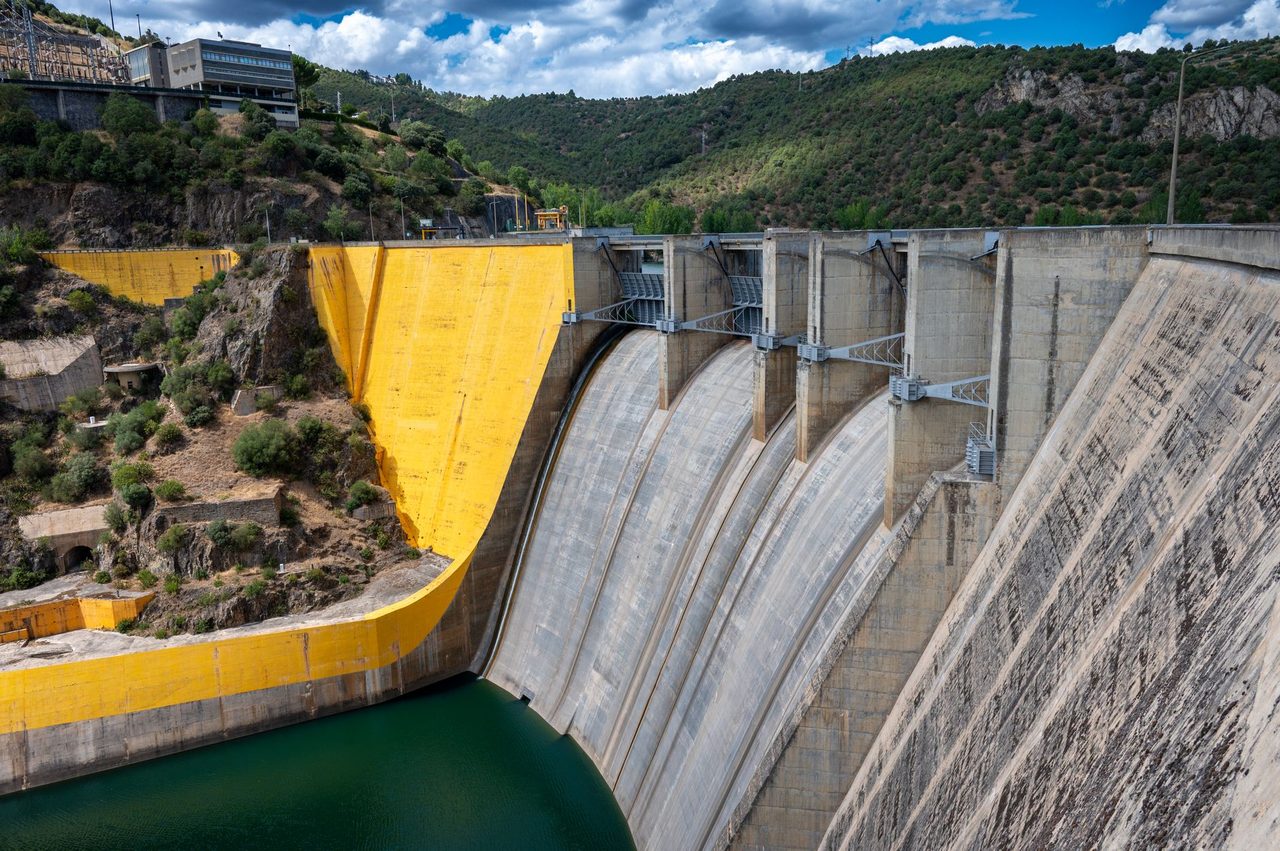
Photo: Stuti ..... on Pexels
India’s round-the-clock renewable market in 2026 is no longer a niche procurement category. RTC power has become a serious procurement pathway for utilities, large commercial and industrial buyers, and public-sector intermediaries that want high renewable penetration without taking pure intermittency risk. Yet many discussions still oversimplify RTC as a straightforward exercise in combining solar, wind and storage. In practice, RTC success depends on contract design, scheduling rules, monthly and annual availability tests, curtailment treatment, interstate transmission assumptions, and the exact cost of under-delivery.
For developers, the headline tariff is only one part of the equation. For lenders, the central question is whether contracted availability can be delivered consistently across seasons without unacceptable exposure to merchant balancing costs. For C&I buyers, the key issue is whether the product definition actually aligns with load shape, open-access rules and deviation settlement exposure. For policymakers, the challenge is to procure firmness without creating contracts that price in avoidable conservatism.
This article breaks down how RTC power works in India in 2026, where the tariff really comes from, and which structuring choices separate bankable projects from marginal ones.
What RTC means in India in 2026
In the Indian market, RTC generally refers to a power supply product where the seller commits to deliver a predefined quantum of power across all 96 time blocks in a day, with minimum annual and sometimes monthly availability thresholds. Many tenders and bilateral contracts define RTC in terms of a contracted capacity available round the clock, while actual enforcement depends on scheduling, permissible variation bands, annual capacity utilisation expectations, and penalties for shortfall.
This is very different from selling plain solar or plain wind under a must-run paradigm. In RTC, the seller is effectively underwriting shape risk.
Typical RTC delivery ingredients in 2026 include:
- Solar generation from high-CUF states such as Rajasthan, Gujarat or Karnataka
- Wind generation, often from Tamil Nadu, Gujarat, Karnataka, Maharashtra or hybridised corridors
- Short-duration BESS, commonly 2-hour to 4-hour configurations, for intraday shifting and deviation management
- External market purchases or bilateral balancing arrangements for rare low-resource periods
- Sophisticated forecasting, scheduling and energy management systems
Depending on the PPA, the supply obligation may require:
- 90% to 100% annual availability against contracted capacity
- Monthly minimum availability thresholds to prevent back-loading performance into high-resource months
- Penalties linked to shortfall units, substitute power purchase costs, or deemed loss to the procurer
- Time-block level scheduling discipline under DSM and state/open-access frameworks
The commercial difficulty is obvious: a seller must transform variable resources into a product that resembles a firm supply contract, while still remaining cheaper than thermal alternatives on a delivered basis.
Where RTC tariff really comes from
A common market mistake is to treat RTC tariff as the weighted average of solar, wind and storage costs. That approach misses three major cost drivers: overbuild, balancing energy and under-delivery risk.
At a simplified level, the RTC tariff in India 2026 is built from:
- Solar capex and generation profile
- Wind capex and generation profile
- Storage capex, round-trip losses and degradation allowance
- Transmission charges and losses, including ISTS assumptions where relevant
- O&M and augmentation reserves
- Forecasting, scheduling and SLDC/RLDC operating overheads
- Cost of balancing purchases during low-resource periods
- Penalty reserves for under-availability and deviation exposure
- Return requirements shaped by contract bankability
Indicative 2026 cost ranges that many market participants are underwriting, subject to location, technology, duty structure and financing terms:
- Utility-scale solar capex: around Rs 3.0 crore to Rs 3.8 crore per MW AC-equivalent, depending on module choice, topology and evacuation scope
- Utility-scale wind capex: around Rs 6.0 crore to Rs 7.5 crore per MW, depending on turbine rating, hub height and logistics
- Grid-scale BESS capex: around Rs 1.2 crore to Rs 1.8 crore per MWh for DC-block level systems in mainstream LFP deployments, with project-level installed cost higher after PCS, transformers, land, fire systems and integration
- BESS augmentation reserve: often explicitly modelled from year 7 onward, though contract duration and cycling assumptions matter
Indicative CUF assumptions in serious underwriting cases may be:
- Solar: 24% to 31%, depending on state, DC oversizing and module selection
- Wind: 30% to 42%, depending on site quality and machine choice
- RTC contracted output equivalent: often supported by generation overbuild of 1.7x to 2.5x of the contracted RTC capacity, depending on product firmness and seasonal profile
That overbuild matters. If a 100 MW RTC obligation is backed by 220 MW to 260 MW of combined renewable capacity plus storage, the tariff is not paying only for energy. It is paying for shape correction, seasonal insurance and contractual certainty.
In 2026, competitively structured utility-facing RTC tariffs may still cluster in a broad band around the high Rs 4s to low/mid Rs 6s per kWh depending on firmness requirements, location mix, transmission treatment and risk allocation. C&I delivered prices can look very different after wheeling, banking, cross-subsidy surcharge where applicable, standby and balancing treatment. Any blanket claim that RTC is available at a single national tariff is usually analytically weak.
The sizing logic developers and offtakers often underestimate
The hardest part of RTC is not annual energy sufficiency. It is hourly and seasonal coverage at tolerable cost.
A portfolio that looks comfortable on annual MWh can still fail badly in:
- Monsoon cloud-plus-low-wind windows in a concentrated geography
- Evening ramps during weak wind days
- Consecutive low-resource days where short-duration BESS is exhausted quickly
- High-curtailment periods that reduce usable generation despite adequate resource
This is why robust RTC modelling in 2026 usually tests:
- 15-minute block generation and delivery over at least 8 to 15 years of resource data where available
- P90 and downside weather scenarios, not just P50 averages
- Transmission outage assumptions and evacuation bottlenecks
- BESS dispatch under efficiency loss, availability loss and end-of-life usable capacity decline
- Seasonal complementarity across geographies, not just technologies
- Merchant balancing costs during tail-risk periods
An illustrative portfolio for a 100 MW RTC contract may include:
- 120 MW to 160 MW solar in Rajasthan or Gujarat
- 100 MW to 140 MW wind in Tamil Nadu, Karnataka or Gujarat
- 200 MWh to 500 MWh BESS depending on monthly firmness targets and balancing philosophy
But there is no universal template. A contract with relaxed monthly thresholds and tolerance bands may need much less storage than one that imposes strict time-block delivery and punitive shortfall pricing.
For C&I offtakers, the right question is not whether storage is included. It is whether the product shape matches the load. A flat RTC block can be uneconomic if the buyer’s demand has deep weekend troughs or heavy evening concentration. In some cases, a shaped supply contract with day-night differentiation is better than a textbook RTC block.
Contract terms that decide bankability
Many RTC projects become unbankable not because the resource is poor, but because the PPA allocates too much uncontrollable risk to the seller.
Key clauses that matter in 2026 include:
- Availability definition: Is the test annual, monthly, daily or block-wise?
- Tolerance band: How much deviation is allowed before penalties apply?
- Curtailment treatment: Is grid unavailability treated as deemed generation, deemed delivered energy, or seller risk?
- Change in law: Does it fully cover future taxes, duties, storage rules and transmission treatment?
- Force majeure and grid events: Are ISTS or state evacuation failures excusable?
- Substitute power obligation: Must the seller buy market power at any price to fill gaps?
- Payment security: LC amount, escrow structure, payment timeline and surcharge on delay
- Termination compensation: Especially important for portfolios carrying large storage capex
- Scheduling rights: Can the seller optimise across sites and technologies flexibly?
Lenders usually become cautious where PPAs combine strict firmness requirements with weak curtailment protection and open-ended replacement obligations. If a developer is effectively forced to purchase expensive spot power during extreme scarcity events without a cost pass-through, the downside tail can destroy DSCR.
This is especially relevant in 2026 because balancing markets are more visible, but not always deep enough to support cheap replacement power during stressed periods. A model that assumes reliable market purchases at moderate prices in all scarcity hours is not conservative.
State policy, transmission and market design can make or break RTC economics
India’s RTC market does not operate in a policy vacuum. Delivered economics depend heavily on whether the project is central procurement, state utility supply, or open-access/C&I supply.
Three policy variables remain critical in 2026:
- Interstate transmission charge treatment and applicable timelines
- State banking rules, including caps, charges and time restrictions
- Deviation settlement and scheduling rules at state and regional level
For utility-scale interstate portfolios, transmission assumptions still materially affect tariff competitiveness. Even where generation economics are strong, congestion on major renewable corridors can create hidden firmness risk. A low headline tariff based on ideal evacuation is not the same as a reliable delivered RTC product.
For C&I buyers, open-access RTC is often harder than marketed because:
- Banking may be restricted or expensive in several states
- Group captive structures may not align neatly with 24x7 load shapes
- Additional surcharges and standby provisions can change net savings fast
- DSM and load-generation mismatch can leave residual grid procurement at high marginal rates
Utilities and policymakers should also recognise a procurement design issue: if tenders demand near-thermal firmness with renewable-only economics and minimal flexibility on monthly performance, bids will either become expensive or rely on aggressive assumptions that later create stress.
Better-designed RTC procurement can lower tariff without undermining reliability by:
- Allowing limited annual balancing bands
- n- Recognising curtailment and transmission outages as seller-relief events where justified
- Defining transparent shortfall compensation formulas instead of open-ended replacement obligations
- Encouraging geographically diversified portfolios
- Aligning payment security with the higher capital intensity of firm renewable products
Delivery risk after award: where projects slip
Winning an RTC bid is only the beginning. Several projects that looked attractive at award have later struggled because execution risk was underestimated.
The most common post-award risk areas are:
- Wind site underperformance versus pre-bid assumptions
- Delays in transmission connectivity or bay readiness
- BESS integration issues, including EMS logic and performance guarantee gaps
- Inadequate SCADA and forecasting architecture for multi-site dispatch
- Mismatch between PPA delivery definition and actual operating controls
- Overly optimistic assumptions on curtailment frequency
A recurring problem in 2026 is that sponsors optimise bid tariff using best-case complementarity between wind and solar sites, but then compromise on final asset selection due to land, permits or evacuation constraints. That can materially worsen shape performance.
For lenders and investors, diligence should go beyond technology packages and EPC terms. The key question is whether the operating portfolio can actually deliver the contracted shape through bad months, not just good annual averages.
Useful diligence checkpoints include:
- Independent hourly portfolio simulation under downside weather years
- Review of curtailment history in the exact pooling substations and transmission corridors
- BESS augmentation strategy tied to contract life and dispatch duty
- Verification of liquidated damages alignment across turbine, module, inverter, BESS and EMS packages
- Sensitivity to delayed COD of one portfolio component, especially wind
What buyers and developers should do now
In 2026, RTC is viable in India, but only when the commercial structure matches the physical system. There is no single tariff benchmark that can substitute for proper modelling.
Developers should:
- Bid only after block-level portfolio simulation under conservative resource and curtailment assumptions
- Price balancing energy and shortfall penalties explicitly, not implicitly
- Secure flexibility in technology and site mix where the PPA permits it
- Avoid under-sizing storage if the contract includes strict monthly thresholds
C&I buyers should:
- Test RTC products against actual load curves before comparing against current grid tariff
- Evaluate open-access charges, residual demand charges and DSM implications together
- Prefer contracts with transparent shape definitions and replacement power treatment
Utilities and policymakers should:
- Procure firmness through measurable and realistic performance definitions
- Reduce avoidable risk premiums by clarifying curtailment and transmission-event treatment
- Support market depth for balancing products and better scheduling visibility
The Indian RTC market is moving from headline tariff competition to execution and contract sophistication. The winners will not be those with the most aggressive spreadsheet. They will be those who understand that firmness is a system product, not just an energy product.
If you are evaluating an RTC bid, a C&I supply structure, or lender diligence on a hybrid portfolio, contact Growthifye’s advisory desk for project-specific modelling, contract review and delivery-risk assessment.
About the author

Chief Executive Officer, Growthifye — With over 23 years in management consulting, Sudarshan has taken businesses from concept to scale — building and scaling new-age digital and energy businesses.
- 23+ years in management consulting
- EY alumnus
- Led large-scale BESS programmes, capital raises and advisory mandates
Want this analysis applied to your project?
Talk to our team