Pumped Hydro in India 2026: Project Economics, Siting Risks and Bankability
By Sudarshan Karweer · sudarshan@growthifye.com · +91 84510 99371 (Call / WhatsApp) · 2026-09-07
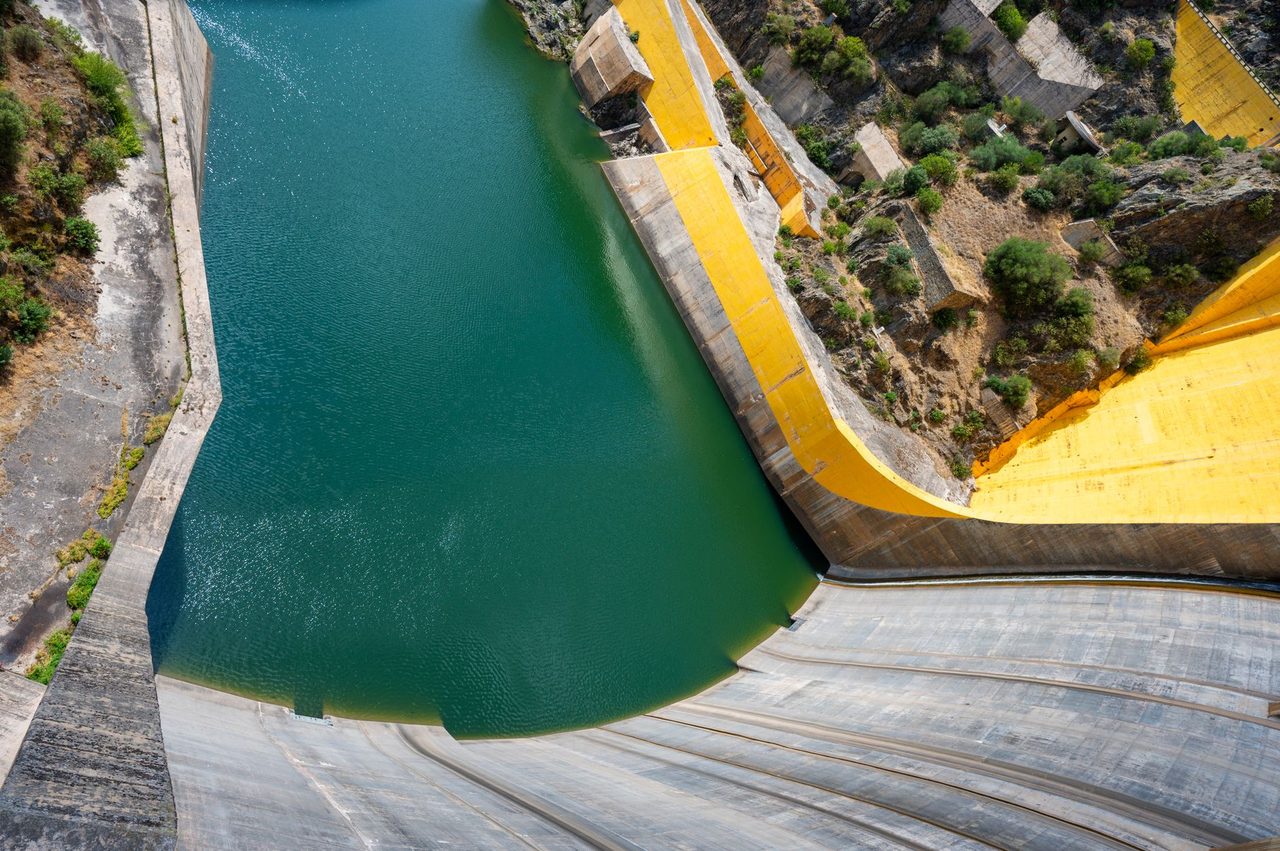
Photo: Christian Palau on Pexels
India’s storage debate in 2026 is often framed around batteries, ancillary markets and short-duration flexibility. But for utilities, state agencies, large developers and lenders looking at 6- to 10-hour shifting, pumped hydro storage projects (PSPs) are again central to capacity planning. That shift is not just conceptual. It is being driven by the hard reality of evening ramps, renewable curtailment, transmission congestion, monsoon variability and the rising cost of serving peak demand with coal at part load.
For Indian market participants, pumped hydro is no longer a legacy hydro sub-sector. It is becoming a system-flexibility asset class with direct relevance to RTC, FDRE, peaking supply, state procurement strategy and long-tenor infrastructure finance. The challenge is that PSPs look attractive in system studies long before they become bankable in real projects. Between conceptual potential and financial close sit difficult issues: topography, hydrology, land, forest clearances, geology, tunnel risk, evacuation, construction schedule and offtake design.
This article takes a practitioner view of pumped hydro in India in 2026: where the economics work, what tariff structures are emerging, how lenders assess risk, and which project-development mistakes are still killing timelines.
Why pumped hydro is back on the Indian grid agenda
India’s power system needs long-duration flexibility for three reasons.
- Solar output is still heavily concentrated in daylight hours, while demand peaks later in the evening.
- Wind output helps but is seasonal and regionally concentrated.
- Coal remains the balancing backbone, but flexible operation increases heat-rate penalties, O&M stress and emissions intensity.
This is why PSPs are increasingly discussed alongside BESS rather than against BESS. In practice, the two solve different problems.
- BESS is typically stronger for fast response, ancillary services, 1- to 4-hour shifting, congestion relief and modular deployment.
- Pumped hydro is stronger for bulk shifting, multi-hour discharge, asset life beyond 35-40 years, and lower replacement risk over long operating periods.
In 2026, many state utilities and central agencies are evaluating portfolios where batteries handle fast and short-duration flexibility while PSPs cover deep evening peaks, weekend balancing and seasonal operating resilience. This portfolio approach matters for procurement. A state buying 500 MW of 2-hour BESS and 1,200 MW of 8-hour PSP is not duplicating storage; it is solving different grid constraints.
Policy support has also improved the visibility of PSPs. States with significant hydro or hilly terrain are actively identifying sites, while central planning discussions increasingly treat storage as capacity infrastructure rather than a pure energy product. That has changed how DISCOMs, load-serving entities and lenders think about long-term contracts.
What project economics look like in 2026
Pumped hydro economics in India vary dramatically by site type.
Broadly, projects fall into two categories:
- Off-river or closed-loop PSPs, where upper and lower reservoirs are purpose-built or substantially modified.
- On-river or linked-reservoir PSPs, where one or both reservoirs connect to existing hydro infrastructure.
For 2026, market conversations and project-level estimates generally place greenfield PSP capital cost in a broad range of around Rs 7 crore to Rs 11 crore per MW for many viable sites, with meaningful outliers above that where tunnelling, geology, land or evacuation are difficult. Per-MWh storage cost depends on reservoir sizing and duration, but for 6- to 10-hour configurations the effective cost profile often compares favourably against replacing battery packs over a long concession period.
However, quoting only Rs crore per MW is misleading for PSPs. The more useful economic variables are:
- Total capex including IDC and transmission interconnection
- Construction period, often 4 to 6 years or more
- Round-trip efficiency, typically around 70% to 80% depending on hydraulic design and operating conditions
- Auxiliary consumption and pumping energy cost
- Annual fixed O&M and major maintenance assumptions
- Availability and cycling profile tied to PPA or dispatch model
For utility procurement, delivered storage cost can be evaluated in multiple ways.
- Levelised cost of storage over long operating life
- Fixed capacity payment plus variable energy/pumping pass-through
- Tolling-style charge for storage availability
- Integrated tariff in an FDRE or peaking supply bundle
Indicative tariffs are highly site- and structure-specific, but many utility-side discussions in 2026 for long-duration pumped hydro are landing in a zone where viability depends less on raw capex and more on contract design and utilisation. A PSP with low annual cycling but very high peak-system value can still be economic if the revenue model recognises capacity and flexibility rather than only arbitrage spreads.
That is a crucial point. A battery merchant model can sometimes lean on daily spreads and ancillary revenue. A pumped hydro project usually needs stronger contracted revenue support because debt tenors and construction risks are larger.
The real development bottleneck: siting, water and approvals
India has no shortage of theoretical PSP potential. It has a much smaller pipeline of actually buildable, approvable and financeable projects.
The best-looking map-based sites often fail during detailed development because of one or more of the following:
- Weak geological conditions increasing tunnelling and underground works risk
- Forest land diversion or protected-area issues
- Rehabilitation and resettlement complexity
- Water availability assumptions that do not hold through dry years
- Competing basin use for irrigation or drinking water
- Long and uncertain transmission connectivity timelines
- Reservoir design challenges that inflate civil costs
Developers frequently underestimate just how much value is destroyed by weak early-stage diligence. In PSP, a bad site cannot be fixed later by smarter procurement alone. Front-end technical and regulatory filtering matters more than in most solar, wind or even BESS projects.
In 2026, the most credible PSP developers are investing more heavily in pre-bid and pre-FID work:
- High-resolution topographic and geological studies
- Hydrology validation using multi-year data, not only monsoon averages
- Detailed access-road and logistics studies
- Transmission evacuation studies aligned with state and ISTS planning
- Early land and forest screening
- Construction packaging strategy for civil, electro-mechanical and balance-of-plant scopes
Utilities and policymakers should note that announcing large PSP targets is the easy part. The harder part is creating realistic development windows, standardising bid documents, clarifying water-use permissions and synchronising storage procurement with transmission readiness.
Revenue models: where bankability is improving and where it is not
There are four broad revenue pathways for PSPs in India today.
- Long-term utility capacity-linked contracts
- Integrated supply under RTC or FDRE structures
- Peaking power procurement by DISCOMs or state agencies
- Merchant or quasi-merchant arbitrage with limited contracted support
Of these, the first three are currently much more bankable.
A pure merchant PSP in India remains difficult in 2026 unless the sponsor has a very strong balance sheet and can absorb long development risk. The reason is simple: merchant price spreads are volatile, market design for long-duration flexibility is still evolving, and lenders do not like underwriting 20-plus year debt against uncertain arbitrage assumptions.
The more financeable structures typically include a fixed availability or capacity-linked payment. This can be combined with variable treatment of pumping energy. Typical structuring questions include:
- Who bears the electricity cost for pumping?
- Is there a normative round-trip efficiency benchmark?
- Are off-peak charging windows contractually protected?
- How are deemed availability and outage events treated?
- Is dispatch centralised by the buyer, scheduler or SLDC/RLDC framework?
- What happens if renewable input energy is curtailed?
For DISCOMs, a peaking or storage availability structure may be more rational than trying to force PSP into a simple per-kWh energy tariff. For developers, this improves revenue visibility. For lenders, it aligns debt service with the actual system value of storage.
Bundled structures also deserve attention. A developer pairing solar, wind and PSP can reduce procurement fragmentation and create more dispatchable supply blocks. But these structures need careful modelling. If the renewable side is oversized without accounting for curtailment, transmission limits and pumping requirements, the apparent integrated tariff may look attractive in a bid but fail under real operating conditions.
What lenders are scrutinising in pumped hydro deals
Lenders like the long asset life and strategic relevance of PSPs, but they remain cautious because civil construction risk dominates the early years.
The main lender concerns in 2026 include:
- Geological risk and adequacy of site investigations
- EPC packaging and interface risk across civil and electro-mechanical scopes
- Construction schedule realism and contingency
- Cost overrun protection and sponsor support
- PPA strength, payment security and dispatch rights
- Water-use rights and environmental compliance
- Transmission evacuation certainty by COD
- O&M capability over long operating life
In lender reviews, one recurring weakness is over-optimistic COD planning. A developer may assume 48 months, but experienced technical advisors often stress-test to 60-72 months depending on tunnel length, access conditions and permit status. That difference can materially change IDC and equity returns.
Another issue is mismatch between tariff design and debt profile. If revenue depends too heavily on actual cycling or arbitrage rather than contracted availability, DSCR volatility rises. Banks will then either tighten leverage or seek stronger reserve structures.
For this reason, lender’s engineer reviews are becoming more detailed and less formulaic for PSPs than for standard solar or wind assets. Project sponsors who treat technical diligence as a financing formality usually discover the problem too late.
How PSP compares with BESS for Indian buyers and policymakers
The correct question is not whether PSP is better than BESS in all cases. It is where each technology is superior in the stack of Indian use cases.
BESS usually wins when:
- Duration requirement is up to 4 hours
- Land must be compact and near load or congestion nodes
- Fast deployment is essential
- Frequency response and ancillary services are major value streams
- Modular expansion is preferred
PSP usually wins when:
- Duration requirement is 6 to 10 hours or more
- The buyer values long asset life and lower repowering risk
- Bulk shifting at utility scale matters more than sub-second response
- Suitable topography and water access are available
- Multi-decade capacity planning is the objective
For C&I buyers, PSP will rarely be a direct behind-the-meter decision. Its relevance is indirect but important. As more PSP capacity enters state and central procurement, evening tariffs, open access supply products, renewable shaping costs and grid reliability outcomes can all change. C&I consumers buying high-renewable power should therefore track PSP additions as part of forward energy strategy.
For policymakers, the key design challenge is avoiding a one-size-fits-all storage policy. BESS and PSP need different bidding windows, qualification criteria, concession timelines and payment structures. Trying to force both into identical procurement templates can distort bids and delay projects.
What developers and utilities should do next
In 2026, the PSP market in India is moving from ambition to execution discipline. The winners are unlikely to be the sponsors with the biggest announced pipeline. They will be the ones that control site quality, approvals, contract structure and financing strategy early.
For developers:
- Prioritise site bankability over portfolio optics
- Build realistic geotechnical and hydrology evidence before aggressive bidding
- Secure transmission visibility early, not after land and permits are advanced
- Structure offtake around capacity value, not only energy output
- Align civil contracting strategy with lender expectations from day one
For utilities and state agencies:
- Procure storage for actual system needs: peak, duration, flexibility and congestion
- Use bid structures that recognise capacity and availability value
- Coordinate storage tendering with evacuation readiness
- Standardise key contractual positions on pumping energy, dispatch and outage treatment
For lenders:
- Differentiate between top-tier and weak-site PSPs early in screening
- Focus on geological evidence, contingency philosophy and interface management
- Stress-test dispatch assumptions under real renewable and transmission constraints
India needs both fast-response batteries and durable long-duration storage. Pumped hydro can play a major role in that mix, but only where project fundamentals are strong. In this segment, poor siting or weak contract design can erase the technology’s theoretical advantage. Good projects will get funded. Weak ones will remain PowerPoint assets.
If your team is evaluating a pumped hydro project, storage procurement strategy, integrated FDRE design or lender diligence, contact Growthifye’s advisory desk for a practical assessment of bankability, grid fit and project economics.
About the author

Founder & CEO, Growthifye — engineering and financing India's clean-energy transition.
Want this analysis applied to your project?
Talk to our team