Pumped Hydro Storage in India 2026: Project Economics, Siting and Bankability
By Sudarshan Karweer · sudarshan@growthifye.com · +91 84510 99371 (Call / WhatsApp) · 2026-09-07
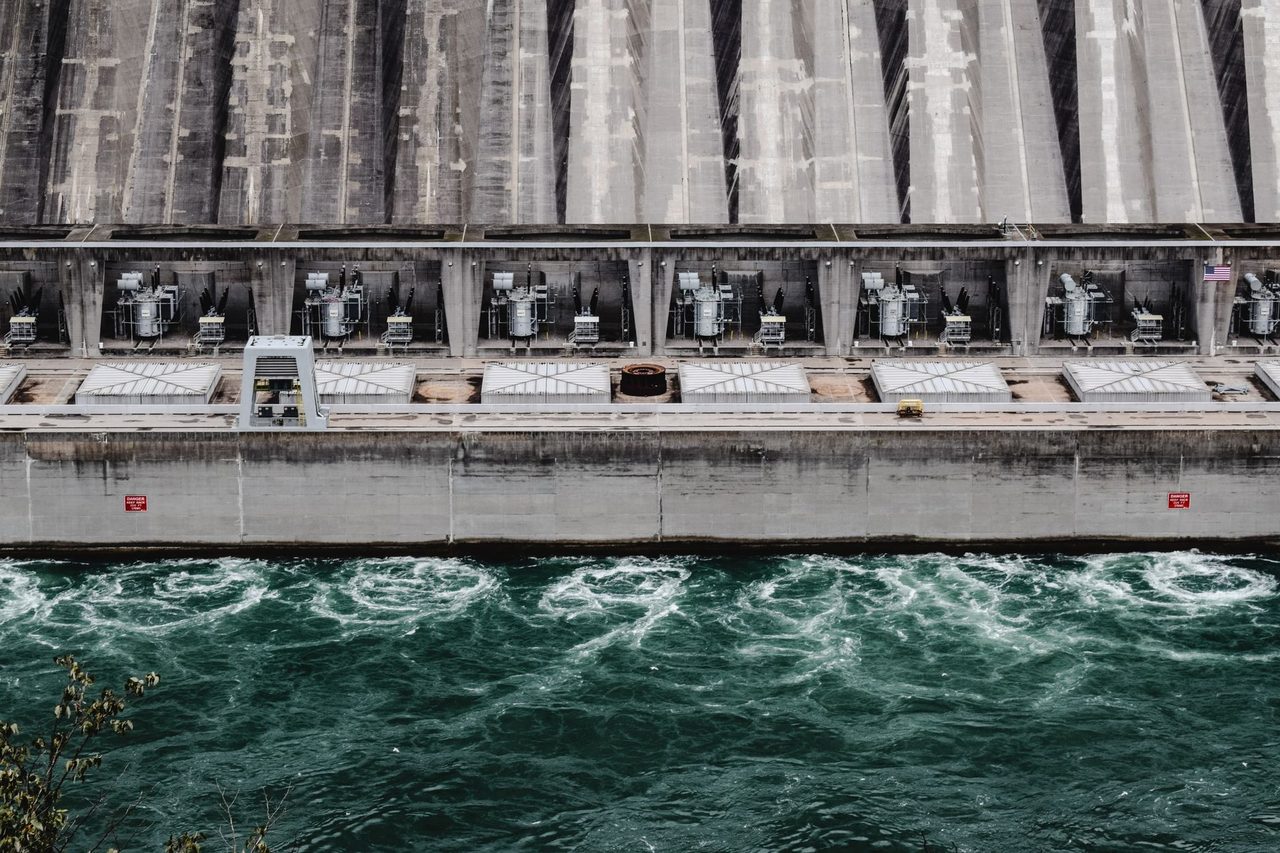
Photo: Eva Bronzini on Pexels
India’s power system in 2026 needs more than fast-response batteries. It also needs long-duration storage that can shift large blocks of renewable energy across evening peaks, manage multi-hour ramps, and reduce the thermal balancing burden on state and central procurers. That is where pumped hydro energy storage, or PHES, is returning to the centre of grid planning.
For Indian developers, lenders, DISCOMs, C&I buyers evaluating round-the-clock supply chains, and policymakers structuring dispatchable renewable procurement, PHES now deserves a more serious commercial lens. The conversation is no longer only about technical potential. It is about whether projects can be permitted, financed, contracted and integrated into the grid within realistic timelines.
This article looks at pumped hydro in India in 2026 from a practitioner’s perspective: where the economics are landing, how site screening should be done, what approval risks matter most, how PHES compares with BESS, and what makes a project bankable.
Why pumped hydro is back in India’s storage mix
India’s renewable fleet is larger, but the shape of the problem has changed. Solar additions continue to deepen the midday surplus in several states while evening net-load ramps remain steep. Wind helps, but seasonal and hourly variability still leaves a gap for firming resources. BESS has become the preferred tool for sub-4-hour and some 4-hour applications, especially where ancillary services, fast response and modular deployment matter. But as discharge duration requirements move toward 6, 8 or more hours, PHES enters the discussion more strongly.
The policy backdrop in 2026 also supports this shift.
- FDRE and RTC tenders increasingly reward dispatchability rather than simple installed MW
- State utilities are under pressure to reduce expensive evening thermal dispatch and power exchange exposure
- Renewable curtailment and transmission congestion in some corridors increase the value of time-shifting energy
- Grid planners are paying more attention to inertia, reactive support and system adequacy alongside energy arbitrage
- Pumped hydro has stronger strategic alignment with long-duration storage needs than short-duration merchant cycling alone
India also has one practical advantage: unlike several countries starting from scratch, it already has legacy hydro engineering capability, public-sector experience with large civil works, and identified pumped storage potential across multiple states.
That does not mean all projects are attractive. It means the market is moving from abstract potential to selective execution.
Where PHES fits versus BESS in 2026
The wrong way to frame the storage debate is battery versus pumped hydro. In most serious portfolios, both are needed, but for different jobs.
BESS is generally stronger when the requirement is:
- Fast frequency response and ancillary services
- 1-4 hour shifting
- Modular scale-up near load centres or renewable pooling points
- Shorter construction timelines
- Lower land and water complexity
- Revenue stacking across multiple market products
PHES is generally stronger when the requirement is:
- 6-10+ hour discharge duration
- Bulk energy shifting at utility scale
- Daily or near-daily charging from midday renewable surplus
- Lower degradation concerns over long operating lives
- Large MWh storage at lower lifecycle replacement risk
- Long asset life that better matches utility and infrastructure debt tenors
In India in 2026, that distinction matters for procurement strategy. If a procurer needs firm capacity across the full evening and late-night block, or wants to support high renewable penetration in a transmission-constrained region, a well-sited PHES asset may deliver a more durable solution than trying to force the same duty cycle onto a battery-only platform.
The trade-off is obvious: PHES has much heavier development risk. Site quality, hydrology assumptions, geology, land interface, forest issues, construction complexity and evacuation readiness can make or break the economics.
Project economics: what numbers matter in 2026
PHES economics should never be reduced to a single Rs/kWh metric. Indian projects vary too widely by head, tunnel length, reservoir configuration, land profile, geology, transmission distance and whether the design is off-river closed-loop or linked to existing hydro infrastructure.
That said, market conversations in 2026 are broadly converging around a few workable economic reference points for large projects, subject to site and design specifics.
- Capital cost can often land in the range of about Rs 8 crore to Rs 13 crore per MW for viable utility-scale configurations, though difficult sites can exceed this materially
- Cost per stored energy unit depends heavily on duration, but PHES becomes comparatively more attractive as required duration rises beyond typical 4-hour battery applications
- Round-trip efficiency is commonly modelled in the roughly 70% to 80% band depending on configuration and operating regime
- Construction periods often range from 4 to 6 years, with financing and IDC sensitivity therefore much higher than for BESS
- Technical life is materially longer than battery assets, with useful operating life often modelled over several decades if major equipment maintenance is handled properly
For lenders and investors, the most important distinction is that PHES economics are usually capex-and-execution dominated, while BESS economics are often more exposed to replacement assumptions, degradation trajectories and merchant or ancillary revenue stacking.
A practical financial model for PHES in India should test at least the following:
- Single-cycle daily operation versus partial and seasonal cycling
- Charging energy source and price, especially if grid charging is used during low-price hours
- Auxiliary consumption and pumping losses
- Variable dispatch value by season, not a flat arbitrage spread assumption
- Capacity payment or availability-based revenue if under utility contract
- Curtailment reduction value where paired with renewables
- Transmission charges, losses and scheduling treatment depending on structure
- IDC impact from construction slippage of 6, 12 and 18 months
- O&M escalation, major overhaul reserves and insurance
For offtake-linked projects, tariff outcomes depend on structure. A PHES-backed FDRE or peak-supply arrangement may justify a premium over plain renewable energy if the dispatch profile reduces balancing cost for the buyer. But if the procurement design pays only for delivered energy without adequately valuing storage capacity, the project can look expensive on a headline tariff basis even when system value is high.
That is why tender design matters. Storage should be compensated for both energy shifting and capacity contribution, not treated as a free add-on to renewable energy.
Siting and technical screening: the real first filter
In practice, most weak PHES projects fail long before financing discussions. They fail in site selection.
A serious screening exercise in India should begin with a ruthless elimination framework, not optimistic top-down potential numbers.
Key siting criteria include:
- Sufficient elevation difference to achieve an efficient head and manageable civil design
- Geological suitability for reservoirs, tunnels and powerhouse works
- Water availability and refill assumptions that are technically credible
- Minimal social displacement and manageable land acquisition path
- Low forest and wildlife conflict where possible
- Proximity to strong transmission evacuation points
- Reasonable road access for construction logistics
- Clear monsoon and sediment-related design considerations
- Ability to operate as a closed-loop or near-closed-loop system where hydrological dependence is a concern
For many Indian developers, the temptation is to prioritise notional topography over execution realities. That is a mistake. A site with slightly weaker theoretical efficiency but cleaner permitting and evacuation can be far more financeable than a technically elegant but environmentally constrained location.
Off-river closed-loop designs are gaining attention because they reduce some hydrological and river-flow concerns. But they are not automatically easier. Land, geology, lining requirements, water sourcing for initial fill, and transmission access still need detailed work.
From an engineering and advisory standpoint, early-stage due diligence should include at minimum:
- Pre-feasibility design optimisation
- Head-duration trade-off studies
- Reservoir sizing linked to actual market use case
- Geotechnical reconnaissance
- Water balance modelling
- Grid interconnection assessment
- Construction methodology review
- Capex benchmarking against comparable sites
A common error is oversizing energy duration without confirming that the project’s expected dispatch regime supports that storage volume. More hours are not always better if the charging opportunity, offtake design or transmission availability does not support full utilisation.
Permitting, policy and execution risk
The single biggest reason PHES is discussed more than delivered is approvals and execution complexity.
In 2026, developers need to assume that regulatory and permitting readiness will be scrutinised much more closely by lenders, offtakers and equity partners than in solar or standalone BESS.
Typical project risk areas include:
- State-level allocation and site allotment conditions
- Environmental clearance requirements
- Forest clearance where applicable
- Land acquisition and rehabilitation obligations
- Water-use permissions
- Geological surprises during excavation
- Transmission bay and evacuation delays
- Contractor capability for heavy electro-mechanical and civil integration
For policymakers, the implication is straightforward. If India wants PHES to support high-renewable grids in the early 2030s, approval pathways must be faster and more standardised in the late 2020s. Without that, developers will continue to prefer storage technologies with lower development friction even if system economics favour long-duration assets.
For developers, the implication is equally clear: do not assume permits can be regularised later. Front-load the risk work. A PHES project with unresolved land, forest or evacuation questions should not be marketed as near-bankable capacity.
Contracting and bankability: what lenders will ask
Lenders do not finance storage ambition. They finance cash-flow visibility and execution discipline.
For PHES in India, bankability in 2026 depends on whether the project can show a stable contracted use case or, at minimum, a robust path to monetisation that does not rely on heroic merchant spread assumptions.
Bankable structures may include:
- Long-term capacity-plus-energy contracts with utilities
- FDRE or RTC-linked offtake structures where storage value is embedded in dispatch obligations
- Hybrid arrangements where PHES supports a renewable portfolio and reduces balancing exposure
- State utility peak-supply contracts with availability metrics
Lenders will focus on the following questions:
- Is the site fully diligenced technically and environmentally?
- Are capex estimates supported by credible engineering detail and contingency?
- Is the EPC or multi-package contracting strategy realistic for the site complexity?
- Are construction milestones and liquidated damages enforceable?
- Is evacuation infrastructure aligned with COD?
- How is charging energy sourced and priced?
- Does the revenue model compensate both capacity and energy delivered?
- Are dispatch rights and scheduling responsibilities clearly allocated?
- What happens if utilisation is lower than base-case assumptions?
- How resilient is DSCR under delay and lower-spread scenarios?
This is where many PHES models need more discipline. Too many base cases still assume smooth construction, generous dispatch spreads and little curtailment or outage friction. In reality, lenders will haircut utilisation, widen contingency, and stress-test COD delays heavily.
A project that still holds acceptable returns after those adjustments is the one likely to move.
What C&I buyers and developers should do now
For C&I consumers, PHES is unlikely to appear immediately as a direct behind-the-meter solution in the way batteries can. But it will matter indirectly and increasingly through the structure and cost of firm renewable supply, peak power procurement and utility-backed dispatchable clean energy products.
C&I buyers negotiating medium- to long-term clean power arrangements should ask suppliers and intermediaries harder questions:
- Is the firmness claim backed by batteries, hydro, market purchases or contracted long-duration storage?
- What are the seasonal delivery limits?
- How is evening peak risk priced?
- What is the curtailment backstop?
- Is the storage component contracted or merely assumed?
For renewable developers, the strategic decision is not simply whether to enter PHES. It is whether they have the balance sheet, development capability, and patience for large civil infrastructure with long lead times. Many will be better served by partnering early with hydro-experienced entities rather than treating PHES as an extension of solar-wind execution playbooks.
For utilities and policymakers, procurement design must evolve. If tenders continue to focus excessively on headline energy tariffs without valuing duration, availability and system adequacy, PHES will remain underbuilt relative to system need.
The 2026 outlook for pumped hydro in India
The Indian storage market in 2026 is broadening. Batteries will continue to dominate near-term deployments because they are faster to build and easier to contract. But pumped hydro is moving from peripheral discussion to strategic necessity in specific use cases: evening peak management, high-duration renewable shifting, and long-life utility storage.
The winners in PHES will not be those with the most ambitious pipeline slides. They will be those with bankable sites, disciplined capex control, realistic revenue structures and early attention to approvals and transmission.
In other words, pumped hydro in India is not a story of theoretical potential anymore. It is a story of execution quality.
If you are evaluating a pumped hydro project, an FDRE strategy involving long-duration storage, or the comparative economics of PHES versus BESS for an Indian offtake or investment case, contact Growthifye’s advisory desk for a practical, transaction-focused assessment.
About the author

Founder & CEO, Growthifye — engineering and financing India's clean-energy transition.
Want this analysis applied to your project?
Talk to our team