PSS Tuning for RE Evacuation in India 2026: ISTS Stability, Grid Codes, Costs
By Sudarshan Karweer · sudarshan@growthifye.com · +91 84510 99371 (Call / WhatsApp) · 2026-09-12
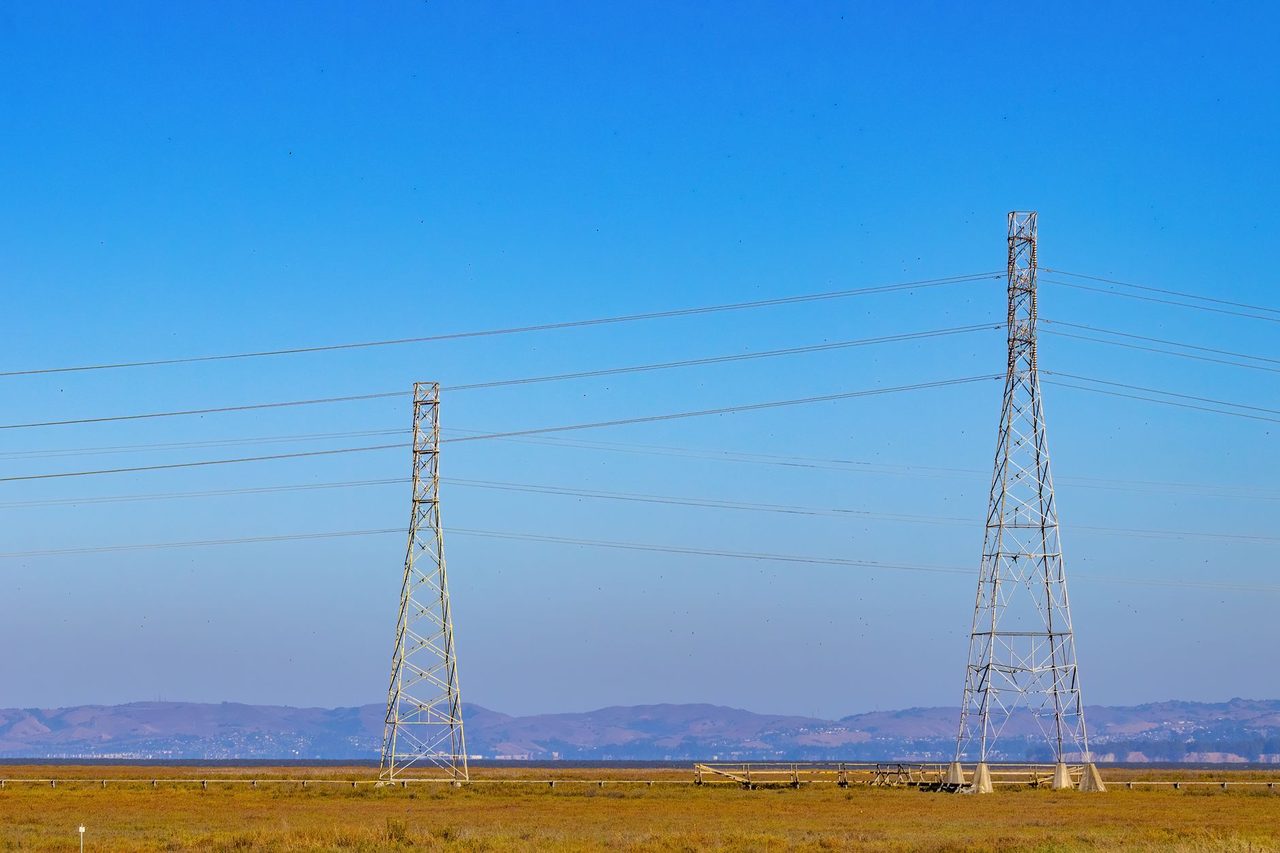
India’s utility-scale renewable build-out is no longer constrained only by land, modules, wind turbines or tariff discovery. In 2026, a growing share of project risk sits in the transmission interface: whether an RE plant can stay stable, compliant and dispatchable on a stressed or weak part of the grid. One under-discussed issue is power system stabiliser, or PSS, tuning and controller coordination across the evacuation chain.
For developers, lenders and utilities, this is not an academic topic. Poor damping of oscillations can trigger repeated grid events, curtailment instructions, delayed connectivity approvals, expensive retrofits and tougher lender technical conditions. As India adds more inverter-based resources to the ISTS and state networks, the interaction between synchronous generators, STATCOMs, SVCs, HVDC terminals and plant-level inverter controls is changing system dynamics. PSS settings that worked earlier may not remain adequate after new renewable injections, topology changes or additional compensation equipment.
This article explains where PSS tuning matters in India’s 2026 transmission context, how it affects RE evacuation, what studies are typically required, what costs to expect, and what project stakeholders should check before financial close.
Why PSS tuning matters more in India’s 2026 RE grid
PSS is typically associated with synchronous generators, where it improves damping of low-frequency oscillations by modulating excitation control. At first glance, that may look more relevant to thermal or hydro stations than to solar and wind parks. But for renewable evacuation, the system-level effect is direct.
A large RE pool connected to an ISTS node depends on the dynamic performance of the wider grid around it. If inter-area oscillations are weakly damped, if nearby synchronous units have poorly coordinated PSS settings, or if compensation and inverter controls interact unfavourably, the evacuation node can see:
- voltage and power oscillations after faults or switching events
- repeated active power runbacks
- nuisance tripping or control blocking
- stricter reactive power operating instructions
- additional study requirements from CTUIL, STU or the transmission licensee
- conditions imposed during connectivity approval and commissioning
India’s 2026 context makes this more relevant for three reasons.
First, renewable penetration is deeper in western, southern and emerging high-capacity corridors than it was even three years ago. Second, new network additions under ISTS, Green Energy Corridor phases and state transmission schemes are altering power flow patterns and modal behaviour. Third, the share of inverter-based generation is increasing faster than the retirement or repurposing of synchronous support in many regions.
The result is a more control-heavy grid. Damping is no longer provided passively by legacy system strength alone. It must be verified, coordinated and maintained.
Where PSS issues show up in RE evacuation projects
In practice, a solar park or wind project developer usually encounters PSS-related questions indirectly, through connectivity and stability study workflows. Common triggers include:
- grant of connectivity for large injection capacity under GNA-linked planning
- augmentation of pooling substations or 220/400/765 kV evacuation paths
- addition of STATCOM, SVC or series compensation nearby
- major generation mix changes around the injection region
- recurring observations from grid operator event analysis
- pre-commissioning model validation and dynamic study review
For example, a 500 MW to 1 GW renewable cluster evacuating to a 400 kV or 765 kV ISTS node may pass steady-state load flow but still face concerns under small-signal stability review. The issue may not be the RE plant alone. It may be damping performance of nearby synchronous units, older PSS settings at regional generators, or interaction among AVR, PSS and fast-acting power-electronic controls.
This matters because system operators increasingly look beyond thermal loading and simple N-1 checks. In many nodes, especially with high renewable concentration, dynamic performance after faults and disturbances is becoming central to connection readiness.
That is why developers should include Power system studies early in project development rather than waiting until commissioning-stage queries arise.
The Indian regulatory and technical framework in 2026
In India, no single isolated regulation says “renewable developer must tune PSS” in a generic way. The obligation arises through the broader compliance chain: CEA technical standards, IEGC-aligned operating discipline, CTUIL connectivity processes, RLDC/SLDC requirements, and plant/grid study outcomes.
Key touchpoints in 2026 typically include:
- CEA technical standards for connectivity to the grid
- Indian Electricity Grid Code and related scheduling, operation and security provisions
- CTUIL connectivity and network access procedures under the GNA regime
- CEA guidelines on model submission, RMS/EMT validation and dynamic performance for large plants where applicable
- transmission utility or load dispatch centre observations during study review
- OEM controller model acceptance and field-tuning records
For lenders, the practical question is simpler than the regulation map: is there any unresolved dynamic stability risk that can delay COD, reduce deemed availability, or lead to post-COD capex?
Projects that assume “PSS is the generator owner’s problem” can miss real exposure. If a regional evacuation corridor needs control retuning or coordinated studies before allowing full injection under stressed conditions, the renewable plant may be the one facing delay.
What studies developers and lenders should insist on
For 2026-era ISTS and major state-transmission renewable projects, the minimum diligence should go beyond base-case load flow. A serious study package generally includes:
- steady-state load flow across seasonal and high-RE scenarios
- contingency analysis for credible outages
- short-circuit assessment at plant and grid nodes
- small-signal stability or oscillatory stability assessment
- transient stability assessment for severe disturbances
- reactive power and voltage control coordination review
- controller interaction review among AVR, PSS, plant controller, STATCOM/SVC and inverter controls
In many cases, the decisive value comes from small-signal studies. These identify poorly damped modes, often in the 0.2 Hz to 2.0 Hz range, and test whether damping ratios remain acceptable across operating conditions.
If modal damping is marginal, the mitigation may include:
- PSS retuning at one or more nearby synchronous units
- AVR parameter changes
- power oscillation damping function activation in FACTS devices or inverters where supported
- revised plant controller gain settings
- changes in reactive support placement or dispatch philosophy
- operational limits until permanent correction is implemented
For a lender, the key document is not just the final study report but the closure path: who owns the mitigation, what approvals are needed, what outage windows are required, and whether the renewable project schedule depends on third-party action.
This is where experienced support in Protection, control & SCADA and system integration becomes commercially valuable, not just technically useful.
Typical costs, timelines and commercial impact in 2026
PSS tuning itself is not usually the largest capex item, but the cost of discovering the need too late can be material.
Indicative 2026 cost ranges in India are as follows:
- system-level dynamic study package for a large RE project or cluster: roughly Rs 15 lakh to Rs 60 lakh, depending on scope, node complexity, software environment and number of scenarios
- OEM-supported generator AVR/PSS retuning at a synchronous station: roughly Rs 10 lakh to Rs 40 lakh per unit for engineering, testing and validation, excluding major hardware replacement
- controller retrofit or excitation system upgrade where legacy hardware is inadequate: roughly Rs 50 lakh to Rs 3 crore per unit, sometimes higher for old fleets
- additional site testing, PMU-assisted validation or disturbance recording improvements: roughly Rs 10 lakh to Rs 75 lakh per installation scope
The bigger impact is usually indirect:
- COD delay of 1 to 3 months if study closure is linked to external station retuning
- evacuation restrictions during high-generation months
- additional liquidated damages risk under PPA or connectivity milestones
- DSRA and lender drawdown pressure if commissioning slips
- generation loss if RLDC/SLDC imposes conservative operating envelopes
For a 300 MW solar project with a 24% CUF, even a one-month delay can translate into roughly 18 million units of lost generation opportunity. At a realised tariff of Rs 2.9 to Rs 3.4 per kWh, that is about Rs 5.2 crore to Rs 6.1 crore in gross revenue impact, excluding financing knock-on effects. For wind or hybrid projects in stronger seasons, the number can be higher.
This is why transmission-side dynamic diligence deserves the same seriousness as module degradation, wind resource assessment or land title review.
Practical bid-stage and pre-COD checklist for RE stakeholders
Developers, C&I buyers under open access structures, utilities and lenders should ask a focused set of questions before treating evacuation as “secured.”
At bid stage:
- Is the injection node in a known high-RE corridor with evolving stability behaviour?
- Are there nearby thermal or hydro units whose PSS/AVR settings materially affect the node?
- Has any recent event analysis in the region pointed to oscillation, weak-grid or controller interaction issues?
- Is a new STATCOM, HVDC link, series compensation element or major transmission augmentation planned nearby?
- Are the grid models available and current enough for credible studies?
Before financial close:
- Has a bankable dynamic study package been completed or clearly scoped?
- Are all required OEM RMS/EMT models available and accepted?
- If mitigation depends on third-party generator retuning, is there a documented implementation commitment?
- Have timelines for studies, outages, witness tests and approvals been built into the schedule?
- Is there any unresolved risk of staged injection rather than full-capacity energisation?
Before COD:
- Are plant controls coordinated with grid expectations for voltage, frequency and fault ride-through?
- Has disturbance recording and event visibility been commissioned properly?
- Are settings frozen, version-controlled and reflected in as-built documentation?
- Have any conditions from CTUIL, STU, SLDC or RLDC been formally closed?
For C&I consumers sourcing power through open access, these questions also matter. A cheap tariff at the generator bus does not remain cheap if transmission-side stability issues create curtailment or intermittent non-availability. Connectivity quality is a procurement variable, not just an engineering detail.
What the market should expect next
In 2026 and beyond, India’s transmission planning and connection ecosystem will continue moving toward deeper dynamic assessment, especially in renewable-heavy pockets. Three trends are likely.
First, more projects will need corridor-level rather than project-only dynamic review. Second, model quality and field validation will become more important as inverter controls diversify across OEMs. Third, coordinated tuning across legacy synchronous assets and newer power-electronic assets will increasingly shape practical evacuation capacity.
For policymakers and utilities, this means strengthening data-sharing, standardising study assumptions and reducing delays in model acceptance. For developers, it means treating transmission dynamic performance as an early-stage development workstream. For lenders, it means asking one extra question in diligence: not only whether a project has connectivity, but whether that connectivity remains robust under realistic disturbances.
Firms with capability in Power system studies and HV/EHV substation design can add value by identifying these issues before they hit the critical path. The objective is not over-engineering. It is avoiding a situation where a project that looks complete on paper cannot inject reliably when the grid is stressed.
India has built impressive momentum in renewable additions. The next layer of execution discipline is making sure evacuation is not only available in MW terms, but stable in dynamic terms. PSS tuning and controller coordination sit squarely in that category.
If you are evaluating an ISTS or state-transmission evacuation scheme, planning lender diligence, or facing stability-related connectivity questions, contact Growthifye’s advisory desk for a practical review of study scope, compliance risks and mitigation options.
Explore Growthifye's related capabilities
This analysis connects directly to our advisory practice: Power system studies · HV/EHV substation design · Transmission line engineering · Protection, control & SCADA.
About the author

Chief Executive Officer, Growthifye — With over 23 years in management consulting, Sudarshan has taken businesses from concept to scale — building and scaling new-age digital and energy businesses.
- 23+ years in management consulting
- EY alumnus
- Led large-scale BESS programmes, capital raises and advisory mandates
Want this analysis applied to your project?
Talk to our team