
OT/IT Cybersecurity for India Renewables 2026: IEC 62443, CEA Rules and ROI
By Sudarshan Karweer · sudarshan@growthifye.com · +91 84510 99371 (Call / WhatsApp) · 2026-09-13
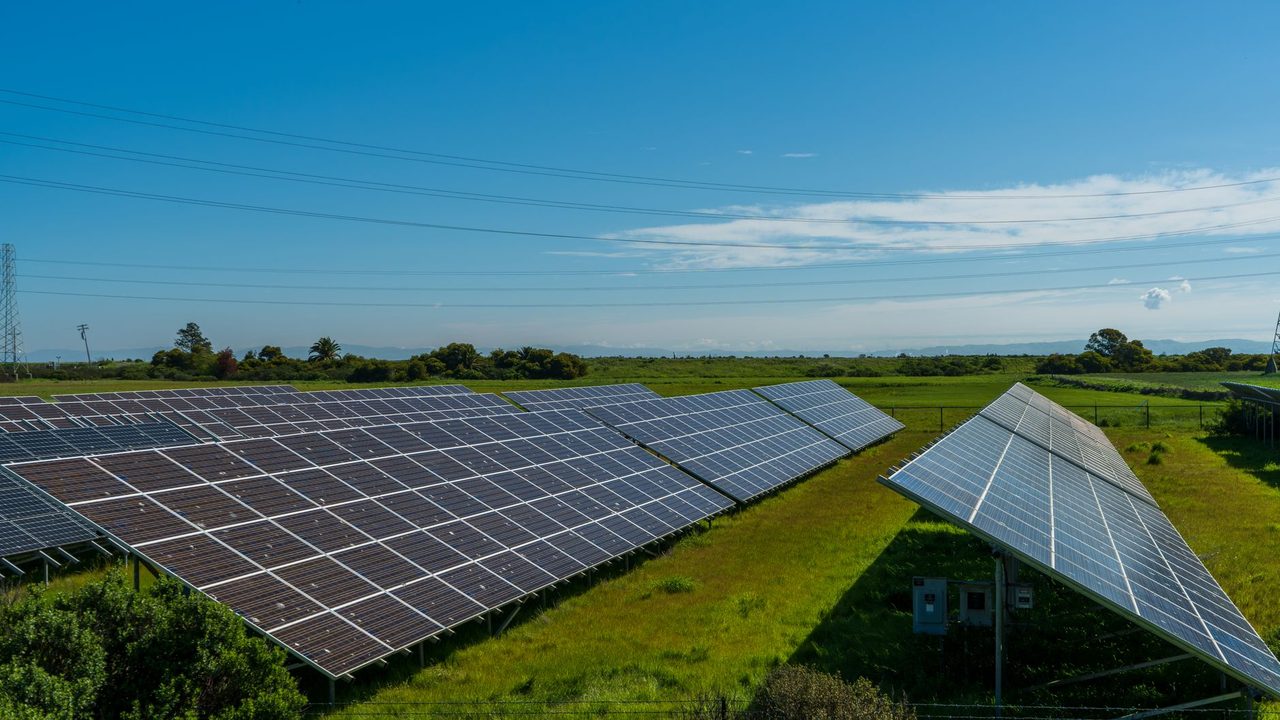
Photo: ERod Photos on Pexels
India’s renewable sector has scaled fast, but cybersecurity maturity at plant and portfolio level has not kept pace. Solar parks, wind farms, hybrid projects, battery energy storage systems, pooling substations and remote O&M networks now depend on SCADA, historians, edge gateways, OEM remote access, cloud dashboards, ERP integrations and API-based reporting. That makes cyber risk a direct threat to generation, scheduling, invoicing, warranty claims, lender reporting and grid compliance.
For Indian C&I energy consumers, RE developers, lenders, utilities and policymakers, the key 2026 question is no longer whether cyber controls are needed. The practical question is which controls matter first, how much they cost, what regulations apply and what return they deliver in avoided downtime, lower incident probability and stronger bankability.
This article focuses on a clearly distinct topic from ERP, APM, CMMS, forecasting and data-platform discussions: OT/IT cybersecurity for India’s renewable-energy value chain. It looks specifically at solar, wind, BESS, hybrid and open-access operating environments in the Indian context.
Why cybersecurity is now a board-level issue in Indian energy
Three structural shifts have changed the risk profile.
First, renewable operations are increasingly distributed and remotely managed. A 250 MW solar portfolio may have central SCADA visibility, remote inverter access, string-level monitoring, weather stations, CCTV, drone imagery, meter integrations and cloud-based ticketing. Every remote connection creates a potential path of compromise if identity, network segregation and access logs are weak.
Second, India’s grid and market operations are becoming more data-intensive. Forecasting, scheduling, DSM management, ABT settlement, open-access energy accounting and payment reconciliation all rely on digital systems. A cyber incident that corrupts meter data, scheduler outputs or availability logs can trigger financial losses even if turbines and modules are physically intact.
Third, lenders and offtakers increasingly examine operational resilience. Cyber posture now affects due diligence for acquisitions, refinancing, long-term O&M contracts and utility interconnections. A developer with poor OT governance may face tougher indemnity clauses, higher insurance friction and slower diligence sign-off.
In 2026, a cyber event at an Indian renewable asset can cause:
- Generation loss from inverter, PPC, BMS or SCADA unavailability
- Curtailment or dispatch issues from corrupted control signals
- DSM penalties from bad forecasting or schedule submission failure
- Billing disputes from meter-data integrity issues
- Extended outages due to lack of clean backups and tested recovery
- Safety risk where protection, relay settings or operator consoles are affected
- Reputational damage with DISCOMs, C&I buyers, regulators and lenders
For many operators, the biggest weakness is not a sophisticated attacker. It is basic hygiene gaps: shared passwords, flat networks, unmanaged remote desktop tools, old Windows hosts, unsupported firmware, no asset inventory and no incident-response playbook.
The 2026 India regulatory and standards context
Renewable operators in India should evaluate cyber controls against both domestic regulatory expectations and globally recognised industrial standards.
The most relevant Indian anchor remains the Central Electricity Authority cyber framework applicable to the power sector, alongside broader directions issued across critical information infrastructure and sectoral security operations. Depending on the project’s connection level, load dispatch interactions, utility interfaces and ownership model, asset operators may need to align with requirements around:
- Asset inventory and classification
- Access control and authentication
- Logging, monitoring and security operations
- Patch and vulnerability management
- Incident reporting and response
- Backup, recovery and business continuity
- Third-party and remote-access governance
- Network segregation between corporate IT and operational environments
For implementation design, IEC 62443 remains the most practical international reference for OT environments. It gives a usable framework for industrial automation and control systems across policies, zones and conduits, secure remote access, user roles, hardening, system requirements and supplier practices. For utilities and large renewable fleets, NIST Cybersecurity Framework concepts are also useful at governance level, but IEC 62443 is generally closer to engineering reality at plant level.
A sensible 2026 posture for Indian renewables is:
- Use domestic power-sector cyber obligations as the compliance baseline
- Use IEC 62443 to design plant and fleet controls
- Map controls to lender, insurer and customer due-diligence questionnaires
- Extend requirements contractually to OEMs, EPCs, O&M vendors and cloud providers
This is where structured IT strategy & roadmaps can prevent ad hoc spending. Without a roadmap, operators often buy tools before resolving architecture flaws.
The highest-risk cyber weak points in solar, wind and BESS portfolios
Not every vulnerability has equal operational impact. In Indian renewable portfolios, the most common high-risk areas are usually the following.
Remote OEM and vendor access
Inverter OEMs, turbine OEMs, PPC vendors, BMS integrators and SCADA suppliers often require remote access for diagnostics and support. Many sites still use always-on VPNs, shared credentials or direct internet exposure through field routers. That is one of the fastest ways to compromise an OT environment.
Plant-to-corporate network bridging
When historians, reporting servers, engineer laptops and finance systems share trust paths without segmentation, malware from office IT can propagate into the plant network. Ransomware does not need to understand solar controls to shut down Windows-based OT support systems.
Unmanaged edge devices
Gateways, protocol converters, serial-to-IP devices, data loggers and unmanaged switches are widely deployed in Indian plants. These often run outdated firmware, default passwords and weak encryption.
Weak identity and privileged access management
A surprising number of operating sites still rely on common admin accounts for HMIs, engineering workstations, routers and SCADA servers. That makes user accountability impossible and recovery slower.
Insecure portable media and contractor laptops
Engineers routinely connect laptops and USB drives for relay settings, firmware upgrades, inverter tuning and data extraction. If device control is absent, malware can enter otherwise isolated networks.
Insufficient backup and recovery validation
Many operators say they have backups, but few regularly test bare-metal recovery of SCADA servers, historian nodes, PPC configurations, relay settings or BESS control environments. In a real incident, untested backups often fail.
For BESS, the stakes are even higher because cyber compromise can affect controls linked to thermal management, alarms, charge-discharge commands and protection coordination. While safety systems are layered, poor cybersecurity materially increases operational risk.
A practical control stack for Indian renewable assets
The right control stack depends on asset size and complexity, but most portfolios should prioritise a foundational package before moving to advanced threat detection.
Start with asset discovery and network mapping.
You cannot secure what you cannot see. Build a plant-wise inventory of:
- SCADA servers and historian nodes
- HMIs and engineering workstations
- Inverters, turbines, PPCs, BMSs and relays
- Meters, RTUs, PLCs and weather stations
- Firewalls, routers, switches and gateways
- Remote-access tools and external vendor links
- Software versions, firmware versions and support status
Then establish OT network segmentation.
At minimum, separate:
- Corporate IT network
- DMZ for data exchange and controlled services
- Plant supervisory layer
- Control-device layer
- Vendor remote-access paths
Use firewalls and allow-list rules, not informal trust. Direct internet access from OT devices should be eliminated wherever feasible.
Next, fix identity and access controls.
- Remove shared administrator accounts
- Enforce named users and role-based access
- Implement MFA for all remote access
- Restrict vendor sessions to approved windows
- Record and log privileged sessions for critical systems
Harden endpoints and servers.
- Disable unused ports and services
- Remove default credentials
- Lock down USB use
- Maintain approved application lists for engineering workstations where possible
- Separate patching rules for OT based on maintenance windows and OEM validation
Implement logging, monitoring and alerting.
For a 2026 renewable operator, security visibility should at least cover:
- Firewall and VPN logs
- Windows server and HMI logs
- User authentication events
- Configuration changes on network devices
- Remote-session activity
- Critical process alarms and communication failures
Larger fleets should consider OT-aware monitoring integrated with a central SOC or MSSP model. Full industrial anomaly detection may not be needed on day one, but centralised visibility is increasingly justified for portfolios above 500 MW.
Backups and recovery come next.
- Maintain offline and immutable backup copies where possible
- Backup SCADA configurations, PPC logic, relay settings, historian databases and network-device configs
- Define RPO and RTO plant-wise
- Test restoration every quarter for critical systems
Finally, formalise incident response.
Every asset owner should know:
- Who isolates affected systems
- n- Who informs SLDC, RLDC, DISCOM or utility counterparties if operations are affected
- Which OEMs are contacted first
- How evidence is preserved
- How recovery is approved and validated
These controls sit naturally alongside Cybersecurity and Program governance workstreams rather than as a one-off IT purchase.
What does cybersecurity cost, and what is the ROI?
In India, cost depends heavily on fleet size, site count, legacy complexity and whether the operator already has basic IT controls. For planning purposes in 2026, the following indicative ranges are useful.
For a single renewable site of 50 to 250 MW:
- OT cyber assessment and architecture review: Rs 8 lakh to Rs 25 lakh
- Firewall refresh, secure remote access and segmentation basics: Rs 15 lakh to Rs 60 lakh
- Log collection, MFA, endpoint hardening and backup improvements: Rs 10 lakh to Rs 40 lakh
- Documentation, playbooks, vendor access policy and training: Rs 5 lakh to Rs 15 lakh
For a multi-site portfolio of 500 MW to 2 GW:
- Fleet-wide assessment and risk ranking: Rs 25 lakh to Rs 1.2 crore
- Standardised secure access architecture across sites: Rs 75 lakh to Rs 3 crore
- Central monitoring, SOC/MSSP integration and incident processes: Rs 50 lakh to Rs 2.5 crore annually depending on scope
- Recovery modernisation and resilience testing: Rs 20 lakh to Rs 1 crore
These are not trivial costs, but the avoided-loss logic is strong.
Consider a 300 MW solar-wind portfolio with blended realised revenue of roughly Rs 3.2 to Rs 4.5 per kWh depending on offtake structure. If a cyber incident causes even 48 hours of partial outage at 40% unavailable capacity, the immediate energy-revenue impact alone can easily cross Rs 25 lakh to Rs 45 lakh. Add contractor mobilisation, restoration effort, schedule disruption, penalty exposure, dispute costs and management time, and a single incident can exceed the annual cost of preventive controls.
Now consider a C&I open-access portfolio where monthly billing accuracy and settlement timeliness matter. Corrupted meter data or scheduler interfaces can delay invoices and cash flows, raising working-capital stress. For leveraged projects, that can be more damaging than the pure energy loss.
Cyber ROI should therefore be framed across four buckets:
- Outage and production-loss avoidance
- Faster incident recovery and lower restoration cost
- Compliance and diligence readiness for lenders, utilities and buyers
- Lower probability of cascading financial errors in forecasting, billing and reporting
In many portfolios, payback can be justified if controls prevent or materially reduce just one medium-severity incident over two to three years.
How developers, lenders and C&I buyers should approach due diligence
Cybersecurity should be a transaction issue, not just an O&M issue.
Developers seeking capital or asset sales should maintain a cyber diligence pack that includes:
- Network diagrams and plant asset inventory
- Remote-access matrix by vendor and system
- Patch and vulnerability status summary
- Backup and recovery test records
- Incident log for the last 24 months
- OT/IT policy set and responsibility matrix
- Evidence of alignment to applicable CEA requirements and IEC 62443 principles
Lenders should ask whether operational dependence on digital systems has been reflected in technical due diligence. A conventional electrical review is no longer enough for a digitally operated asset. For utility-scale renewables, cyber resilience should influence assumptions on availability, business continuity and reserve planning.
C&I consumers procuring renewable power through captive, group captive or third-party open access should include minimum cyber clauses in procurement and operating agreements, especially where data interfaces connect metering, scheduling or billing systems to customer environments. A weak vendor cyber posture can become a customer operational problem.
Utilities and policymakers also have a role. Standardising baseline remote-access requirements, event logging expectations and incident-reporting pathways can reduce ambiguity for connected renewable assets.
A 180-day rollout roadmap for 2026
For operators that know they need action but want a sequenced plan, a 180-day rollout is realistic.
Days 0 to 30: establish baseline
- Inventory OT and connected IT assets
- Identify crown-jewel systems affecting generation, scheduling, billing and safety
- Review all remote-access paths
- Rank sites by exposure and business criticality
Days 31 to 75: reduce obvious exposure
- Close direct internet exposure
- Enforce MFA on remote access
- Eliminate shared privileged accounts where possible
- Separate IT and OT trust zones
- Disable unsupported or unnecessary services
Days 76 to 120: improve resilience
- Standardise backup policies and test restoration
- Deploy central log collection for critical sites
- Define incident-response workflows
- Update OEM and O&M contracts with cyber obligations
Days 121 to 180: operationalise governance
- Conduct tabletop exercises with plant, IT and management teams
- Build fleet dashboards for access, patching and backup status
- Align documentation to audit and diligence requirements
- Prioritise phase-2 investments such as OT monitoring and advanced segmentation
This is also where Data & analytics platforms can support cyber operations by consolidating logs, asset inventories, maintenance states and site criticality into one decision layer, especially for distributed portfolios.
The bottom line for Indian renewables
In 2026, OT/IT cybersecurity is no longer optional overhead for Indian renewable assets. It is part of plant reliability, lender confidence, utility compliance and commercial resilience. Solar, wind, hybrid and BESS operators do not need to solve every advanced threat on day one. But they do need a disciplined baseline: asset visibility, segmentation, controlled remote access, hardened endpoints, tested backups and a live incident-response model.
The best programmes are engineering-led, risk-ranked and tied to operating realities such as maintenance windows, OEM dependencies, SLDC interfaces and settlement workflows. That delivers practical security without disrupting generation.
If your organisation is planning a cyber baseline, lender diligence, portfolio standardisation or remediation roadmap, contact Growthifye’s advisory desk for a practical assessment and implementation plan.
Explore Growthifye's related capabilities
This analysis connects directly to our advisory practice: IT strategy & roadmaps · ERP & asset management systems · Data & analytics platforms · Cloud migration.
About the author

Chief Executive Officer, Growthifye — With over 23 years in management consulting, Sudarshan has taken businesses from concept to scale — building and scaling new-age digital and energy businesses.
- 23+ years in management consulting
- EY alumnus
- Led large-scale BESS programmes, capital raises and advisory mandates
Want this analysis applied to your project?
Talk to our team