EAM for Indian Renewables 2026: Reliability, Spares, ROI and Rollout
By Sudarshan Karweer · sudarshan@growthifye.com · +91 84510 99371 (Call / WhatsApp) · 2026-09-19

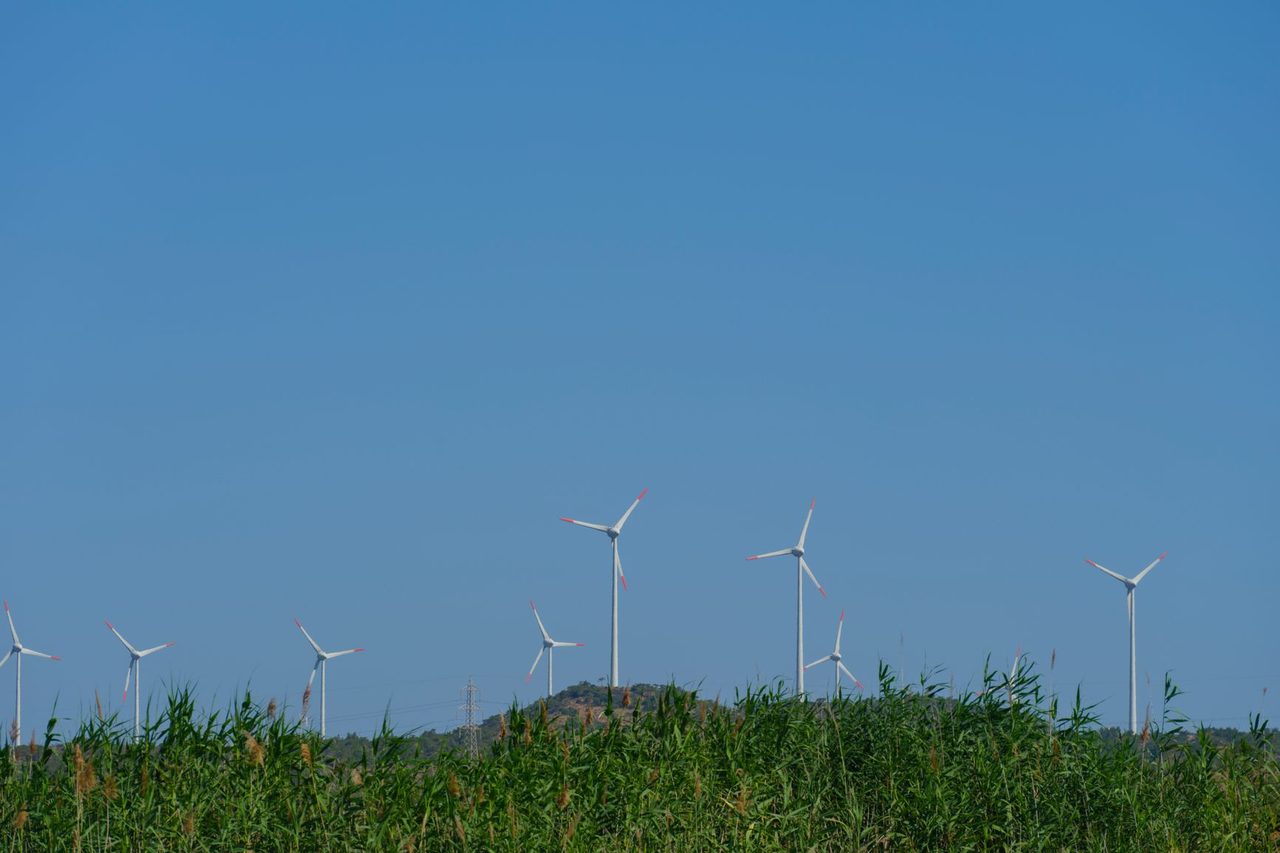
Photo: Digvijaysinh Rajput on Pexels
India’s renewable fleet is expanding faster than many owner-operators’ maintenance systems. Utility-scale solar parks, wind clusters, C&I open-access plants, BESS projects and hybrid portfolios are now being managed across multiple states, multiple SPVs and multiple O&M contractors. Yet on the ground, a large share of maintenance planning, spare-parts tracking, breakdown analysis and contractor performance management still sits in spreadsheets, WhatsApp groups and email trails.
That operating model is now too risky for 2026.
Curtailment pressure remains real in several states. Module and inverter warranty enforcement requires clean failure evidence. Wind gearbox, converter and pitch-system events can quickly become high-cost outages. BESS projects add thermal, fire-safety and warranty-traceability requirements. Lenders and investors increasingly ask for plant-wise availability, MTBF, MTTR, work-order closure discipline, critical-spares coverage and root-cause reporting. Meanwhile, O&M margins are tightening.
This is why enterprise asset management, or EAM, is becoming a core digital layer for Indian energy companies. Unlike a generic ERP, an EAM platform is designed around asset hierarchies, preventive and condition-based maintenance, work orders, reliability analytics, inspection rounds, spares management, mobile technician workflows and audit-ready service history.
For Indian renewable portfolios, the business case is straightforward: if a better maintenance system cuts avoidable downtime by even 0.5% to 1.5%, the annual benefit can materially exceed software and implementation costs.
Why EAM matters now for Indian renewable portfolios
By 2026, the operational challenge is no longer just building capacity. It is operating assets consistently across geography, technology and contract structures.
A 250 MWp solar portfolio spread across Rajasthan, गुजरात, Karnataka and Maharashtra may have:
- Different inverter OEMs and firmware versions
- Multiple SCADA environments
- Separate land parcels and evacuation arrangements
- Distinct SLA terms with local O&M partners
- Different state-level labour, safety and logistics realities
- Separate lender reporting needs by SPV
A 300 MW wind portfolio has its own complexity:
- Turbine model variation by commissioning vintage
- Major-component failure risk and crane-planning dependencies
- Remote site access and monsoon-season constraints
- Higher dependence on critical spares readiness
- More expensive unplanned outages per incident
Solar-plus-storage and RTC-linked projects increase the need further because maintenance windows, availability commitments and energy-shifting obligations are more time-sensitive.
In such environments, EAM is not just a maintenance tool. It becomes an operational control system for reliability, inventory, contractor governance and commercial protection.
What an EAM platform does better than spreadsheets and basic CMMS
Many Indian operators already use some form of CMMS. The issue is depth and discipline. A basic ticketing or work-order tool may capture complaints, but it often fails to connect asset history, failure modes, spare usage, technician productivity, warranty claims and risk-based maintenance decisions.
A mature EAM platform brings together the following capabilities:
- Asset register and hierarchy down to inverter, string combiner, turbine subsystem, transformer, protection relay or BESS rack level
- Preventive maintenance scheduling by calendar, runtime, event or condition trigger
- Mobile work orders with timestamps, checklists, images and geo-tagging
- Failure-code libraries and root-cause analysis workflows
- Spare-parts planning with min-max levels, lead times, ABC/criticality classification and issue/return tracking
- Contractor SLA tracking for response time, closure time and repeat failure rates
- Reliability metrics such as MTBF, MTTR, forced outage frequency and availability loss by cause
- Permit-to-work and safety integration for high-risk interventions
- Audit trails for warranty claims, insurance support and lender reviews
- Integration with SCADA, historians, ERP, procurement and finance systems
The practical result is better maintenance decisions, faster closure, lower repeat failures and cleaner data for management.
This is also where Growthifye’s ERP & asset management systems and Data & analytics platforms capabilities can add value, especially when owners need a practical operating model rather than a software-only rollout.
Where the value comes from: uptime, spares, labour and claims
The ROI case for EAM in India should be built using four value pools, not one.
First, uptime improvement.
Consider a 100 MW AC solar plant with a CUF around 24% in a strong irradiation zone. Annual generation is roughly 210 to 220 million units. If average realised revenue is in the range of Rs 2.70 to Rs 3.40 per kWh depending on PPA structure, a 1% avoidable generation loss can cost about Rs 57 lakh to Rs 75 lakh annually. Even a 0.5% recovery through better outage planning, faster maintenance closure and tighter spare availability can justify a focused EAM rollout.
For wind, the economics are often sharper because outage events can be longer and component-specific failures more expensive. A 100 MW wind portfolio at 32% PLF may generate roughly 280 million units. At a realised tariff of Rs 3.20 to Rs 4.25 per kWh, a 1% generation impact can translate to about Rs 90 lakh to Rs 1.19 crore per year.
Second, spare-parts optimisation.
Many Indian operators either overstock insurance spares across sites or understock critical items and then pay with extended downtime. EAM enables:
- Criticality-based stocking
- Common-part visibility across sites
- Better lead-time planning for imported components
- Reduced dead inventory
- More disciplined issue and consumption tracking
A portfolio with Rs 8 crore to Rs 20 crore of maintenance inventory can often release 8% to 15% of excess or poorly classified stock over time while improving service levels for truly critical parts.
Third, labour and contractor productivity.
When technicians lose time on paper records, duplicate data entry or poorly defined jobs, actual wrench time drops. Mobile work orders, standard task lists and digital closure evidence can lift field productivity significantly. In Indian conditions, even a 10% to 15% improvement in effective maintenance productivity matters because skilled manpower remains constrained in remote renewable sites.
Fourth, warranty and claim recovery.
This is frequently underestimated. For inverter trips, tracker drive failures, transformer issues, blade defects, BESS thermal alarms or repetitive BoP faults, successful claim recovery often depends on evidence quality. If timestamps, event logs, maintenance history, environmental conditions, inspection photos and repeat-failure patterns are not recorded properly, owners struggle to enforce warranty terms. EAM creates the documentation backbone required for recovery discussions with OEMs and insurers.
EAM use cases by asset class in India
The most successful deployments are tailored by technology rather than forced into one generic template.
For utility-scale solar:
- PM schedules for inverter, transformer, HT yard, weather station, CCTV and module cleaning equipment
- Tracker maintenance and actuator failure tracking
- String or block-level defect history linked to recurring generation loss
- Thermography, IV testing and hotspot inspection record management
- Monsoon-readiness and drainage inspection workflows
- Vegetation, fencing and security-related work orders where applicable
For wind:
- Turbine subsystem hierarchy for gearbox, generator, yaw, pitch, converter and hydraulics
- High-value alarm and trip-code mapping
- Major-component replacement planning and crane mobilisation workflow
- Lubrication, oil analysis and condition-driven tasks
- Repeat-failure analytics by turbine model, OEM or site wind regime
For BESS:
- Rack, module, PCS, HVAC and fire-system asset hierarchy
- Alarm severity workflow with escalation rules
- Thermal-event inspection and incident traceability
- Warranty-cycle and performance record retention
- Integration with EMS/SCADA for event-triggered maintenance actions
For C&I and open-access portfolios:
- Small distributed asset management across rooftops, ground-mount and captive sites
- Travel-efficient technician routing
- SLA visibility for third-party O&M vendors
- Faster invoice support through completed, timestamped service records
Integration architecture that works in practice
One reason EAM projects fail is overengineering. Indian operators do not need a giant transformation before they get value. They need a fit-for-purpose architecture.
A practical 2026 EAM stack for renewables usually includes:
- EAM as the system of record for assets, maintenance plans, work orders and spares
- SCADA or historian as the operational event source
- ERP for procurement, vendor management, finance and inventory valuation
- Analytics layer for reliability dashboards, outage Pareto and portfolio benchmarking
- Mobile apps for technicians and supervisors
The integration priorities should be sequenced.
Phase 1 should focus on asset hierarchy, PM library, work-order workflows, mobile forms and basic spares control.
Phase 2 should add SCADA-triggered event creation, reliability analytics and contractor SLA dashboards.
Phase 3 can cover advanced use cases such as predictive maintenance, condition scoring, warranty-claim workflows and fleet benchmarking.
Cloud deployment is now the default for many Indian portfolios unless utility or critical-infrastructure constraints push specific workloads on-premise. However, role-based access control, field-device security, backup policy, OEM remote-access governance and cyber segmentation remain essential. This is where Cloud migration and Cybersecurity planning must sit inside the operating design, not as afterthoughts.
How to calculate ROI credibly in 2026
Decision-makers should avoid inflated digital-transformation claims. A bankable EAM business case in India should use conservative assumptions and plant-specific data.
Start with these baselines:
- Current planned vs unplanned maintenance mix
- Equipment-wise forced outage hours
- Mean time to acknowledge and close incidents
- Availability loss by top 10 recurring causes
- Inventory value, stock-outs and dead-stock ratio
- Repeat failure rates within 30, 60 or 90 days
- Contractor SLA misses and penalty leakage
- Warranty claims filed vs successfully recovered
Then estimate value under conservative scenarios.
For a 300 MW mixed solar portfolio, a typical annual benefit range may come from:
- 0.4% to 1.0% generation recovery from lower avoidable downtime
- 5% to 12% reduction in emergency procurement and logistics costs
- 8% to 15% improvement in technician productivity
- 5% to 10% inventory optimisation over 12 to 24 months
- Better claim recovery and lower revenue leakage from undocumented failures
Depending on portfolio size and implementation scope, total first-year programme costs for software, integration, mobility, data setup and change management may range from roughly Rs 60 lakh to Rs 3 crore or more. Large multi-site owners may spend more, but they also capture more value. In many cases, payback can fall within 9 to 18 months if the rollout is disciplined and tied to operating KPIs.
Common rollout mistakes Indian operators should avoid
Most failures are not software failures. They are operating-model failures.
The most common mistakes are:
- Poor asset master data with no consistent naming standard
- Importing legacy preventive tasks without rationalisation
- No failure-code taxonomy, making analysis useless later
- Treating contractor adoption as optional
- Weak mobile usability for field teams with low-connectivity conditions
- No spare-parts criticality model and no lead-time logic
- Building dashboards before fixing data-capture discipline
- Leaving site managers to run change management alone
A better rollout playbook is to start with one representative portfolio slice, prove value, then scale.
A strong pilot in India often covers:
- 100 MW to 300 MW solar or wind across 3 to 6 sites
- Standardised asset hierarchy and coding
- 20 to 40 critical PM templates
- Mobile workflows for supervisors and technicians
- Top 100 to 300 critical spares classified by failure impact and lead time
- Weekly governance on adoption, closure quality and outage reduction
Programme governance matters as much as software configuration. Owners should define clear KPI ownership across operations, maintenance, procurement, finance and contractor management. If no one owns data quality and work-order closure discipline, the system degrades quickly.
What lenders, investors and policymakers increasingly care about
For lenders and institutional investors, EAM maturity is becoming a soft but meaningful indicator of asset-operating quality. It does not replace technical due diligence, but it improves confidence in reported availability, maintenance discipline, lifecycle planning and reserve assumptions.
Policy and regulatory stakeholders also have an interest. As India’s grid integrates more variable renewable capacity, asset reliability and outage discipline become system-relevant, especially for hybrid and storage-linked projects. Better maintenance records support safer operations, cleaner incident reporting and stronger compliance posture.
For utilities and DISCOM-facing renewable suppliers, better reliability data also improves commercial discussions around availability, scheduling support and outage attribution.
The broader point is simple: as renewable fleets mature, digital asset management shifts from administrative convenience to infrastructure necessity.
In 2026, Indian renewable companies that still manage maintenance through fragmented tools will face more downtime, more inventory waste, weaker claim recovery and less lender confidence than peers that deploy a proper EAM operating model.
The winning approach is not to buy the biggest software stack. It is to implement a practical EAM backbone with clean asset data, disciplined workflows, mobile execution, spare-parts logic and measurable reliability KPIs. Done well, that creates lower outage losses, better O&M control and a more financeable portfolio.
If you are assessing an EAM business case, vendor shortlist or rollout roadmap for solar, wind, BESS or hybrid assets, contact Growthifye’s advisory desk for a practical discussion on architecture, ROI and implementation strategy.
Explore Growthifye's related capabilities
This analysis connects directly to our advisory practice: IT strategy & roadmaps · ERP & asset management systems · Data & analytics platforms · Cloud migration.
About the author

Chief Executive Officer, Growthifye — With over 23 years in management consulting, Sudarshan has taken businesses from concept to scale — building and scaling new-age digital and energy businesses.
- 23+ years in management consulting
- EY alumnus
- Led large-scale BESS programmes, capital raises and advisory mandates
Want this analysis applied to your project?
Talk to our team