
Open Access PPA Curtailment Risk in India 2026: Charges, Compensation and Strategy
By Sudarshan Karweer · sudarshan@growthifye.com · +91 84510 99371 (Call / WhatsApp) · 2026-09-16
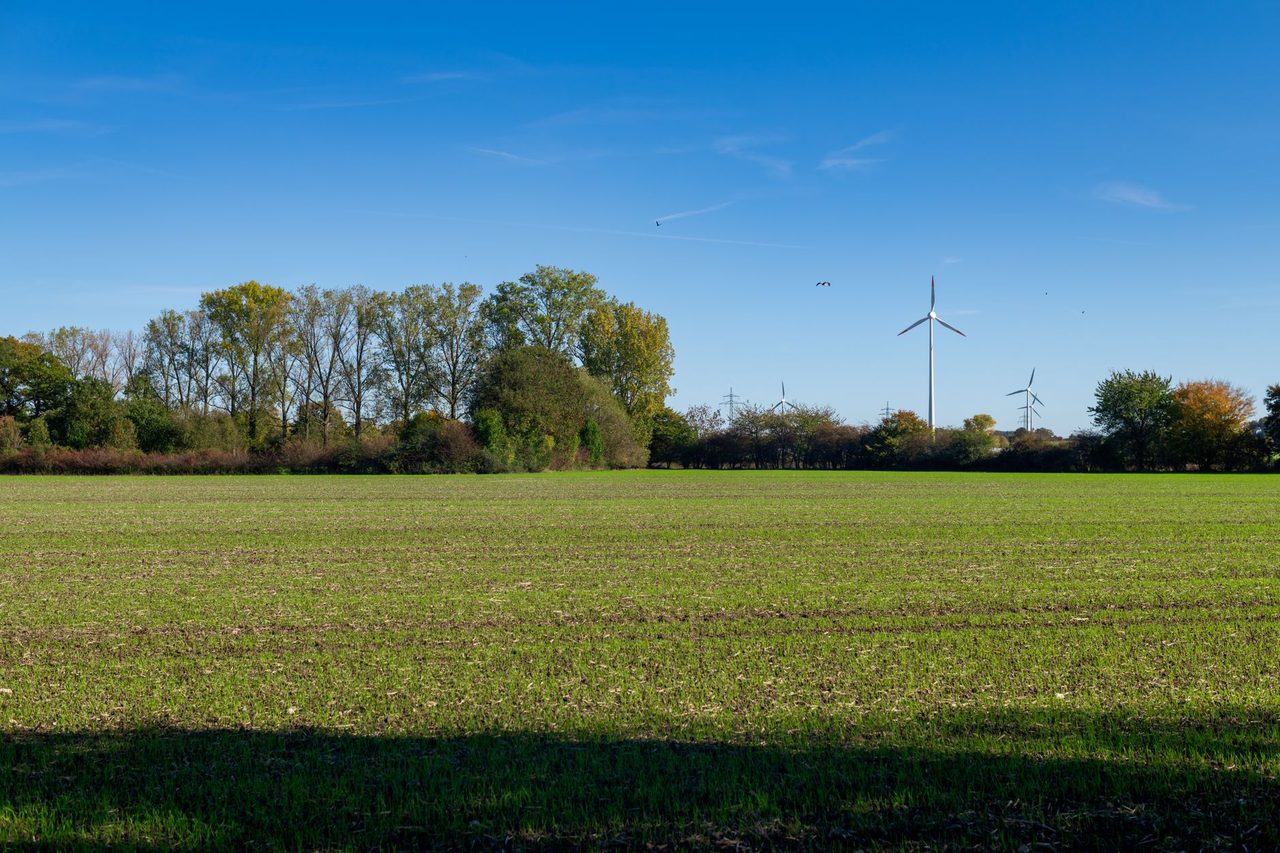
Photo: Sergej ***** on Pexels
India’s open access market in 2026 is no longer constrained only by headline tariffs, wheeling charges or banking rules. For many commercial and industrial buyers, the next material value leak is curtailment risk: when a renewable plant is available to generate, but power cannot be scheduled, evacuated or injected fully into the grid. In a market where landed cost savings versus DISCOM supply can be as thin as Rs 0.40-1.20/kWh after all charges, even a 3-7% annual curtailment can erase much of the expected benefit.
This issue matters across third-party and group captive structures, and it matters differently for solar, wind and hybrid projects. It also matters across stakeholders: C&I consumers worry about savings volatility, developers worry about revenue erosion, lenders worry about DSCR compression, and utilities worry about system balancing and grid security. Yet many open access transactions in India still treat curtailment as generic boilerplate rather than as a quantified commercial risk.
This article looks at curtailment risk in Indian open access and corporate PPAs in 2026 through a practical lens: where curtailment occurs, how regulation and state practice shape outcomes, what it does to landed cost economics, and how PPA and approval strategy can reduce damage.
Why curtailment has become a first-order open access risk
Three structural shifts have pushed curtailment up the agenda in 2026.
First, renewable penetration in several states has increased sharply, especially during solar afternoon hours and in windy monsoon periods. Grid congestion is no longer a remote risk limited to a few nodes. It is visible in renewable-rich corridors, substation bottlenecks and downstream distribution constraints.
Second, corporate buyers are procuring larger shares of annual consumption through open access. A textile unit that earlier covered 15-20% of load from open access may now target 40-70%. That makes intermittency and curtailment not just an energy-accounting issue, but a procurement-strategy issue affecting residual DISCOM purchases, demand charges and time-of-day economics.
Third, many 2024-2026 PPAs have become more aggressively priced. In solar-rich states, base PPA tariffs around Rs 2.70-3.40/kWh for third-party supply and project-specific captive structures are not unusual, while wind and hybrid tariffs may sit higher depending on CUF, location and evacuation profile. But low base tariffs leave limited room to absorb avoidable energy loss. If annual delivered units fall due to curtailment while fixed and quasi-fixed costs remain embedded in the tariff, effective delivered cost rises quickly.
A simple illustration shows the impact. Assume a 20 MW solar open access project with a net expected annual generation of 34 million kWh and a busbar tariff of Rs 3.00/kWh. If 5% of available generation is curtailed without compensation, 1.7 million kWh of energy value is lost. At busbar level alone, that is Rs 5.1 million in annual revenue foregone. For the consumer, the impact is not just lost renewable units. Those units are replaced by higher-cost DISCOM supply, often at Rs 7-10/kWh marginal energy cost for HT users, depending on state and tariff category. That widens the landed-cost gap far beyond the PPA tariff.
Where curtailment happens in the open access chain
In practice, “curtailment” is not one thing. It can arise at multiple points in the delivery chain, and each one has a different legal and commercial remedy.
- Plant-level backing down by SLDC or state utility despite renewable availability
- Grid congestion at pooling substation, GETCO/STU bay or downstream transmission network
- Distribution-system restrictions affecting wheeling to the end consumer
- Scheduling or forecasting deviations that cause reduced accepted schedules
- Protection or evacuation outages where the generator is ready but the network is unavailable
- Must-run exceptions invoked on grounds of grid security or safety
For a C&I buyer, these distinctions matter because compensation depends on cause classification. If a generator underperforms because of equipment failure, that is a generation risk. If the state load dispatch centre issues backing-down instructions for system security, the generator may claim must-run protection or deemed generation depending on the applicable regulatory framework and the exact facts. If the consumer’s drawal point has restrictions, the issue may sit partly with the buyer-side network.
A rigorous procurement process therefore needs event coding and data granularity: timestamped SCADA data, plant availability logs, dispatch instructions, schedule revisions, bay outage records and meter-backed settlement trails. Without this evidence, curtailment disputes become difficult to prove.
The 2026 policy and regulatory context: must-run is not the same as guaranteed compensation
Indian renewable generators have long relied on the principle of must-run status, reflected in central and state regulatory treatment for wind and solar. But market participants should not confuse must-run status with automatic cash recovery.
At a policy level, the Electricity Rules, Green Energy Open Access framework, state open access regulations, grid codes, forecasting and scheduling regulations, and state commission orders all interact. The practical outcome varies by state and by whether the project is intra-state or linked to inter-state transmission. In 2026, the key point is this: legal recognition that renewables should ordinarily not be backed down does not eliminate actual curtailment events, nor does it ensure quick compensation.
Several states continue to have differing approaches on:
- Whether deemed generation is recognised in principle
- Whether compensation is based on PPA tariff, APPC, variable charge proxy or another formula
- What evidence is required to establish wrongful backing down
- Whether compensation applies equally to open access and utility-contracted projects
- How exceptions for grid security are interpreted
- How long dispute resolution takes before SERCs, APTEL or through contractual forums
For lenders, this creates bankability divergence. A curtailment clause that appears acceptable in one state may be materially weaker in another if state regulations are silent, contested or inconsistently implemented. A 100 MW wind-solar hybrid supplying multiple C&I offtakers across one state may therefore face a different risk profile from a similar plant in another state, even if the tariff is comparable.
Landed-cost impact: why curtailment can be more damaging than a charge increase
Open access buyers often spend disproportionate time negotiating wheeling charges, cross-subsidy surcharge, additional surcharge and banking cost. Those are visible line items. Curtailment is less visible, but often more damaging because it hits both numerator and denominator of the value case.
Consider a stylised third-party open access solar case in 2026:
- Busbar PPA tariff: Rs 3.05/kWh
- Transmission and wheeling charges: Rs 0.55/kWh
- SLDC, scheduling and other OA costs: Rs 0.08/kWh
- Loss-adjusted impact: Rs 0.22/kWh
- Banking-related impact: Rs 0.00-0.35/kWh depending on state and profile
- Total expected landed cost: around Rs 3.90-4.25/kWh
If comparable HT DISCOM power costs Rs 8.10/kWh average billed energy rate, apparent savings are attractive. But now assume 6% uncompensated curtailment during high-generation periods. The buyer loses low-cost renewable supply and replaces it with grid power. If those replacement units are bought at Rs 8.10/kWh, the effective portfolio cost can rise by Rs 0.25-0.60/kWh across the renewable tranche depending on coincidence with plant availability and load profile.
The economics get worse when curtailment clusters in solar peak hours. Why? Because the consumer may still be paying fixed demand-related charges to the DISCOM, while losing energy-volume dilution from renewable procurement. If the buyer had also sized the project assuming afternoon consumption offset, curtailment may increase drawal in expensive time blocks.
This is why sophisticated buyers now pair curtailment analysis with Demand & ToD analysis rather than evaluating PPA tariff in isolation. The right question is not “What is the cheapest tariff?” but “What is the most resilient delivered-cost outcome after curtailment, scheduling friction and replacement power?”
Third-party vs group captive: same physical risk, different commercial consequences
Curtailment affects both third-party and group captive projects, but the downstream consequences differ.
In a third-party structure:
- The developer typically bears generation and delivery obligations subject to force majeure and grid exceptions.
- The consumer pays for delivered energy, so unrecovered curtailed units increase dependence on DISCOM supply.
- Disputes around deemed generation and compensation may sit primarily between developer and utility agencies, but the buyer ultimately feels the savings loss.
In a group captive structure:
- Shareholders in the SPV feel the pain on both sides: lower energy delivery and lower project cash flow.
- DSCR and equity returns are directly hit if compensation is unavailable or delayed.
- Annual captive-compliance planning becomes more delicate because energy off-take patterns and shareholder consumption assumptions may need recalibration.
For lenders, group captive curtailment is especially important where debt sizing assumes stable contracted energy offtake and no material revenue haircut from backing down. A 4-5% curtailment assumption may be manageable in downside cases; persistent double-digit seasonal curtailment is not.
This is also where Sourcing strategy matters. A slightly higher-tariff project with better evacuation infrastructure, stronger substation capacity and lower congestion history can outperform a cheaper project over the PPA term.
What should be negotiated in the PPA and related project documents
Many curtailment disputes begin not because the grid event was unforeseeable, but because the contract was vague. In 2026, a bankable corporate PPA should address curtailment with precision.
Key provisions to negotiate include:
- Definition of available energy and available capacity
- Clear distinction between generator default, grid unavailability, buyer-side restriction and force majeure
- Treatment of unlawful backing down versus lawful grid-security instructions
- Deemed generation methodology, including meter hierarchy and irradiation or wind-resource reference
- Compensation formula for curtailed available energy
- Whether compensation is at full tariff, margin above avoided cost, or another agreed basis
- Scheduling responsibility and revision protocol
- Data-sharing obligations among generator, trader if any, consumer and SLDC interface teams
- Time limits for raising claims and dispute notices
- Change-in-law treatment if state curtailment or dispatch rules evolve
- Termination-right thresholds where persistent curtailment destroys economics
The compensation formula is particularly important. If the PPA says compensation is payable only when actually recovered from the utility, the buyer may wait years. If it says the developer bears all curtailment risk regardless of cause, tariff will likely increase or developers will resist. The practical middle ground is usually a structured pass-through or sharing mechanism depending on curtailment cause and recoverability.
Hybrid projects need additional care. A solar-wind hybrid may reduce volumetric curtailment risk at the portfolio level by diversifying output, but if both technologies evacuate through the same constrained node, the grid bottleneck remains. Contract language must therefore link compensation to evacuation availability, not just generation diversity.
A due-diligence framework for buyers, developers and lenders
Before signing, stakeholders should run a curtailment diligence checklist with actual state and node evidence.
For buyers:
- Review 24-36 months of curtailment history at state, substation and feeder level where available
- Ask for plant evacuation single-line diagram and bay-sharing details
- Evaluate replacement power cost during likely curtailment windows
- Stress-test savings under 2%, 5% and 10% curtailment scenarios
- Confirm whether banking restrictions interact with curtailment to create double loss
For developers:
- Secure documentary visibility on evacuation approvals and downstream network readiness
- Build scheduling discipline and real-time communication with buyers
- Ring-fence evidence for deemed-generation claims
- Avoid overpromising annual delivered units where curtailment history is unresolved
For lenders:
- Test whether financial model assumes unrealistic zero-curtailment operation
- Check if curtailment compensation is enforceable and timely enough to support debt service
- Examine concentration risk if multiple C&I offtakers depend on one constrained evacuation corridor
- Apply state-specific haircut to P90 delivered energy, not just gross generation
This is where Growthifye’s Open-access approvals and Landed-cost management capabilities become relevant in practice. Curtailment risk is not only a legal issue or only a grid issue; it sits at the intersection of approvals, dispatch, commercial design and delivered-cost modelling.
How the market is likely to evolve in 2026 and beyond
The medium-term direction is clear: more granular scheduling, tighter forecasting enforcement, better digital metering and stronger scrutiny of backing-down practices. But improvement will be uneven across states. Some corridors will strengthen with new transmission capacity and substation upgrades; others will remain congested as renewable additions outrun evacuation build-out.
For policymakers, the next step is not merely to restate must-run principles. It is to make compensation and accountability workable for open access transactions as well, with standardised curtailment reporting, event classification and settlement norms. For utilities, transparency can reduce litigation and improve planning. For corporate buyers, the winning strategy will be portfolio resilience rather than chasing the lowest tariff on paper.
In 2026, the most sophisticated open access buyers are no longer asking only about CSS, AS or banking caps. They are asking harder questions: What node are we evacuating through? What is the curtailment history by month? What is the replacement power cost during curtailment hours? How fast can claims be settled? That is the right shift.
A corporate PPA that ignores curtailment risk is not cheap; it is simply under-modelled.
If you are evaluating an open access or corporate PPA portfolio and want a grounded view on curtailment exposure, approval design and delivered-cost protection, contact Growthifye’s advisory desk.
Explore Growthifye's related capabilities
This analysis connects directly to our advisory practice: Demand & ToD analysis · Sourcing strategy · Competitive developer selection · PPA structuring & negotiation.
About the author

Chief Executive Officer, Growthifye — With over 23 years in management consulting, Sudarshan has taken businesses from concept to scale — building and scaling new-age digital and energy businesses.
- 23+ years in management consulting
- EY alumnus
- Led large-scale BESS programmes, capital raises and advisory mandates
Want this analysis applied to your project?
Talk to our team

