
Open Access PPA Change-in-Law Risk in India 2026: Charges, Pass-Through and Strategy
By Sudarshan Karweer · sudarshan@growthifye.com · +91 84510 99371 (Call / WhatsApp) · 2026-09-17
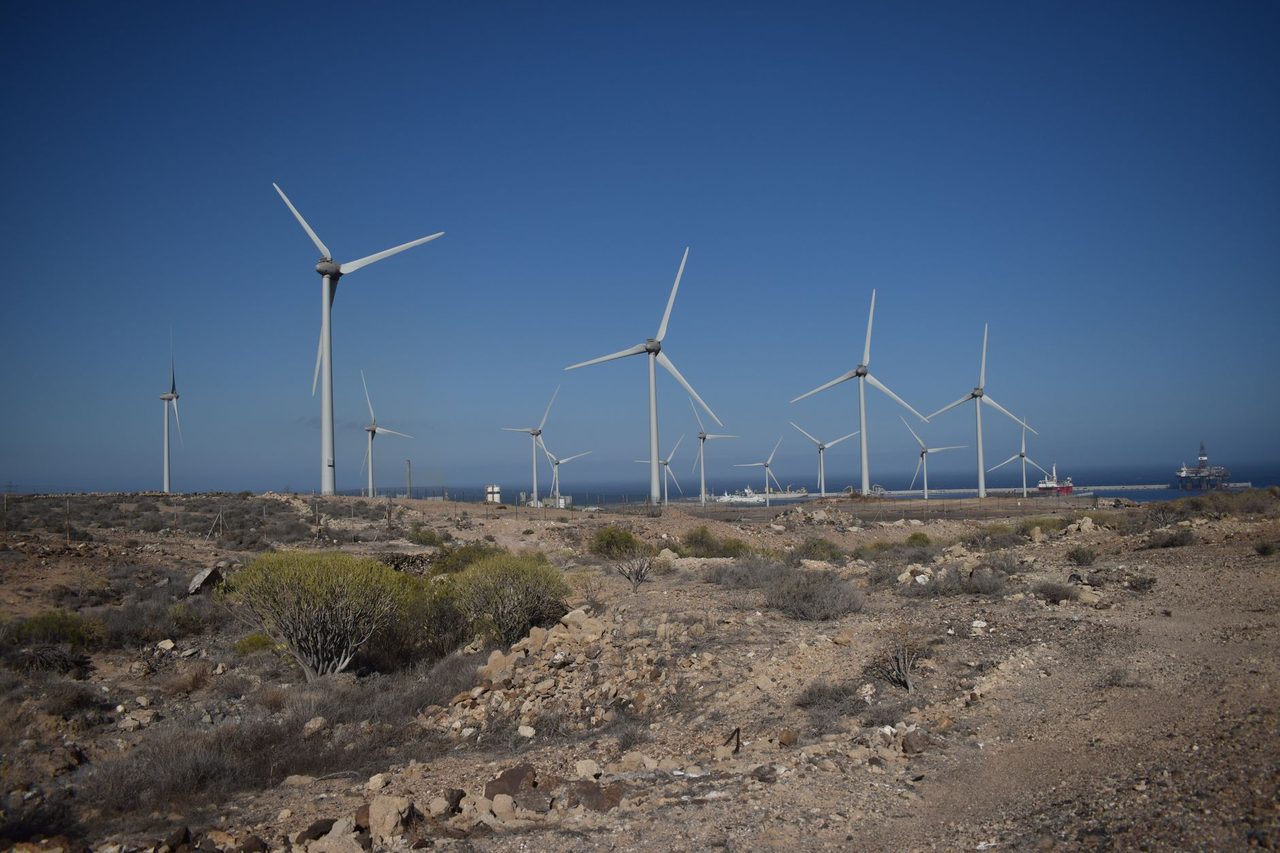
Photo: Ciprian Andrei Pavel on Pexels
Corporate open access buyers in India have spent the last two years optimising tariffs, banking and captive structures. But in 2026, the larger commercial risk in many transactions is not the starting tariff. It is change-in-law risk across charges, surcharge design, banking rules, scheduling obligations and captive compliance.
A project that looks attractive at signing can lose 40-90 paise/kWh of value if a state commission revises wheeling charges, tightens banking settlement, withdraws concessions, or changes the treatment of additional surcharge and cross-subsidy surcharge for a category of consumer. For lenders, these are not peripheral issues. They directly affect debt service coverage, payment security sizing and downside base cases. For C&I consumers, the question is simple: who bears future regulatory pain, and how quickly can the contract respond?
This article focuses on a practical topic distinct from generic cost comparison: how to allocate and manage change-in-law risk in open access and corporate PPAs in India in 2026.
Why change-in-law is the real margin killer in 2026
In most mature corporate PPA processes today, the quoted generation tariff spread between bidders may be only 10-25 paise/kWh. By contrast, the variation caused by state-level charge revisions can be much larger.
Typical landed-cost swings seen in 2025-26 procurement exercises include:
- Wheeling and transmission revisions: 10-35 paise/kWh impact depending on voltage level and state
- Cross-subsidy surcharge changes for third-party open access: 20-80 paise/kWh impact in high-tariff industrial states
- Additional surcharge applicability changes: 15-60 paise/kWh impact where discom stranded-cost arguments are accepted
- Banking charge or haircut revisions: 10-70 paise/kWh effective impact depending on load shape and banked share of energy
- Deviation settlement and scheduling compliance costs: 5-20 paise/kWh for portfolios with weak forecasting discipline
- Group captive non-compliance outcomes: potentially full CSS exposure plus penalty and dispute cost
That means a PPA that is 70 paise/kWh cheaper than grid supply at signing can compress to near parity if the contract does not clearly define relief, sharing, or renegotiation rights.
This issue has become sharper in 2026 for four reasons:
- More states are revisiting surcharge frameworks as C&I migration to open access increases
- Banking concessions are narrowing in several jurisdictions or being made time-of-day specific
- Distribution utilities are litigating captive and open-access interpretations more aggressively
- Lenders are stress-testing regulatory downside harder after seeing project underperformance in certain portfolios
What counts as change in law in an Indian open access PPA
A weak PPA uses generic wording such as any change in law affecting the parties. A bankable PPA in 2026 needs precision. The definition should usually cover:
- New statutes, rules, regulations, notifications, orders or policy instruments issued by central or state authorities
- Orders of SERCs, APTEL, CERC, courts or other competent bodies that alter cost or operational rights
- Amendments, withdrawal or reinterpretation of open access regulations
- Changes in methodology for wheeling charges, transmission charges, losses, CSS, additional surcharge or standby charges
- Changes in banking permission, settlement period, banking charges, drawal restrictions or expiry treatment
- Changes affecting forecasting, scheduling, SLDC fees, DSM or balancing obligations
- Changes in electricity duty, cess or other energy-sector levies where contractually relevant
- For captive structures, changes affecting eligibility tests, ownership thresholds, or consumption rules
Not every cost movement should qualify. For example, ordinary inflation in O&M costs or module replacement cost is generally a developer risk, not change in law. Similarly, merchant market volatility is not change in law.
The drafting challenge is especially important in multi-state deals. The generator may sit in one state, the consumer in another, and part of the charge stack may arise under central rules while other elements are state-specific. The contract should map each component to the responsible party and the relevant regulatory forum.
The three biggest battlegrounds: charges, banking and captive status
1) Network charges and surcharges
For third-party PPAs, CSS and additional surcharge remain the most litigated and value-sensitive items. In some states in 2026, all-in landed cost for a solar open access consumer at 33 kV can still remain 80 paise to Rs 1.80/kWh below grid tariff. In others, surcharge build-up leaves savings thin unless the buyer has a strong load factor or uses a hybrid profile.
A practical contract question is whether changes in these charges are:
- Fully passed through to the offtaker
- Shared beyond a collar band, such as the first 15 paise/kWh borne by buyer and the rest shared 50:50
- Absorbed by the developer up to a capped annual amount
- Treated as a trigger for tariff rebasing or restructuring
There is no universal answer. If the buyer insists on fixed landed savings, the generator will price that optionality into the base tariff. If the buyer accepts pass-through of non-project regulatory charges, the headline tariff can be lower, but budget certainty reduces.
2) Banking revisions
Many C&I buyers underestimate the extent to which banking rules support the economics of an as-generated PPA. A solar profile with weekend surplus and a weekday evening load mismatch may rely on banking for 12-28% of annual energy value. If monthly banking becomes tighter, if peak-hour drawal is restricted, or if settlement shifts from 1:1 energy to discounted treatment, the PPA may no longer meet internal savings thresholds.
In 2026, banking must be modeled not as a static state policy feature but as a revocable regulatory variable. Good contracts identify:
- The assumed banking regime at signing
- Whether the seller guarantees any minimum annual delivered energy after applying then-prevailing banking rules
- Whether the buyer bears lost value from regulatory curtailment of banking rights
- Whether alternate supply shaping, hybrid augmentation or market purchases can substitute for lost bankability
This is where Demand & ToD analysis and Landed-cost management materially improve contracting quality. Buyers should know exactly how much savings depend on banking, by month and by time block, before accepting a pass-through structure.
3) Group captive status risk
Captive structures can deliver a major landed-cost advantage where CSS is avoided. But that advantage depends on continuing compliance with ownership and consumption conditions, and on the practical ability to evidence compliance over time.
Even if the legal standard appears stable, operational realities create risk:
- Shareholding changes after refinancing or secondary transactions
- Consumption shortfall by one or more captive users
- Mismatch between projected and actual user participation
- Disputes over annual consumption measurement methodology
- Delayed recognition by local authorities despite substantive compliance
A well-drafted change-in-law and risk-allocation regime should distinguish between:
- True legal change, such as a new rule altering captive tests
- Seller-caused compliance failure
- Buyer-caused underconsumption or ownership breach
- Administrative dispute risk despite no legal change
These are not the same risks and should not attract the same remedy.
How sophisticated PPAs allocate change-in-law risk in 2026
The most credible corporate PPAs in India now use a layered approach rather than a one-line pass-through clause.
Pass-through buckets
A common structure is to classify cost changes into three buckets:
- Bucket A: pure system or regulatory charges outside seller control, passed through to buyer
- Bucket B: project-specific compliance costs within seller operational control, borne by seller
- Bucket C: mixed-impact changes, subject to sharing formula or reopening discussion
For example, revised SLDC scheduling fees may be seller-borne if the seller is responsible for scheduling. A new state levy on open access drawal may be buyer pass-through. A new forecasting obligation requiring additional technology and operations expense may be shared if it is substantial and unforeseen.
Materiality thresholds
To avoid reopening the tariff for immaterial changes, parties often include a threshold such as:
- No adjustment unless aggregate impact exceeds 5-10 paise/kWh over a rolling quarter
- Annual true-up after crossing a specified rupee threshold
- Separate treatment for one-time capital cost versus recurring operating cost
Thresholds are useful, but if set too high they can create cash-flow strain for the developer, especially in the first two years of debt service.
Tariff adjustment mechanics
The clause should define not just entitlement, but mechanics:
- Effective date of adjustment
- Evidence required from the claiming party
- Interim billing treatment while a dispute is pending
- Reconciliation timeline
- Whether interest applies on delayed true-up
Without this, even valid claims can become working-capital disputes.
Renegotiation and termination rights
Some changes are too large for simple pass-through. For example, if a state retrospectively removes a critical concession or makes open access operationally unviable for a consumer category, the PPA may require:
- Good-faith renegotiation within a defined period
- Right to restructure contracted capacity, tenor or delivery profile
- Temporary suspension
- Exit right with pre-agreed compensation formula
Lenders prefer limited termination ambiguity, but they also dislike contracts that trap the project in uneconomic performance.
What lenders and investors look for now
In 2026 credit committees are reading open access PPAs with much more attention to regulatory volatility. They focus on five points.
1) Is the base case dependent on fragile concessions?
If DSCR relies on full-year banking at favourable terms, or on a surcharge exemption under policy challenge, lenders will haircut the case. Many now test downside scenarios with 25-50 paise/kWh adverse charge movement.
2) Is the offtaker strong enough to absorb pass-through?
An investment-grade or highly rated C&I buyer may accept regulatory pass-through more easily than a mid-market manufacturer with tight energy budgets. This affects both tariff competitiveness and financeability.
3) Is there a working dispute mechanism?
If every charge revision can result in invoice withholding, the payment security package becomes less meaningful. Robust PPA structuring & negotiation matters here more than shaving a few paise off the tariff.
4) Is captive compliance operationally manageable?
For group captive deals, lenders ask for quarterly tracking discipline, shareholder agreement controls, and clear cure rights. They are less comfortable with fragmented user pools that have volatile consumption.
5) Is the portfolio diversified by state and charge regime?
For developers, concentrated exposure to one difficult state can impair valuation more than headline contracted megawatts suggest.
A practical checklist for C&I buyers and developers
Before signing a 2026 open access PPA, both sides should pressure-test the following.
- Separate generation tariff from non-tariff pass-through items in the commercial schedule
- Build a charge register listing wheeling, transmission, losses, CSS, additional surcharge, SLDC fees, banking charges, duty and taxes
- Identify which items are fixed assumptions and which are floating
- Run downside landed-cost cases for 25 paise, 50 paise and Rs 1.00/kWh adverse change
- Quantify how much value depends on banking by month and time block
- For captive, map ownership and consumption compliance responsibility user by user
- Include documentary standards for claiming change-in-law relief
- Define invoice treatment during disputes so supply and payment discipline continue
- Align PPA terms with financing documents and shareholder arrangements
- Track state commission proceedings continuously after signing, not only at bid stage
For C&I consumers, the key commercial decision is not whether pass-through is good or bad. It is which risks you are actually equipped to absorb. A buyer with flexible operations, strong internal approval systems and good forecasting may accept more regulatory pass-through and secure a lower energy tariff. A buyer needing quarterly cost certainty may prefer a higher fixed structure with tighter seller obligations.
For developers, underpricing change-in-law risk to win capacity is dangerous. In several competitive processes, sponsors have discovered that an apparently aggressive tariff can become non-bankable once realistic charge volatility is applied. Winning the bid is not the same as sustaining project equity returns.
The strategic takeaway for 2026
The next phase of India open access growth will be shaped less by whether companies want renewable power and more by whether contracts can survive regulatory movement without value destruction. Change-in-law drafting is therefore no longer back-end legal text. It is a core pricing variable.
Third-party and captive structures both remain viable in 2026, but each needs explicit treatment of future charge revisions, banking changes, scheduling costs and compliance outcomes. Buyers, developers and lenders should stop treating these as residual issues to be solved after tariff discovery. They should be designed into the commercial model from day one.
For serious procurements, the right approach is to combine state-by-state regulation tracking, detailed load-shape modeling, downside economics and disciplined contract drafting. That is the only reliable way to preserve landed savings through the life of the PPA rather than only at signing.
If your organisation is evaluating open access or corporate PPA options in India, contact Growthifye's advisory desk for support on charge-risk assessment, contract design and bankable landed-cost strategy.
Explore Growthifye's related capabilities
This analysis connects directly to our advisory practice: Demand & ToD analysis · Sourcing strategy · Competitive developer selection · PPA structuring & negotiation.
About the author

Chief Executive Officer, Growthifye — With over 23 years in management consulting, Sudarshan has taken businesses from concept to scale — building and scaling new-age digital and energy businesses.
- 23+ years in management consulting
- EY alumnus
- Led large-scale BESS programmes, capital raises and advisory mandates
Want this analysis applied to your project?
Talk to our team

