MDM and Meter Data Platforms for India Energy 2026: Architecture, ROI and Compliance
By Sudarshan Karweer · sudarshan@growthifye.com · +91 84510 99371 (Call / WhatsApp) · 2026-08-30

India’s power sector is adding complexity faster than most enterprise systems can absorb it. Open access, group captive structures, RTC and firm renewable products, battery-linked scheduling, time-of-day tariffs, feeder-level analytics, smart meters, and tighter settlement expectations are all creating one common problem: energy companies are sitting on growing volumes of interval data, but many still do not have a robust meter data management layer.
For Indian renewable developers, C&I consumers, utilities, retailers, storage operators and lenders, this is no longer a back-office issue. Meter data quality now affects invoicing, deviation analysis, scheduling, renewable energy accounting, banking settlement, demand-side planning, loss analysis, and dispute resolution. In 2026, the most practical digital move for many energy businesses is not another dashboard. It is a reliable meter data management and utility data platform that can ingest, validate, reconcile and operationalise interval data across the enterprise.
This article looks at why meter data management (MDM) matters in India in 2026, what architecture works, where ROI comes from, and how to approach implementation in a sector dealing with mixed telemetry quality, multiple regulators, and fragmented operational ownership.
Why MDM matters in India’s 2026 power market
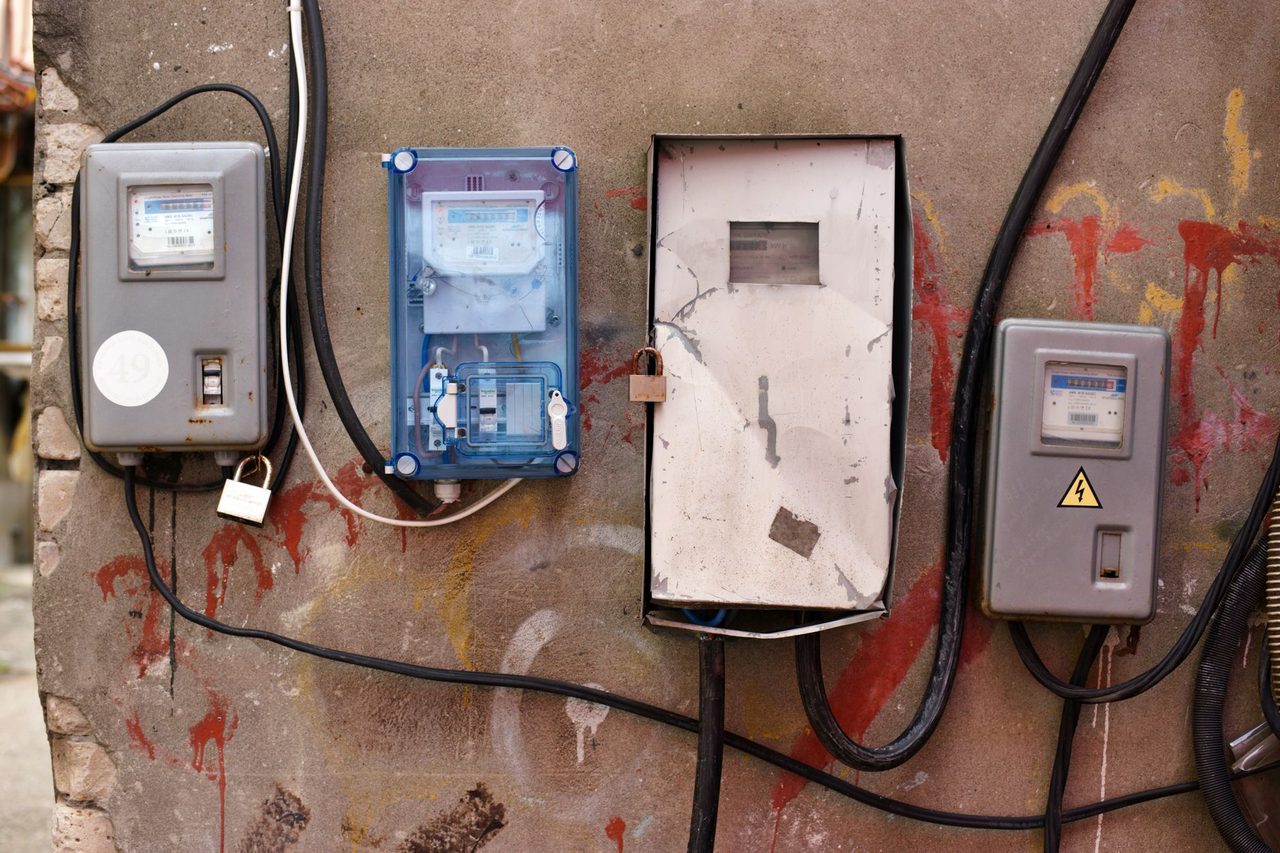
Most Indian energy businesses already have some combination of meters, SCADA tags, billing files, SEM data, ABT-related reports, DISCOM bills, OA settlement statements, rooftop generation logs, and manually maintained MIS sheets. The issue is that these data flows rarely agree on time stamps, asset IDs, completeness, or source-of-truth ownership.
That gap has become more expensive in 2026 for five reasons.
- Time-of-day and dynamic commercial constructs are expanding, raising the value of accurate interval data.
- Open access consumers need tighter reconciliation between generator output, drawal points, wheeling losses, banking units and supplier invoices.
- Commercial and industrial users are increasingly combining rooftop solar, open access renewable supply, diesel backup, BESS, and demand response measures, which complicates site-level accounting.
- Utilities and load-serving entities are under more pressure to improve feeder visibility, collection accuracy and loss analytics, especially as smart metering deployments scale.
- Lenders and investors now ask for cleaner operational data trails before accepting performance claims, availability metrics, or savings assertions.
A 1 MW to 20 MW C&I portfolio with 15-minute interval data can easily generate millions of records annually when generation, import/export, battery charging/discharging, and multiple consumer meters are included. At utility scale, the record count becomes several orders higher. Without structured ingestion, validation, estimation and editing workflows, teams end up spending analyst hours on routine reconciliation instead of actionable decisions.
In practice, poor meter data governance typically causes the following issues:
- 1% to 3% billing leakage due to missing, duplicated or wrongly mapped reads
- 2% to 5% avoidable effort overhead in settlement and finance teams
- delayed invoice cycles of 3 to 10 days
- disputes over banking, wheeling loss application, reactive energy treatment or contract demand charges
- weak forecasting baselines because historical interval series are not clean
- inability to benchmark site performance consistently across portfolios
For energy companies operating on margins shaped by tariffs of Rs 3.0 to Rs 6.5 per kWh for renewable supply contracts, these data errors can materially alter EBITDA.
What a modern meter data platform should do
An MDM platform is not just a repository of meter reads. In a workable Indian setup, it should act as the transactional and analytical backbone for all metering-based business processes.
At minimum, a strong platform should support:
- ingestion from AMI head-end systems, SEM/ABT files, SCADA, PLCs, historians, billing systems, and manually uploaded meter sheets
- interval data handling at 15-minute, 30-minute, hourly and daily granularity
- validation, estimation and editing rules for missing or anomalous values
- meter and asset hierarchy mapping across plant, feeder, consumer, contract and invoice dimensions
- version control and audit trails for every data correction
- reconciliation between meter sources, invoices and settlement statements
- APIs to ERP, EAM, analytics tools, demand forecasting engines and customer portals
- tariff and contract-aware calculations for billing, open access accounting and internal chargebacks
- role-based access and cybersecurity controls
The validation, estimation and editing layer is where value starts. If one interval is missing due to communication loss, the system should not simply leave a blank. It should apply configurable logic such as interpolation, peer-meter comparison, profile substitution, or source prioritisation, with a confidence score and full audit trail.
For example, an open access C&I portfolio may need one hierarchy for physical metering points, another for contractual entities, and a third for reporting by state or DISCOM. Many legacy systems cannot support that cleanly. An MDM-centric architecture can.
India-specific use cases across consumers, developers and utilities
The use case for MDM differs by stakeholder, but the underlying need is the same: reliable interval data tied to commercial outcomes.
For C&I energy consumers:
- reconcile utility bills against actual interval consumption and contract demand patterns
- optimise shift loads under time-of-day tariffs
- track rooftop solar self-consumption versus export
- settle internal energy transfers across campuses or subsidiaries
- improve diesel, battery and solar dispatch decisions during peak tariff windows
A large industrial consumer facing blended landed electricity costs of Rs 7 to Rs 10 per kWh can often identify 1% to 2% avoidable cost through better demand-charge control, billing validation and source-wise energy accounting.
For renewable developers and IPPs:
- reconcile generation meters, pooling substation records and buyer settlement statements
- improve availability-linked revenue tracking
- support open access and group captive billing across multiple offtakers
- create lender-grade monthly performance packages with consistent data lineage
- feed clean data into generation forecasting and curtailment analytics
For utilities and distribution companies:
- improve feeder energy accounting and AT&C loss analysis
- support smart metering data aggregation at scale
- reduce billing exceptions and field rework
- identify tampering or non-technical loss anomalies faster
- provide better service-level visibility for regulators and management
For storage operators and integrated portfolios:
- measure charging and discharging efficiency accurately
- separate market dispatch, backup reserve and renewable firming use cases
- support settlement under complex operational regimes
- benchmark cycle performance against degradation assumptions
For lenders and infrastructure investors:
- obtain a more defensible operational record for debt monitoring
- standardise cross-portfolio performance comparisons
- reduce dependence on manually compiled Excel-based borrower submissions
Reference architecture that works for India
The best-fit architecture in India is usually modular. It does not force a rip-and-replace of all operational systems. Instead, it establishes the meter data platform as a governed middle layer between field/operational systems and enterprise applications.
A practical reference stack includes:
- data sources: AMI, smart meters, SEM data, plant meters, SCADA, historians, billing systems, OA settlement files, manual uploads
- ingestion layer: connectors, APIs, secure file transfer, streaming where available
- data quality engine: validation, estimation, editing, exception workflows
- master data layer: meter registry, asset hierarchy, customer and contract mapping, location tagging
- calculation engine: loss factors, banking logic, invoice determinants, source-mix accounting, tariff mapping
- storage layer: scalable time-series and relational storage with archival controls
- analytics and reporting: operational dashboards, settlement reports, forecasting data marts, audit reports
- integration layer: ERP, customer portals, EAM, financial systems, regulatory reporting tools
- security layer: identity management, encryption, SOC monitoring, OT/IT segregation where required
Cloud-first deployment is now common in 2026, particularly for private C&I, retailers, and renewable platforms that want fast scaling and lower infrastructure overhead. But architecture must respect India’s practical constraints: intermittent connectivity from remote sites, mixed meter protocols, and varying comfort with cloud controls across organisations.
That is why implementation success often depends less on software selection and more on design discipline in IT strategy & roadmaps. Teams need to define source-of-truth rules, exception ownership, retention policies, and operational SLAs before building dashboards.
A recurring mistake is to connect everything to a data lake and assume analytics will solve the rest. Without master data discipline and reconciliation logic, the result is faster confusion.
ROI: where the business case is strongest
In India, MDM business cases are strongest when tied to one of four measurable outcomes: billing assurance, settlement acceleration, operational optimisation, or compliance-grade reporting.
Typical value levers include:
- billing accuracy improvement of 0.5% to 2.5% depending on current process maturity
- 30% to 70% reduction in manual reconciliation effort
- month-end and invoice-cycle reduction from 5 to 10 days down to 1 to 3 days
- 10% to 25% reduction in billing disputes and exception cases
- 1% to 3% demand-cost savings for large C&I users through improved interval visibility
- better forecasting inputs that can reduce imbalance or overdrawal risk in managed portfolios
Consider a 100 MU annual renewable supply portfolio with an effective realised tariff of Rs 4.25 per kWh. A 1% revenue leakage due to meter mapping errors, missing reads, delayed adjustments or incorrect loss applications means roughly Rs 4.25 million per year at risk. If an MDM platform plus process redesign recovers even half of that while also cutting analyst effort, the payback period can fall below 18 months.
For a utility or retailer processing millions of meter intervals, operational savings can be larger, particularly when exception handling and field revisits are expensive. In smart metering contexts, the benefit also extends to customer service and collection performance, not just core billing.
For lenders, the ROI is indirect but real. More reliable monthly operational reporting improves covenant tracking, reserve monitoring and project performance oversight.
The strongest programs usually combine platform rollout with Data & analytics platforms for portfolio-level KPI tracking, rather than treating MDM as a siloed meter repository.
Compliance, auditability and cybersecurity considerations
In 2026, data platforms in the energy sector cannot be designed without security and auditability at the core. Meter data may appear harmless compared to control commands, but once tied to billing, customer identities, dispatch records and operational patterns, it becomes business-critical and sensitive.
Key design requirements include:
- immutable audit logs for edits and estimations
- role-based approval workflows for commercial adjustments
- encryption in transit and at rest
- API security and token-based access
- separation of operational ingest paths from enterprise user access layers
- backup and disaster recovery aligned to business continuity needs
- integration with SIEM and incident monitoring tools
For organisations with mixed OT/IT exposure, meter data often crosses trust boundaries. A plant SCADA source may feed enterprise billing or customer-facing dashboards. That makes architecture and Cybersecurity decisions inseparable.
Regulatory expectations vary by segment, but boards, auditors and lenders increasingly expect demonstrable control over data provenance. If a monthly invoice or generation claim cannot be traced back to a governed meter source with clear transformation logic, disputes become harder to resolve.
Implementation roadmap for 2026
The right implementation approach is phased and use-case led. Trying to solve all utility and enterprise data problems in one program usually delays value.
A practical roadmap looks like this:
- Phase 1: baseline current data flows, meter inventory, source systems, interval granularity, exception types and commercial pain points
- Phase 2: define target operating model, master data standards, reconciliation rules, and ownership between operations, finance, IT and commercial teams
- Phase 3: deploy core ingestion, validation and hierarchy management for the highest-value portfolio or geography
- Phase 4: integrate billing, OA settlement, forecasting and management reporting
- Phase 5: expand to predictive analytics, anomaly detection, customer portals and automated controls
Selection criteria for platforms should include:
- ability to handle Indian metering realities and file formats
- strong exception workflow and audit capability
- tariff and contract configurability
- integration flexibility with ERP and finance systems
- scalability across smart meters and portfolio growth
- cloud readiness and security maturity
- local implementation support and change-management capability
Do not underestimate change management. In many firms, the biggest obstacle is not technical integration but ownership conflict. Meter data may sit with plant teams, commercial settlements with finance, and customer bills with separate business units. Unless governance is explicit, the platform will mirror organisational fragmentation.
That is where Program governance becomes critical. Clear escalation matrices, data stewardship roles, exception SLAs and executive sponsorship often determine whether a program becomes a strategic system or just another reporting tool.
What decision-makers should do next
If your organisation is still reconciling major energy and billing datasets in spreadsheets, 2026 is the year to fix the foundation. Before adding more AI, forecasting tools or customer-facing portals, make sure your meter data layer is defensible, scalable and commercially useful.
For Indian C&I consumers, the opportunity is lower landed power cost and fewer billing surprises. For developers and IPPs, it is cleaner settlement and better cash realisation. For utilities, it is more accurate energy accounting and smarter operations. For lenders and policymakers, it is better transparency and stronger performance evidence.
The winning architecture is not the most complex one. It is the one that makes interval data trustworthy enough to support billing, compliance, forecasting and portfolio decisions at scale.
If you are evaluating a meter data management platform, redesigning utility data flows, or planning a broader digital program for your energy business, contact Growthifye’s advisory desk to discuss the right architecture, business case and implementation roadmap.
Explore Growthifye's related capabilities
This analysis connects directly to our advisory practice: IT strategy & roadmaps · ERP & asset management systems · Data & analytics platforms · Cloud migration.
About the author

Chief Executive Officer, Growthifye — With over 23 years in management consulting, Sudarshan has taken businesses from concept to scale — building and scaling new-age digital and energy businesses.
- 23+ years in management consulting
- EY alumnus
- Led large-scale BESS programmes, capital raises and advisory mandates
Want this analysis applied to your project?
Talk to our team