
Energy Data Lakehouse for India Renewables 2026: ROI, Architecture and Rollout
By Sudarshan Karweer · sudarshan@growthifye.com · +91 84510 99371 (Call / WhatsApp) · 2026-09-14
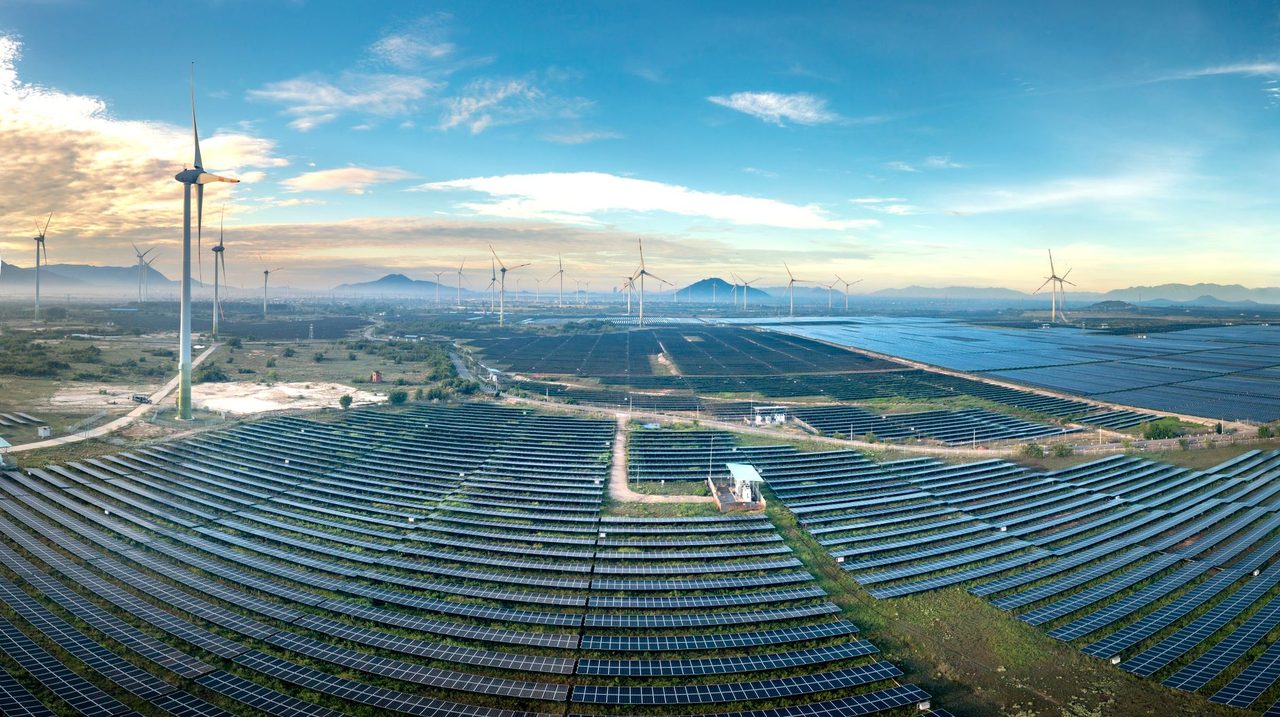
Photo: Quang Nguyen Vinh on Pexels
India’s renewable sector has added scale faster than its digital foundations have matured. Utility-scale solar parks, wind portfolios, hybrid projects, open-access plants, RTC contracts, BESS pilots and C&I decarbonisation programs now produce huge volumes of operational, commercial and compliance data every day. Yet in many organisations, the data still sits in silos: SCADA in one environment, meter data in another, ERP and maintenance records elsewhere, forecasting files on desktops, and PPA, invoicing and regulatory documents spread across shared drives.
For Indian renewable developers, utilities, lenders and large energy consumers, the practical problem in 2026 is no longer whether data matters. It is whether the organisation can trust, combine and use that data fast enough to improve tariffs, collections, availability, scheduling performance and financing outcomes. This is where an energy data lakehouse has become relevant.
A lakehouse is not just another dashboard project. It is a modern data architecture that combines the scale and flexibility of a data lake with the governance and query performance of a data warehouse. In energy terms, it provides one controlled foundation for time-series plant data, meter data, maintenance history, contracts, invoices, weather feeds, market prices, forecasting outputs and compliance records. Done properly, it can support board reporting, state-level scheduling decisions, DISCOM reconciliation, lender monitoring, and O&M analytics from the same governed data backbone.
This article explains what an energy data lakehouse means for India in 2026, where it creates measurable ROI, what architecture works in practice, and how to roll it out without disrupting operations.
Why India’s energy companies need a lakehouse in 2026
The commercial pressure on data quality has increased sharply across the sector.
- Open-access and captive consumers are scrutinising landed energy cost against grid tariffs that may range from roughly Rs 6 to Rs 10 per kWh depending on state, voltage level, banking rules and demand profile.
- Renewable generators are under pressure to reduce DSM exposure through tighter forecasting and scheduling discipline.
- Lenders want monthly and quarterly performance packs that tie generation, availability, curtailment, receivables and DSCR assumptions back to source records.
- Utilities and developers need traceable data for CEA reporting, state regulatory submissions, invoicing, change-order support, and claim management.
- O&M teams are expected to improve plant availability while controlling spares, contractor productivity and response times.
In many Indian organisations, these requirements are still handled through spreadsheets stitched together by a small operations or finance team. The hidden cost is material.
- Engineers spend hours reconciling inverter, SCB, meter and SLDC data.
- Commercial teams dispute invoices because meter hierarchies do not match contract structures.
- Management gets different numbers for the same KPI depending on which file is opened.
- Lenders receive delayed reports because operational and financial data cannot be tied together quickly.
- Analytics initiatives stall because the underlying master data is weak.
A lakehouse addresses this by creating one governed layer for both structured and semi-structured energy data. Instead of repeatedly exporting CSV files from SCADA, ERP, meter data management, weather vendors and billing systems, the organisation ingests them once, standardises tags and asset hierarchies, applies quality checks, and serves trusted datasets to different use cases.
What data should go into an energy lakehouse
The strongest business case comes when the platform is designed around actual workflows rather than generic enterprise IT language. For Indian renewables and power portfolios, the typical data domains include:
- Plant telemetry: inverter, turbine, SCB, transformer, weather station, protection relay and BESS time-series data
- Metering: ABT meter files, check meter data, feeder meters, net-metering records, open-access accounting inputs
- Forecasting and scheduling: day-ahead, intra-day, revision logs, actual-versus-schedule data, DSM calculations
- Maintenance: work orders, PM plans, breakdown history, technician logs, MTBF, MTTR, warranty data, spares issues
- Commercials: PPAs, tariffs, escalation clauses, billing determinants, wheeling and banking charges, cross-subsidy surcharge, additional surcharge where applicable
- Finance: receivables ageing, payment realisation, deductions, curtailment claims, OPEX, capex, budget versus actuals
- Compliance and contracts: land records, connectivity documents, insurance, test certificates, statutory renewals, EPC punch lists
- External feeds: weather forecasts, market prices, grid outage notices, state policy changes, benchmark irradiance or wind resource datasets
A key design principle is to preserve raw source data while also creating curated business-ready layers. This matters because in India, audits, disputes and reconciliations often require going back to the original source file or event log.
High-value use cases and ROI levers
The right lakehouse program should be justified through measurable use cases, not technology labels. In 2026, the strongest ROI usually comes from five areas.
1. Faster and more accurate generation-to-revenue reconciliation
For a 100 MW to 500 MW renewable portfolio, reporting delays often arise because generation, meter, curtailment and invoice data do not line up by timestamp, asset code or contract mapping. A lakehouse can automate the reconciliation chain from plant output to billable energy.
Typical benefits include:
- 50% to 80% reduction in monthly reporting effort
- Faster invoice preparation and fewer billing disputes
- Better tracking of deemed generation and curtailment support
- Improved receivables follow-up because invoice line items are traceable
Even a 0.5% improvement in revenue capture on a 250 MW solar portfolio can be meaningful. At a CUF of 24% and tariff of Rs 2.9 per kWh, annual revenue is roughly Rs 152 crore. A 0.5% leakage reduction is about Rs 0.76 crore per year.
2. Better forecasting, scheduling and DSM control
Many forecasting teams still work with fragmented weather, plant and revision data. A lakehouse provides a history of forecast inputs, model outputs, revisions and actuals at the right granularity. This improves root-cause analysis by site, season and equipment state.
Typical benefits include:
- Reduced DSM penalties through better forecast error tracking
- Faster identification of underperforming weather stations or telemetry gaps
- Clear evidence for whether misses were driven by meteorology, outages or data issues
For wind and solar portfolios exposed to scheduling obligations, even a modest reduction in DSM outgo can justify the platform. The exact savings vary by state and contract structure, but the business case is often visible within one windy or high-variability season.
3. O&M productivity and spares planning
A lakehouse does not replace ERP & asset management systems, but it can make them far more useful by integrating work-order history with plant events and parts consumption. This helps answer practical questions:
- Which inverter model is causing repeat dispatches?
- Which site has high MTTR because of logistics rather than technical complexity?
- Which spare parts are slow-moving versus truly strategic?
- Are PM tasks reducing forced outages, or just consuming technician time?
For geographically dispersed portfolios, cutting truck rolls, avoiding repeat visits and optimising spares can reduce O&M cost by 3% to 8% depending on baseline maturity.
4. Lender, investor and board reporting
Most lenders do not want another portal; they want consistent, auditable data. A curated lakehouse layer can produce standard monthly packs covering generation, availability, PR, outages, receivables, DSRA-related indicators, major incidents and compliance status.
Benefits include:
- 60% to 90% reduction in manual report assembly time
- Better audit trail for assumptions used in covenant monitoring
- Faster response to due diligence during refinancing, M&A or portfolio sale
This is particularly important where a platform spans multiple SPVs with different PPAs, payment cycles and O&M arrangements.
5. C&I energy cost and decarbonisation analytics
For Indian C&I buyers, the value is not only operational. A lakehouse can combine interval consumption, utility bills, open-access settlement data, DG/BESS operation and carbon accounting inputs in one model. That enables better decisions on:
- Contracted demand optimisation
- Shift-wise load analysis
- Open-access versus grid procurement mix
- Demand charge management
- Plant-level emissions reporting for customers and export markets
For large industrial users, even a 1% to 3% reduction in annual electricity spend can outweigh the platform cost.
Reference architecture that works for Indian energy firms
The architecture does not need to be exotic. It needs to be secure, resilient and easy to govern.
A practical 2026 pattern includes:
- Source connectors for SCADA historians, meters, ERP/EAM, billing systems, weather APIs, forecasting tools and document repositories
- A raw ingestion layer for high-frequency time-series and batch files
- A standardised asset and meter master linking site, feeder, inverter, meter, contract and financial entity codes
- Curated datasets for operations, maintenance, commercials, finance and compliance
- A semantic layer defining common KPIs such as CUF, PR, availability, schedule deviation, invoiceable units and receivables ageing
- Analytics and BI tools for dashboards, alerts and self-service reporting
- Controlled data-sharing interfaces for lenders, utilities, auditors and partners
Cloud-first deployment is increasingly common because it reduces infrastructure lead time and supports scaling across portfolios. But cloud does not mean weak control. For energy companies, access design, encryption, environment separation, backup policies and logging are non-negotiable. This is where Cloud migration and Cybersecurity must be planned alongside analytics, not after go-live.
Equally important is data governance. Without clear ownership for master data, tag naming, timestamp conventions, meter hierarchy and contract mapping, the platform will degrade into another storage repository. The winning model assigns business data owners from operations, commercial, finance and IT, with escalation rules for data-quality exceptions.
Common rollout mistakes and how to avoid them
Many energy data programs fail for predictable reasons.
First, they try to solve every use case in phase one. That creates a long implementation cycle and weak user adoption. A better approach is to start with two or three high-value journeys such as generation-to-revenue reconciliation, forecasting analytics, or lender reporting.
Second, they underestimate master data cleanup. If site codes, meter IDs, feeder names and contract references are inconsistent, no analytics layer can rescue the outcome. Master data should be treated as a workstream, not a side task.
Third, they ignore OT realities. Telemetry gaps, tag changes after equipment replacement, clock drift and communication downtime are common in live plants. The data model must handle missing values, event annotations and source lineage.
Fourth, they over-focus on dashboards and under-invest in operating processes. The lakehouse should trigger actions, not just charts. If curtailment anomalies are visible but no one owns claim preparation, the value is lost.
Fifth, they implement without executive sponsorship across business functions. A useful lakehouse sits between operations, finance, commercial and compliance. If it is seen as only an IT project, adoption will stall.
A disciplined program typically includes IT strategy & roadmaps, process redesign, source-system integration, governance rules, user training and phased benefit tracking. This is also why Program governance matters from the beginning.
Implementation roadmap for 2026
A realistic rollout for an Indian energy firm usually spans 12 to 24 weeks for a scoped first release, depending on source-system readiness.
Phase 1: Discovery and business case
- Identify top decision bottlenecks and quantify manual effort, leakage, penalties or delay costs
- Map current systems, data owners and critical reports
- Prioritise 2 to 3 use cases with named business sponsors
- Define success metrics such as reporting cycle time, reconciliation accuracy or DSM reduction
Phase 2: Data foundation and governance
- Create the asset, meter and contract master
- Set source-system interfaces and ingestion logic
- Define data quality checks, exception workflows and role-based access
- Establish KPI definitions and report standards
Phase 3: Use-case delivery
- Build curated datasets and dashboards for selected use cases
- Validate numbers against existing reports for at least one billing cycle or operating month
- Train user teams and document SOPs
- Start benefit tracking with baseline-versus-improved metrics
Phase 4: Scale-out
- Add more plants, SPVs, business units or external users
- Expand to predictive analytics, carbon reporting or benchmarking
- Tighten controls for audit, retention and cyber resilience
- Rationalise duplicate manual reporting packs
For many firms, payback can be achieved within 9 to 18 months if the initial scope focuses on revenue, reporting labour, O&M efficiency or scheduling performance rather than broad digital ambition.
What decision-makers should ask before approval
Before funding an energy lakehouse, boards, CXOs, lenders and procurement teams should ask a few direct questions.
- Which business decisions will improve in the first 6 months?
- What current manual process cost or revenue leakage are we removing?
- Who owns the asset, meter and contract master?
- Can every KPI be traced back to source data?
- How will OT/IT security, access control and backup be handled?
- Which reports or reconciliations will be retired after go-live?
- What is the plan to onboard new sites, acquisitions or SPVs?
If these answers are vague, the program is not ready. If they are precise, a lakehouse can become the core digital utility for the organisation.
In 2026, Indian renewable and power companies do not need more disconnected point tools. They need a reliable data backbone that can connect plant operations, market participation, maintenance, revenue and compliance. A well-designed energy data lakehouse does exactly that. It improves speed, trust and traceability across the business, while creating a stable platform for future AI, optimisation and regulatory reporting.
If your organisation is evaluating a lakehouse for renewable assets, utility operations or C&I energy management, contact Growthifye’s advisory desk. We help clients define the business case, architecture, governance model and rollout plan for measurable outcomes.
Explore Growthifye's related capabilities
This analysis connects directly to our advisory practice: IT strategy & roadmaps · ERP & asset management systems · Data & analytics platforms · Cloud migration.
About the author

Chief Executive Officer, Growthifye — With over 23 years in management consulting, Sudarshan has taken businesses from concept to scale — building and scaling new-age digital and energy businesses.
- 23+ years in management consulting
- EY alumnus
- Led large-scale BESS programmes, capital raises and advisory mandates
Want this analysis applied to your project?
Talk to our team