India Solar Plant Performance Ratio 2026: EPC Design, Testing and Yield Guide
By Sudarshan Karweer · sudarshan@growthifye.com · +91 84510 99371 (Call / WhatsApp) · 2026-09-03
# India Solar Plant Performance Ratio 2026: EPC Design, Testing and Yield Guide
In India’s solar market, tariff competition has become sharper, module and inverter technologies have changed quickly, and lenders are asking tougher questions on energy realism. In that environment, performance ratio, or PR, remains one of the most practical indicators of whether a plant has been engineered and commissioned properly.
For C&I consumers, a weak PR means lower captive savings, higher grid dependence and delayed payback. For developers, it can mean liquidated damages exposure, lower generation-based cash flows and difficult O&M conversations. For lenders, PR trends often reveal whether a plant’s underperformance is temporary, seasonal or structural.
In 2026, PR is no longer just a post-facto KPI in monthly reports. It should shape EPC decisions from layout and cable sizing to inverter loading ratio, thermal management, transformer selection, SCADA metering philosophy and acceptance testing.
This article focuses on a different angle from module, inverter, BOS and SCB selection guides: how to design, build and commission Indian solar plants specifically for stronger and more defensible performance ratio outcomes.
What PR really means in Indian utility and C&I projects
At a practical level, performance ratio compares actual AC energy delivered against the theoretical energy expected from available irradiation and installed DC capacity, after normalisation. In India, PR is often tracked daily, monthly and annually, but interpretation varies widely because site conditions, metering boundaries and data quality are inconsistent.
A healthy PR depends on more than module efficiency. It reflects the combined effect of:
- Module operating temperature
- Soiling losses
- DC mismatch and string current spread
- Cable and transformer losses
- Inverter clipping and conversion efficiency
- Grid outages and curtailment
- Auxiliary consumption
- Shading, row spacing and backtracking quality
- SCADA sensor accuracy
- Commissioning defects and latent workmanship issues
For fixed-tilt and tracker plants across India, annual PR ranges can vary significantly by location and design philosophy. In many well-executed projects commissioned in 2024-2026, annual PR in the low-to-mid 80s is achievable on a gross basis, while net PR depends on whether grid outage and external restrictions are excluded. The issue is not just the number; it is whether the number is measured consistently and whether losses were avoidable at EPC stage.
For lenders evaluating a 25 MW to 300 MW plant, a 1 percentage point PR gap can materially change annual revenue. In high-CUF states such as Rajasthan, Gujarat and parts of Andhra Pradesh, even a 0.8% to 1.2% avoidable yield loss can move debt service cushions. In C&I open-access projects with delivered tariffs around Rs 3.2 to Rs 4.8 per kWh depending on state, banking rules and wheeling charges, that loss hits equity returns quickly.
The 2026 PR baseline: where Indian projects still lose yield
Despite better equipment availability and maturing EPC processes, most PR leakage in India still comes from execution basics rather than headline technology choices.
Common sources include:
- Excessive DC cable runs because of land-driven layout compromises
- String grouping errors causing mismatch across orientations or shading zones
- Inverter block overconcentration leading to thermal stress and downtime clustering
- Poor crimping, gland failures and moisture ingress in JB or combiner terminations
- Inadequate tracker calibration and backtracking logic tuning
- Undersized AC evacuation elements causing transformer or cable heating
- Poorly calibrated pyranometers, module temperature sensors or energy meters
- Weak earthing and surge protection coordination causing intermittent inverter trips
- Construction quality problems hidden until the first monsoon or first summer peak
The pattern in 2026 is clear: plants with similar modules and inverters can show meaningfully different PR because one project team controlled engineering tolerances and testing discipline while another chased capex savings in the wrong places.
This is where integrated EPC thinking matters. Good PR is engineered, not discovered after COD.
EPC design choices that move PR by 0.5% to 2%
Several design decisions have an outsized impact on delivered PR. These should be reviewed not only by the EPC contractor but also by owner’s engineers, lenders’ technical advisers and independent engineers.
1. Array layout and row spacing
India’s high-irradiation sites tempt designers to compress layout and reduce land cost per MW. But if row spacing is too aggressive, near-horizon self-shading, winter losses and tracker backtracking penalties can erode annual yield.
At many sites, a small increase in pitch can improve annual energy enough to justify the land or structure cost. The right answer depends on DNI/GHI mix, topography, tracker geometry and land lease cost. PR-focused design should test at least three layout scenarios instead of selecting the densest one by default.
2. Thermal design and ventilation
Module temperature remains a major PR driver in India’s hot states. Elevated cell temperature reduces voltage and worsens conversion efficiency. Design teams should evaluate:
- Ground clearance and air circulation under tables
- Structure choices affecting convective cooling
- Inverter room or skid ventilation under peak summer conditions
- Transformer loading and oil temperature margins
It is not unusual for poorly ventilated inverter or transformer blocks to show recurrent thermal derating in May and June. A seemingly minor thermal design oversight can shave 0.3% to 0.7% off annual yield.
3. DC and AC loss optimisation
In many projects, contractual design loss assumptions are disconnected from field execution. PR discipline requires explicit loss budgeting for:
- String and home-run cable losses
- Combiner to inverter losses
- Inverter conversion loss
- Transformer loss at expected loading profile
- HT cable loss to interconnection point
For large ground-mount plants, even 0.2% excess DC loss and 0.25% excess AC loss add up. Copper and aluminium choices, route lengths, cross-sections and termination quality all matter. This is why Balance of system & civil works and Procurement & vendor management should not sit in separate silos.
4. Inverter block sizing and clipping realism
ILR decisions are often made on revenue grounds, but PR interpretation must separate useful clipping from poor design. A plant with higher ILR may show more clipping hours yet better annual revenue. The issue is whether clipping was planned, modelled and thermally supportable.
In 2026, many Indian utility and C&I projects still target ILRs around 1.30 to 1.45 depending on tariff structure, curtailment risk, DC cost and land economics. But block loading should reflect local weather, soiling profile, auxiliary load and expected module degradation. If thermal derating combines with clipping, PR can deteriorate faster than the financial model suggests.
5. Sensor and meter architecture
PR is only as credible as the data chain behind it. A surprising number of disputes in India stem from poor-quality irradiance sensors, bad sensor placement or inconsistent meter boundary definitions.
Minimum good practice in 2026 should include:
- Secondary standard pyranometers or high-quality calibrated sensors
- Redundant irradiance measurement at representative locations for larger sites
- Back-of-module temperature sensors placed correctly and maintained
- Revenue-grade export metering aligned with contract definitions
- Separate logging of grid outage, internal fault and curtailment events
Without this, PR analysis becomes argumentative rather than useful.
Construction, QA and commissioning: where PR is won or lost
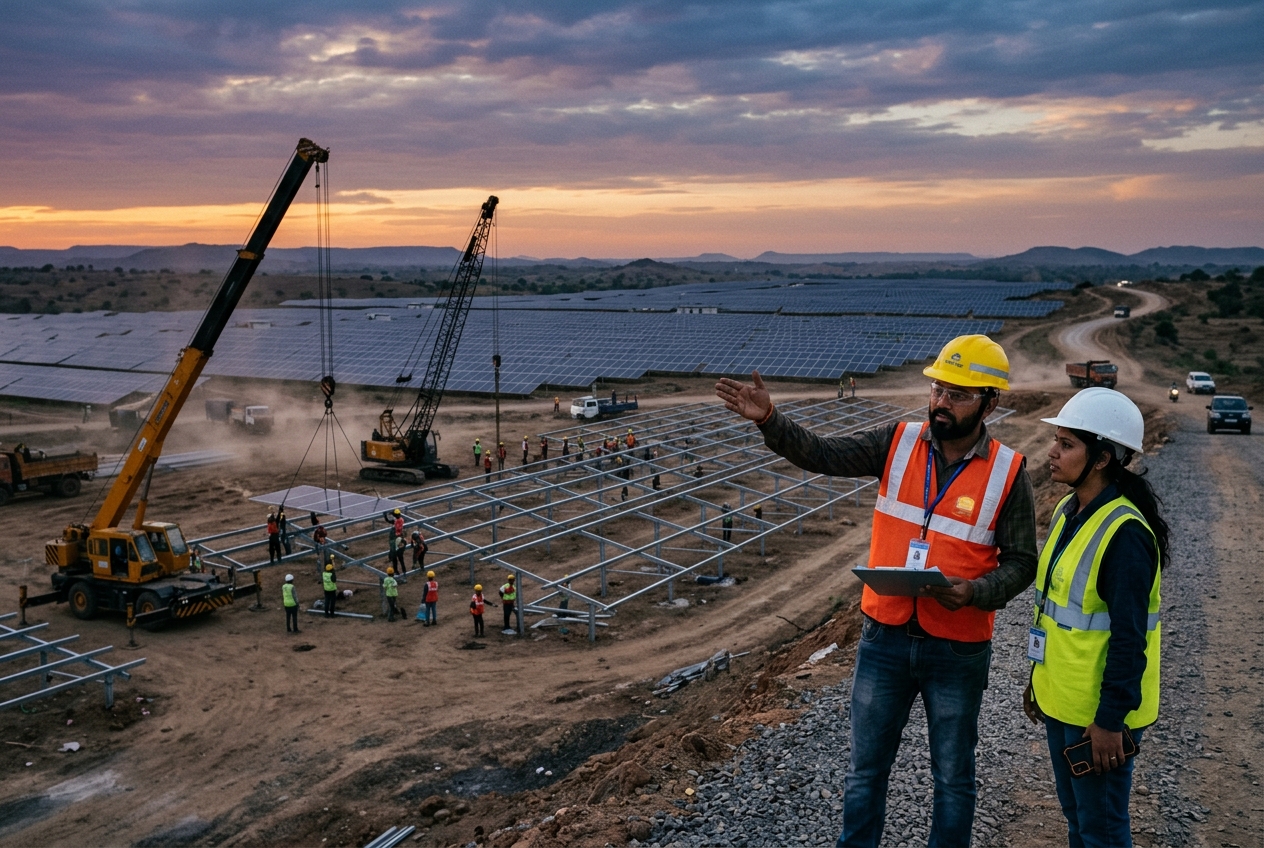
PR underperformance often originates during construction weeks that receive little management attention. Once the plant is energised, these defects become expensive to isolate.
Critical construction controls include:
- Incoming inspection for modules, inverters, cables, structures and transformers
- EL testing strategy for modules before and after installation where warranted
- Torque control records for module clamps, busbar joints and cable terminations
- String polarity verification and string current benchmarking
- Earthing continuity and earth resistance checks by block
- Thermography of terminations, SCBs, inverters and transformers
- Drainage and waterlogging prevention before monsoon exposure
A disciplined QA/QC & HSE enforcement framework reduces both safety incidents and latent yield loss. In India’s dusty and high-temperature conditions, poor workmanship does not stay hidden for long.
Commissioning quality is equally important. Too many projects still rush synchronisation to meet PPA or financing deadlines, leaving punch points unresolved. PR-centric commissioning should include:
- Block-wise performance verification under stable irradiance windows
- Inverter availability testing over a defined continuous period
- Comparison of measured versus design losses on sampled feeders
- Tracker functional checks across morning, noon and evening positions
- SCADA time sync and alarm validation
- Meter reconciliation between inverter, feeder and export levels
Testing, commissioning & handover should end with a clear baseline performance dossier, not just a COD certificate.
How lenders and asset owners should evaluate PR in 2026
For lenders and institutional asset owners, PR should be treated as a structured diligence topic across development, EPC and operations.
Questions worth asking include:
- What exact PR formula is used in EPC and O&M contracts?
- Is PR guaranteed gross or net of grid outages and curtailment?
- Where are irradiation and energy measured?
- Are clipping losses modelled explicitly in the accepted energy estimate?
- What are the assumed DC, AC, thermal and availability losses?
- How are soiling and cleaning intervals reflected?
- What are the rights and methods for independent retesting?
In 2026, independent engineers increasingly expect higher granularity in acceptance protocols, especially for open-access and merchant-exposed assets. For projects with tighter DSCR structures, even short periods of low PR during the first operating year can trigger reserve pressure.
Owners should also distinguish among three situations:
- Low PR due to external grid constraints
- Low PR due to normal seasonal or soiling variation
- Low PR due to EPC design or workmanship defects
Only the third category is truly remediable through revamp, punch-list closure or warranty enforcement. That distinction requires clean data and disciplined root-cause analysis.
Practical PR improvement actions for Indian solar assets
Whether a project is under construction or already operating, there are practical steps to improve PR without waiting for a major retrofit.
For projects under design or EPC
- Run layout sensitivity analysis on spacing, orientation and cable routing
- Validate thermal assumptions for inverters, transformers and module operating conditions
- Tighten design loss budgets and compare them with field quantities
- Specify sensor redundancy and calibration requirements early
- Establish acceptance tests linked to yield-critical parameters, not just energisation
For operational plants
- Benchmark block-wise PR and identify persistent outliers
- Compare inverter loading and thermal behaviour across seasons
- Use thermography and IV-curve testing to detect hidden losses
- Recalibrate irradiance and temperature sensors annually or as per site conditions
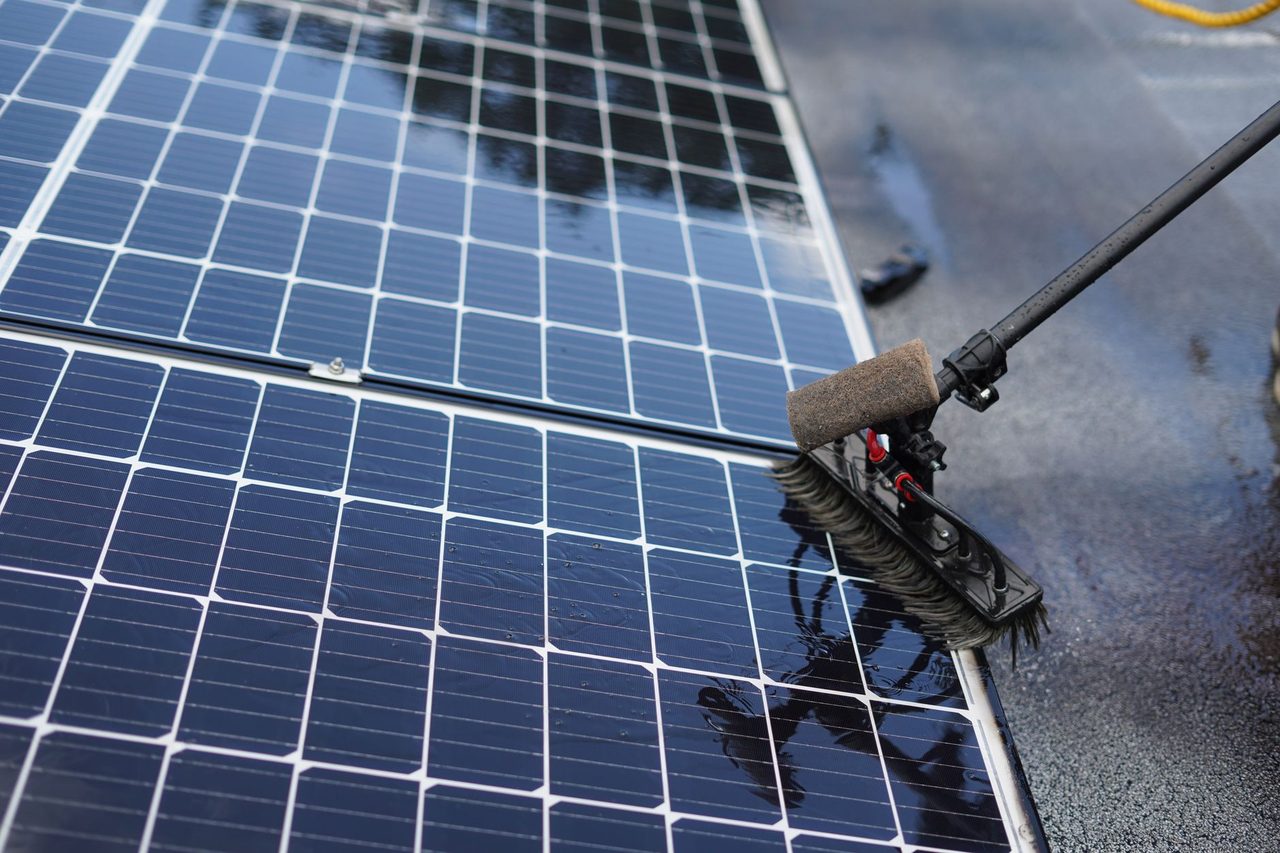
- Review cleaning frequency against local dust load and water availability
- Audit auxiliary consumption and nighttime parasitic loads
- Reconcile export, feeder and inverter energy data monthly
For rooftop and C&I captive plants, PR discipline is especially valuable because behind-the-meter economics depend directly on displaced retail tariffs. In several industrial states, avoided grid tariffs for HT consumers can still range from roughly Rs 6.5 to Rs 9.5 per kWh depending on demand category, surcharge structure and time-of-day implications. A plant losing 2% yield due to preventable EPC issues gives away savings every single month.
For utility-scale and open-access assets, the same logic applies through lower scheduled delivery and weaker cash generation. In competitive markets, the cheapest capex is not the same as the lowest levelised delivered energy cost.
Why PR-focused EPC is becoming a strategic differentiator
In India’s 2026 solar market, equipment choices are increasingly standardised by domestic manufacturing rules, approved vendor ecosystems, ALMM-linked procurement discipline and lender expectations. That means execution quality is becoming the true differentiator.
Plants that hold PR well over time usually share certain traits:
- Conservative but intelligent design margins
- Strong field QA and documentation
- Better supply-chain control and traceability
- Serious commissioning protocols
- Fast closure of early-life defects
- Data architecture that supports real diagnostics
This is why sophisticated owners now value Solar & hybrid plant EPC partners that understand not only construction schedules, but also long-term yield defensibility. The same applies where BESS system integration is planned later, because the AC design, auxiliary loads, metering boundaries and dispatch strategy can affect how hybrid performance is interpreted.
PR is not a cosmetic KPI for monthly dashboards. It is a compact summary of whether engineering intent survived procurement pressure, construction shortcuts, grid realities and Indian climatic stress.
For asset owners, developers, lenders and utilities, the right question in 2026 is not simply “What PR did the model assume?” It is “What specific EPC decisions make that PR achievable, measurable and enforceable?”
If you are planning a solar or hybrid project and want a sharper view on performance-risk, commissioning strategy and yield assurance, contact Growthifye’s advisory desk. We can help evaluate design choices, EPC risk points and bankability from a practitioner’s perspective.
Explore Growthifye's related capabilities
This analysis connects directly to our advisory practice: Solar & hybrid plant EPC · BESS system integration · Balance of system & civil works · Procurement & vendor management.
About the author

Chief Executive Officer, Growthifye — With over 23 years in management consulting, Sudarshan has taken businesses from concept to scale — building and scaling new-age digital and energy businesses.
- 23+ years in management consulting
- EY alumnus
- Led large-scale BESS programmes, capital raises and advisory mandates
Want this analysis applied to your project?
Talk to our team