India Solar Plant Acceptance Testing 2026: EPC, QA/QC, ALMM and Bankability Guide
By Sudarshan Karweer · sudarshan@growthifye.com · +91 84510 99371 (Call / WhatsApp) · 2026-09-04
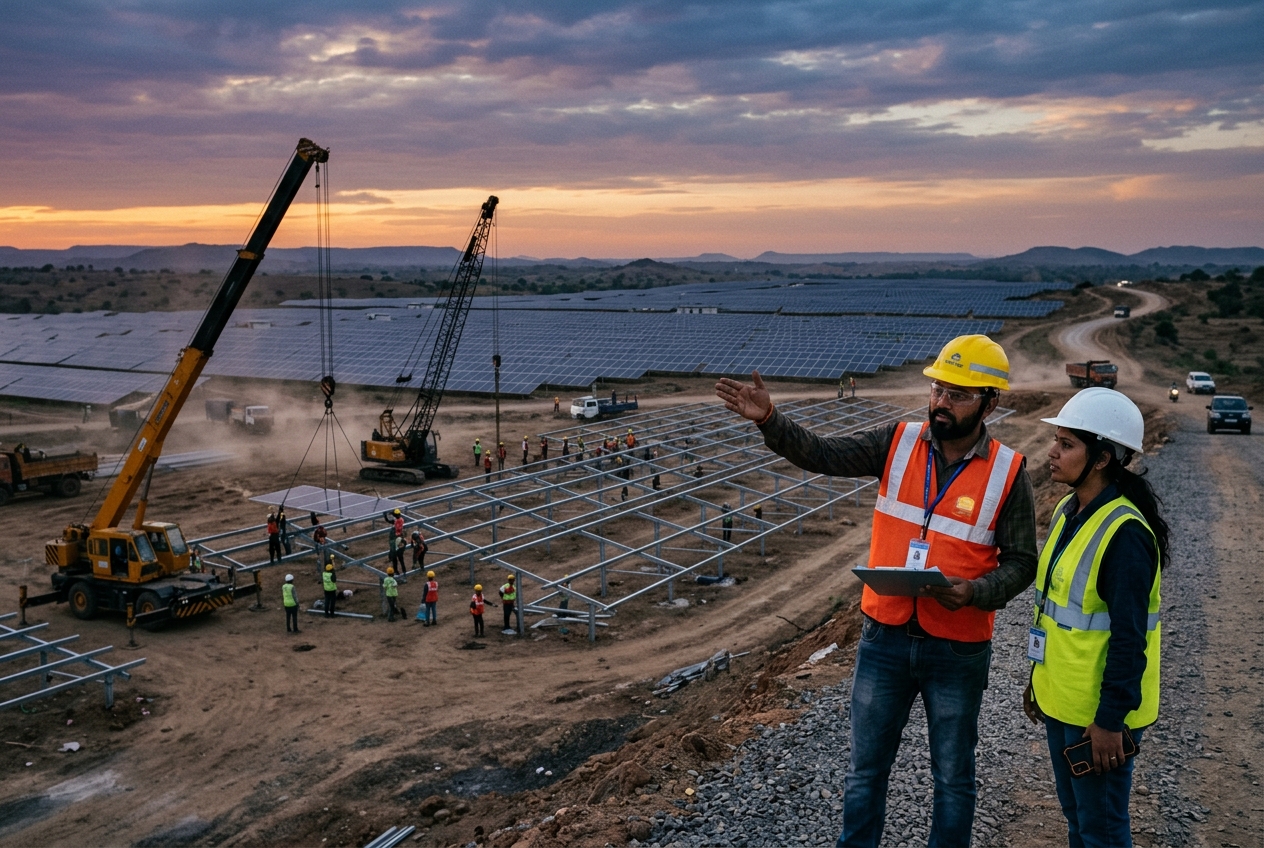
India’s solar market in 2026 is no longer judged only on EPC capex or quoted CUF. For C&I buyers, developers, utilities and lenders, the bigger differentiator is whether the plant can pass acceptance cleanly, achieve early energy stability and demonstrate that design intent has translated into safe, bankable performance. That makes acceptance testing one of the most under-discussed but commercially decisive parts of solar EPC.
A plant that reaches mechanical completion is not necessarily ready for revenue operation. Common problems still show up across Indian projects: undocumented ALMM substitutions, inverter settings misaligned with utility requirements, weak earthing continuity, SCADA data gaps, tracker calibration errors, hidden string outages, transformer oil test delays and unresolved punch points at handover. Each of these can delay provisional acceptance, retention release, insurance effectiveness or debt drawdown.
This article sets out a practical 2026 framework for solar plant acceptance testing in India, with a focus on EPC execution, QA/QC records, grid-readiness, contractual risk allocation and lender confidence.
Why acceptance testing matters more in India in 2026
Three market shifts have made acceptance discipline more important this year.
First, module and inverter supply chains remain policy-sensitive. ALMM requirements, DCR-linked scheme obligations and OEM model revisions mean the as-built plant may differ from the originally bid configuration unless procurement is tightly controlled. Acceptance testing is the point where all material substitutions must be checked against approved makes, datasheets, warranties and contractual obligations.
Second, offtake and grid conditions have become less forgiving. C&I customers operating under open access, group captive or behind-the-meter structures are highly sensitive to delayed COD because every lost day can mean replacement power at Rs 6-9/kWh from the grid, while the solar tariff economics may have been modelled closer to Rs 2.6-4.2/kWh depending on project type and financing. For utility-scale plants, even a two-week slippage in declared commissioning can affect PPA milestones, liquidated damages exposure and interest during construction.
Third, lenders have tightened technical diligence. They increasingly want evidence that the plant has not only been energized, but has passed documented testing across DC systems, AC systems, protection, metering, SCADA, weather station correlation and initial performance observation. In practice, weak acceptance documentation is now a direct bankability issue.
The four-stage acceptance framework EPC teams should follow
In Indian projects, acceptance should not be treated as a single event at the end. It works best as a staged process.
- Stage 1: Factory and pre-dispatch verification
- Stage 2: Site installation quality checks during construction
- Stage 3: Pre-commissioning tests before first energization
- Stage 4: Final acceptance and performance-linked handover
At Stage 1, the objective is to stop non-conforming equipment before it reaches site. For modules, this includes ALMM listing validation, flash test report sampling, visual inspection for glass and frame defects, connector compatibility checks, bill of materials consistency and pallet traceability. For inverters, EPC teams should verify firmware version, protection capability, harmonic limits, LVRT/HVRT functionality if applicable, and communication protocol compatibility with the selected SCADA platform.
At Stage 2, the focus shifts to workmanship and hidden defects. This is where many Indian sites lose value because civil, structural and electrical works progress fast during weather windows. Without disciplined QA/QC, defects get buried. Typical checks include pile location and verticality, torque records for structure fasteners, module clamp positioning, string polarity confirmation, cable dressing, UV protection, gland sealing, lug crimp quality, trench depth, route marking, and earthing strip continuity.
At Stage 3, the plant is tested system by system before synchronization. This includes insulation resistance, continuity, transformer pre-commissioning tests, breaker operation logic, relay settings, CT/PT polarity, inverter startup sequence, anti-islanding checks, SCADA tag mapping and weather sensor calibration.
Stage 4 is commercial handover readiness. Here, the question is not only whether the plant can run, but whether it can be accepted by the owner, utility and lender with a complete documentation trail. This is where punch lists, as-built drawings, warranties, O&M manuals, spares inventory and performance observation reports become critical.
What should be in a 2026 solar plant acceptance test checklist
A useful acceptance checklist in India should be evidence-based and package-wise. The following areas deserve mandatory coverage.
1. Module package
- ALMM status and approved make-model confirmation
- Nameplate verification against design wattage and voltage class
- Random EL testing or third-party sample verification where contractually specified
- Visual checks for micro-cracks, snail trails, backsheet damage and frame distortion
- Connector brand compatibility and no mixed mating unless OEM-approved
- String layout matching approved SLD and array map
2. Mounting structure and foundations
- Pile depth or foundation cube/strength test records
- Galvanization thickness records where relevant
- Torque tightening logs for primary structural connections
- Tracker alignment, row spacing and stow logic validation for tracker plants
- Corrosion protection for coastal, high-salinity or industrial environments
3. DC system
- String polarity checks before landing
- String insulation resistance values to acceptance threshold
- Continuity and voltage checks string-wise
- DC cable segregation, bend radius and clamping adequacy
- Combiner box fuse ratings, SPD health and gland sealing
- Thermal scan after energization to identify hotspots, loose terminals and connector heating
For large Indian ground-mount sites, thermography during early stable operation can reveal 0.2-1.5% hidden yield loss if defective strings, bypass diode heating or poor terminations are present. Catching these before handover is materially important.
4. Inverters and AC equipment
- Inverter firmware and settings freeze record
- MPPT functionality verification
- Start-stop sequence and fault logging validation
- Auxiliary supply resilience and communication health
- Transformer ratio, winding resistance, IR and oil BDV test results as applicable
- RMU or HT panel interlock checks
- Breaker timing, annunciation and trip circuit supervision
5. Protection and grid compliance
- Over/under-voltage and frequency settings aligned with utility approval
- Anti-islanding logic test record
- Reverse power or directional settings if required by interconnection design
- Relay coordination study implementation check
- Harmonic and power factor control validation
- Zero export logic test for relevant C&I systems
6. Metering and SCADA
- Main meter and check meter installation per DISCOM/SLDC requirement
- CT/PT ratio and burden verification
- SCADA point-to-point tag validation
- String monitoring population test where installed
- Weather station calibration and time synchronization
- PR/yield calculation logic alignment between plant SCADA and owner reports
A surprising number of disputes in 2026 still arise because owner dashboards, inverter portals and settlement meters do not match within acceptable tolerance due to configuration errors rather than actual generation loss.
Acceptance criteria that should be written into EPC contracts
Many acceptance disputes happen because the contract says the plant must be “commissioned” without defining how success is measured. A stronger Indian EPC contract should separate mechanical completion, synchronization, provisional acceptance and final acceptance.
A practical structure is:
- Mechanical completion: all physical works complete except minor punch items not affecting safety or operability
- Synchronization: plant energized and exporting power to grid or internal load
- Provisional acceptance: all critical tests passed, major punch points closed, documents submitted, and plant under stable monitored operation
- Final acceptance: performance demonstration completed and all residual documentation and defects closed
Developers and C&I buyers should define objective thresholds. Examples include:
- Maximum unresolved Category A safety punch points at PAC: zero
- Communication availability before PAC: typically more than 98% of required tags healthy
- Metering and SCADA timestamp synchronization: within contract-defined tolerance
- Inverter availability during observation window: often 99% or above excluding grid outages
- Transformer and HT equipment test certificates: mandatory before energization
For performance observation, owners should avoid unrealistic single-day PR guarantees because monsoon variability, curtailment and grid interruption can distort short windows. In Indian conditions, a 5- to 15-day stabilized observation period, with exclusions clearly defined, is more practical than forcing a one-day number that leads to arguments rather than quality.
ALMM, DCR and scheme-linked risks at handover
Acceptance in 2026 is also a compliance event. If the project is linked to a CFA programme, DCR requirement or a utility tender with approved vendor conditions, handover documents must establish conformity beyond normal technical completion.
Typical documentation should include:
- ALMM listing evidence for modules applicable to the project scope
- Manufacturer test certificates and serial number traceability
- DCR origin documents where mandated
- Warranty certificates matching supplied serial ranges
- Insurance-relevant equipment schedules
- Statutory approvals, CEIG clearances where applicable, and utility synchronization permissions
This matters because a plant may physically operate while still carrying latent compliance risk. If a later audit finds unsupported substitution or documentation gaps, the commercial impact can be severe: subsidy disallowance, payment withholding, dispute over EPC milestone release or weakened lender confidence.
This is why disciplined Procurement & vendor management and QA/QC & HSE enforcement are not back-office functions. They directly protect project cash flow at commissioning.
Common failure modes seen during Indian solar handovers
Across utility-scale, captive and open-access projects, several repeat issues continue to delay acceptance.
- Mixed connector families causing heating and long-term failure risk
- Unsealed glands and poorly terminated JB or SCB entries leading to moisture ingress before first monsoon
- Earthing pits installed but not tested to design assumptions
- Tracker rows misconfigured, creating backtracking loss or high-wind risk
- Inverter clipping misunderstood because actual DC population differs from approved design
- Energy meter CT/PT polarity or ratio errors affecting settlement
- SCADA dashboards showing healthy plant status despite dead strings or offline sensors
- Relay settings left at factory default rather than utility-approved values
The cost of these issues is often underestimated. On a 20 MW AC project, just 1% avoidable annual generation loss can mean roughly 0.35-0.4 million units depending on irradiation and design, translating to Rs 10-16 lakh per year at many realised tariffs. If the root cause is visible at acceptance but missed in documentation, the owner may carry a long-tail loss throughout operations.
How lenders and owners should review acceptance packages
A lender-grade acceptance package should be concise, auditable and structured by discipline. It should not be a random dump of PDFs. At minimum, reviewers should expect:
- Approved AFC drawings and final as-built drawings with revision control
- Equipment datasheets and approved vendor list alignment
- Factory and site inspection reports
- Test sheets signed by EPC, owner’s engineer and relevant OEMs
- Protection settings and commissioning records
- SCADA architecture, tag list and communication verification reports
- Warranty matrix and defect liability obligations
- Punch list with closure status and responsibility owner
- Initial generation trend and outage log during observation period
For larger projects, independent sampling by the owner’s engineer remains valuable even if the EPC contractor has internal quality systems. A 2-5% sample audit of strings, torque points, trench sections, foundations and SCADA tags can catch systemic issues at low cost.
Where Growthifye supports Solar & hybrid plant EPC or Testing, commissioning & handover, the biggest value often comes from integrating engineering intent, field QA and documentation discipline into one acceptance pathway rather than treating handover as a paperwork exercise after construction is already done.
A practical acceptance strategy for 2026 projects
If you are a developer, C&I buyer or lender evaluating a project this year, the best approach is simple.
Freeze acceptance criteria early, before procurement starts.
Ensure every major package has a test plan and hold-point matrix.
Do not allow undocumented equipment substitutions, even when delivery pressure is high.
Link milestone payments to evidence, not verbal readiness.
Require SCADA, metering and protection validation before declaring practical completion.
Keep a category-wise punch list: safety-critical, performance-critical and cosmetic.
Use a short stabilization window after synchronization to identify hidden defects before final handover.
In India’s 2026 solar market, acceptance testing is not an administrative step. It is where quality, compliance, yield and finance intersect. Plants that pass this stage with robust documentation generally move faster into reliable operations, cleaner receivables and fewer post-COD disputes. Plants that do not often spend the first operating year chasing defects that should have been closed before handover.
If you are planning a solar or solar-plus-storage project and want a bankable acceptance framework from design through commissioning, contact Growthifye’s advisory desk for project-specific support.
Explore Growthifye's related capabilities
This analysis connects directly to our advisory practice: Solar & hybrid plant EPC · BESS system integration · Balance of system & civil works · Procurement & vendor management.
About the author

Chief Executive Officer, Growthifye — With over 23 years in management consulting, Sudarshan has taken businesses from concept to scale — building and scaling new-age digital and energy businesses.
- 23+ years in management consulting
- EY alumnus
- Led large-scale BESS programmes, capital raises and advisory mandates
Want this analysis applied to your project?
Talk to our team