India Solar Curtailment & Grid Evacuation 2026: EPC, ALMM, BESS and Yield Guide
By Sudarshan Karweer · sudarshan@growthifye.com · +91 84510 99371 (Call / WhatsApp) · 2026-09-19

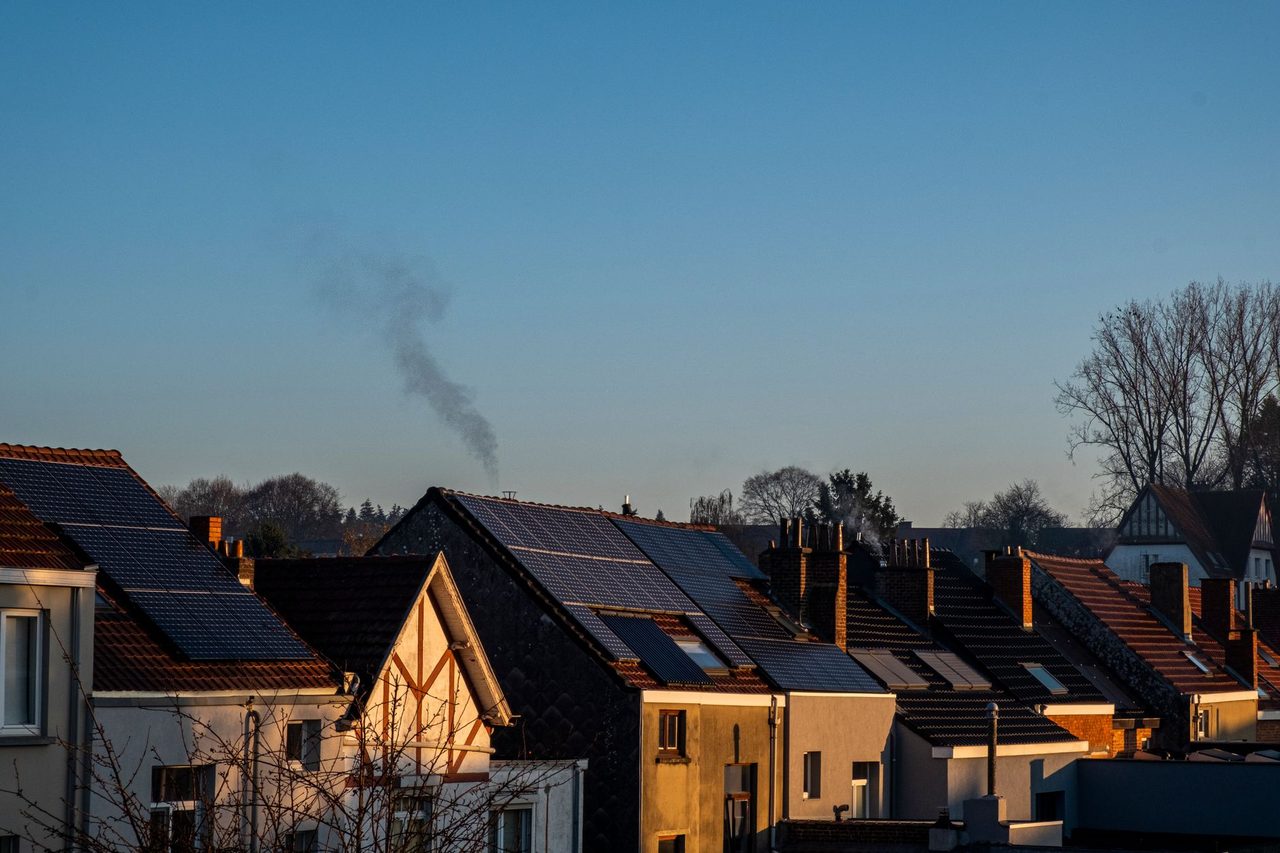
Photo: Lukas Blazek on Pexels
India’s utility-scale and C&I solar market in 2026 is no longer constrained only by module prices, land aggregation or headline tariffs. A growing share of project underperformance now comes from something less visible at bid stage: curtailment and weak grid evacuation planning. Projects that look viable on paper can lose meaningful revenue if the pooling substation is delayed, upstream bays are congested, reactive power obligations are not fully designed into the plant, or peak injection coincides with local network stress.
For developers, lenders and C&I offtakers, this issue has moved from an operational footnote to a first-order valuation variable. A plant with 2% lower capex but 4% avoidable energy loss due to evacuation constraints is not cheaper in any practical sense. Likewise, a solar+BESS project sized without reference to actual curtailment windows can carry battery capex without solving the real dispatch bottleneck.
This article looks at how Indian project sponsors should evaluate curtailment and evacuation risk in 2026, what EPC scope must include, where ALMM-linked procurement choices matter, and how storage can be deployed rationally rather than cosmetically.
Why curtailment has become a major 2026 project risk
Curtailment in India now arises from multiple pathways, not just formal SLDC instructions. In practice, energy loss can result from:
- transmission bay or pooling station readiness lagging COD
- transformer loading limits at the evacuation point
- state-level congestion during high-solar hours
- voltage excursions forcing inverter derating
- poor plant-level reactive power and control-system tuning
- mismatch between contracted capacity and actual export capability
- behind-the-meter export restrictions in C&I projects
- temporary restrictions during upstream maintenance outages
In several high-penetration renewable corridors, especially where solar parks, private ISTS-connected assets and state-connected projects cluster around common substations, midday export headroom can be materially tighter than bid assumptions suggest. Even where formal deemed-generation clauses exist in PPAs, recovery is often delayed, disputed or incomplete. For open-access and C&I projects, compensation for curtailment is usually weaker still.
The financial effect is straightforward. A 100 MW AC solar plant with a 24% CUF would expect about 210 GWh annually. If 3% of generation is lost to avoidable curtailment or evacuation weakness, annual energy loss is roughly 6.3 GWh. At a realised tariff of Rs 3.10 per kWh, that is about Rs 1.95 crore of annual gross revenue erosion. Over a 25-year life, even before escalation assumptions and discounting nuances, the project value impact is substantial.
For C&I projects offsetting retail tariffs of Rs 6.0-8.5 per kWh, the economic penalty is even sharper because every lost exported or self-consumed unit can displace more expensive power.
What developers should check before land, EPC and financing are locked
Too many projects still treat evacuation as a binary milestone: either connectivity exists or it does not. In reality, bankable evacuation diligence in 2026 should test both physical readiness and operational usability.
Key diligence items include:
- sanctioned evacuation capacity versus realistic simultaneous injection by nearby projects
- status of pooling substation, line bay, breaker scheme and protection approvals
- upstream transformation capacity and N-1 resilience
- reactive power requirement at interconnection point
- SCADA, plant controller and telemetry protocol requirements of STU/CTU/SLDC
- expected seasonal voltage profile at the point of interconnection
- likely commissioning sequence of neighbouring plants sharing infrastructure
- land-to-substation route risks for transmission line construction
- compensation framework in PPA, connectivity agreement and transmission documentation
A useful practical test is to ask a simple question: if the plant reaches mechanical completion 60 days before evacuation infrastructure is fully stable, who bears the cost? The answer usually determines whether the project’s apparent schedule buffer is real or fictional.
Developers should also model at least three export cases during bid and financial closure:
- base case: no material curtailment, full evacuation available
- moderate stress case: 1.5-3.0% annual export restriction or equivalent derating
- downside case: delayed full evacuation plus 3.0-6.0% first-year energy impact
Lenders increasingly expect sensitivity cases of this nature for renewable portfolios in congestion-prone states. If the debt sizing only works in a no-curtailment scenario, the project is not conservatively structured.
EPC design choices that directly influence curtailment and evacuation outcomes
Curtailment is often seen as a grid-side issue outside EPC control. That is incomplete. While the EPC contractor cannot remove state-level congestion, good engineering can significantly reduce plant-side losses, derating and non-compliance events that worsen effective curtailment.
Critical design areas include:
- inverter reactive capability and control philosophy
- plant controller response for active/reactive power dispatch
- transformer sizing with thermal margin for local climate and duty cycle
- collector system voltage-drop optimisation
- dynamic voltage support settings
- harmonic compliance under weak-grid conditions
- SCADA integration with utility dispatch instructions
- redundancy in communication architecture
- weather station quality for forecasting and scheduling compliance
For example, weak-grid conditions at 33 kV or 132 kV evacuation points can cause repeated inverter trips or prolonged derating if control settings are generic rather than site-specific. The result gets recorded as lower generation, but root cause lies in poor grid studies or rushed commissioning.
This is where integrated execution matters. A contractor delivering Solar & hybrid plant EPC should not stop at civil, mechanical and electrical completion. Grid-code interpretation, PPC tuning, SAT discipline and utility coordination are now part of value preservation.
Another often overlooked area is AC/DC ratio selection. Aggressive DC oversizing can improve annual yield in unconstrained systems, but at congested evacuation points it can amplify clipping and midday export bottlenecks. A plant designed at 1.45 DC/AC in a location with recurring noon-time restrictions may create less monetisable energy than a better-shaped configuration paired with limited storage or smarter export management. There is no universal ratio; the right answer depends on hourly evacuation probability, not just module prices.
ALMM, equipment selection and the hidden link to grid performance
ALMM compliance is usually discussed in terms of procurement eligibility and module supply security. In 2026, it also has an indirect but important relationship with evacuation performance.
Why? Because tighter approved-vendor pools, batch variability, replacement lead times and warranty response can affect how consistently a plant operates under grid stress. The same applies to inverter procurement strategy. Lowest upfront price can be expensive if firmware support, PPC integration or reactive power performance is weak.
Project teams should evaluate:
- module operating current and temperature behaviour under high-irradiance Indian conditions
- inverter short-term overload capability and dynamic grid support features
- OEM responsiveness for grid-code updates and utility interface requirements
- spare strategy for inverter power stacks, control cards and MV components
- compatibility of SCADA, plant controller and forecasting systems
- track record at similar voltage levels and state grid environments
On the module side, technology choice alone does not solve curtailment, but mismatch between string design, clipping profile and evacuation windows can alter realised value. In congested systems, the best technology is not always the one with the highest STC wattage; it is the one that delivers the best monetisable kWh after clipping, thermal losses and dispatch constraints are considered.
On the inverter side, central versus string remains project-specific, but whatever architecture is selected must be validated against grid support obligations, maintainability and fault recovery times. Plants that recover slowly from grid disturbances lose energy repeatedly in ways that standard P50 models do not capture well.
This is where disciplined Procurement & vendor management becomes material to revenue, not just to schedule. Bankable procurement in 2026 means selecting equipment ecosystems that can survive utility interaction, not merely pass factory datasheets.
When BESS actually makes sense for curtailment mitigation
Battery storage is increasingly proposed as a universal answer to solar curtailment. It is not. In some projects, BESS improves monetisation and grid compliance meaningfully. In others, it adds capex while shifting only a small volume of constrained energy.
The right use case depends on the shape, duration and commercial treatment of curtailment.
BESS tends to work best where:
- curtailment is concentrated in predictable midday windows
- evening tariffs or merchant prices are materially higher than solar-hour realisations
- the project faces contractual ramp-rate or scheduling obligations
- grid support services create additional revenue or compliance value
- evacuation augmentation will be delayed for years, not weeks
BESS is less compelling where:
- curtailment is infrequent and irregular
- export restriction is caused by prolonged outages rather than daily congestion
- tariff spread between charge and discharge windows is weak
- the battery is oversized relative to actual constrained energy
Consider a simple illustration. A 100 MW AC plant loses 20 MWh on a typical constrained day for 180 days annually, or 3,600 MWh per year. Installing a 50 MW/100 MWh battery to recover only a part of that energy may not pencil out unless the recovered units also earn a materially higher time-of-day value or provide additional system services. In contrast, a smaller 15 MW/30 MWh battery integrated with tight dispatch control may recover the most valuable constrained slice at lower capex.
For C&I consumers, storage economics can be stronger where midday export is limited but evening self-consumption is high, diesel displacement remains relevant, or demand-charge management adds value. In such cases, BESS system integration should be based on interval load data, outage patterns, open-access settlement rules and transformer/export constraints, not generic round numbers.
Financing, due diligence and contract structuring implications
Lenders and investors in 2026 are increasingly sensitive to avoidable yield-risk categories. Curtailment is no longer acceptable as a vague residual assumption in the IE report. It should be contractually mapped and financially stress-tested.
Key financing questions include:
- Is evacuation infrastructure under sponsor control, utility control or shared control?
- What are the LDs or relief mechanisms if substation readiness lags?
- Does the PPA compensate backing down, and how reliably has that been enforced?
- How much of the generation estimate is exposed to weak-grid derating rather than meteorology?
- Are storage capex and augmentation provisions linked to measured need?
- Is there enough DSRA and contingency to absorb delayed stabilisation after COD?
For EPC contracting, sponsors should pay attention to:
- clear demarcation between plant COD and evacuation readiness dependencies
- interface matrix with utility, bay contractor and transmission-line contractor
- performance-test methodology under constrained grid conditions
- exclusions related to utility non-availability and dispatch restrictions
- obligations for PPC tuning, forecasting integration and compliance support
A recurring mistake is to define commissioning success too narrowly. If a project passes basic generation tests but remains unstable under dispatch signals or voltage fluctuations, handover may occur before the real operating issues are solved. That creates post-COD disputes and delayed cash flow normalisation.
Experienced Testing, commissioning & handover practice should therefore include utility witness coordination, staged dispatch tests, reactive power verification and disturbance-recovery checks, not only no-load and peak-hour generation snapshots.
A practical 2026 playbook for developers, C&I buyers and utilities
For developers:
- treat evacuation studies as commercial diligence, not just engineering paperwork
- align DC/AC ratio with likely export constraints
- procure inverters and control systems for weak-grid reality
- size BESS only after hourly curtailment analysis
- build financing sensitivities around export risk
For C&I buyers:
- verify sanctioned import/export logic and settlement rules before signing
- test whether zero-export or limited-export scenarios still deliver savings
- assess battery value against actual load curve, not vendor templates
- insist on realistic commissioning and performance guarantees
For utilities and policymakers:
- improve transparency on substation loading and connection queues
- standardise dispatch, telemetry and PPC compliance expectations
- reduce ambiguity in curtailment compensation frameworks
- prioritise evacuation augmentation in high-renewable corridors
The main lesson for 2026 is simple: the cheapest solar project on a spreadsheet is not necessarily the most profitable asset on the ground. In a market where module efficiencies are converging and bid tariffs remain tight, value is being won or lost in grid-readiness discipline, controllability, commissioning quality and smart storage integration.
Projects that model evacuation honestly, design for real grid conditions and contract interfaces tightly will protect yield and debt service far better than those relying on optimistic assumptions. As Indian renewable penetration rises, curtailment management will become a core capability, not a niche technical issue.
If you are evaluating a new solar or solar+BESS project, or troubleshooting evacuation and curtailment risk in an existing asset, contact Growthifye’s advisory desk for practical support on design review, EPC strategy, storage integration and project bankability.
Explore Growthifye's related capabilities
This analysis connects directly to our advisory practice: Solar & hybrid plant EPC · BESS system integration · Balance of system & civil works · Procurement & vendor management.
About the author

Chief Executive Officer, Growthifye — With over 23 years in management consulting, Sudarshan has taken businesses from concept to scale — building and scaling new-age digital and energy businesses.
- 23+ years in management consulting
- EY alumnus
- Led large-scale BESS programmes, capital raises and advisory mandates
Want this analysis applied to your project?
Talk to our team