India RE Blended Finance 2026: Viability Gap, Concessional Debt and De-risking
By Sudarshan Karweer · sudarshan@growthifye.com · +91 84510 99371 (Call / WhatsApp) · 2026-09-12

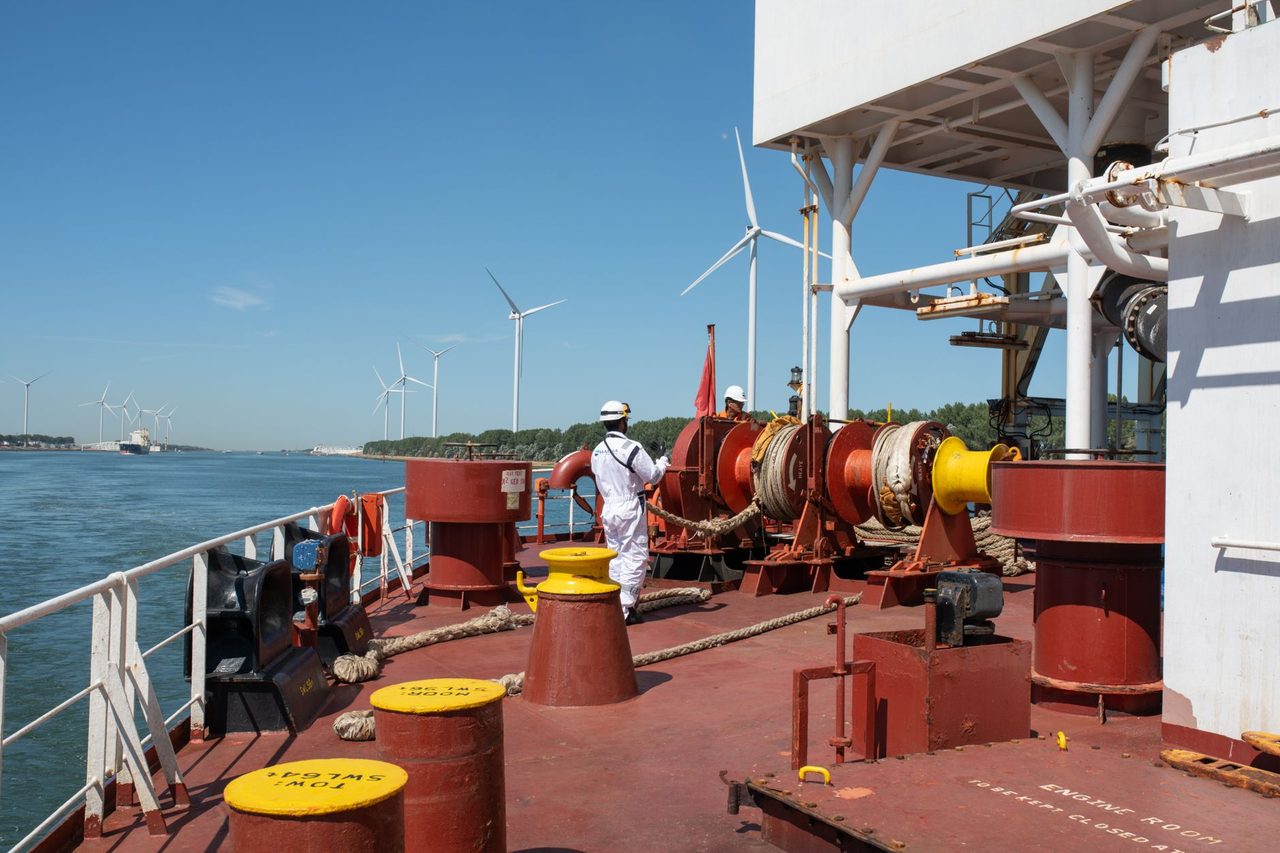
Photo: Parveen Khantwal on Pexels
India’s renewable-energy funding market in 2026 is deepening, but not evenly. Plain-vanilla solar and wind with strong offtake can still reach debt closure through domestic NBFCs, PSU lenders and infrastructure finance platforms. But the harder end of the market, including storage, hybrid projects, C&I portfolios with mixed credit quality, agricultural feeders, distribution-linked structures and emerging technologies, still faces a bankability gap. That gap is exactly where blended finance matters.
For Indian developers, C&I consumers, utilities and lenders, blended finance is not a buzzword. It is a structuring tool that can lower weighted cost of capital, improve debt service resilience, absorb specific project risks and unlock projects that otherwise struggle on tariff, tenor or security requirements. In 2026, this matters even more because equipment prices have stabilised relative to the volatility of 2022-24, but financing costs remain sensitive to interest rates, DISCOM payment cycles, merchant exposure and storage revenue uncertainty.
This article explains how blended finance is being used in India’s renewable-energy market in 2026, where it actually works, what lenders look for, and how developers should structure transactions for faster closure.
Why blended finance matters in India RE in 2026
India has an ambitious pipeline across utility-scale solar, wind, RTC, hybrid, pumped storage, battery energy storage systems, open-access C&I and distribution-connected projects. Yet the financing market still prices risk very differently across these segments.
A straightforward utility-scale solar project with a central agency offtaker or high-credit state utility may secure senior debt in the broad range of 8.35% to 10.25%, depending on sponsor strength, project size, security package and tenor. By contrast, a storage-led, hybrid or merchant-exposed structure can see significantly tighter lender conditions, including:
- lower initial leverage
- n- higher DSRA expectations
- more conservative generation assumptions
- tighter covenants on cash sweeps
- restrictions on distribution triggers
- shorter effective tenor versus PPA life
For many projects, the issue is not whether capital exists. The issue is whether available capital matches the project’s risk profile and tariff constraints. That is where Blended & concessional finance can be decisive.
In practical terms, blended finance combines commercial capital with concessional, catalytic or risk-tolerant capital to make projects financeable without replacing market discipline. The concessional layer may come as subordinated debt, first-loss support, viability gap support, guarantees, insurance-backed protection, technical assistance, results-based payments or lower-cost senior tranches tied to development outcomes.
In India’s 2026 context, the most relevant use cases are not generic. They are highly targeted.
Where blended finance works best today
Blended finance is most useful where the project has strong strategic value but faces one or two risks that domestic senior lenders do not fully absorb at acceptable pricing.
The leading use cases in 2026 include:
- battery energy storage systems where contracted revenues are still evolving and merchant upside is hard to debt-size
- firm and dispatchable renewable projects with complex revenue stacks across energy, capacity, ancillary or peak-shaving value
- C&I portfolios with diversified but mid-tier offtakers where portfolio aggregation improves economics but not always enough for plain-vanilla bank debt
- renewable projects serving agricultural feeders or public-sector distribution reforms where payment security is improving but still uneven
- mini-grid, rural industrialisation and distributed RE assets where ticket sizes are smaller and transaction costs are relatively high
- early large-scale repowering or retrofit programmes where performance uplift is attractive but lender underwriting data is limited
- harder geographies or evacuation-linked projects where construction and grid integration risk remain elevated
Take a typical 100 MW solar-plus-storage project bidding into a dispatchability-led procurement structure in 2026. Assume total project cost of Rs 5.8 crore to Rs 6.8 crore per MW on a blended equivalent basis depending on storage duration, interconnection and augmentation assumptions. If contracted tariffs are competitive and the storage component has partial revenue uncertainty, a conventional lender may cap leverage at 65:35 or 70:30 with a base DSCR requirement of 1.20x to 1.25x and higher reserve requirements. That can make sponsor equity IRR unattractive.
Now add a concessional subordinated tranche, targeted guarantee support, or a viability-gap style catalytic layer that reduces senior lender risk. The result may be:
- senior leverage improving by 5 to 10 percentage points
- all-in financing cost reducing by 75 to 200 basis points on the supported portion
- DSCR improving through back-ended support or reserve optimisation
- tariff viability improving enough to bid competitively without underpricing risk
That is the difference between a project that remains on paper and one that reaches financial close.
The main blended-finance instruments Indian RE sponsors should know
Not every project needs the same instrument. Good structuring starts with identifying the exact problem: tariff affordability, construction risk, payment risk, technology-performance uncertainty, foreign-exchange mismatch, or scale inefficiency.
In India’s 2026 renewable market, the most practical instruments include the following.
Concessional senior or subordinated debt
This is one of the most straightforward options. A development-oriented institution or catalytic fund provides debt below market pricing or with a longer tenor, often subordinated to domestic senior lenders. This can help projects with long payback periods, especially storage and distributed infrastructure.
For example, if senior commercial debt prices at 9.25% to 10.50%, a concessional tranche at 5.50% to 7.50%, even for a smaller share of the capital stack, can improve project-level DSCR and reduce early-year cash stress.
First-loss or guarantee structures
These are especially useful where domestic lenders are comfortable with core operating risk but hesitant on offtaker payment delays, portfolio granularity or new revenue streams. A partial credit guarantee or first-loss facility can unlock senior debt participation from banks and NBFCs that would otherwise reduce leverage or demand stronger sponsor recourse.
This is highly relevant for aggregated C&I portfolios, MSME-linked energy access and utility-facing programmes with state-level complexity.
Viability gap or results-based support
Where tariffs are tightly competitive and social or system value exceeds immediate project cash generation, viability-gap support can close the gap. In 2026, this logic is increasingly relevant for storage, grid-support assets and transition infrastructure where benefits include reliability, peak management and reduced curtailment.
Support may be paid upfront, milestone-linked or performance-linked, but lenders will always focus on certainty, disbursement conditions and legal enforceability.
Technical assistance and project-preparation funding
This is often underestimated. For smaller developers and new segments, project-preparation grants or technical support can materially improve lender confidence by funding resource assessments, legal diligence, demand analysis, interconnection studies, E&S systems and MRV frameworks.
In many transactions, weak preparation, not lack of capital, is what delays closure.
What Indian lenders and DFIs will actually diligence
Blended finance does not mean lighter underwriting. In most cases, it means more documentation, more intercreditor negotiation and more emphasis on measurable outcomes.
By 2026, lenders in India are increasingly aligned on a few core diligence themes.
Revenue quality and payment security
If the project depends on state utility receivables, open-access third-party sales or a multi-buyer C&I structure, lenders will evaluate:
- PPA tenor and termination provisions
- curtailment risk allocation
- deemed-generation treatment
- change-in-law pass-through
- payment security mechanism
- average receivable days and stress assumptions
- concentration risk across offtakers
For C&I portfolios, lenders are far more comfortable when no single offtaker dominates cash flow and when termination-substitution provisions are robust.
Technology bankability
For hybrid and storage projects, lenders now expect degradation assumptions, augmentation policy, EMS strategy and warranty coverage to be fully integrated into the model. Conservative assumptions remain standard. A battery project that looks healthy at 1.28x DSCR under aggressive cycling assumptions may fall below acceptable thresholds under lender cases.
Policy and regulatory alignment
Projects linked to open access, banking, wheeling, scheduling, DSM and state-level subsidy frameworks require a clear regulatory memo. This is particularly important because state-by-state divergence remains significant in 2026.
E&S, climate and development outcomes
Concessional and catalytic investors often need measurable impact in addition to repayment. That means sponsors should be ready with Impact quantification & MRV frameworks, including avoided emissions, peak-shaving impact, energy access effects, resilience benefits or agricultural feeder outcomes where relevant.
Model integrity
Lenders increasingly reject sponsor models that are operationally weak even if the project is conceptually attractive. Inputs for CUF, degradation, O&M escalation, inverter replacement, battery augmentation, curtailment, GST timing, working capital and receivables need to reconcile cleanly through all statements. This is where Lender-grade financial modelling directly influences financing outcomes.
How blended finance changes project economics
Sponsors often ask a simple question: does blended finance really move returns enough to justify the complexity?
In many Indian RE projects, yes.
Consider a simplified example for a 250 MW hybrid renewable portfolio with partial storage and mixed contracted offtake.
Base case without catalytic support:
- project cost: Rs 1,550 crore
- debt-equity: 70:30
- senior debt cost: 9.60%
- tenor: 15 years door-to-door
- minimum DSCR required: 1.23x
- contracted/blended tariff too tight to support full debt sizing under lender downside
Potential outcome:
- lenders reduce sanctioned debt by Rs 90 crore to Rs 140 crore
- sponsor equity requirement rises materially
- bid competitiveness weakens
With blended support:
- concessional subordinate tranche of Rs 120 crore at 6.25%
- partial guarantee on select payment-delay risk or portfolio-default layer
- improved senior lender comfort allows more efficient debt sizing
Potential outcome:
- effective senior debt quantum improves
- weighted cost of capital drops
- average DSCR improves by 0.05x to 0.12x depending on structure
- equity cheque falls
- project clears internal hurdle rates without inflating tariff
These numbers vary by structure, but the principle is consistent: targeted concessionality is most effective when it addresses the precise risk preventing debt closure.
The mistake sponsors make is seeking concessional capital too early as a generic cheap-money exercise, or too late after term-sheet negotiations are already misaligned. Blended finance works best when the capital stack is designed around lender concerns from the start.
The biggest mistakes developers make
In 2026, several recurring mistakes still slow blended-finance transactions in India.
- treating blended finance as a branding label rather than a capital-structure solution
- approaching concessional providers without a clear use-of-proceeds logic
- failing to ring-fence the risk that catalytic capital is meant to absorb
- ignoring intercreditor terms between senior, subordinate and guarantee providers
- presenting impact metrics that do not match actual cash-flow drivers
- assuming concessional capital will compensate for weak land, evacuation or permitting readiness
- using sponsor models that do not stand up to lender stress testing
Another major mistake is not matching the financing structure to the procurement pathway. A central utility PPA, a state tender, a C&I open-access portfolio and a behind-the-meter storage project each need different risk allocation. There is no universal blended-finance template.
What a workable sponsor strategy looks like in 2026
A developer or asset owner pursuing blended finance in India this year should think in five steps.
- Define the financing problem precisely: is it leverage, tariff, tenor, security, payment risk or technology risk?
- Match the risk to the right instrument: concessional debt, first-loss support, guarantee, viability gap or technical assistance.
- Build a lender-ready base case and downside case with transparent assumptions.
- Prepare a clear impact and monitoring framework if catalytic capital requires development outcomes.
- Run parallel discussions with commercial lenders and catalytic capital providers so intercreditor issues do not emerge late.
Sponsors should also map the likely lender universe early. For many projects, commercial debt may come from domestic institutions such as IREDA, PFC, REC, large PSU banks, private infrastructure lenders or NBFCs, while concessional or catalytic support may come from climate-focused facilities, multilateral platforms, development-linked funds or programme-specific windows. The funding strategy has to reconcile all parties’ security, reporting, reserve and covenant expectations before documentation advances too far.
For C&I platforms, aggregation is especially important. A 10 MW project with one mid-credit offtaker may be hard to structure efficiently. A 120 MW diversified portfolio with sector spread, stronger collections discipline and standardised contracts becomes much easier to finance, and may justify blended support where transaction costs can be absorbed sensibly.
The 2026 outlook for India RE blended finance
The strongest demand for blended finance in India over the next 12 to 24 months is likely to come from storage, hybrids, distribution-linked clean-energy programmes, C&I aggregation and projects delivering system flexibility rather than only low-cost energy.
That is because the market has already learned how to finance straightforward solar and wind. The next financing challenge is enabling assets that improve reliability, dispatchability and grid resilience while staying tariff-competitive.
In that environment, blended finance is not a substitute for disciplined project finance. It is a way to make disciplined project finance work in segments where market risk appetite is still catching up to policy ambition.
Done well, it can reduce financing friction, improve bankability, support lower tariffs, attract more senior capital and unlock projects with real strategic value for India’s 2030 renewable and storage trajectory. Done poorly, it adds complexity without solving the core bankability issue.
For sponsors, utilities and investors, the takeaway is simple: start with the risk, not the instrument. Then structure the capital stack so that every rupee of concessional support crowds in more commercial capital than it replaces.
If you are evaluating storage, hybrid, C&I or utility-facing renewable projects and need help with Blended & concessional finance, Green financing frameworks or lender-ready structuring, contact Growthifye’s advisory desk to discuss a financing strategy tailored to your project.
Explore Growthifye's related capabilities
This analysis connects directly to our advisory practice: Green financing frameworks · Sustainability-linked loans · Blended & concessional finance · Impact quantification & MRV.
About the author

Chief Executive Officer, Growthifye — With over 23 years in management consulting, Sudarshan has taken businesses from concept to scale — building and scaling new-age digital and energy businesses.
- 23+ years in management consulting
- EY alumnus
- Led large-scale BESS programmes, capital raises and advisory mandates
Want this analysis applied to your project?
Talk to our team