India RE Blended Finance 2026: Viability Gap and Concessional Debt Strategy
By Sudarshan Karweer · sudarshan@growthifye.com · +91 84510 99371 (Call / WhatsApp) · 2026-09-12

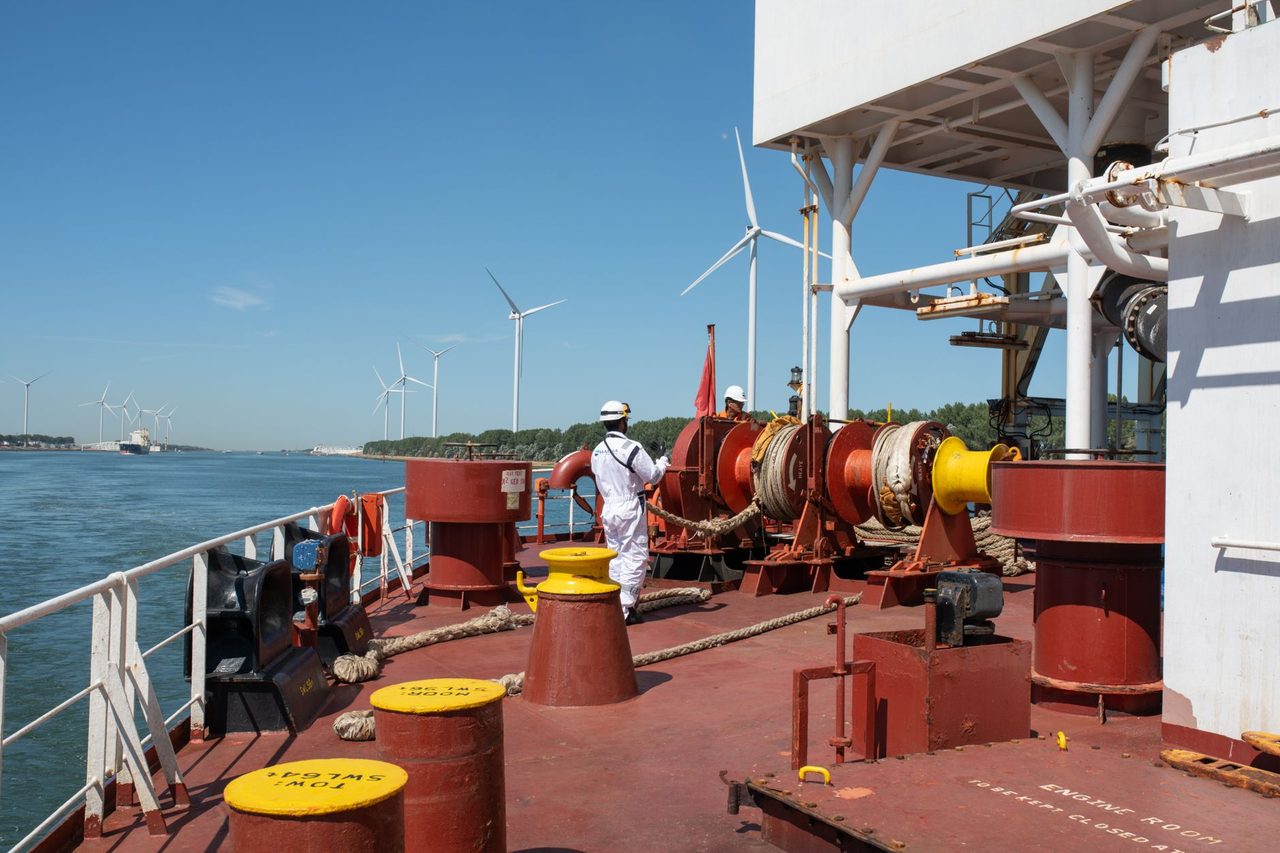
Photo: RASIK MOHAN MUNDA on Pexels
India’s renewable-energy market in 2026 is no longer constrained only by headline debt availability. The sharper problem is selective bankability. Utility-scale solar parks with strong offtake still attract lender interest, but more complex opportunities—C&I storage, FDRE, distribution-connected projects, agrivoltaics, MSME rooftop portfolios, islanded systems, municipal energy savings and emerging hard-to-abate decarbonisation assets—often struggle to clear conventional credit filters on tariff, tenor, counterparty risk, technology risk or early-stage development costs.
That is where blended finance matters. In Indian renewable energy, blended finance is not charity and it is not soft capital for weak projects. It is the disciplined use of concessional, catalytic or risk-sharing capital alongside commercial funding to make viable projects financeable faster and at lower weighted cost of capital. For developers, utilities, C&I buyers and lenders, the real question in 2026 is not whether blended finance exists, but where it genuinely improves project outcomes without distorting the capital stack.
This article looks at how blended finance is being used in India’s renewable sector in 2026, which project types benefit most, how viability-gap style support changes debt capacity, what lenders expect in term sheets, and how sponsors should prepare for debt syndication.
Why blended finance is gaining traction in India RE in 2026
Three market conditions are driving renewed interest.
First, the easy assets have largely been financed. Plain-vanilla utility-scale solar and wind with established state or central offtake frameworks remain fundable through standard project finance. But incremental capacity growth increasingly depends on more difficult segments such as storage-integrated projects, distributed portfolios, behind-the-meter decarbonisation and grid-support assets. These segments often need either longer payback periods, first-loss support, subordinated capital, results-based incentives or concessional debt to meet lender DSCR thresholds.
Second, tariff competition remains tight. In several tenders, discovered tariffs leave little room for capital-cost inefficiency. For storage and hybrid projects, revenue stacking assumptions may still be conservative in lender models, especially where merchant exposure, ancillary services or peak-power value is not fully underwritten. A 75 to 150 basis point reduction in blended borrowing cost can materially improve tariff competitiveness or equity IRR.
Third, public and development finance institutions are under pressure to crowd in private capital, not replace it. That means structures where concessional capital addresses a specific bottleneck—construction risk, offtake weakness, tenor mismatch, early losses, currency costs for imported components, or affordability gaps for public-serving infrastructure.
In practice, developers are now exploring combinations of:
- concessional senior debt alongside domestic term loans
- subordinated catalytic capital to improve senior lender comfort
- viability gap funding for storage or round-the-clock supply structures
- guarantee-backed facilities for weaker counterparties or emerging technologies
- grant support for project preparation, interconnection studies or technical assistance
- portfolio-level facilities for smaller rooftop and distributed assets
For many of these situations, Growthifye’s Blended & concessional finance and Lender-grade financial modelling capabilities become directly relevant because the structure only works if the concession is translated correctly into DSCR, repayment profile, reserve logic and downside resilience.
Which renewable segments benefit most from blended finance
Not every project needs concessional capital. In fact, using it unnecessarily can complicate documentation and slow closure. The strongest use cases in 2026 are segments where commercial lenders are interested but not comfortable enough to lend at efficient terms.
One clear segment is battery energy storage systems, whether standalone or paired with solar/wind. In India, storage economics continue to improve, but debt underwriting still depends heavily on contract design. Where revenues rely on fixed availability payments under SECI, NTPC or state tenders, debt appetite is improving. But for C&I storage, peak-shaving and backup applications, lenders remain conservative on utilisation assumptions and replacement reserves. A concessional tranche with longer tenor can reduce annual debt service and improve minimum DSCR from, say, 1.15x to 1.25x or above, which can be decisive.
Another segment is distributed renewable portfolios serving MSMEs, schools, hospitals, municipalities or agriculture feeders. Ticket sizes are fragmented, counterparties may be unrated, and collections performance becomes central. Here, blended structures can support aggregation, first-loss reserves, guarantee wraps or technical assistance for monitoring and collections systems.
FDRE and hybrid projects also stand out. These structures often involve more complex forecasting, scheduling and balancing obligations, plus higher initial capex due to oversizing or storage integration. If tariffs are under pressure while availability commitments are high, modest concessional support can bridge the gap between acceptable lender downside metrics and sponsor return thresholds.
Emerging decarbonisation assets can also qualify, including solar for process heat integration, renewable-powered cold chains, wastewater-to-energy systems, and industrial decarbonisation projects with energy savings components. Conventional project finance may struggle where revenue is partly embedded in avoided costs rather than a straightforward PPA. Structured concessional capital can reduce execution friction.
How viability-gap support and concessional debt change project economics
The most important discipline is to measure blended finance not by headline concessionality but by what it changes in the financing model.
For example, consider a 100 MW/200 MWh storage-linked project with total project cost of Rs 520 crore. A purely commercial debt package at 10.25% with a 14-year tenor and standard sculpting may support only around 68-70% leverage, depending on contract cash flows and reserve requirements. If a concessional tranche covering 15-20% of project cost is priced at 6.5-7.5% with a longer repayment tail, total annual debt service can reduce meaningfully in the first 8-10 years. That can improve:
- minimum DSCR by 0.08x to 0.15x
- equity IRR by 100 to 250 basis points, depending on tariff and degradation assumptions
- tariff competitiveness by several paise per kWh equivalent in levelised terms
- refinanceability after stabilisation
Similarly, a viability-gap style capital grant for a socially valuable but marginally viable project can directly reduce debt requirement and interest during construction. If even 10% of capex is covered through a grant-like support mechanism, the reduction in leverage pressure may allow the commercial debt tenor to remain shorter without breaching lender covenants.
Developers should model at least four effects:
- reduced average interest cost
- lower principal burden in early years
- improved resilience under generation or availability downside
- covenant headroom after accounting for reserve accounts and distribution lock-ups
Too many sponsors stop at project IRR. Lenders do not. They will test whether concessional support creates genuine senior debt protection or only cosmetic improvement. That is why robust downside cases matter: CUF underperformance, module degradation variance, BESS augmentation timing, payment delays, curtailment and O&M inflation should all be built into the base and downside models.
What Indian lenders and DFIs will look for in 2026
In 2026, institutions such as IREDA, PFC and REC remain central to the renewable-finance ecosystem, directly or through co-lending, refinancing pathways and market signalling. Private banks and NBFCs continue to participate where project structure, sponsor quality and offtake are strong. Development finance participation can help, but it does not waive core credit standards.
Lenders will focus on six practical issues.
First, concessional capital must be clearly subordinated or ring-fenced if it is intended to absorb risk before senior debt. Intercreditor arrangements need to be unambiguous.
Second, use-of-proceeds must be tightly defined. If concessional debt is earmarked for grid interconnection, storage augmentation, viability support or customer acquisition in a distributed portfolio, documentation must show how that spend improves project bankability.
Third, cash-flow mechanics must be lender-proof. Waterfalls, reserve accounts, cure rights and distribution tests should be straightforward. Over-engineered structures often fail at credit committee stage.
Fourth, monitoring and reporting must be credible. For blended structures tied to development outcomes, emissions reduction, access expansion, resilience or affordability metrics may need to be tracked. This is where Impact quantification & MRV becomes commercially important, not just a reporting exercise.
Fifth, counterparties still matter more than narrative. A concessional tranche does not fix a structurally weak PPA, ambiguous change-in-law protection or poorly allocated curtailment risk.
Sixth, exit clarity matters. If the sponsor expects later refinancing into lower-cost domestic debt after operational stabilisation, the initial documents should not create prepayment constraints or consent complexity that destroys that option.
Structuring principles for developers and C&I sponsors
Sponsors should approach blended finance as a targeted intervention, not as a generic fund-raising label. In our experience, the most financeable structures usually follow five principles.
- Match the concession to the risk: Use concessionality only where the market failure exists. Do not apply long-tenor soft debt to a risk that is actually about collections discipline or contract enforceability.
- Keep senior debt simple: Commercial lenders prefer familiar security packages, reserve structures and covenants. Complexity should sit outside the senior loan where possible.
- Price downside honestly: If the base case needs heroic merchant assumptions or unrealistic annual escalators, concessional funding will not rescue the transaction.
- Preserve refinance flexibility: If project performance is expected to improve after two to three operating years, build optionality for repricing or takeout.
- Prepare lender materials early: Blended transactions require stronger technical, legal and financial articulation than standard debt raises.
For C&I renewable platforms, especially rooftop solar plus storage portfolios, sponsors should also pay close attention to aggregation strategy. A portfolio of 50 smaller assets can become more financeable than five large but heterogeneous assets if customer segmentation, equipment standards, O&M protocols and receivables controls are uniform. In such cases, concessional support may be most effective at the warehouse or platform level rather than project by project.
Common mistakes that delay debt closure
Several recurring issues slow or derail blended finance transactions in India.
One is confusing cheap capital with patient capital. A tranche can be lower-priced but still operationally rigid, reporting-heavy or misaligned with senior lenders. Sponsors should judge the all-in transaction cost, including conditions precedent, drawdown constraints and reporting burden.
Another mistake is weak term-sheet sequencing. If sponsors approach concessional providers before testing commercial lender appetite, they may design a structure that looks development-friendly but is unattractive to the eventual senior lenders. The right sequence is usually:
- validate base commercial bankability
- identify the exact credit gap
- size the concessional intervention minimally but effectively
- align intercreditor and security package early
- run integrated financial sensitivities before circulation
A third mistake is underestimating documentation around outcomes and compliance. If the blended structure is linked to developmental or sustainability outcomes, data architecture matters. Metering boundaries, baseline assumptions, emissions factors and verification protocols should be established before financial close where possible.
Finally, some developers ask for concessionary terms to compensate for weak fundamentals that should instead be fixed operationally: land risk, evacuation uncertainty, counterparty mismatch, delayed permits or unrealistic EPC timelines. Blended finance works best on projects that are fundamentally viable but commercially constrained.
A practical 2026 playbook for bankable blended-finance execution
For Indian renewable developers, utilities and C&I platforms, the 2026 playbook is pragmatic.
Start with a conventional project-finance model using realistic debt pricing, DSCR thresholds, reserve assumptions and construction timelines. Then identify exactly where the project fails to clear lender thresholds: is it first-year DSCR, tariff affordability, tenor mismatch, customer concentration, or technology-performance uncertainty?
Next, test alternative interventions one by one.
- concessional senior debt with extended tenor
- subordinated debt or quasi-equity support
- viability-gap capital support at COD or during construction
- partial risk sharing or guarantee support
- technical-assistance grants for development, monitoring or portfolio build-out
Then quantify the minimum concession required to move the project into an investable range. This is critical. Efficient structures use the least concessional capital necessary to crowd in the most commercial capital.
In parallel, prepare a lender pack that includes:
- integrated financial model with base, downside and break-even cases
- contract summary showing revenue certainty and risk allocation
- capex and drawdown schedule with contingencies
- reserve-account framework and cash waterfall
- sensitivity analysis on tariff, CUF, degradation, delay and payment lags
- reporting framework for any development or impact-linked requirements
This is also where Green financing frameworks can help align the use-of-proceeds logic, reporting expectations and lender communications in a way that accelerates syndication rather than adding confusion.
Blended finance will not replace disciplined project finance in India’s renewable sector. But in 2026 it is becoming one of the most useful tools for unlocking the next wave of assets that sit just outside standard bankability—particularly storage, distributed portfolios, public-serving infrastructure and hybrid decarbonisation platforms. For sponsors that structure it carefully, the payoff is not just lower cost of capital. It is faster debt closure, deeper lender participation, stronger downside protection and a broader universe of viable projects.
If you are evaluating concessional debt, viability-gap support, refinancing pathways or lender strategy for a renewable project or portfolio, contact Growthifye’s advisory desk. We help sponsors and investors structure bankable transactions, build lender-ready models and execute debt syndication with practical 2026 market grounding.
Explore Growthifye's related capabilities
This analysis connects directly to our advisory practice: Green financing frameworks · Sustainability-linked loans · Blended & concessional finance · Impact quantification & MRV.
About the author

Chief Executive Officer, Growthifye — With over 23 years in management consulting, Sudarshan has taken businesses from concept to scale — building and scaling new-age digital and energy businesses.
- 23+ years in management consulting
- EY alumnus
- Led large-scale BESS programmes, capital raises and advisory mandates
Want this analysis applied to your project?
Talk to our team