India 2026 Scope 3 Decarbonisation Strategy: Supplier Engagement, PCF and MRV
By Sudarshan Karweer · sudarshan@growthifye.com · +91 84510 99371 (Call / WhatsApp) · 2026-09-08
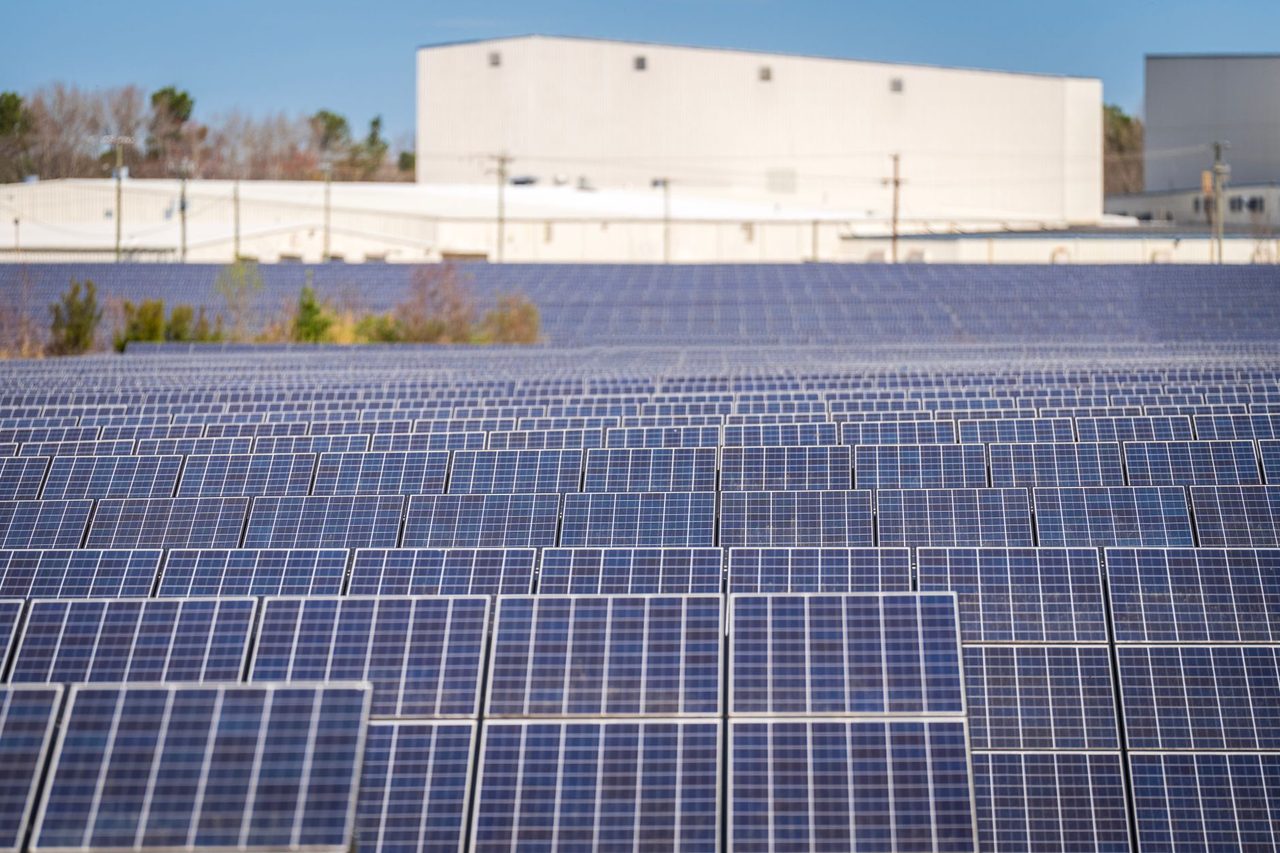
Photo: Mark Stebnicki on Pexels
India’s climate strategy in 2026 is no longer only about cutting grid electricity emissions or preparing a corporate net-zero slide deck. For many Indian manufacturers, infrastructure companies, logistics operators and large buyers, the bigger challenge is now Scope 3: the upstream and downstream emissions that sit outside the factory gate but increasingly shape procurement decisions, export competitiveness, lender diligence and transition planning.
This matters for three reasons. First, Scope 3 often represents 60% to 95% of total enterprise emissions for sectors with large purchased-material, freight or use-phase footprints. Second, customers in Europe, Japan and North America are asking for product-level emissions evidence rather than generic ESG statements. Third, Indian firms subject to BRSR Core, supply-chain questionnaires, sustainability-linked procurement and export carbon screening need data that can survive assurance, not just estimates copied from generic databases.
A practical 2026 Scope 3 strategy for India therefore needs more than inventorying emissions categories. It requires supplier segmentation, product carbon footprinting, procurement levers, plant-to-product allocation logic, internal governance and MRV discipline. It also needs to connect disclosure with abatement, capital allocation and commercial outcomes.
This article sets out a practitioner framework for Indian C&I energy consumers, RE developers, lenders, utilities and policymakers building that capability.
Why Scope 3 has become a board-level issue in India
The trigger is not one regulation alone. It is the convergence of disclosure, export pressure, customer requirements and financing discipline.
- Large listed companies are expanding climate reporting under BRSR and aligned voluntary frameworks.
- Export-oriented firms are being asked for product-level emissions, supplier primary data and chain-of-custody evidence.
- Global OEMs are embedding emissions clauses into RFQs and annual supplier scorecards.
- Lenders and investors are increasingly reviewing transition credibility, supply-chain risk and carbon-cost exposure in diligence.
- Corporate net-zero commitments are shifting from Scope 1 and 2 claims to the harder question: what will actually reduce value-chain emissions over the next 3 to 7 years?
In Indian industry, the sectors where Scope 3 is usually most material include steel downstream, cement products, chemicals, textiles, auto components, data centres, construction materials, food processing, logistics, e-commerce and consumer goods. Even where direct fuel and power dominate plant-level emissions, purchased goods and services can still be the largest corporate category when measured across legal entities and outsourced operations.
A common error in 2024-25 was to publish a Scope 3 baseline using spend-based factors and then treat the exercise as complete. In 2026, that is no longer enough. Spend-based methods are useful for screening, but they are too coarse for supplier engagement, target-setting, low-carbon procurement or customer-grade product claims.
Where Indian companies should start: material categories and data maturity
Under the GHG Protocol, companies may assess up to 15 Scope 3 categories. In practice, Indian firms should prioritise the categories that are both material and actionable.
For most industrial and infrastructure players, the first screening usually highlights:
- Category 1: Purchased goods and services
- Category 2: Capital goods
- Category 4: Upstream transportation and distribution
- Category 5: Waste generated in operations
- Category 6 and 7: Business travel and employee commuting, where relevant
- Category 9: Downstream transportation and distribution
- Category 11: Use of sold products, especially for energy-consuming equipment
- Category 12: End-of-life treatment of sold products
The right first step is a dual materiality matrix for Scope 3 categories using two axes:
- Emissions materiality: share of total value-chain emissions
- Intervention feasibility: data access, supplier influence, procurement leverage and reduction potential
A practical threshold used by many companies is to focus detailed action planning on categories contributing 80% to 90% of total Scope 3. Within those, segment suppliers by spend, emissions intensity and business criticality.
Data maturity should also be scored explicitly. A useful four-tier model is:
- Tier 1: Spend-based proxy only
- Tier 2: Activity data with secondary emission factors
- Tier 3: Supplier-specific primary activity data
- Tier 4: Product-level cradle-to-gate footprint with third-party review or assurance
In 2026, many Indian companies still have Category 1 inventories dominated by Tier 1 and Tier 2 data. The strategic aim should be to move the top 20 to 50 suppliers by emissions contribution toward Tier 3 and Tier 4 over 12 to 24 months.
Building a supplier engagement model that actually works
Supplier engagement fails when buyers send long questionnaires without a clear commercial pathway. It works when requests are prioritised, standardised and tied to sourcing decisions, technical support and realistic timelines.
A workable Indian supplier decarbonisation program usually has five tracks.
- Supplier mapping and hotspotting
- Standard data templates and boundary rules
- Capability-building for priority suppliers
- Commercial integration into procurement
- Verification and improvement cycles
Start by identifying the suppliers that drive the largest embedded emissions. For a metals fabricator, this may be primary steel, aluminium and process chemicals. For a food processor, it may be packaging, cold-chain logistics and agricultural inputs. For a real-estate or infrastructure player, cement, steel, glass, aluminium, cables and MEP systems often dominate.
Then standardise what you ask for. At minimum, supplier templates should cover:
- Organisational and product boundary
- Reporting period and production volume
- Energy consumption by source
- Fuel mix and thermal process data
- Purchased electricity source and emission factor basis
- Material inputs and recycled content
- Waste, scrap and by-product handling
- Transport distances and modes
- Allocation method across products
- Any EPD, ISO 14067, ISO 14064 or verified footprint references
The procurement team must be involved from day one. Without procurement ownership, Scope 3 remains a sustainability exercise with limited abatement impact. In practice, the most effective commercial levers are:
- Preferred-supplier status for verified emissions data
- RFQ scoring weight for product carbon intensity
- Multi-year sourcing visibility in exchange for decarbonisation plans
- Technical collaboration on energy efficiency, fuel switching and renewable power
- Shared target pathways for top suppliers
Indian companies should also be realistic about supplier capability. MSME vendors may not have lifecycle assessment teams or digital metering. Buyers therefore need a tiered ask:
- Level A: Basic energy and production data for smaller suppliers
- Level B: Facility-level emissions and allocation for medium suppliers
- Level C: Product-level cradle-to-gate PCF for strategic suppliers
This is where structured advisory support matters. Growthifye’s Carbon accounting & disclosure and Carbon markets & MRV capabilities are particularly relevant when companies need supplier data protocols that are practical enough for the factory floor and rigorous enough for assurance and customer scrutiny.
Product carbon footprints: from broad averages to customer-grade numbers
The next shift in 2026 is from corporate Scope 3 estimates to product carbon footprints. Buyers increasingly want emissions per tonne, per unit, per square metre or per functional output, not only annual corporate totals.
For Indian industry, product carbon footprinting is most useful when tied to real commercial decisions:
- Comparing domestic versus imported raw-material sourcing
- Qualifying low-carbon product variants for export markets
- Preparing customer declarations and EPD inputs
- Assessing decarbonisation payback at product-line level
- Quantifying exposure to embedded-carbon procurement criteria
A robust PCF exercise typically needs:
- Clear functional unit
- System boundary, usually cradle-to-gate for industrial inputs
- Plant data on fuel, power and process emissions
- Input-output mapping and bill-of-material alignment
- Treatment of scrap, recycled content and co-products
- Transport assumptions by mode and distance
- Allocation rules by mass, energy, revenue or process causality
Illustratively, in sectors like fabricated metals or chemicals, plant-average footprints can differ materially from product-specific footprints because product mix, process routing and yield losses vary. A company using only annual plant-average emissions may overstate or understate the carbon intensity of specific SKUs by 10% to 30%, sometimes more.
That error matters when customers compare bids. It also matters internally because the highest-abatement interventions may sit in only one process line or product family.
For example, moving one supplier’s electricity sourcing from grid mix to open-access solar-plus-wind may reduce product footprint more than a packaging redesign. Similarly, increasing scrap content in a metal input, improving kiln fuel efficiency at a materials supplier or shifting long-haul freight from road to rail can materially change a product’s cradle-to-gate profile.
The abatement playbook: what reduces Scope 3 fastest in India
Scope 3 reduction is often presented as a long-horizon challenge. That is only partly true. Several levers already have near-term viability in India when targeted at the right categories.
The fastest-maturing levers in 2026 include:
- Supplier renewable electricity adoption through open access, group captive or rooftop
- Energy efficiency at supplier plants, especially compressed air, motors, boilers, furnaces and cooling systems
- Industrial electrification for low- and medium-temperature heat where technically feasible
- Logistics optimisation through modal shift, load consolidation and route redesign
- Material efficiency, yield improvement and scrap reduction
- Recycled content substitution where quality requirements allow
- Packaging redesign and lightweighting
- Reduced clinker, virgin resin or high-emission input intensity in selected product systems
The financial case depends on category and geography, but practitioners should avoid vague claims and use site-specific economics. In many Indian states in 2026, open-access renewable power for C&I buyers can still deliver landed tariffs in the broad range of Rs 4.0 to Rs 6.5 per kWh depending on state charges, profile, banking and contract structure. In contrast, grid tariffs for industrial consumers may range from roughly Rs 6.5 to Rs 10 per kWh or more in several discom territories, excluding hidden cost volatility. For suppliers with high electricity intensity, this can create both emissions reduction and operating-cost savings.
Electrification economics are more case-specific. Replacing diesel or furnace-oil systems with electric alternatives may make sense where operating hours are high and renewable-backed power is available. For high-temperature applications, the near-term answer may still involve efficiency, heat recovery or fuel optimisation before deeper transitions like hydrogen become viable.
This is why companies need marginal abatement cost curves, not generic targets. Growthifye’s Net-zero roadmaps & MACC and RE-led decarbonisation capabilities are relevant here because value-chain abatement has to be prioritised by rupees per tonne avoided, implementation time and supplier control.
MRV and assurance: the difference between a report and a decision-grade system
Most Scope 3 programmes break down at MRV. Data arrives in inconsistent units, boundaries vary by supplier, allocation methods are not disclosed, and there is no audit trail linking product footprints to meter data, invoices or production records.
An audit-ready MRV framework for Scope 3 should include:
- Category-wise methodology notes
- Approved emission-factor hierarchy
- Supplier data-quality scoring
- Version control for templates and assumptions
- Evidence requirements for primary data
- Allocation and cut-off rules
- Recalculation policy for major structural changes
- Internal review and sign-off workflow
- Periodic independent assurance for high-materiality categories
Digitisation helps, but governance matters more. The best systems assign ownership clearly:
- Sustainability team: methodology and consolidation
- Procurement: supplier response rates and commercial integration
- Operations or technical team: plausibility checks on production and process data
- Finance or internal audit: controls, traceability and evidence retention
Companies should also define confidence levels when communicating numbers externally. Not every category needs the same precision in year one. But stakeholders should know what is primary, what is estimated and what is under improvement.
A useful 2026 operating target is:
- 100% coverage of material Scope 3 categories by estimate
- 70% to 80% of Category 1 emissions covered by supplier-specific activity data for top suppliers within 18 months
- 40% to 60% of priority product portfolio covered by product-level footprints within 24 months
These are not regulatory thresholds. They are practical benchmarks for moving from disclosure to action.
What lenders, developers, utilities and policymakers should watch
The Scope 3 conversation is no longer limited to reporting entities.
Lenders should assess whether borrower transition plans include credible value-chain levers, particularly where supply-chain emissions drive customer risk or export competitiveness. A borrower with no supplier-engagement strategy may face margin pressure even if its own plant is relatively efficient.
RE developers should recognise that supplier decarbonisation is a growing demand segment. Large corporates are no longer procuring clean power only for owned facilities; they are exploring structures that help strategic suppliers reduce embedded emissions. This opens advisory and aggregation opportunities, though contract design and attribution need care.
Utilities and policymakers should note that industrial decarbonisation increasingly extends beyond direct consumers. Data infrastructure, standardised emissions factors, grid-emission transparency, freight decarbonisation policy and market design for low-carbon products will all influence Scope 3 outcomes.
For policymakers, one priority is interoperability. Indian reporting systems, product declarations, carbon market MRV and export-facing carbon data requirements should not evolve in silos. The lower the duplication in data collection and verification, the faster Indian industry can respond competitively.
A practical 12-month roadmap for Indian companies
For organisations starting or upgrading Scope 3 in 2026, a realistic 12-month plan is:
- Months 1-2: Build baseline, identify material categories, define governance and data hierarchy
- Months 2-4: Segment suppliers by emissions contribution and procurement leverage
- Months 3-5: Launch standard templates and pilot data collection with top suppliers
- Months 4-7: Develop PCF methodology for priority products and validate allocation rules
- Months 5-8: Prepare MACC for supplier and logistics abatement levers
- Months 6-10: Integrate carbon criteria into RFQs, supplier reviews and sourcing decisions
- Months 8-12: Establish MRV controls, assurance plan and management dashboard
The companies that will lead are not those with the most polished net-zero statement. They are the ones that can answer practical questions quickly and credibly:
- Which suppliers drive our embedded emissions?
- Which products need customer-grade PCFs first?
- Which interventions cut emissions at the lowest cost?
- Which actions improve both export readiness and margins?
- Which numbers are robust enough for assurance and financing discussions?
In 2026, Scope 3 in India is no longer a peripheral disclosure issue. It is becoming a procurement, competitiveness and capital-allocation issue. Companies that build supplier-grade data, product-level carbon visibility and action-oriented MRV now will be better placed to win tenders, defend export markets and direct decarbonisation capital where it delivers measurable value.
If your organisation is building a practical Scope 3 decarbonisation plan, product carbon footprint framework or audit-ready supplier MRV system, contact Growthifye’s advisory desk.
Explore Growthifye's related capabilities
This analysis connects directly to our advisory practice: Carbon accounting & disclosure · Net-zero roadmaps & MACC · RE-led decarbonisation · Industrial efficiency & electrification.
About the author

Founder & CEO, Growthifye — engineering and financing India's clean-energy transition.
Want this analysis applied to your project?
Talk to our team