India 2026 Scope 2 Decarbonisation Strategy: RE Procurement, Accounting and Cost
By Sudarshan Karweer · sudarshan@growthifye.com · +91 84510 99371 (Call / WhatsApp) · 2026-09-18
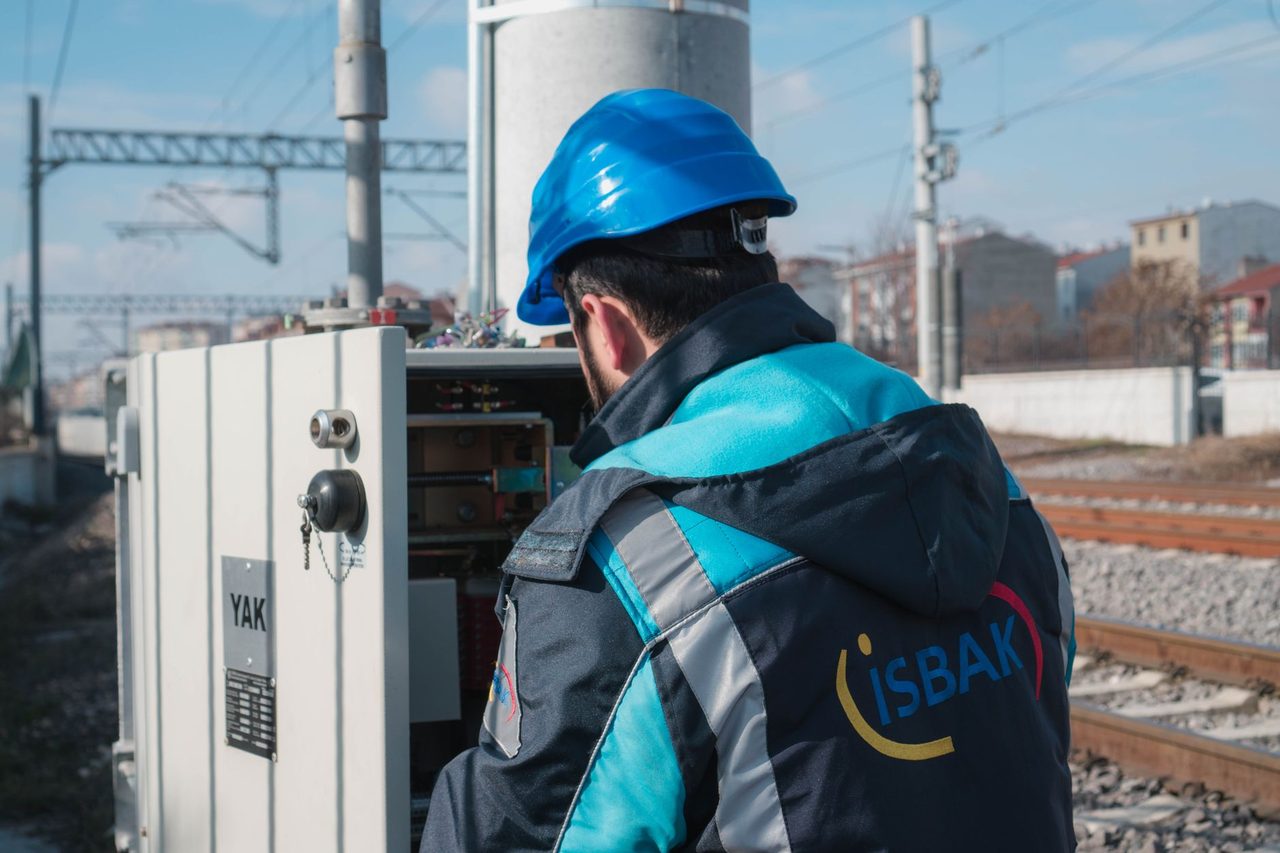
Photo: Sami Abdullah on Pexels
India’s industrial decarbonisation discussion often starts with boilers, furnaces, hydrogen and electrification. But for many commercial and industrial companies, the fastest bankable emissions reduction still sits in Scope 2. In 2026, that is no longer just about buying some renewable power and claiming progress. It is about choosing the right procurement pathway, understanding market-based versus location-based accounting, aligning with BRSR Core and investor scrutiny, and making sure the cost curve works against grid tariffs, banking rules and time-of-day exposure.
For Indian manufacturers, data centres, pharmaceuticals, food processing plants, automotive suppliers, IT campuses and logistics operators, Scope 2 strategy now sits at the intersection of energy procurement, decarbonisation disclosure, and long-term competitiveness. Exporters also face increasing questions from customers on electricity sourcing quality, hourly matching, and whether renewable claims are backed by contracts, certificates and metered evidence. Lenders and private equity funds are asking the same questions during diligence.
This article sets out a practical 2026 Scope 2 decarbonisation strategy for India: what to procure, how to account for it, what tariffs to test, what data to collect, and where companies are making avoidable mistakes.
Why Scope 2 matters more in India in 2026
Scope 2 covers indirect emissions from purchased electricity, steam, heating and cooling. In India, electricity dominates this category for most C&I consumers. Grid emission factors remain material because coal still sets a large share of generation in many states, even as solar and wind additions continue at scale.
In practice, Scope 2 is often the first emissions category where Indian companies can move quickly because:
- the technology is proven
- contracts can be structured without changing core process equipment
- savings can be immediate where RE tariffs beat grid landed cost
- disclosure benefits are visible in annual reporting cycles
- buyers can build a platform for later electrification and storage
In 2026, three developments have increased the importance of Scope 2 action:
- BRSR and BRSR Core scrutiny has made electricity data quality and controls a governance issue, not just a sustainability issue
- corporate net-zero commitments and SBTi-aligned plans increasingly require credible market-based accounting and procurement evidence
- large consumers are now comparing renewable pathways not only on levelised tariff, but also on hourly supply shape, deviation risk and residual grid exposure
For some facilities, Scope 2 can represent 25% to 80% of total operational emissions depending on process fuel use. For commercial real estate, data centres and many light manufacturing units, it can be the dominant emissions source.
The main Scope 2 reduction levers available to Indian C&I buyers
There is no single best route for every plant. The right answer depends on connected load, load factor, state policy, contract demand, operating profile, banking treatment, wheeling losses, and whether the company wants physical delivery, contractual attributes, or both.
The main levers in 2026 are:
- rooftop solar for behind-the-meter daytime consumption
- open access solar, wind or hybrid procurement
- captive and group captive structures
- utility green tariff or green power offerings where available
- renewable energy certificates or equivalent attribute instruments, subject to claim boundaries and disclosure integrity
- battery storage paired with RE for peak shaving and shaping
- energy efficiency to reduce absolute electricity consumption before procurement scaling
Typical commercial outcomes vary by state and load profile, but many C&I users still see open access renewable tariffs in the approximate range of INR 3.2 to 5.0 per kWh before site-specific adjustments, while industrial grid landed tariffs can range from around INR 6 to 10 per kWh or more once demand charges, surcharges and taxes are included. The spread can be attractive, but only if the transaction is modelled correctly.
Key variables that materially change delivered economics include:
- cross-subsidy surcharge applicability
- additional surcharge treatment
- wheeling and transmission charges
- banking charges and permitted banking period
- treatment of unutilised energy
- time-of-day settlement
- ISTS charge waivers where relevant and available under current rules
- scheduling and deviation provisions
A procurement strategy that looks strong on headline tariff can underperform if 20% to 35% of renewable generation spills into low-value periods or if settlement assumptions are unrealistic.
How to compare procurement options: tariff is not enough
Many board papers still compare options using a simple tariff versus tariff framework. That is inadequate in 2026. A good Scope 2 strategy compares options across cost, carbon, operability and auditability.
A practical evaluation matrix should include:
- annual energy matched to site demand in MWh
- hourly or 15-minute profile match, not just annual volume
- delivered landed cost per kWh after all charges
- fixed versus variable cost exposure over contract term
- residual grid power dependence during non-generation hours
- expected market-based Scope 2 reduction
- legal title to environmental attributes
- contract tenor and termination risk
- accounting treatment and evidence trail
- compatibility with future storage or load electrification plans
For example, a day-shift manufacturing plant with stable weekday demand may achieve 20% to 35% of annual consumption through rooftop and 30% to 50% through solar open access, but still retain evening and monsoon-season grid dependence. A 24x7 facility may need a solar-wind hybrid and battery strategy if it wants deeper market-based reductions. In several cases, hybrid procurement plus moderate storage now beats oversizing solar and absorbing poor shaping economics.
Typical planning benchmarks seen in the market include:
- rooftop solar CUF assumptions of around 16% to 21% depending on location and design
- utility-scale solar CUF broadly around 20% to 26%
- wind projects often around 28% to 38% depending on wind regime
- battery storage economics still site-dependent, but increasingly relevant for peak demand management and renewable firming in high tariff states
Companies should stress-test at least three scenarios:
- least-cost annual renewable penetration
- balanced cost and accounting integrity
- deep decarbonisation with shaped supply and storage support
The accounting question: market-based claims need evidence
The biggest mistake in Scope 2 strategy is treating procurement and carbon accounting as separate workstreams. They are not. A contract that saves power cost but does not support a robust emissions claim can create disclosure risk. Conversely, a conservative accounting stance without a competitive procurement strategy can leave savings on the table.
In 2026, Indian companies reporting under investor, customer or multinational parent frameworks need to be explicit about both location-based and market-based Scope 2 accounting where applicable. The location-based figure reflects average grid emissions. The market-based figure reflects emissions after considering contractual instruments and supplier-specific purchases, provided claims are backed appropriately.
That means companies need clarity on:
- what instrument is being used to support the renewable claim
- whether attributes are exclusively owned and retired for the buyer
- what metering and settlement records exist
- whether there is any double-counting risk
- whether annual matching is the only basis, or whether customers expect tighter temporal matching
- how residual electricity from the grid is treated
This is where Carbon accounting & disclosure becomes operational, not theoretical. Meter hierarchy, invoice controls, contract mapping, and attribute registers should all reconcile. If they do not, sustainability reports and lender DDQ responses can diverge from actual procurement reality.
For listed companies and large private issuers, the internal controls standard is also rising. Audit committees increasingly want source-to-report traceability: feeder meter to DISCOM bill, DISCOM bill to energy ledger, energy ledger to emissions factor, emissions factor to disclosure note, disclosure note to assurance file.
At plant level, useful data controls include:
- unique mapping of each meter to cost centre and legal entity
- monthly validation of imported, exported and banked units
- separate coding for captive, group captive, rooftop, open access and utility supply
- documentation of curtailment, outages and replacement power events
- retention of wheeling, banking and settlement statements
- version-controlled emissions factor files and claim methodology notes
What a strong India 2026 Scope 2 roadmap looks like
A robust Scope 2 plan is usually built in four layers rather than one transaction.
First, reduce avoidable electricity consumption. Efficiency remains the cheapest abatement wedge in many facilities. Motors, compressed air, cooling systems, chillers, HVAC controls, process heat recovery and power quality improvements can reduce the denominator before renewable procurement is sized. In many plants, 5% to 15% electricity savings are still available with paybacks under three years.
Second, maximise behind-the-meter economics. Rooftop and carport solar are still attractive where shadow-free space, structural integrity and daytime load permit. These systems also reduce losses and some external policy exposures. Typical commercial system sizes vary widely, but even 1 MW to 5 MW rooftop portfolios can produce meaningful annual Scope 2 reduction in multi-site groups.
Third, add off-site renewable supply using the right structure. Open access, captive and group captive solutions remain the workhorses for larger loads. The structure should be selected based on legal feasibility, balance sheet preference, expected utilisation and long-term consumption certainty.
Fourth, shape and govern the portfolio. This is the step many companies skip. A mature portfolio may need:
- wind to complement solar seasonality and evening ramps
- battery storage for peak shaving or renewable shifting
- flexible operations to align non-critical loads to renewable hours
- contract clauses for curtailment and change-in-law
- annual review of claim methodology as disclosure norms evolve
This is where RE-led decarbonisation and Net-zero roadmaps & MACC intersect. Scope 2 is not just a procurement line item; it is one abatement wedge in the wider MACC, and its sequencing matters relative to electrification, process changes and carbon market exposure.
State-level and commercial issues that can change outcomes
India remains a state-shaped electricity market for C&I buyers. Two similar plants in different states can see very different outcomes from the same renewable strategy. Decision-makers should test state-specific issues before locking a target.
Watch-outs include:
- open access approvals and processing timelines
- banking restrictions by technology, month or consumer type
- caps on banking carry-forward
- treatment of third-party sale versus captive models
- peak-hour charges and demand ratchets
- curtailment patterns in renewable-rich corridors
- standby charges where applicable
- distribution franchise or special economic zone considerations
Contract design also matters. Useful commercial protections include:
- clear energy accounting and settlement waterfall
- change-in-law pass-through definitions
- compensation principles for prolonged under-supply
- force majeure boundaries
- metering responsibility and data access rights
- attribute ownership language and retirement responsibility
- termination formulas that do not create hidden balance-sheet pain
For lenders financing renewable-linked industrial strategies, this detail is not optional. Weak contracts can convert expected savings into contingent liabilities.
Scope 2, export competitiveness and financing credibility
Even though Scope 2 is not identical to product-level embedded carbon, electricity sourcing quality increasingly shapes customer perception and procurement decisions. Global buyers are asking Indian suppliers for plant-level energy mix, renewable sourcing pathway, and supporting evidence. In electronics, auto components, chemicals, textiles and engineered products, this is moving from questionnaire to commercial qualifier.
Companies that can demonstrate a credible pathway to lower market-based Scope 2 emissions often gain three advantages:
- stronger positioning in customer sustainability assessments
- better visibility for transition-linked financing discussions
- clearer internal capital allocation because savings and abatement are both quantifiable
From a finance perspective, decision-makers should model Scope 2 projects on both INR per kWh saved and INR per tonne CO2e abated. In many cases, renewable electricity procurement remains among the lowest-cost decarbonisation levers available to industry, especially where displaced grid tariffs are high. But that conclusion must account for transaction and compliance costs, portfolio balancing needs and residual power purchases.
A useful board dashboard should show:
- current annual electricity consumption by site
- current location-based and market-based Scope 2 emissions
- renewable share by procurement route
- weighted average delivered power cost
- savings achieved versus DISCOM base case
- tonnes CO2e reduced by action type
- unresolved data or claim risks
- next 24-month procurement pipeline
Common mistakes Indian companies should avoid
Several recurring errors continue to undermine otherwise good Scope 2 programmes.
- treating annual renewable energy volume as equivalent to operational decarbonisation without checking time profile
- signing low-tariff deals without fully modelling surcharges, banking losses and curtailment
- making renewable claims without a clean attribute ownership trail
- ignoring plant expansion plans and then under-contracting future demand
- overcommitting to a single technology where hybrid supply would be more resilient
- separating sustainability teams from power procurement teams
- lacking a documented MRV protocol for site-level electricity and renewable data
The strongest performers in 2026 are building integrated teams across procurement, finance, legal, operations and sustainability. They know that an auditable Scope 2 strategy is part energy strategy, part disclosure strategy, and part risk management.
For Indian C&I buyers, the message is straightforward: Scope 2 is still one of the fastest routes to visible decarbonisation, but only when renewable procurement, accounting rules and site operations are designed together. The market has matured beyond simple annual REC-style thinking. Winning strategies now combine tariff discipline, hourly realism, contractual clarity and audit-ready evidence.
If your organisation is evaluating open access RE, green tariff options, storage-backed supply, or audit-ready Scope 2 accounting, contact Growthifye’s advisory desk. We help clients turn electricity decarbonisation into a finance-ready, disclosure-ready business case.
Explore Growthifye's related capabilities
This analysis connects directly to our advisory practice: Carbon accounting & disclosure · Net-zero roadmaps & MACC · RE-led decarbonisation · Industrial efficiency & electrification.
About the author

Chief Executive Officer, Growthifye — With over 23 years in management consulting, Sudarshan has taken businesses from concept to scale — building and scaling new-age digital and energy businesses.
- 23+ years in management consulting
- EY alumnus
- Led large-scale BESS programmes, capital raises and advisory mandates
Want this analysis applied to your project?
Talk to our team