India 2026 Green Hydrogen Strategy for Hard-to-Abate Industry and Net Zero
By Sudarshan Karweer · sudarshan@growthifye.com · +91 84510 99371 (Call / WhatsApp) · 2026-09-17
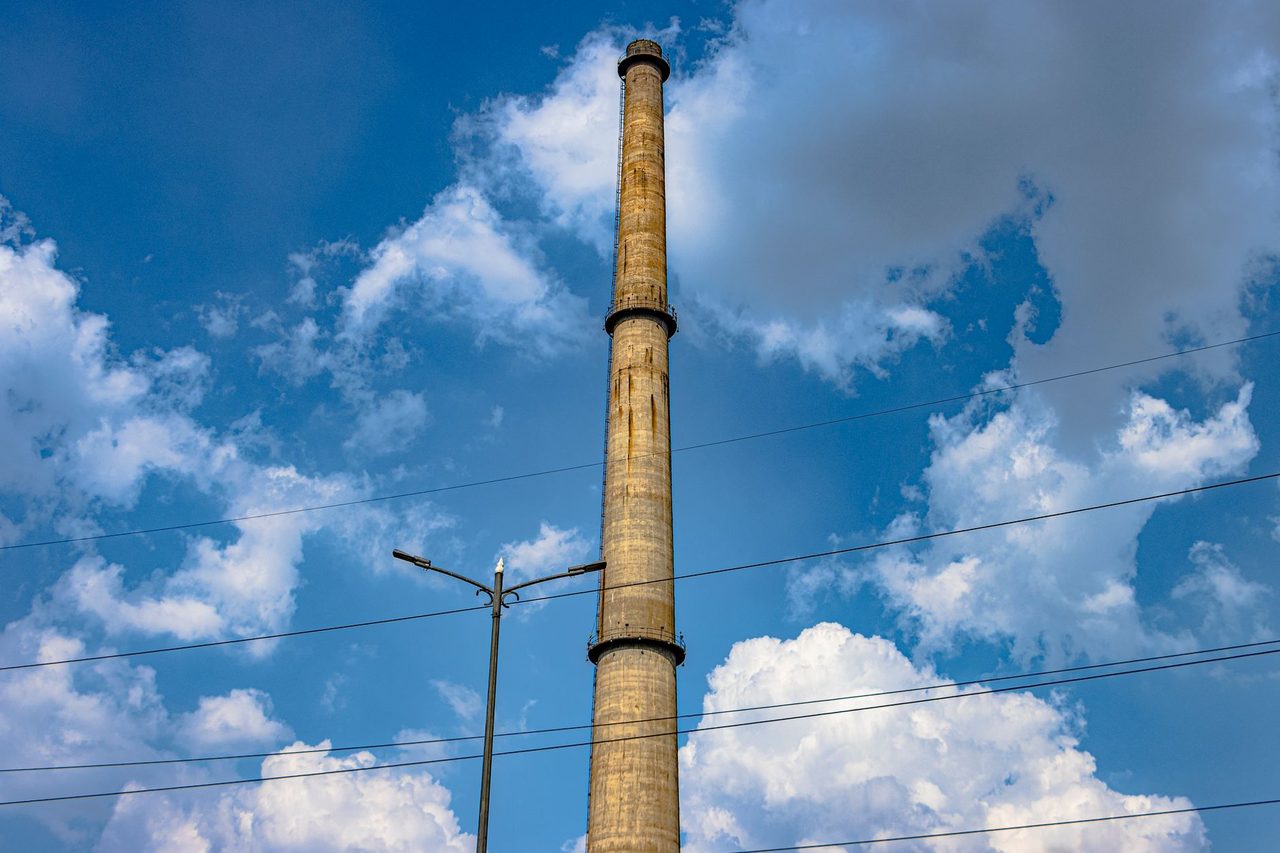
Photo: Shantum Singh on Pexels
Indian industry has spent the last two years getting much sharper on Scope 1, Scope 2 and Scope 3 baselines, BRSR Core controls, and exposure to export-linked carbon costs. In that process, one lesson has become clear in 2026: green hydrogen should not be treated as a generic decarbonisation label. It is a specific industrial feedstock and fuel solution that only works in a narrow set of use cases, and only when plant configuration, power sourcing, policy support, offtake structure and MRV are aligned.
That makes green hydrogen important precisely because it is hard. For sectors where direct electrification cannot fully replace fossil molecules or where process chemistry requires hydrogen, it can be one of the few credible pathways left for deep Scope 1 reduction. For many other facilities, however, open-access renewables, storage-backed power, waste-heat recovery, process optimisation and electric heat will deliver lower-cost abatement first.
For Indian C&I consumers, lenders, developers and policymakers, the strategic question is no longer whether green hydrogen matters. It is where it fits in the marginal abatement cost curve, how quickly its delivered cost can converge with incumbent fuels and grey hydrogen, and what project structures can survive real operating conditions rather than spreadsheet assumptions.
This article sets out a 2026 India view on green hydrogen for hard-to-abate industry: where it is viable, the current cost benchmarks, policy anchors, MRV requirements, financing issues and how companies should sequence hydrogen within a broader net-zero plan.
Where green hydrogen actually fits in Indian industry
The strongest green hydrogen case in India remains industrial feedstock substitution rather than broad fuel switching. That distinction matters because feedstock use often has fewer combustion-retrofit complications and clearer carbon-accounting outcomes.
The most relevant 2026 use cases are:
- Refineries replacing grey hydrogen used in hydrotreating and desulphurisation
- Ammonia and fertiliser production, where hydrogen is a core input rather than only an energy carrier
- Methanol and chemicals where low-carbon hydrogen can reshape product emissions intensity
- Direct reduced iron pathways in steel, especially for long-term low-emissions steel strategies
- Select high-temperature heat applications where electrification is technically difficult, costly or operationally disruptive
- Heavy mobility or mining-related captive applications in niche cases, though these remain less bankable than industrial feedstock projects
By contrast, many medium-temperature industrial heat loads below roughly 200-250°C still favour electric boilers, heat pumps, mechanical vapour recompression or induction, depending on process design and electricity access. For several facilities, replacing furnace oil, LPG or piped natural gas with hydrogen today would destroy economics unless there is a premium market for low-carbon product, a compliance driver, or strong support under a central or state scheme.
This is why hydrogen must sit behind a disciplined technology screen. A serious plant-level strategy first asks:
- Is hydrogen already used as feedstock?
- Is process chemistry forcing a molecular fuel or reductant?
- Is direct electrification technically infeasible or excessively expensive?
- Is there carbon-cost exposure through exports, customers or domestic compliance?
- Can the site source low-cost renewable power with high annual utilisation?
- Is there a credible premium, pass-through or avoided-carbon-cost case?
If the answer to most of these is no, hydrogen is probably not the first decarbonisation lever.
India 2026 cost benchmarks: what the market is really seeing
In 2026, the economics of green hydrogen in India depend far more on power cost and electrolyser utilisation than on headline electrolyser capex alone. Renewable electricity still accounts for the largest share of delivered hydrogen cost, especially when projects are structured around dedicated round-the-clock supply or high-capacity-factor hybrid generation.
For large projects using open-access or captive renewable supply, current market discussions typically cluster around these broad ranges, though plant-specific variations remain high:
- Solar or wind-solar hybrid power for large C&I-linked projects: roughly INR 3.0-4.5/kWh landed, depending on state, evacuation, banking, ISTS treatment, scheduling profile and contract shape
- Firmed renewable power with storage or hybrid balancing: often INR 4.5-6.5/kWh equivalent or higher, depending on required firmness and storage duration
- Electrolyser capex for utility-scale alkaline systems: still commonly discussed around USD 350-550/kW equivalent landed-and-integrated range, though final project capex depends heavily on balance of plant, compression, storage, water treatment and EPC scope
- Green hydrogen delivered cost for stronger Indian resource conditions and high utilisation assumptions: often around INR 280-420/kg for nearer-term projects, with some developers targeting lower future numbers under favourable policy and scale assumptions
- Grey hydrogen cost reference, linked largely to natural gas prices and plant configuration: often materially lower on a base-cost basis, but volatile and increasingly exposed to carbon and customer pressure
At these levels, green hydrogen is not yet a universal parity story. It becomes more viable when one or more of the following apply:
- The user already consumes large volumes of hydrogen
- The alternative fuel is costly and operationally constrained
- There is a premium for low-carbon product in export markets or downstream procurement
- The project qualifies for production-linked or state-level support
- Carbon intensity reduction has direct value in customer contracts, disclosure ratings or market access
- By-product oxygen has local monetisation potential
Water cost is usually not the dominant variable, but water security and treatment design are still critical. Depending on electrolyser technology and plant design, roughly 9 litres of demineralised water are required per kg of hydrogen at the stoichiometric level, with actual raw-water requirement higher after purification and plant losses. In water-stressed industrial clusters, this can affect siting and permitting.
Policy support and market signals shaping projects in 2026
India's National Green Hydrogen Mission remains the central policy reference point in 2026, but project success increasingly depends on how central incentives combine with state industrial policy, transmission access, land, water and offtake certainty.
Several market signals are now more relevant than generic policy announcements:
- Incentives for domestic manufacturing and production support have improved confidence around local supply chains, though developers still need to underwrite actual commissioning and performance risk
- Renewable-power access frameworks, including open access and captive structures, remain decisive for hydrogen economics
- Export-oriented sectors are paying closer attention to embedded carbon in products and future customer procurement standards
- Indian compliance carbon-market architecture and emerging MRV expectations are pushing companies to quantify real abatement rather than rely on narrative claims
- Ports, industrial parks and state hydrogen policies are creating location advantages for integrated projects
For developers, the practical takeaway is that policy is necessary but not sufficient. The bankable project remains the one with credible renewable supply, high electrolyser load factor, a long-tenor offtake arrangement, and a measurement framework that lenders and industrial buyers can trust.
That is especially relevant for companies evaluating hydrogen as part of wider Net-zero roadmaps & MACC. Hydrogen almost always sits on the higher-cost side of the abatement curve today. It therefore needs to be justified either by process necessity, strategic market positioning, or expected future compliance value.
Hydrogen versus electrification: the sequencing question
One of the biggest mistakes in industrial decarbonisation is to evaluate hydrogen before exhausting lower-cost electrical and efficiency measures. In most Indian industrial contexts, the correct sequence is:
- Reduce energy intensity through process optimisation, controls, heat integration and waste-heat recovery
- Decarbonise Scope 2 through renewable procurement, storage-backed supply where needed, and improved energy scheduling
- Electrify heat and mechanical loads where technically feasible
- Address residual hard-to-abate Scope 1 emissions with hydrogen, biomass, CCUS, process redesign or material substitution
This sequencing is not ideological; it is financial. If a facility can abate CO2 at INR 2,000-5,000 per tonne through efficiency and renewable electricity, it should not start with a hydrogen pathway costing multiples of that unless there is no viable alternative.
For example, replacing grey hydrogen in a refinery unit may be rational even at a relatively high abatement cost because it tackles a process-specific fossil input. Replacing a reasonably efficient gas-fired boiler with green hydrogen in a plant that could instead use electric heat from renewable power is a much weaker proposition in 2026.
The strongest advisory work therefore links RE-led decarbonisation, electrification and hydrogen in one common decision model rather than in separate silos. This is where plant-level energy balance, thermal profile, operating hours, emissions baseline and procurement structure all need to be integrated.
Building a bankable green hydrogen project: offtake, EPC, power and risk allocation
In India, many announced hydrogen projects still struggle at the transition from concept note to financial close. The gap is usually not ambition; it is risk allocation.
A bankable project in 2026 needs disciplined structuring across four interfaces.
First, power supply.
Hydrogen cost depends heavily on electricity price and electrolyser utilisation. A project tied only to low-cost solar without balancing may achieve attractive nominal energy cost but weak annual utilisation. Conversely, a highly firmed supply can improve utilisation but make hydrogen too expensive. The optimal design often combines solar, wind, grid balancing and limited storage based on actual hourly dispatch modelling.
Second, technology and EPC.
Electrolyser selection should reflect operating profile, start-stop behaviour, degradation, stack replacement assumptions, water quality and integration with compression and storage. Developers should stress-test guarantees for efficiency, availability and output under Indian ambient conditions rather than relying on brochure data.
Third, offtake.
Without a credible offtaker, merchant hydrogen remains difficult to finance. Industrial users should define purity, pressure, daily draw pattern, curtailment provisions, outage responsibilities and pass-through logic for electricity cost changes. If the project supports low-carbon product claims, the contract should also define carbon-intensity accounting and audit rights.
Fourth, MRV and certification.
For both domestic and export-linked use, buyers increasingly want evidence that hydrogen is genuinely low-emissions, not simply grid-powered production relabelled through loose allocation. Hourly matching is still not a universal requirement in India, but scrutiny of temporal correlation, additionality and emissions factors is growing.
This makes Carbon markets & MRV a commercial issue, not only a reporting one. Poor data architecture can weaken customer acceptance, financing confidence and future eligibility under evolving carbon-market mechanisms.
MRV, claims and carbon accounting: getting the emissions story right
Hydrogen projects often fail in boardrooms because the emissions accounting is oversimplified. In reality, the reduction achieved depends on what hydrogen is replacing, how the electricity is sourced, and how boundaries are defined.
A robust accounting framework should cover:
- Baseline emissions from incumbent grey hydrogen, natural gas, naphtha, coal or other fuels/feedstocks
- Emissions from electricity consumed by electrolysis, including residual grid draw where applicable
- Upstream emissions factors where required by customer or reporting framework
- Compression, storage and transport energy use
- Plant-level allocation where hydrogen serves multiple units or products
- Treatment of curtailment, backup power and outages
- Linkage to BRSR Core controls, assurance processes and internal audit trails
For exporters and large listed companies, this matters across several layers: Scope 1 reduction claims, Scope 2 treatment for electricity consumed, product carbon footprint outcomes, and customer-facing disclosures. If hydrogen is incorporated into a low-carbon product narrative without defendable data, the reputational and commercial downside can be material.
In 2026, companies should assume that any major decarbonisation claim will eventually be reviewed by lenders, auditors, buyers, or regulators. That means data granularity, meter hierarchy, calibration discipline and document retention are no longer back-office issues.
A practical decision framework for Indian industry
For industrial companies considering green hydrogen today, the best approach is not to ask, “Should we do hydrogen?” but to ask, “Under what conditions does hydrogen beat our alternatives?”
A workable decision framework includes:
- Establish a verified baseline for fuel, feedstock and process emissions by unit
- Identify no-regret actions first: efficiency, renewable electricity, thermal integration and electrification
- Screen hydrogen only for units where molecular substitution is genuinely needed
- Build a site-specific marginal abatement cost curve with fuel-price and carbon-price sensitivities
- Test multiple power-supply configurations, not just annual average tariff assumptions
- Evaluate policy support, land, water, evacuation and state-level permissions early
- Secure offtake logic and product-claim boundaries before final capex commitment
- Design MRV architecture alongside engineering, not after commissioning
For most companies, the answer in 2026 will be a phased pathway. Near-term action will focus on energy efficiency, renewable power and selective electrification. Parallel pilot or anchor hydrogen projects may be justified in refineries, chemicals, fertilisers, steel and integrated industrial clusters where offtake is concentrated and decarbonisation value is strategic.
That is the right framing for India: hydrogen as a precision tool for hard-to-abate segments, not a blanket solution. Used selectively, it can unlock deep Scope 1 reduction and support export competitiveness in carbon-conscious markets. Used indiscriminately, it risks becoming an expensive distraction from cheaper and faster abatement.
The winners in 2026 will be companies that treat hydrogen not as a headline, but as an engineered business case tied to power strategy, process need, auditable emissions reduction and financeable execution.
If your organisation is evaluating green hydrogen within a broader decarbonisation portfolio, contact Growthifye’s advisory desk. We help industrial clients translate plant data, policy signals and commercial realities into investable pathways across carbon accounting, renewable power, electrification, hydrogen and MRV.
Explore Growthifye's related capabilities
This analysis connects directly to our advisory practice: Carbon accounting & disclosure · Net-zero roadmaps & MACC · RE-led decarbonisation · Industrial efficiency & electrification.
About the author

Chief Executive Officer, Growthifye — With over 23 years in management consulting, Sudarshan has taken businesses from concept to scale — building and scaling new-age digital and energy businesses.
- 23+ years in management consulting
- EY alumnus
- Led large-scale BESS programmes, capital raises and advisory mandates
Want this analysis applied to your project?
Talk to our team