India 2026 Scope 2 Decarbonisation Strategy: Open Access, RTC Power and MRV
By Sudarshan Karweer · sudarshan@growthifye.com · +91 84510 99371 (Call / WhatsApp) · 2026-09-07
Photo: Parveen Khantwal on Pexels
India’s 2026 Scope 2 Decarbonisation Strategy: Open Access, RTC Power and MRV
For many Indian commercial and industrial energy consumers, Scope 2 is now the fastest large-scale emissions reduction lever that can move from board presentation to operating reality within 12–24 months. The reason is simple: electricity emissions are visible, measurable, increasingly material in BRSR Core and customer disclosures, and often reducible at lower cost than many deep industrial retrofits.
But the market has moved beyond the old question of whether to buy renewable power. In 2026, the practical issue is how to design a Scope 2 strategy that works across tariffs, open access charges, banking rules, hourly load profiles, residual emissions, reporting frameworks and lender diligence. A company that signs the cheapest solar PPA without considering load shape, state charges, nighttime demand, deemed demand savings, renewable energy accounting and audit trails can end up with weak carbon performance and unstable savings.
A robust Scope 2 strategy for India now sits at the intersection of power procurement, regulatory design, emissions accounting and plant operations. That is where advisory work has shifted from generic renewable sourcing to integrated RE-led decarbonisation and Carbon markets & MRV.
Why Scope 2 deserves a dedicated 2026 strategy
Indian industry has focused for years on reducing unit power cost. That remains important, especially for energy-intensive sectors such as metals, chemicals, textiles, data centres, auto components, food processing and building materials. However, in 2026 three new pressures are making Scope 2 more strategic.
- BRSR Core and broader ESG reporting expectations are pushing listed and large unlisted companies to quantify electricity-related emissions with tighter controls.
- Export-oriented manufacturers are under customer pressure to disclose plant-level and product-level carbon intensity, even when regulations target embedded emissions more directly.
- Lenders and investment committees increasingly ask whether projected decarbonisation savings come from measurable operational changes or from non-additional accounting adjustments.
For most Indian C&I buyers, purchased electricity remains one of the top two or three reported emissions categories. Grid emission factors are still significant in many regions, even though India’s renewable capacity build-out continues at pace. A plant consuming 100 GWh per year can still report tens of thousands of tonnes of CO2e under Scope 2 depending on the accounting method and residual power mix.
That makes electricity procurement a major strategic lever. If done well, Scope 2 reduction can also support lower delivered energy cost, reduced merchant power exposure and stronger resilience against future carbon-linked trade and financing scrutiny.
The four building blocks of an Indian Scope 2 programme
A practical 2026 Scope 2 decarbonisation plan usually combines four elements rather than relying on a single contract.
- Energy demand optimisation: reduce avoidable kWh through efficiency, controls, motor system upgrades, compressed air correction, cooling optimisation and process scheduling.
- Renewable power sourcing: on-site solar, group captive, third-party open access, utility green tariff, or hybrid procurement structures.
- Firming and matching: use storage, demand response, flexible loads and portfolio balancing to improve the share of clean power serving actual consumption hours.
- Accounting and verification: maintain clean data, emission factors, contractual evidence and reconciliation logic for audit-ready reporting.
In other words, Scope 2 is no longer only a procurement issue. It is an operating model issue.
A company with a flat daytime load in a high-tariff state may see excellent economics from solar open access. A company with heavy nighttime operations may need solar-wind hybrid supply, storage-backed contracts or a phased portfolio. A company with multiple plants across states may need plant-specific strategies because wheeling, banking and surcharges vary materially by state.
Procurement options in 2026: cost, carbon and execution trade-offs
The biggest mistake buyers make is comparing only headline tariff numbers. In reality, delivered economics depend on several state-specific and project-specific variables.
1. On-site solar
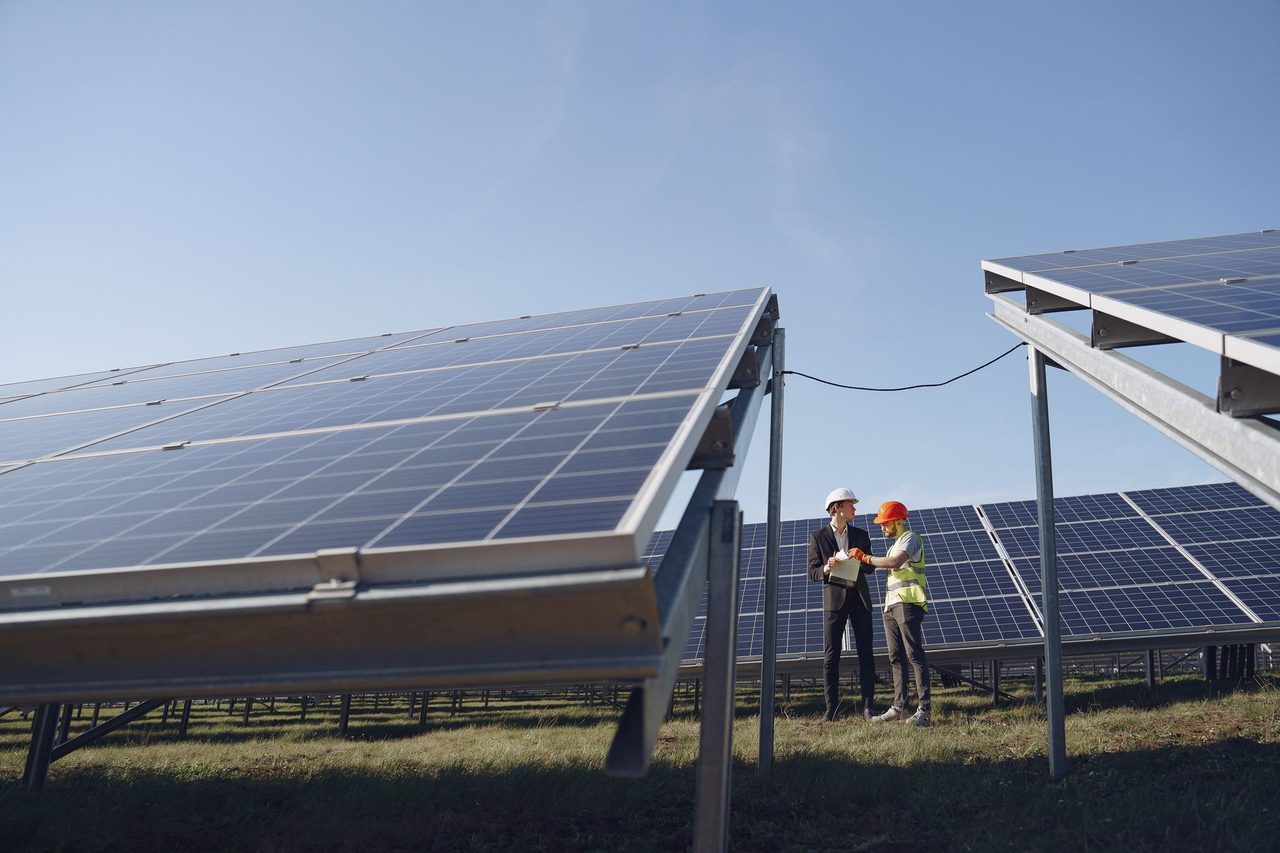
On-site captive solar remains attractive where roof or ground space exists and daytime self-consumption is high.
Typical 2026 market ranges in India:
- Rooftop C&I solar capex: roughly Rs 3.2-4.5 crore per MW depending on scale, structure type and evacuation complexity
- Levelised cost for behind-the-meter projects: often around Rs 2.2-3.4 per kWh over project life
- Typical annual generation: 1.35-1.65 million units per MW depending on irradiance and design
Strengths:
- High visibility savings against retail tariffs that can exceed Rs 7-10 per kWh for many C&I consumers
- Straightforward emissions claim for self-consumed renewable electricity
- Lower regulatory complexity than interstate open access
Limits:
- Space constraints
- Daytime generation mismatch
- Limited contribution to night load and round-the-clock decarbonisation
2. Group captive and third-party open access
This remains the dominant route for large off-site renewable procurement, especially for loads above roughly 1 MW continuous equivalent, though economics vary sharply by state.
Indicative 2026 ranges for off-site RE supply before and after state-layer charges:
- Solar or wind PPA headline tariff: around Rs 2.7-4.2 per kWh depending on tenor, location and CUF assumptions
- Hybrid tariffs: often Rs 3.4-4.8 per kWh
- Delivered landed cost after wheeling, transmission, banking, SLDC and surcharges: can move into roughly Rs 4.0-6.5 per kWh depending on state and structure
States with more favourable open access implementation continue to see stronger C&I traction. But buyers must model:
- Cross-subsidy surcharge
- Additional surcharge
- Banking charges and banking settlement windows
- Transmission and wheeling losses
- Scheduling and deviation implications
- Standby and demand charges from discom supply retention
Good projects still deliver meaningful savings against grid tariffs while reducing reported Scope 2 emissions substantially. Poorly structured projects can underperform both financially and operationally.
3. Green tariff and utility-supplied renewable options
Some buyers prefer utility-linked green supply because it reduces execution complexity. This can work for multi-site consumers or for loads too small for bespoke open access procurement.
However, buyers should evaluate:
- Premium over standard tariff
- Contractual certainty on renewable attributes
- Transparency of allocation and accounting basis
- Actual annual and monthly matching logic
This route can be useful, but auditability matters. If the renewable claim is vague, sustainability teams may struggle during assurance or customer disclosure reviews.
4. RTC, firm renewable and storage-backed products
As companies move from “some renewable power” to “credible high-share renewable consumption,” hourly mismatch becomes the central issue. That is why RTC and firmed RE products are getting more attention in 2026.
Indicative market observations:
- Standalone battery energy storage pricing has improved, but storage-backed RTC supply still carries a premium versus simple solar or wind contracts
- Hybrid plus storage structures can materially lower residual grid dependence for facilities with evening and early-morning peaks
- Data centres, electronics, pharmaceuticals and export manufacturing clusters are increasingly testing 24x7 clean power frameworks rather than annual energy matching alone
For many industries, the optimal answer is not 100% RTC from day one. It is a staged path: daytime solar substitution first, hybrid procurement second, storage or flexibility third, and residual emissions accounting throughout.
Scope 2 accounting in India: market-based claims need evidence
Many companies still underestimate how quickly electricity emissions reporting has become technical. Scope 2 can be reported using location-based and market-based methods in many global disclosure settings, but the credibility of any market-based reduction depends on evidence quality.
At a minimum, companies need a transparent chain covering:
- Metered electricity consumption by site and period
- Contracted renewable volumes by source and period
- Treatment of transmission and distribution losses where applicable
- Reconciliation of contracted generation with actual offtake and banking
- Residual grid consumption calculation
- Emission factors and methodology notes
- Renewable attribute documentation such as contractual certificates or recognised environmental attribute instruments where relevant
This is where Carbon accounting & disclosure becomes operational, not just report writing.
A common weak point in Indian companies is monthly aggregation without load-shape analysis. If a plant consumes heavily at night but procures only daytime solar, annual accounting may show major renewable sourcing while operational dependence on the grid remains high in non-solar hours. That may be acceptable for some reporting boundaries, but it is not the same as deep decarbonisation.
Boards, customers and lenders are beginning to understand the difference.
Designing the right portfolio: annual matching, hourly matching and residual emissions
In practice, not every company needs 24x7 carbon-free electricity today. But every large buyer should know where it sits on the maturity curve.
Stage 1: Annual energy matching
The buyer procures renewable electricity volumes that offset a large share of annual electricity consumption on paper or settlement basis.
Use case:
- Good first step for cost reduction and major Scope 2 cuts
- Suitable for many general manufacturing facilities
Risk:
- Can overstate operational decarbonisation if generation and demand are poorly aligned by time
Stage 2: Monthly or seasonal matching
The buyer aligns procurement more closely with monsoon, wind season, summer cooling peaks and production calendars.
Use case:
- Better fit for plants with strong seasonality or customer disclosure needs
- Improves realism in renewable contribution
Stage 3: Hourly or near-hourly matching
The buyer uses hybrid portfolios, storage, flexible loads or advanced procurement to match consumption with clean supply across more hours.
Use case:
- Premium products, export-focused sectors, data centres, high-credibility net-zero roadmaps
Risk:
- More complex and often higher cost in the near term
For most Indian C&I companies in 2026, the best strategy is to maximise low-cost annual and monthly matching first, then target the most carbon-intensive residual hours through load shifting, battery storage, thermal storage, process flexibility or wind-heavy procurement.
This should be tied to a marginal abatement cost lens. Some plants can remove an additional 15-25% of residual Scope 2 emissions with modest operational changes. Beyond that point, the cost of deeper hourly matching may rise sharply unless storage prices soften further or market structures improve.
State regulation, open access reform and what boards should monitor
The economics of Scope 2 reduction in India remain strongly state-dependent. Two plants from the same company can see very different results because of discom tariffs, banking restrictions and open access treatment.
Boards and energy teams should monitor:
- Changes in Green Energy Open Access implementation at state level
- Banking availability and settlement rules
- Surcharge revisions for third-party and captive structures
- Forecasting, scheduling and DSM obligations for larger buyers or suppliers
- Utility green tariff frameworks and how renewable attributes are documented
- Storage policy and hybrid procurement incentives
The central policy direction continues to support higher renewable penetration, transmission build-out and deeper market participation. But project viability still depends on state execution. A procurement strategy approved in principle should not move to signature without a state-specific delivered tariff and risk model.
This is particularly important for lenders assessing savings-backed projects. If projected savings assume outdated surcharge levels or unrealistic banking treatment, the debt case weakens quickly.
What a board-ready Scope 2 roadmap should contain
A credible 2026 roadmap for an Indian industrial or commercial buyer should include the following:
- Site-wise baseline electricity use in kWh, demand profile and tariff structure
- Current Scope 2 emissions under stated methodology
- Procurement options ranked by delivered cost, carbon impact and execution risk
- Contract strategy across on-site, open access, utility supply and residual power
- Sensitivity analysis for surcharge changes, CUF variation and curtailment risk
- Plant flexibility opportunities such as load shifting, thermal storage or process rescheduling
- Data and MRV architecture for assurance and customer disclosure
- Governance on claim language, certificate handling and reporting boundaries
This is why leading companies are shifting from isolated PPAs to integrated Net-zero roadmaps & MACC. Scope 2 should not be treated as a one-off deal. It should be treated as a portfolio strategy with annual recalibration.
The winners in 2026 will not necessarily be the companies that announce the largest percentage of renewable procurement. They will be the ones that can prove, site by site, hour by hour where needed, how electricity cost, electricity carbon intensity and reporting integrity are improving together.
For Indian C&I buyers, that means fewer generic targets and more procurement intelligence, more meter-level data, more state-specific modelling and better MRV discipline. Scope 2 is no longer just about buying cheaper renewable energy. It is about building an electricity decarbonisation stack that is financeable, defensible and scalable across assets.
If your business is evaluating open access, hybrid procurement, storage-backed clean power or audit-ready Scope 2 reporting, contact Growthifye’s advisory desk. We help clients turn electricity decarbonisation into a practical, bankable plan.
Explore Growthifye's related capabilities
This analysis connects directly to our advisory practice: Carbon accounting & disclosure · Net-zero roadmaps & MACC · RE-led decarbonisation · Industrial efficiency & electrification.
About the author

Founder & CEO, Growthifye — engineering and financing India's clean-energy transition.
Want this analysis applied to your project?
Talk to our team