India 2026 Scope 2 Decarbonisation: RE Procurement, CFE and Audit-Ready MRV
By Sudarshan Karweer · sudarshan@growthifye.com · +91 84510 99371 (Call / WhatsApp) · 2026-09-07
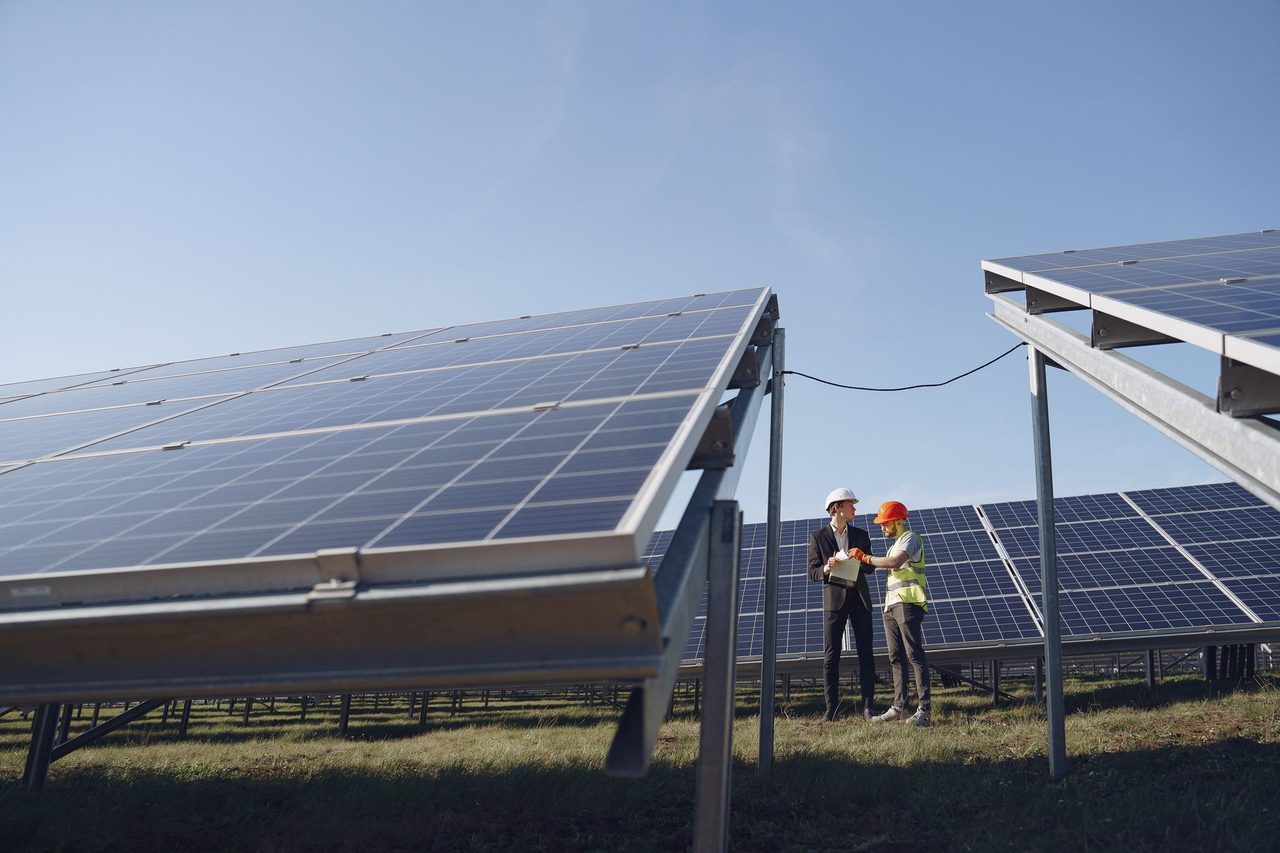
Photo: Gustavo Fring on Pexels
Indian commercial and industrial power buyers are moving beyond annual renewable-percentage claims. In 2026, the real discussion is about which Scope 2 reduction pathway is cheapest, auditable and operationally credible under Indian market conditions. For large electricity consumers, the answer is rarely a single instrument. It is a portfolio decision across on-site solar, open-access renewable supply, round-the-clock structures, storage-backed contracts, energy attribute certificates, load shifting and metering architecture.
This matters for four reasons. First, purchased electricity often remains the largest controllable emissions source for offices, data centres, metals, chemicals, textiles, auto ancillaries and food processing. Second, BRSR Core, customer disclosures and lender DDQs increasingly ask for traceable energy and emissions data, not broad sustainability statements. Third, exporters face growing scrutiny on embedded emissions and electricity sourcing quality. Fourth, power procurement itself has become a board-level lever because industrial tariffs, banking rules, open-access charges and cross-subsidy structures vary sharply by state.
For Indian companies, Scope 2 strategy now sits at the intersection of decarbonisation, power sourcing and compliance. A credible plan must answer five questions: what is the baseline, which accounting method is being used, what procurement instruments are available in each state, what abatement cost sits behind each option, and how will claims be supported through meter-level MRV.
Why Scope 2 needs a 2026 reset in India
The old playbook was simple: buy some solar, report annual units, and convert grid electricity into emissions using a standard factor. That is no longer enough. Buyers now need to distinguish between location-based emissions and market-based emissions, understand residual grid exposure, and show whether renewable claims are backed by contractual rights and retirements.
In practice, three shifts are driving the 2026 reset:
- State-level open-access regimes have matured but remain uneven on banking, wheeling and standby charges
- Corporate buyers increasingly want higher renewable utilisation across more operating hours, not just annual energy balancing
- Assurance expectations are rising for BRSR Core, customer questionnaires, lender technical reviews and internal audit
A plant consuming 100 GWh per year may already have a 25 to 40 MW solar or wind-solar hybrid opportunity through captive or third-party open access. But if its process load runs 24x7, annual matching can still leave substantial evening and monsoon-hour grid draw. That means the company can show high annual RE penetration yet still carry material Scope 2 emissions under certain accounting approaches and customer-facing disclosure frameworks.
This is why procurement design matters as much as capacity addition.
The accounting choices: location-based, market-based and claim quality
Most Indian companies preparing inventory disclosures use the GHG Protocol distinction between:
- Location-based Scope 2: emissions calculated using average grid emission factors for the grid where consumption occurs
- Market-based Scope 2: emissions calculated using supplier-specific factors or contractual instruments that convey environmental attributes
The challenge in India is not conceptual. It is evidentiary. Companies must decide which renewable instruments support market-based claims, whether the attributes are exclusive, and how retirements are documented. For many boards and finance teams, the practical issue is simple: if an auditor or customer asks, can we prove the claim meter by meter and contract by contract?
A robust corporate position usually includes:
- Clear boundary definition by legal entity, plant and meter
- A monthly reconciliation of consumption, renewable procurement and residual grid draw
- Treatment rules for captive, group-captive, third-party PPA, rooftop, exchange purchase and certificates
- A documented approach for handling transmission losses, banking withdrawals and curtailment
- Retired certificate or attribute evidence where relevant
This is where Carbon accounting & disclosure becomes operational rather than purely reporting-led. If the data stack cannot reconcile invoices, ABT meters, SLDC statements, PPA schedules and certificate retirements, the Scope 2 number may not stand up to scrutiny.
The main Scope 2 reduction routes for Indian C&I buyers
There is no universal best option. The right mix depends on state, load shape, land availability, voltage level, operating hours, group structure and counterparty appetite.
1) Rooftop and behind-the-meter solar
For daytime commercial loads, rooftop solar remains one of the fastest abatement levers. In 2026, installed C&I rooftop tariffs in India typically translate into levelised power costs of roughly Rs 3.2 to Rs 4.8 per kWh depending on system scale, roof complexity, financing terms and CUF. Against grid tariffs of Rs 7 to Rs 11 per kWh for many HT consumers, savings remain attractive.
But rooftop rarely solves full Scope 2 exposure for larger industrial plants because:
- Roof area limits annual coverage, often to 5 to 20 percent of demand
- Generation coincides poorly with night-shift and continuous-process loads
- Curtailment, transformer constraints and internal distribution integration can reduce effective utilisation
2) Open-access solar, wind and hybrid PPAs
Open access remains the workhorse for large-scale reduction. In 2026, many C&I buyers can access landed renewable tariffs broadly in the Rs 4.0 to Rs 6.5 per kWh range after accounting for state-specific wheeling, transmission, banking and other charges. The spread is large because each state treats open access differently.
A simple example illustrates the economics:
- Existing grid tariff: Rs 8.20 per kWh
- Open-access hybrid landed tariff: Rs 5.10 per kWh
- Annual procurement: 60 GWh
- Gross annual power cost saving: about Rs 18.6 crore
That saving can coexist with substantial Scope 2 reduction, but only if scheduling, settlement and claim documentation are managed carefully. Buyers should check minimum contracted demand, banking treatment, peak-hour settlement, CSS/AS applicability and deemed-generation clauses before assuming headline savings.
3) Round-the-clock and firmed renewable supply
For 24x7 operations such as data centres, pharma, electronics, ferroalloys and some chemicals, annual renewable matching is increasingly viewed as insufficient. RTC structures, hybrids with storage and multi-source portfolios can raise coverage across more hours.
These structures cost more than plain solar or wind but can reduce volatile residual grid draw and improve claim quality. In 2026, RTC or firmed green supply for strong C&I offtakers may land in a broad band around Rs 5.5 to Rs 7.5 per kWh depending on contract tenor, state delivery point, storage content and balancing design.
The decision should not be framed as sustainability versus cost. For some consumers facing high peak tariffs, diesel backup, process interruption risk or customer pressure for cleaner hourly supply, the premium can be justified.
4) Energy attribute certificates and residual balancing
Certificates can play a role, but they should not be the entire strategy for high-consumption industrials. They are most useful for:
- Covering residual demand after physical procurement
- Small dispersed loads where direct renewable contracting is inefficient
- Transitional years while open-access assets are being commissioned
The key is governance. Companies need a clear retirement trail, claim language and a policy on avoiding double counting. If annual reported reductions rely heavily on certificates while actual operations remain mostly grid-powered, stakeholder challenge risk rises.
From annual matching to CFE: what advanced buyers are doing now
The next frontier is carbon-free energy matching by time and location, sometimes tracked as hourly or sub-hourly clean energy coverage. Not every Indian corporate needs full hourly matching in 2026, but many should at least quantify it.
Why? Because two plants can both claim 70 percent annual renewable electricity while having very different operating realities:
- Plant A matches daytime load with solar but runs on grid power every night
- Plant B combines hybrid supply, storage, demand flexibility and some peak-hour curtailment to keep clean-energy coverage far higher across the day
From an emissions-risk and customer-perception standpoint, these are not equivalent.
A practical pathway for Indian buyers is:
- Start with annual renewable share and monthly residual grid analysis
- Add 15-minute load and generation reconciliation where metering allows
- Identify hours with the highest grid draw and the highest marginal tariff exposure
- Test storage, hybridisation and flexible-load measures only for those critical hours
This avoids overpaying for full 24x7 coverage when the real value may sit in just 10 to 20 percent of hours.
Building the business case: MACC for Scope 2 options
Scope 2 decarbonisation should be prioritised using a marginal abatement cost curve, not generic ESG ranking. In many Indian facilities, the least-cost path is still energy efficiency first, then daytime on-site solar, then open-access renewable supply, followed by hybrid or storage-backed contracts for residual hard-to-abate load hours.
A plant-level MACC for Scope 2 should compare at least these levers:
- Compressor, chiller, HVAC and motor efficiency
- PF improvement and demand optimisation
- Rooftop solar
- Ground-mounted captive or group-captive solar
- Wind-solar hybrid open access
- RTC or storage-backed supply
- Fuel-to-electric process shifts that increase power demand but reduce Scope 1 emissions
- Certificate purchases for balancing residual demand
The important insight is that some options increase electricity consumption while still lowering total emissions and total cost. For example, replacing FO or LPG-based low-temperature thermal processes with industrial heat pumps or electric boilers can shift emissions from Scope 1 to Scope 2. If paired with renewable procurement, the combined decarbonisation impact can be strong. This is why RE-led decarbonisation and Industrial efficiency & electrification should be designed together, not in separate workstreams.
What audit-ready MRV looks like in practice
Most Scope 2 reporting problems do not come from ambition. They come from weak data architecture. Audit-ready MRV in 2026 should include the following operating controls:
- Single source of truth for plant-wise consumption by meter, feeder and billing account
- Monthly capture of DISCOM invoices, OA energy statements, scheduling data and settlement records
- Mapping of each procurement instrument to the relevant entity and site
- Reconciliation of contracted generation, actual injection, losses, banking and withdrawal
- Version-controlled emissions factors and documented methodology notes
- Certificate inventory, retirement records and claim boundaries
- Exception handling for curtailment, force majeure and contract under-delivery
For multi-state companies, one additional control is essential: state policy watch. A Scope 2 strategy approved on the basis of one banking regime or one OA surcharge can become uneconomic if the state revises charges or restrictions. Procurement teams should therefore maintain a live policy tracker for key operating states such as Maharashtra, Tamil Nadu, Karnataka, Gujarat, Rajasthan, Andhra Pradesh and Haryana.
This is also where Carbon markets & MRV capability becomes relevant even before any formal carbon-market participation. Once plant-level energy and emissions data are disciplined enough for high-quality Scope 2 accounting, the same MRV backbone helps with BRSR Core, customer carbon questionnaires, internal carbon pricing and future market-linked mechanisms.
A 2026 decision framework for Indian boards and energy teams
For boards, CFOs and sustainability heads, the right question is not “How do we buy more renewable power?” It is “What portfolio gets us the best combination of tariff reduction, claim credibility, operational reliability and future compliance readiness?”
A practical 2026 decision framework is:
- Measure current annual and monthly Scope 2 baseline by site
- Separate base load, daytime load, night load and seasonal peaks
- Quantify rooftop and behind-the-meter potential first
- Compare open-access structures state by state on landed cost, not headline tariff
- Assess whether annual matching is sufficient or whether selected hourly coverage matters
- Evaluate storage or RTC only for high-value residual hours
- Define market-based claim rules and retirement evidence upfront
- Build a meter-to-disclosure MRV process before scaling claims externally
For many Indian C&I consumers, a realistic near-term target is 40 to 80 percent renewable electricity share with robust monthly reconciliation, followed by progressive improvement in time-matched clean-energy coverage for critical facilities. That is generally more bankable, cheaper and more defensible than headline commitments unsupported by metering and contracts.
The companies that move fastest in 2026 will not necessarily be those buying the most expensive clean-power products. They will be those that integrate procurement, accounting and operations into one decision stack. In an environment shaped by BRSR Core, export scrutiny, rising power costs and tighter diligence from lenders and customers, that integrated approach is becoming the market standard.
If your organisation is reassessing Scope 2 strategy across plants, states or portfolios, contact Growthifye’s advisory desk. We help clients design auditable, cost-led pathways across Carbon accounting & disclosure, RE-led decarbonisation and MRV.
Explore Growthifye's related capabilities
This analysis connects directly to our advisory practice: Carbon accounting & disclosure · Net-zero roadmaps & MACC · RE-led decarbonisation · Industrial efficiency & electrification.
About the author

Founder & CEO, Growthifye — engineering and financing India's clean-energy transition.
Want this analysis applied to your project?
Talk to our team