
India 2026 NGO Energy Access: Solar-Powered Rural Schools, CSR Grants and MRV
By Sudarshan Karweer · sudarshan@growthifye.com · +91 84510 99371 (Call / WhatsApp) · 2026-09-13
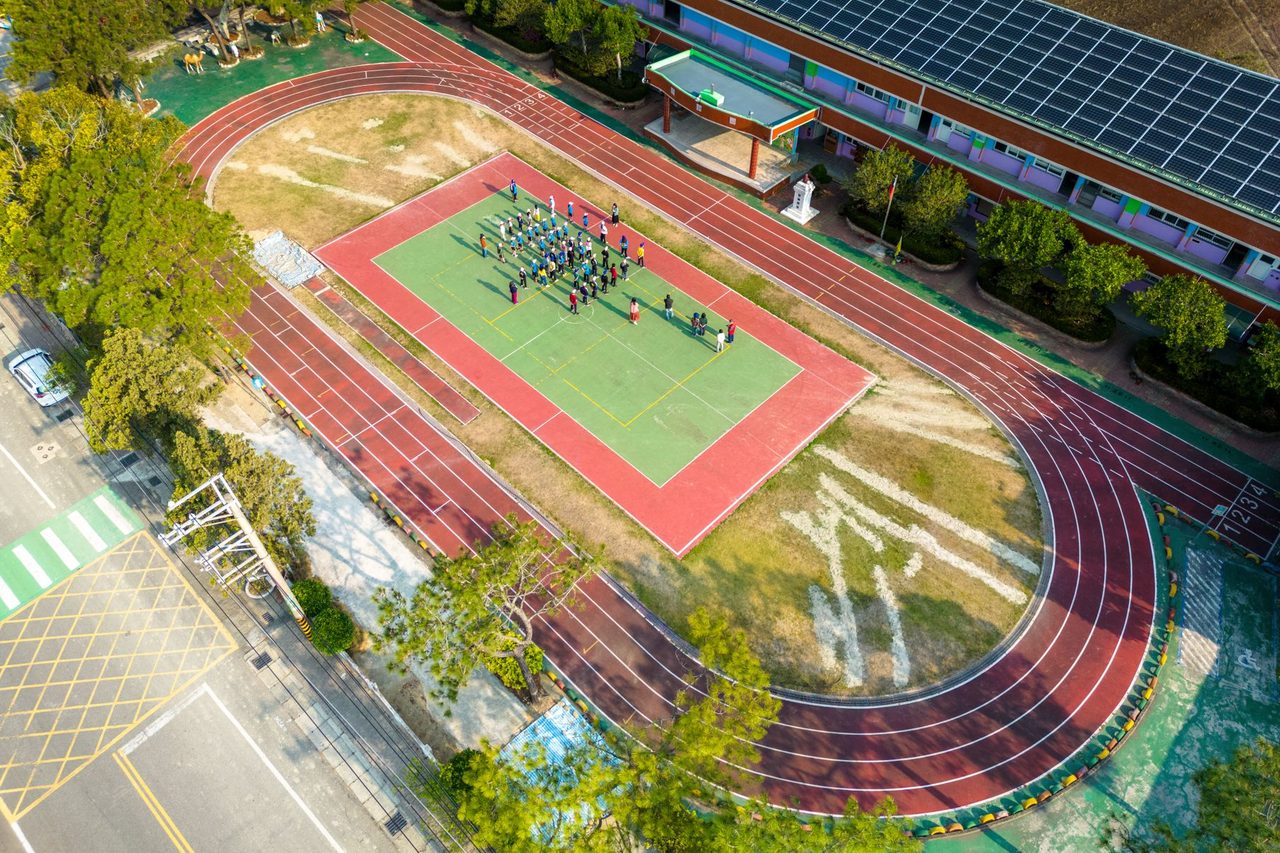
India’s rural energy-access conversation often focuses on clinics, mini-grids, water systems and livelihoods. A major gap remains school energy infrastructure. For NGOs and CSR teams, solar-powered rural schools are one of the most measurable, visible and operationally practical community-energy interventions in 2026. They support learning hours, digital education, fans and lighting, water purification, device charging and basic campus safety without the complexity of a full village distribution business.
For Indian renewable developers, EPC firms, lenders and policymakers, this is not just a social project category. It is a replicable distributed-energy asset class with standardisable system design, blended finance and auditable impact outcomes. For CSR heads and foundations, school solar sits at the intersection of Schedule VII priorities such as education, environment and rural development. For DISCOMs and local administrations, it can reduce service-quality gaps in weak-grid areas while improving public-service delivery.
This article outlines how NGOs can structure solar-powered rural school programmes in India in 2026, covering technical design, capex ranges, operating models, policy fit, CSR and grant structuring, and impact measurement.
Why rural schools are a strong 2026 NGO energy-access use case
Many government and aided schools in rural India have nominal grid connectivity but poor daytime reliability, low-voltage conditions or inadequate internal electrical infrastructure. In hot states, lack of fans directly affects attendance and classroom concentration. In digital-learning programmes, tablets, routers, smart TVs and projectors frequently remain underutilised because power is intermittent. Where schools double up as community meeting spaces, exam centres, disaster-relief shelters or adult-learning venues, the value of reliable power extends beyond classroom hours.
A typical rural school energy load in India is not large, but it is highly meaningful:
- LED lighting for 4 to 10 classrooms and common areas
- Ceiling or wall fans in classrooms
- Office equipment and printer loads
- Smart TV, projector or digital panel
- Router, modem and low-power IT loads
- Phone and tablet charging
- Water pumping or UV purification in some cases
- Security lights for campus perimeters and toilets
In many states, annual electricity consumption for such schools may range from 3,000 to 12,000 kWh depending on size, hours, fan usage and digital equipment. Even when grid tariffs for public institutions are moderate, poor reliability creates hidden costs: diesel backup, damaged electronics, low utilisation of digital assets and reduced educational outcomes. Solar plus battery backup is therefore less about energy arbitrage and more about service continuity.
For NGOs, the use case is also attractive because site selection, stakeholder ownership and impact pathways are straightforward. Attendance, learning-hour extension, teacher retention, digital session uptime and avoided diesel can all be tracked. This gives funders a practical route to Impact measurement & MRV with less ambiguity than many diffuse community-energy programmes.
Technical configurations that work in Indian school campuses
The right architecture depends on load profile, roof condition, outage pattern and school governance. In 2026, most NGO-led school projects in India should evaluate three broad models.
1. Grid-connected rooftop solar without battery
This works where grid supply exists for most school hours and the goal is bill reduction plus daytime self-consumption.
Typical size: - 3 kW to 15 kW for primary and upper-primary schools - 10 kW to 30 kW for larger secondary schools or school clusters
Indicative 2026 capex in India: - Around Rs 42,000 to Rs 58,000 per kW for small institutional systems, depending on structure, wiring upgrades, quality tier and geography
Best for: - Schools with decent daytime grid supply - Campuses with good RCC roofs or elevated structures - CSR programmes prioritising visible climate and education co-benefits
Limitation: - No resilience during outages unless inverter architecture supports limited backup circuits with storage
2. Solar plus battery for critical loads
This is often the most practical NGO model because it ensures lights, fans, routers and digital equipment remain available during grid interruptions.
Typical size: - 3 kW to 10 kW solar with 5 kWh to 20 kWh battery for primary schools - 10 kW to 25 kW solar with 15 kWh to 40 kWh battery for larger campuses
Indicative 2026 capex: - Roughly Rs 85,000 to Rs 1,35,000 per kW-equivalent project scale when including batteries, control systems, BOS and internal rewiring - Lithium iron phosphate batteries remain the preferred chemistry for safety and cycle life in institutional settings
Best for: - States with frequent outages or voltage instability - Schools using digital classrooms, labs or e-learning equipment - Campuses where community use after school hours is planned
3. Solar DC or hybrid energy package for remote schools
For off-grid or severely weak-grid areas, a hybrid package may include rooftop solar, battery, DC fans, LED lights, USB charging, efficient TV/monitor loads and optional water purification.
Typical size: - 1.5 kW to 8 kW depending on enrolment and use case
Best for: - Tribal belts, forest-fringe settlements, hilly districts and island geographies - NGO programmes where logistics and maintenance are already being managed through local partners
In all three configurations, the overlooked budget item is internal electrical rehabilitation. Many rural schools need earthing, MCB replacement, distribution-board upgrades, classroom wiring repairs and safe fan mounting before solar is energised. In practice, 8% to 20% of project budget may go into these enabling works.
Project economics, funding stack and delivery structures
School solar is usually grant-led, but the financing stack can still be disciplined. A useful way to frame it is cost per school, cost per student served and cost per reliable learning hour enabled.
Indicative 2026 all-in project budgets: - Small primary school with 3 kW rooftop and basic backup: Rs 4 lakh to Rs 7 lakh - Mid-sized school with 5 kW to 8 kW solar, 10 kWh to 15 kWh battery and digital-classroom support: Rs 7 lakh to Rs 14 lakh - Larger secondary school with 10 kW to 20 kW system, selective backup and campus lighting: Rs 12 lakh to Rs 28 lakh
Annual O&M planning norms: - Around 1.5% to 3% of capex for non-battery systems - Around 2.5% to 5% of capex for battery-backed systems, excluding midlife battery augmentation where applicable
A robust NGO programme in India should combine: - CSR capex support from one or more corporate donors - Foundation or philanthropic grant support for programme management and training - District administration convergence where possible for school repair, digital equipment or water assets - Local community contribution in-kind for security, cleaning or minor civil works - A ring-fenced O&M reserve for at least 3 to 5 years
This is where CSR funding pipelines and Grant & philanthropic fundraising become critical. Too many school-energy projects fail because the donor funds installation but not monitoring, maintenance visits, theft prevention or inverter replacement contingencies. In 2026, sophisticated CSR teams increasingly prefer multi-year commitments tied to uptime and educational-use metrics rather than one-time asset donation.
Another practical delivery model is cluster procurement. Instead of funding one school at a time, NGOs can aggregate 25, 50 or 100 schools across a district or state. That can reduce per-site EPC overhead, standardise equipment quality and improve remote monitoring economics. For developers and EPCs, cluster sizes above 250 kW aggregate capacity can materially improve logistics and service planning.
Policy and compliance considerations in 2026
Solar schools sit across multiple regulatory domains, even if the projects are philanthropic.
First, rooftop interconnection and net-metering or gross-metering rules remain state-specific. NGOs should verify the latest 2026 state DISCOM framework for institutional rooftop systems, sanctioned-load requirements, transformer constraints and meter availability. In some weak-grid areas, pure self-consumption with zero-export controls may be more practical than waiting for full net-metering approvals.
Second, school ownership and approvals matter. Government schools usually require permissions from district education authorities, school management committees and in some cases panchayat bodies or state implementing societies. For aided and trust-run schools, title clarity and signatory authority must be documented before procurement.
Third, electrical safety and child-safe infrastructure are non-negotiable. Elevated cable routing, lockable battery enclosures, inverter-room ventilation, anti-tamper ACDB/DCDB arrangements and proper earthing should be mandatory. Asset insurance should be considered, particularly in cyclone-, flood- or theft-prone districts.
Fourth, CSR reporting discipline has become more rigorous. Corporate donors increasingly expect utilisation certificates, geo-tagged evidence, beneficiary records, uptime data and outcome narratives that can withstand audit scrutiny. NGOs that build programme frameworks with Compliance & governance from the start are better positioned to scale with repeat donors.
Designing MRV that goes beyond installed kilowatts
Many social-energy projects still report only the number of systems installed. That is not enough for 2026 funders. School solar programmes need operational and educational MRV.
A good MRV framework should track four layers.
Asset and energy performance - Installed kW and battery capacity - Daily, monthly and annual generation in kWh - Critical-load backup hours delivered - System uptime and fault response time - Grid import reduction where metered - Estimated diesel displacement, if any
Service delivery outcomes - Number of classrooms powered - Fan-hours and lighting-hours enabled per day - Number of digital-learning sessions conducted monthly - Internet/router uptime during teaching hours - Water purification litres delivered, if included
Social outcomes - Student attendance trends, especially in high-heat months - Teacher attendance and retention indicators - Evening or extended-use sessions for remedial classes - Safe sanitation access where toilet lighting improves usability - Community use days for meetings, exams or disaster response
Environmental indicators - Annual tCO2e avoided using documented grid-emission factors and diesel displacement assumptions - Waste-management records for replaced batteries or electrical components
Digital monitoring should be proportionate to project size. For large clusters, smart inverters and low-cost remote monitoring portals are now standard. For smaller projects, monthly mobile-app reporting by field coordinators, combined with quarterly site audits, may be enough. The key is consistency and data credibility.
For NGOs seeking repeat corporate support, Program design & theory of change should explicitly link energy reliability to education outputs rather than assuming causality. For example, a theory of change can state that reliable daytime electricity enables fan operation and digital-content use, which improves classroom comfort and teaching continuity, which in turn supports attendance and engagement. That kind of disciplined logic is far more persuasive to CSR committees than generic statements about empowerment.
Procurement and implementation risks practitioners should manage
Rural school solar looks simple on paper, but several recurring implementation risks need active management.
- Roof suitability is often overestimated. Old asbestos sheets, weak trusses or chronic leakage can delay projects or force costly elevated structures.
- Battery rooms are frequently an afterthought. Heat, dust and poor ventilation reduce battery life and increase failure risk.
- School calendars affect installation windows. Exam season, monsoon periods and summer closures should be built into delivery schedules.
- Accountability for O&M is commonly unclear between NGO, vendor, school head and district office.
- Theft and tampering risks rise where perimeter security is weak or assets are externally accessible.
- Teacher transfers can disrupt usage of digital loads unless onboarding is institutionalised.
Mitigation strategies include: - Standardised pre-feasibility templates covering roof, load, ownership, shadow and wiring status - Cluster-based EPC contracts with service-level agreements for response time - 3 to 5 year AMC with clear spare-parts provisions - On-site caretaker or school-management-committee orientation - QR-coded asset registers and geo-tagged handover documentation - A reserve fund for inverter, battery or wiring contingencies
From an advisory standpoint, this is where execution capability matters as much as fundraising. NGOs that combine technical diligence with donor reporting discipline are the ones that can scale from 10 schools to 500 schools across multiple states.
What lenders, developers, utilities and policymakers should take from this segment
Even though school-energy access is largely grant-funded today, it offers useful lessons for the broader decentralised-energy market.
For developers and EPC firms, rural schools provide a pathway to build institutional portfolios, strengthen district-level service models and create standard products that can later extend to anganwadis, hostels, skilling centres and panchayat buildings.
For lenders and blended-finance actors, school clusters can become an entry point for outcome-linked philanthropy, recoverable grants or pooled service contracts with measurable public-value outcomes. The risk is not technical feasibility; it is long-term stewardship and maintenance funding.
For DISCOMs and utilities, supporting school solar through simplified approvals, zero-export configurations and technical guidance can improve public-service reliability without major capex on feeders. In educationally lagging districts, this is a high-visibility intervention with relatively low system impact.
For policymakers, the opportunity is to integrate school energy into district education planning rather than treating it as an ad hoc CSR category. States could publish model specifications, school-energy audit formats and standard O&M responsibilities. Convergence with digital education, WASH and climate-resilience programmes would also improve value for money.
In 2026, the strongest case for solar-powered rural schools is simple: the systems are affordable, the load is manageable, the social value is visible and the impact can be measured with discipline. For NGOs and funders that want a practical, scalable energy-access intervention beyond household-level narratives, school campuses deserve far more attention.
If your organisation is designing a rural school energy programme, structuring CSR support or building an auditable MRV framework, contact Growthifye’s advisory desk to discuss project design, funding strategy and implementation support.
Explore Growthifye's related capabilities
This analysis connects directly to our advisory practice: Program design & theory of change · CSR funding pipelines · Grant & philanthropic fundraising · Compliance & governance.
About the author

Chief Executive Officer, Growthifye — With over 23 years in management consulting, Sudarshan has taken businesses from concept to scale — building and scaling new-age digital and energy businesses.
- 23+ years in management consulting
- EY alumnus
- Led large-scale BESS programmes, capital raises and advisory mandates
Want this analysis applied to your project?
Talk to our team

