India 2026 Decarbonisation MRV Strategy: Audit-Ready Data for CCTS, CBAM and BRSR
By Sudarshan Karweer · sudarshan@growthifye.com · +91 84510 99371 (Call / WhatsApp) · 2026-09-15
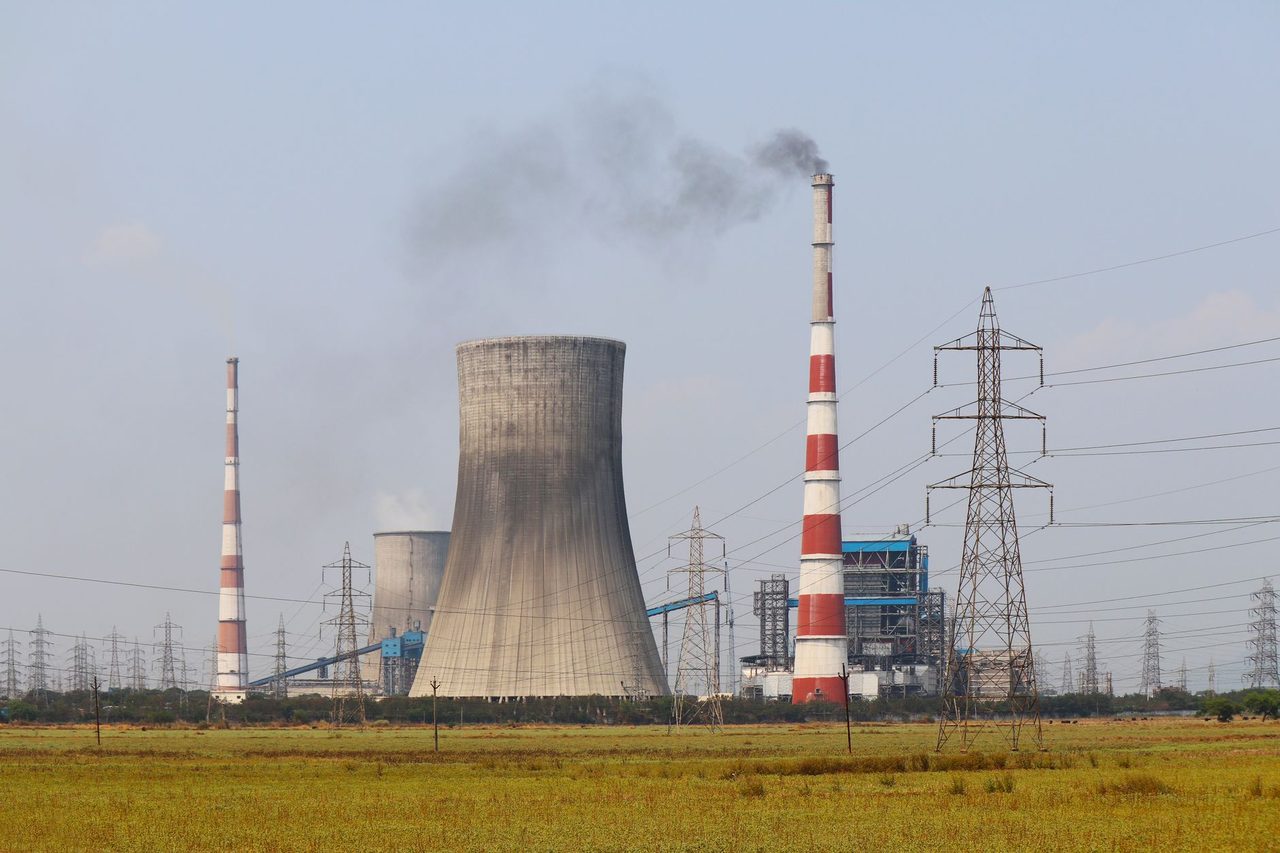
Photo: Sharath G. on Pexels
India’s industrial decarbonisation conversation has moved beyond target-setting. In 2026, the harder question is operational: can a company prove its emissions numbers, defend them under assurance, and use them to take investment decisions at plant level? For many Indian manufacturers, exporters, commercial and industrial power buyers, and energy-intensive sectors, the answer is still no.
That gap is now expensive. The India Carbon Credit Trading Scheme (CCTS) is pushing more disciplined emissions measurement and reporting. EU Carbon Border Adjustment Mechanism (CBAM) exposure is forcing exporters to improve installation-level data quality. BRSR Core is increasing scrutiny on governance, controls and assured disclosures. Lenders are asking sharper questions on baseline integrity, savings claims and climate-linked capex pipelines. Utilities and renewable-energy counterparties want better load and emissions data to structure decarbonisation solutions.
The implication is simple: in 2026, measurement, reporting and verification is not a reporting back office function. MRV is now a strategic operating system for cost control, compliance readiness, market access and finance-ready decarbonisation.
This article sets out a practical India-focused MRV strategy for C&I companies and project stakeholders: what audit-ready MRV means, where industrial data usually breaks, what controls matter, how to align Scope 1, 2 and 3 datasets, and how to make the architecture useful for procurement, electrification, carbon-market participation and lender diligence.
Why MRV is now a board-level issue in India
Three changes have made MRV materially more important in 2026.
First, compliance and disclosure regimes are converging around data quality. A company may be handling BRSR Core, GHG inventories, customer PCF requests, CBAM data templates, internal decarbonisation budgets and emerging CCTS readiness workstreams at the same time. If each dataset is built differently, with different boundaries, factors, meters and assumptions, management gets multiple versions of the truth.
Second, emissions numbers are increasingly linked to money. In many sectors, a 3% to 7% error in fuel-use allocation or grid-power accounting can distort the economics of a captive solar, open-access wind-solar hybrid, biomass fuel switch, electric boiler, waste-heat recovery or green hydrogen pilot. If the baseline is weak, the MACC is weak. If the MACC is weak, capex prioritisation becomes political rather than financial.
Third, external stakeholders are no longer satisfied with spreadsheet claims. Export customers want primary data. Assurers want traceability. Lenders want replicable methodologies. Policymakers want reportable performance. Developers and EPC players want interval load, process and outage data to size solutions correctly.
For that reason, companies that treat MRV as a digital-controls and governance problem, not just a sustainability reporting exercise, are moving faster.
What audit-ready MRV actually means
Audit-ready MRV does not mean perfection. It means that for every material emissions number, the company can answer five questions clearly.
- What is the organisational and operational boundary?
- What is the primary source data and who owns it?
- How is it transformed into emissions numbers?
- What controls and approvals exist?
- Can the number be recalculated and reproduced by an independent reviewer?
In practice, this requires a chain from meter, invoice, lab report, ERP entry or dispatch record to the final disclosure table, with version control and clear change logs.
For Scope 1, audit-ready MRV usually covers fuel consumption by source, process emissions where relevant, refrigerants, and plant-level allocation logic. For Scope 2, it covers purchased electricity consumption, source mix, contract structures, market-based and location-based treatment where required, and temporal matching rules if the company is tracking higher clean-energy coverage. For Scope 3, the standard is harder because supplier primary data is incomplete, but material categories still need transparent methodologies, spend or activity drivers, supplier segmentation and evidence trails.
A useful benchmark for Indian industrial companies in 2026 is this: if your plant head, finance controller and sustainability lead cannot jointly explain the top 10 emissions line items and reproduce them within a review cycle, your MRV is not investment-grade.
Where Indian industrial emissions data usually fails
Across sectors such as steel downstream, cement products, chemicals, textiles, food processing, auto components, data centres, pharma and commercial real estate, the recurring failure points are similar.
- Utility bills do not reconcile with meter hierarchies or production periods.
- Diesel, FO, LPG, natural gas and biomass are tracked for procurement, not for combustion-location accounting.
- Common utilities are not allocated to products, lines or business units consistently.
- Backup power hours, DG loading and fuel burn are estimated rather than measured.
- Refrigerant top-ups are booked by maintenance teams without central inventory controls.
- Open-access renewable procurement data sits with power teams, while emissions ledgers sit with sustainability teams.
- Supplier questionnaires for Scope 3 are not linked to actual procurement categories or vendor spend.
- Emission factors are copied from prior-year files with no policy on updates.
- Plant shutdowns, trial runs and seasonal load shifts are not reflected in baseline normalisation.
These weaknesses matter because they can change project decisions. Consider a medium-sized manufacturing plant consuming 24 GWh annually with a blended grid tariff of Rs 7.2 to Rs 8.8 per kWh and a 6 MW daytime demand profile. If interval data understates weekend loads or auxiliary loads, the economics of captive rooftop plus open-access solar can look stronger than they are. Similarly, if furnace oil consumption is not split correctly between utility and process service, an electrification business case can be distorted by 10% to 20%.
MRV therefore starts with operational realism, not template completion.
A practical MRV architecture for Scope 1, 2 and 3
The strongest 2026 implementations in India use a four-layer architecture.
Layer 1 is source-data capture. This includes main and sub-meters, fuel weighbridge records, tank dip and flow data, gas bills, DG logs, utility invoices, refrigerant issue notes, lab values for calorific content where used, production records, dispatch records and ERP procurement data.
Layer 2 is a controlled data model. Here the company standardises units, timestamps, facility IDs, cost centres, fuel categories, contract identifiers and product or process tags. This is where many organisations gain their first real advantage. Once data is standardised, the same core architecture can support BRSR Core, GHG accounting, CBAM templates, product-carbon calculations and investment models.
Layer 3 is calculation logic. This includes emissions factors, global warming potentials, oxidation factors where relevant, transmission and distribution treatment, contract-specific Scope 2 logic, allocation rules and materiality thresholds. This layer should be documented and locked through a governance workflow.
Layer 4 is review and verification. Variance checks, month-on-month movement analysis, plant-to-corporate reconciliations, exception flags, document retention and assurance-ready audit trails sit here.
A practical implementation does not need expensive enterprise software on day one. Many companies can materially improve MRV through disciplined master-data design, API or batch integration from utility and ERP systems, maker-checker controls and a verification calendar. What matters is process integrity.
This is exactly where structured Carbon accounting & disclosure programmes create value: they reduce duplication across compliance, customer and finance workstreams while improving confidence in the numbers used for capex decisions.
How MRV links directly to CCTS, CBAM and BRSR Core
Indian companies often treat these as separate agendas, but the underlying data stack overlaps significantly.
For CCTS readiness, the key need is consistent facility-level measurement, defined boundaries, documented methods and a chain of evidence strong enough for future compliance confidence. Companies that wait for full obligation clarity before fixing plant-level data controls will lose time. The right 2026 strategy is to identify likely obligated facilities or high-emissions processes now and start with meter adequacy, fuel-accounting discipline and baseline governance.
For CBAM-exposed exporters, installation-level emissions attribution is central. Even where reporting mechanics differ by sector and trade flow, the discipline required is similar: process understanding, energy-input mapping, primary data capture, and a defensible treatment of direct and indirect emissions. Plants supplying EU-facing value chains need monthly rather than annual visibility if they want to react to procurement or process changes fast enough.
For BRSR Core, the issue is less about a single emissions formula and more about governance quality. Can management demonstrate that reported environmental indicators are subject to controls, review and assurance-ready evidence? A well-built MRV programme supports this by connecting policy, ownership, systems and evidence.
The strategic payoff is that one robust data backbone can serve all three. That lowers reporting friction and improves management visibility.
Using MRV to unlock lower-cost decarbonisation
The best MRV systems do more than report emissions. They reveal where decarbonisation is cheapest and fastest.
In Indian C&I contexts, three applications are especially valuable.
First, renewable procurement optimisation. Granular load data combined with tariff, banking, wheeling and scheduling assumptions helps companies compare rooftop, group captive, third-party open access, hybrid and round-the-clock structures more accurately. In 2026, depending on state, consumer category and profile, delivered open-access renewable power can still create meaningful savings versus industrial grid tariffs, but only if exit charges, banking terms, demand interactions and curtailment risks are reflected properly.
Second, industrial electrification screening. Steam, low- to medium-temperature heat, compressed air, pumps, material handling and certain utility loads can often be screened for electrification potential using operating-hour data, thermal duty, tariff blocks and outage constraints. Where grid reliability or demand charges are concerns, the MRV system should capture those operational realities instead of assuming ideal conditions.
Third, green fuels prioritisation for hard-to-abate uses. Not every hydrogen conversation is financeable. Plants need validated demand profiles, purity requirements, storage logic, replacement ratios, renewable-power linkage and avoided-emissions calculations before a pilot makes sense. Without good MRV, green hydrogen tends to remain a presentation slide rather than a bankable transition option.
This is where Net-zero roadmaps & MACC and RE-led decarbonisation planning become stronger. Better data narrows uncertainty bands, making abatement-cost curves usable for board approvals and lender discussions.
Implementation roadmap for 2026: from fragmented data to decision-grade MRV
A realistic MRV upgrade for an Indian industrial enterprise can be phased over 16 to 24 weeks for the first wave, with deeper site instrumentation taking longer.
Phase 1: boundary and materiality definition
- Confirm legal entities, facilities, leased assets and operational-control assumptions
- Identify top emissions sources covering at least 90% of Scope 1 and 2, and the most material Scope 3 categories
- Define reporting outputs needed for management, assurance, customers, lenders and regulators
Phase 2: source-data mapping and gap assessment
- Map every material datapoint to a source owner, system, frequency and evidence type
- Review meter hierarchy and sub-meter sufficiency
- Check fuel and electricity reconciliation against finance books and production records
- Identify manual interventions and undocumented assumptions
Phase 3: controls and calculation design
- Create a data dictionary for units, IDs, periods and source priorities
- Approve emissions-factor policy and update cadence
- Define maker-checker workflow and exception thresholds
- Document allocation methods for common utilities and multiproduct plants
Phase 4: pilot, restatement and assurance prep
- Run at least three to six months of parallel calculations
- Investigate variances above defined thresholds, for example 2% to 5% for major energy streams
- Restate prior periods where methodology changes are material
- Prepare evidence files and management sign-off notes
Phase 5: decision integration
- Feed validated data into RE procurement models, electrification studies and MACC analysis
- Build monthly dashboards for plant, CFO and sustainability leadership
- Link supplier engagement on Scope 3 to actual procurement categories and commercial levers
Companies should also set minimum governance rules. One owner for methodology, one owner for systems, one owner for plant data quality, and one approval point at corporate level. Without ownership clarity, data quality erodes within a reporting cycle.
What lenders, developers and policymakers should look for
For lenders, the key question is whether emissions and savings baselines are robust enough to underwrite transition capex with confidence. If not, technology risk gets overstated and the cost of capital rises indirectly.
For renewable developers and EPC players, better MRV means better project origination. Developers can size systems more accurately, shape contracts around real load patterns, and reduce performance disputes later. This is particularly relevant for C&I solar, hybrid and storage-linked propositions where hourly load understanding matters.
For utilities and policymakers, there is a broader system benefit. Better industrial MRV improves demand visibility, supports cleaner procurement structures, reduces disputes around baselines, and strengthens carbon-market integrity. It also helps India move from disclosure-heavy climate conversations to execution-heavy ones.
In 2026, the companies making the fastest progress on decarbonisation are not always the ones with the most ambitious public targets. They are often the ones with the best operational data, the clearest controls, and the strongest ability to turn emissions information into procurement, process and finance decisions.
That is the real value of MRV. It is not only about reporting what happened. It is about creating a trusted dataset that can support what the company does next.
If your organisation is preparing for CCTS, managing CBAM exposure, strengthening BRSR Core assurance, or building a finance-ready decarbonisation programme, contact Growthifye’s advisory desk. We help companies design practical MRV architectures, align plant data with decision-making, and turn emissions reporting into an execution tool for decarbonisation.
Explore Growthifye's related capabilities
This analysis connects directly to our advisory practice: Carbon accounting & disclosure · Net-zero roadmaps & MACC · RE-led decarbonisation · Industrial efficiency & electrification.
About the author

Chief Executive Officer, Growthifye — With over 23 years in management consulting, Sudarshan has taken businesses from concept to scale — building and scaling new-age digital and energy businesses.
- 23+ years in management consulting
- EY alumnus
- Led large-scale BESS programmes, capital raises and advisory mandates
Want this analysis applied to your project?
Talk to our team