India 2026 CBAM Readiness Strategy: Plant Data, Embedded Carbon and Cost Control
By Sudarshan Karweer · sudarshan@growthifye.com · +91 84510 99371 (Call / WhatsApp) · 2026-09-15

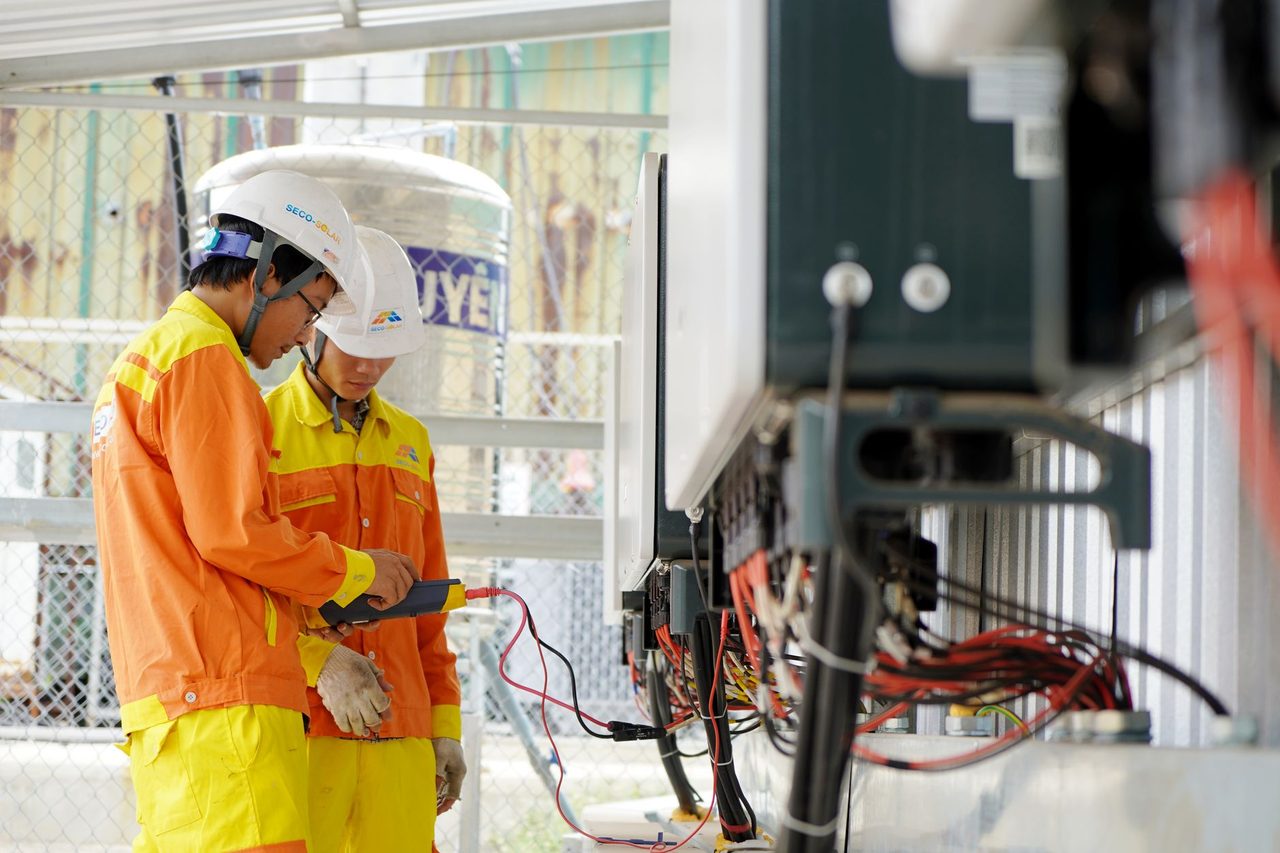
Photo: enes çimen on Pexels
Indian exporters selling into Europe have moved past the phase where CBAM was treated as a distant compliance topic owned by sustainability teams. In 2026, CBAM readiness is a plant-level commercial issue. It affects order book resilience, customer qualification, pricing discussions, capex prioritisation, and lender confidence in export-linked manufacturing assets.
For Indian producers of steel, aluminium, cement, fertilisers, hydrogen, and electricity-intensive intermediates used in European supply chains, the immediate challenge is not only understanding the regulation. The challenge is building a repeatable operating model for embedded-carbon measurement, data assurance, and abatement planning at plant level.
This is especially important because many Indian industrial groups still have fragmented data across energy, production, maintenance, procurement and finance teams. Monthly electricity bills sit in one system, fuel purchase records in another, process chemistry in spreadsheets, and production routing changes are often not reflected in carbon calculations. That weakens reporting quality and also makes it harder to identify the lowest-cost decarbonisation actions.
This article sets out a practical 2026 CBAM readiness strategy for Indian industry, with a focus on plant data, embedded emissions, cost control and investment sequencing.
Why CBAM is now a margin issue for Indian exporters
The EU Carbon Border Adjustment Mechanism is designed to equalise carbon costs between EU producers facing the EU ETS and imports into the EU. During the transitional phase, the immediate burden is emissions reporting. But for Indian exporters, the strategic consequence starts earlier than any direct payment obligation.
European buyers are already using carbon intensity as a supplier-screening metric. In practice, that means:
- higher-information suppliers are preferred over low-visibility suppliers
- product-level emissions disclosures increasingly shape contract negotiations
- plants with weak audit trails face a higher risk of conservative assumptions being applied
- low-carbon product differentiation is becoming commercially relevant even before full CBAM cost pass-through is visible
For many sectors, a relatively small difference in embedded emissions can matter. If two suppliers are close on base price but one can document lower grid-related emissions, lower fuel intensity, or better process control, that supplier is better positioned in annual sourcing reviews.
This is why CBAM readiness should sit alongside finance, operations and commercial planning, not remain a narrow reporting exercise.
What Indian companies must measure at plant level in 2026
Most plants already track energy consumption and production volumes. CBAM readiness requires those datasets to become plant-specific, product-relevant and verifiable.
At a minimum, an Indian exporting plant should establish a monthly data structure covering:
- production by product grade and route
- electricity consumption by source and meter boundary
- fuel consumption by fuel type, calorific value and emission factor basis
- process emissions, where relevant to chemistry or reduction route
- steam, heat or intermediate imports from other units
- raw-material input assumptions that materially affect embedded emissions
- output allocation logic where multiple products share common utilities or process lines
- evidence trails for invoices, meter logs, lab reports, production records and ERP extraction
In practice, many errors come from boundary confusion rather than lack of data. Examples include:
- captive power counted inconsistently between the utility and process boundary
- diesel used for internal logistics omitted from a reported production route
- rolling mills or finishing lines excluded from product-level allocation
- one plant using supplier-specific electricity factors while another uses generic grid factors without documented rationale
A robust operating model needs one emissions methodology across all export-oriented sites, with limited and justified plant-specific variations.
This is where Carbon accounting & disclosure becomes an operational capability, not a reporting line item. Companies that standardise data templates, source hierarchies and internal controls reduce rework and improve customer confidence.
Embedded carbon: where the biggest errors and opportunities sit
For most Indian exporters, embedded emissions are driven by a few dominant levers. The exact mix varies by sector, but the recurring drivers are usually:
- grid electricity intensity
- coal, petcoke, natural gas or furnace oil consumption
- process emissions from calcination, reforming or chemical conversion
- scrap ratio, feedstock quality or ore grade
- plant load factor and yield losses
- imported intermediates with poor emissions visibility
The opportunity is that not all emission reductions require deep process redesign. Several early actions can materially improve embedded-carbon performance per tonne.
Examples relevant in India in 2026 include:
- replacing high-cost grid power with open-access renewable power where state policy and banking rules permit
- shifting medium-temperature thermal loads from fossil fuels to electric systems where tariff structure supports the move
- improving compressor, motor and waste-heat performance to reduce indirect electricity consumption per unit output
- tightening kiln, furnace or boiler controls to reduce specific fuel consumption
- increasing use of lower-carbon inputs where metallurgical or quality constraints allow
- reducing rework and quality rejection that inflate emissions intensity per saleable tonne
For electricity-intensive industries, Scope 2 can still be one of the fastest levers. Industrial open-access renewable tariffs in good-resource states often land in the broad range of Rs 3.2-4.8 per kWh, depending on state charges, contract structure, scheduling complexity and balancing costs. By contrast, effective industrial grid tariffs can remain around Rs 6.5-9.5 per kWh in several states once energy charges, demand charges, duty and other levies are considered. The precise economics vary by state, contract demand and time-of-day profile, but the direction is clear: power strategy affects both cost and embedded carbon.
That said, claiming lower embedded electricity emissions is not a matter of simply signing one PPA. Companies need a documented method for matching procurement structure, consumption profile and residual grid draw. Hourly matching is still not the norm for most Indian industrial sites, but monthly source-backed accounting and clean residual calculations are becoming important in customer audits.
A practical CBAM data architecture for multi-plant Indian manufacturers
The biggest implementation risk in 2026 is not absence of ambition. It is fragmented execution. Groups with three to ten plants often discover that each site calculates emissions differently, uses different emission factors, and closes monthly data on different timelines.
A practical architecture should include five layers:
- source systems: utility bills, captive generation logs, DCS/SCADA records, ERP, weighbridge, lab and maintenance systems
- transformation rules: common unit conversions, calorific values, factor libraries, allocation rules and exception handling
- plant-level calculation engine: monthly emissions and intensity calculations by product or route
- review and controls: maker-checker workflow, variance flags, document storage and approval logs
- reporting outputs: customer templates, management dashboards, lender packs and board summaries
Plants do not need a complex software stack on day one. But they do need discipline. A good month-end carbon close should aim for:
- data freeze within 5-7 working days after month end
- variance analysis against previous month and budget
- documented assumptions for missing or estimated inputs
- sign-off by plant operations, finance and sustainability owners
- archival of evidence for future assurance
For lenders, this matters because export-oriented capex increasingly needs a view on carbon resilience. If two projects have similar DSCR and similar market outlook, the one with stronger emissions data and a clearer embedded-carbon reduction pathway is easier to diligence.
Cost control under CBAM: how to prioritise actions using a plant abatement lens
Many Indian companies still discuss decarbonisation in generic terms: solar, hydrogen, offsets, efficiency. That is not enough for CBAM-exposed assets. Plants need a site-specific cost curve tied to actual production routes.
A useful plant-level cost-control sequence is:
- fix data integrity and product boundary definitions
- identify no-regret efficiency actions with paybacks below 3 years
- optimise electricity sourcing and contract structure
- electrify feasible thermal or mechanical loads
- evaluate feedstock and process changes for intensity reduction
- assess green hydrogen only where direct electrification is not technically viable
- map residual emissions and future market mechanisms
This is effectively a CBAM-facing version of Net-zero roadmaps & MACC. It helps management distinguish actions that reduce both cost and emissions from those that reduce emissions but require strategic customer premiums or policy support.
For example, a medium-voltage industrial site with annual consumption of 80-120 GWh may unlock immediate savings and emissions reduction through open-access renewable procurement, demand optimisation, and motor-system upgrades. By contrast, substituting hydrogen into a high-temperature process may remain significantly more expensive in 2026 unless there is a clear product premium, export mandate, or targeted policy support.
Indicative delivered green hydrogen costs in India remain highly project-specific and depend on renewable power cost, electrolyser utilisation, storage and transport. For many industrial users in 2026, replacing fossil molecules with green hydrogen at scale is still best reserved for hard-to-abate segments rather than used as a generic first step.
The India policy interface: CBAM does not sit alone
Indian exporters should not treat CBAM as isolated from domestic policy. In 2026, the strategic interface includes:
- BRSR Core and investor expectations on climate data quality
- India CCTS implementation trajectory for covered sectors
- state-level open-access and banking regulations affecting electricity emissions
- energy-efficiency mandates and PAT-style operational discipline where relevant
- emerging carbon market and MRV expectations under domestic and cross-border frameworks
This creates both complexity and opportunity. A plant that develops one high-quality MRV backbone can use it across multiple needs: customer disclosures, internal capex decisions, lender diligence, domestic compliance preparation and voluntary market positioning.
The operational message is simple: build one source of truth, then reuse it.
For policymakers and utilities, there is also a systems-level point. If India wants export competitiveness in carbon-sensitive sectors, manufacturers need more than reporting guidance. They need:
- stable open-access frameworks
- predictable banking and wheeling rules
- reliable substation capacity and evacuation readiness
- clearer treatment of low-carbon electricity claims
- support for metering, digitisation and auditable plant data systems
Without these, exporters face a double burden: external carbon scrutiny and domestic implementation friction.
What management teams should do in the next 90 days
A 90-day CBAM readiness sprint for an Indian exporter should produce visible outputs, not just meetings. Management teams should target:
- a plant-wise applicability map by product, route and customer exposure
- a standardised monthly emissions template for all CBAM-relevant sites
- a documented emissions-methodology note with boundary definitions
- a gap assessment of meters, records, allocation logic and evidence trails
- a shortlist of top 10 abatement levers with capex, savings and implementation time
- a power procurement review focused on both tariff and embedded-carbon impact
- a governance structure assigning plant, corporate and commercial responsibilities
Commercial teams should also be involved early. Customers are increasingly asking not only for reported emissions but for confidence in future reduction pathways. That means sales teams need approved talking points on:
- current emissions intensity by product
- basis of calculation and assurance status
- near-term reduction initiatives underway
- likely timing of measurable improvements
- any product differentiation strategy linked to lower embedded carbon
In parallel, boards and promoters should ask one hard question: if a top European customer requests auditable product-level carbon data next quarter, can the company provide it without major reconstruction?
If the answer is no, the issue is no longer regulatory. It is strategic.
The bottom line for 2026
CBAM readiness for Indian industry is now about disciplined plant data, embedded-carbon visibility and costed abatement choices. Companies that respond early can improve customer retention, sharpen capex allocation and reduce future compliance friction. Companies that delay may find themselves negotiating from a weak data position, with less control over both margin and narrative.
The most successful exporters will not be those with the loudest net-zero statements. They will be the ones that can show plant-wise numbers, product-wise logic, auditable controls and a credible path to lower embedded emissions. In a carbon-constrained trade environment, that is what finance-ready competitiveness looks like.
If your business needs a practical CBAM readiness plan covering data systems, RE-led decarbonisation, product emissions and audit-ready MRV, contact Growthifye's advisory desk.
Explore Growthifye's related capabilities
This analysis connects directly to our advisory practice: Carbon accounting & disclosure · Net-zero roadmaps & MACC · RE-led decarbonisation · Industrial efficiency & electrification.
About the author

Chief Executive Officer, Growthifye — With over 23 years in management consulting, Sudarshan has taken businesses from concept to scale — building and scaling new-age digital and energy businesses.
- 23+ years in management consulting
- EY alumnus
- Led large-scale BESS programmes, capital raises and advisory mandates
Want this analysis applied to your project?
Talk to our team