Grid-Forming Inverters for RE Evacuation in India 2026: ISTS Readiness, Costs, Studies
By Sudarshan Karweer · sudarshan@growthifye.com · +91 84510 99371 (Call / WhatsApp) · 2026-09-07
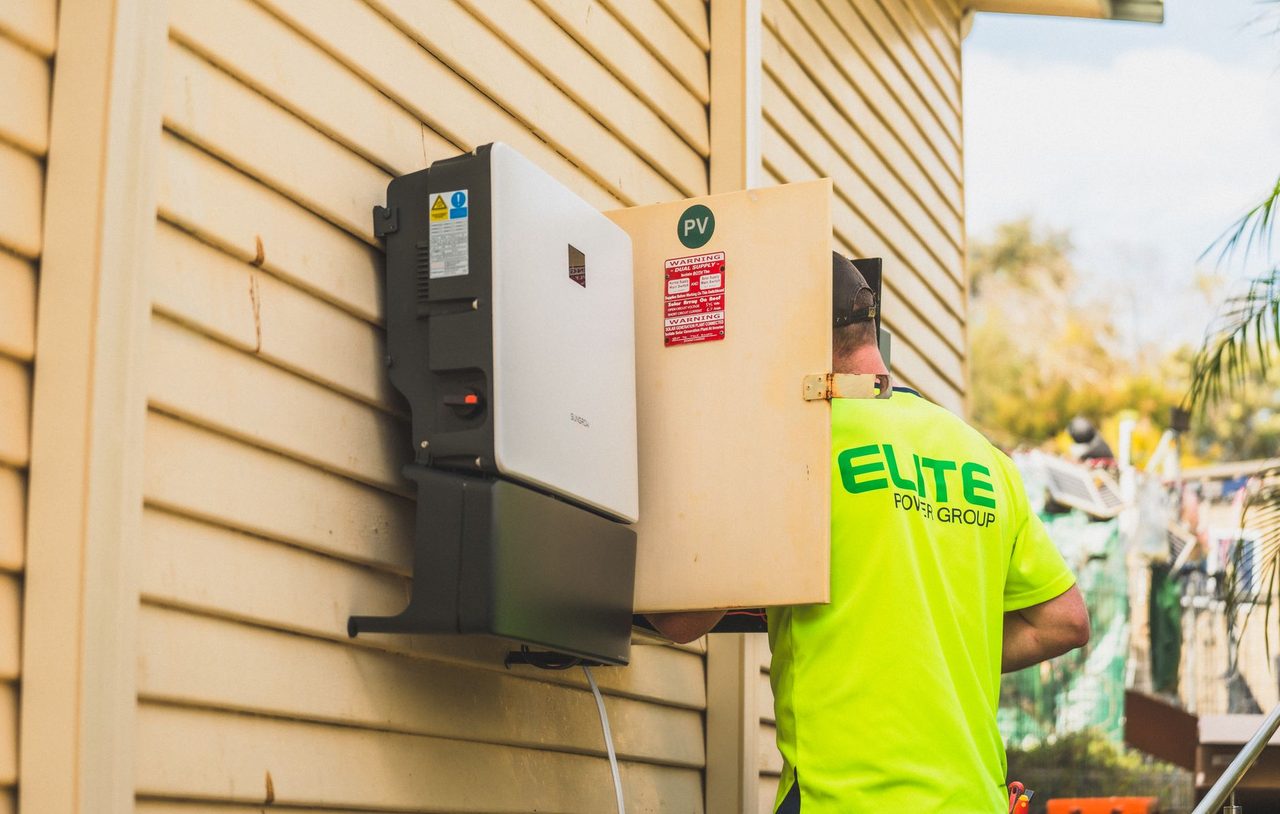
Photo: Elite Power Group on Pexels
India’s transmission discussion for renewable energy has largely focused on corridor build-out, pooling substations, GNA, N-1 margins, reactive support and fault levels. In 2026, one more issue is moving from technical conference rooms into project risk registers: grid-forming inverter capability.
For utility-scale solar, wind and BESS-connected projects evacuating power into state networks or ISTS-linked substations, inverter behaviour during weak-grid conditions is now a bankability issue, not just an OEM feature comparison. As synchronous generation retires or runs at lower dispatch in some regions, and inverter-based resources occupy a larger share of the generation stack, system operators are increasingly concerned about voltage stability, recovery after disturbances, oscillations, and the ability of connected resources to remain stable in low short-circuit strength pockets.
This matters in India because the evacuation problem is not uniform. A 300 MW solar project connected near a strong 400 kV node in western India faces a very different grid than a 250 MW wind-solar hybrid tied into a remote 220 kV pooling station with long EHV lines and limited local inertia. In 2026, developers, DISCOMs, CTU-linked applicants, EPC contractors and lenders should understand where grid-forming capability can reduce integration risk, where it is commercially justified, and how it changes the scope of grid studies.
Why grid-forming matters in India’s 2026 transmission context
Traditional grid-following inverters synchronize to an existing voltage waveform. They inject current based on a grid that is assumed to be stiff enough for PLL-based control to track reliably. That assumption becomes weaker when:
- short-circuit ratio at the point of interconnection drops
- multiple inverter-based plants cluster behind a common evacuation corridor
- long 220 kV or 400 kV lines create higher effective impedance
- local synchronous support is limited
- STATCOMs and switched compensation alone do not fully address dynamic recovery behaviour
- planned RE plus BESS capacity grows faster than transmission reinforcement
Grid-forming inverters, by contrast, can establish and regulate voltage and frequency characteristics more actively. In practice, this can improve performance under weak-grid conditions, support stable black-start-like behaviour in specific configurations, and reduce control interactions among clustered inverter plants.
For India, the immediate relevance is not that every solar or wind project will suddenly require grid-forming mode. The more realistic 2026 question is narrower and more commercial: in which evacuation situations does adding grid-forming capability materially lower curtailment risk, compliance risk, or future retrofit cost?
That question is becoming important because transmission lead times remain long. A 400 kV line or GIS bay addition can take 18 to 30 months depending on land, approvals, equipment supply and right-of-way. Inverter controls can often be specified earlier and adjusted faster, provided the OEM supports the required functionality and the interconnection studies are done correctly.
Where grid-forming is most relevant for RE evacuation projects
Not every project needs to pay for advanced controls. But several Indian use cases stand out in 2026.
First, hybrid RE parks with BESS. Co-located BESS is increasingly being used not only for energy shifting but also for grid support. A BESS block configured for grid-forming operation can help stabilize the plant collector system and improve dynamic response at the evacuation bus. For a 100 MW/200 MWh BESS attached to a 300 MW solar-wind hybrid project, the incremental value of grid-forming functionality may be meaningful if the interconnection node is weak or exposed to repeated voltage dips.
Second, remote pooling substations in high-RE states. In Rajasthan, Gujarat, Karnataka, Tamil Nadu and parts of Andhra Pradesh, clustered renewable development around new pooling infrastructure creates periods where inverter-based resources dominate local generation. If several plants with different OEM controls connect to the same 220 kV or 400 kV bus, control interaction risk rises. Grid-forming-capable resources can sometimes improve aggregate damping and recovery.
Third, phased evacuation where transmission strengthening is delayed. Some projects receive connectivity or planned evacuation paths, but the final network strengthening comes in stages. During the interim period, developers may operate in a grid environment that is weaker than the end-state planning model assumed. In such cases, robust inverter controls can be commercially valuable.
Fourth, industrial decarbonisation hubs and round-the-clock supply portfolios. Large C&I consumers procuring renewable power through open access, captive, group captive or hybrid structures increasingly care about power quality and supply continuity. Where dedicated or near-dedicated evacuation is involved, inverter controls become part of the reliability discussion.
What Indian developers and lenders should actually assess
The market often treats grid-forming as a binary label. That is a mistake. In practice, bankable assessment requires checking at least six things.
- OEM capability: Is the inverter or PCS platform proven in grid-forming mode at utility scale, or is the feature still limited by firmware, operating envelope or site conditions?
- Operating philosophy: Will the asset operate permanently in grid-forming mode, switch dynamically, or reserve that role to a BESS block only?
- Compliance pathway: Do the control settings align with CEA technical standards, grid code expectations, utility-specific requirements and the study assumptions filed for connectivity?
- Interaction risk: How will the controls interact with nearby STATCOM, SVC, HVDC terminals, nearby renewable plants and synchronous condensers where installed?
- Performance guarantees: Are there measurable acceptance criteria for fault ride-through, voltage recovery, frequency support and oscillation damping?
- Cyber and SCADA implications: Will plant controller logic, communication latency and supervisory controls support stable operation under real dispatch conditions?
For lenders, the practical concern is simple. If a project connected to a weak node later requires expensive retrofit studies, controller tuning, harmonic filters, additional BESS functionality or curtailment acceptance, DSCR assumptions can weaken. Conversely, if the sponsor over-specifies premium inverter functionality without a study-based justification, capex rises unnecessarily.
A prudent credit approach in 2026 is to require project-specific Power system studies rather than relying only on generic OEM brochures or standard PSS/E snapshots.
Study scope: what should be modelled before procurement closes
For projects where grid-forming capability is under consideration, the study package should go beyond steady-state load flow.
At a minimum, developers should commission the following analysis:
- RMS dynamic studies for voltage and frequency response
- EMT studies where weak-grid interaction risk is high
- short-circuit assessment to understand network strength context, though fault level alone is not enough
- small-signal or oscillatory stability review for clustered IBR regions
- reactive capability validation across dispatch range
- fault ride-through and post-fault recovery checks
- plant controller coordination studies
- sensitivity analysis for delayed transmission elements or neighboring project additions
This is especially important when the interconnection point is at 220 kV or 400 kV and upstream topology may change as evacuation schemes are commissioned in phases.
Many Indian developers still stop at compliance-oriented connectivity studies and then treat inverter procurement as a separate package. That sequencing is suboptimal. The better sequence is:
- define likely grid conditions at COD and 2- to 5-year horizon
- identify weak-grid scenarios and contingency cases
- compare grid-following-only, hybrid-control and grid-forming-enabled designs
- quantify capex and availability implications
- lock study assumptions into procurement specifications
Growthifye’s experience in Power system studies and Protection, control & SCADA becomes relevant here because control philosophy, relay settings, plant controller logic and utility interface cannot be evaluated in isolation.
Costs and commercial implications in 2026
The cost question is often asked too broadly. Grid-forming is not always a separate line item with a clean Rs/MW premium. The actual commercial impact depends on inverter platform, firmware licensing, BESS inclusion, controller architecture, testing scope and warranty conditions.
Still, some practical 2026 ranges can be discussed for Indian projects.
For solar-only projects, enabling advanced control features may add a modest premium at equipment and integration level if the base inverter platform already supports them. On a utility-scale project, the incremental effect may be under 1% of total plant capex in some cases, but can move higher if additional studies, plant controller upgrades, harmonic mitigation, OEM engineering support and prolonged site testing are needed.
For BESS projects, the economics are often more favourable because the PCS and energy management architecture already support more advanced operational modes. A 50 MW to 100 MW BESS added for firming or ancillary-value reasons may justify grid-forming capability more easily than a solar-only plant trying to achieve similar performance through inverter tuning alone.
Developers should also compare these costs against alternatives:
- dedicated dynamic reactive support equipment
- synchronous condenser installation in special cases
- additional collector-system redesign
- curtailment exposure due to unstable operating windows
- repeated utility-mandated retuning after COD
- liquidated damages risk from delayed compliance sign-off
On tariffs, the impact can still matter. In a competitive bid where discovered tariffs remain tight, even a 2 to 4 paise/kWh lifecycle-equivalent cost difference can influence bid strategy. But if the alternative is reduced PLF realization through recurring curtailment or seasonal instability, the lower upfront option may not be the cheaper one over 25 years.
Policy and grid-planning implications for India
India’s formal framework is still evolving around large-scale inverter-dominant systems. CEA standards, grid code provisions, CTU/Central Transmission Utility processes, RLDC/SLDC operating requirements and utility-specific connection conditions collectively shape what projects must demonstrate. In 2026, stakeholders should expect tighter scrutiny on model quality, dynamic behaviour and actual site performance.
Three policy directions are likely to matter.
First, model validation discipline will tighten. Utilities and system operators are increasingly unwilling to accept black-box assumptions where actual field behaviour differs from study models.
Second, weak-grid pockets may see more specific connection conditions. Instead of one-size-fits-all compliance, some nodes may require enhanced performance envelopes, staged commissioning, or mandatory coordination studies among multiple generators.
Third, ancillary-service and grid-support value streams could become more structured over time. If resources capable of fast voltage and frequency support can monetize that value more transparently, grid-forming capability may shift from a compliance expense to an operational revenue enabler.
For policymakers, the key is to avoid forcing expensive blanket requirements on all projects. India needs a node-specific, evidence-based approach. Strong-grid substations may not need premium control features everywhere. Weak-grid renewable clusters may need them urgently.
A decision framework for developers, EPCs and utilities
A practical screening framework for 2026 would ask five questions.
- Is the project connecting into a demonstrably weak node now or within the next 3 years under expected dispatch patterns?
- Is there BESS on site that can economically provide grid-forming support?
- Are nearby inverter-based plants likely to create control interaction risk?
- Is evacuation phasing likely to leave the project exposed before final network strengthening?
- Will the offtake structure or lender diligence reward higher dynamic performance and lower curtailment risk?
If the answer to three or more is yes, then a formal grid-forming options assessment is usually justified.
Utilities and transmission planners should also avoid pushing this issue entirely onto generators. If a node is structurally weak because network reinforcement is delayed, a balanced solution may include both generator-side advanced controls and transmission-side strengthening. The least-cost system answer may combine selective grid-forming capability, dynamic reactive support, revised protection philosophy, and timely bay/line augmentation.
That is why project sponsors should not treat inverter-mode selection as a late-stage vendor choice. It is part of transmission engineering. It affects evacuation reliability, study acceptance, commissioning timelines, and lender confidence.
The 2026 takeaway
In India’s 2026 renewable build-out, grid-forming inverters are not a universal requirement, but they are no longer niche. They are becoming a serious design option for weak-grid evacuation, hybrid projects, BESS-led firm power strategies and clustered renewable substations.
For developers, the right question is not “Should every project use grid-forming?” It is “At this exact node, with this exact evacuation topology, what is the lowest lifecycle-cost way to achieve stable, compliant and financeable operation?”
That answer requires project-specific studies, disciplined procurement specifications, and coordination between electrical design, controls, transmission planning and financing assumptions. The winners in 2026 will be those who evaluate these choices before bid submission or financial close, not after grid disturbances expose the weakness.
If your team is evaluating evacuation risk, weak-grid behaviour, interconnection compliance or control philosophy for a new renewable project, contact Growthifye’s advisory desk. We support developers, investors and utilities with transmission-focused technical diligence, Power system studies and practical implementation planning.
Explore Growthifye's related capabilities
This analysis connects directly to our advisory practice: Power system studies · HV/EHV substation design · Transmission line engineering · Protection, control & SCADA.
About the author

Chief Executive Officer, Growthifye — With over 23 years in management consulting, Sudarshan has taken businesses from concept to scale — building and scaling new-age digital and energy businesses.
- 23+ years in management consulting
- EY alumnus
- Led large-scale BESS programmes, capital raises and advisory mandates
Want this analysis applied to your project?
Talk to our team