Green Energy Corridors in India 2026: Substations, Congestion and RE Evacuation
By Sudarshan Karweer · sudarshan@growthifye.com · +91 84510 99371 (Call / WhatsApp) · 2026-08-25
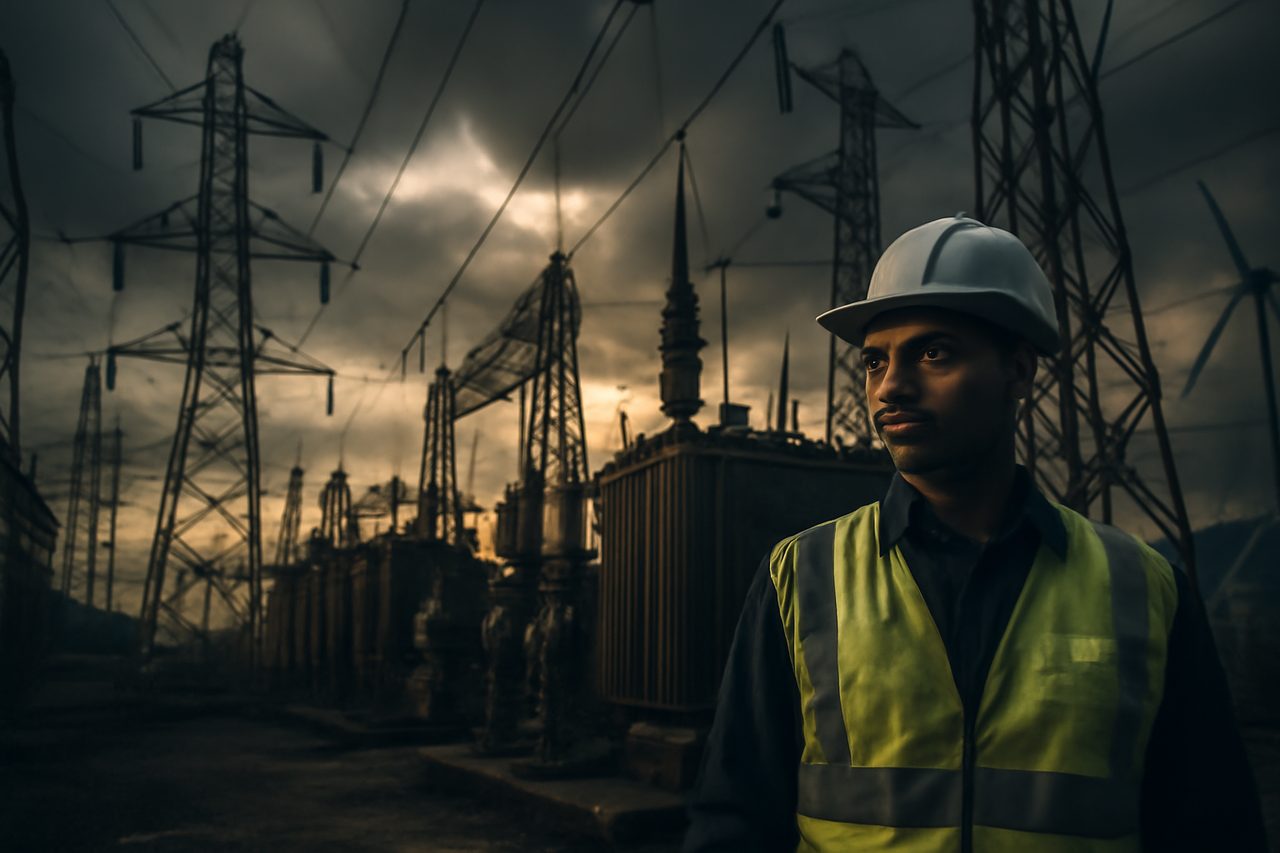
India’s renewable build-out is no longer constrained only by module prices, turbine supply or offtake contracts. In 2026, one of the sharpest constraints is transmission readiness: whether power can move from solar and wind clusters to demand centres without curtailment, unstable voltages, or years of queueing for bays, pooling substations and interconnection approvals. For C&I buyers, RE developers, lenders and utilities, green energy corridors are now a core bankability issue, not just a public-infrastructure theme.
This article looks at green energy corridors from a practitioner’s standpoint: what they are, how they interact with ISTS and state networks, where the real bottlenecks are in 2026, what substations and pooling schemes mean for project design, and how developers and corporate buyers should underwrite congestion and evacuation risk in India.
Why green energy corridors matter in 2026
India’s renewable programme has moved from isolated project approvals to cluster-based development. Ultra-mega solar parks, hybrid wind-solar zones, storage-linked projects and RTC tenders are increasingly concentrated in resource-rich states such as Rajasthan, Gujarat, Tamil Nadu, Karnataka, Andhra Pradesh and parts of Maharashtra. The generation potential exists, but the demand is often elsewhere.
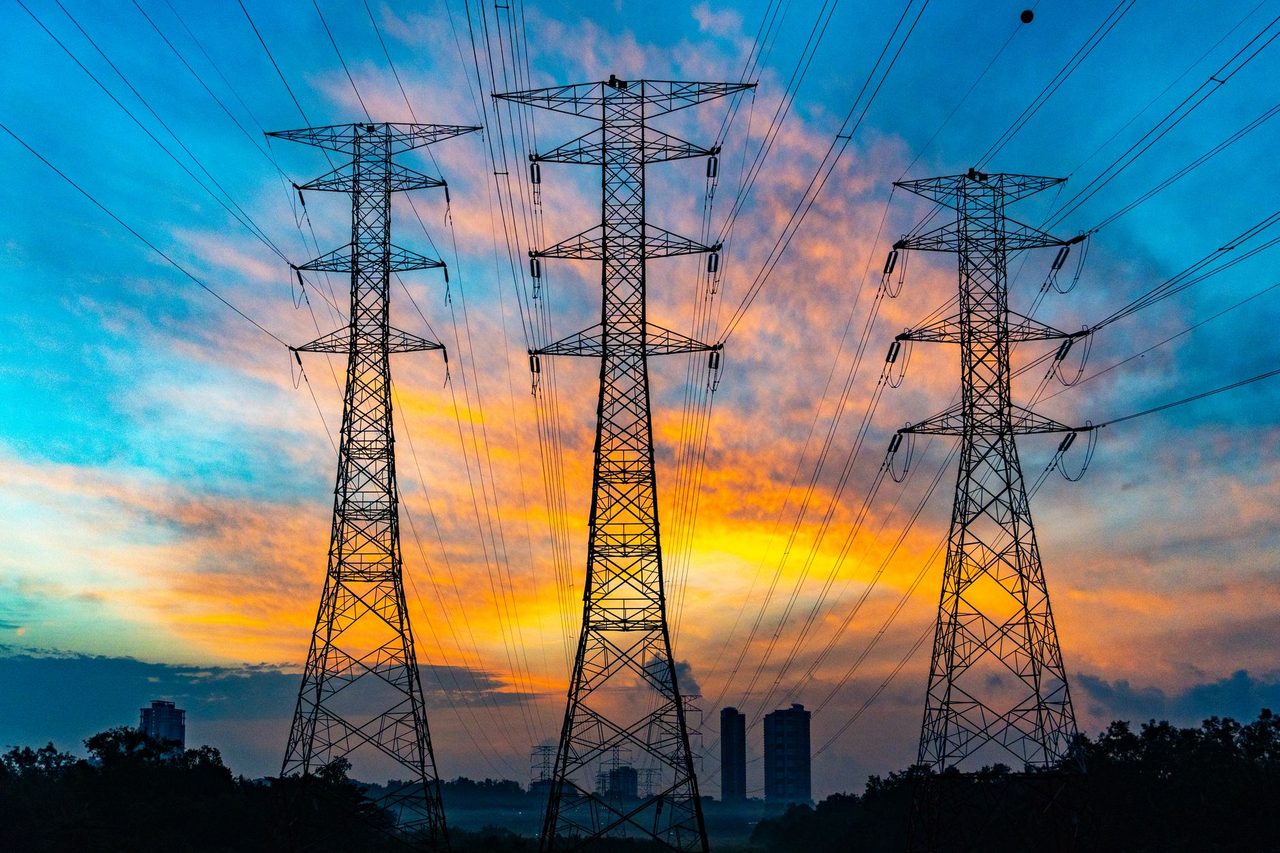
That creates a structural requirement for dedicated high-capacity evacuation systems, commonly referred to as green energy corridors. In practical terms, these include:
- intra-state transmission lines connecting renewable clusters to state or central substations
- pooling substations where multiple generators aggregate output before evacuation
- inter-state transmission system links carrying power to distant demand centres
- upstream transformation capacity at 220 kV, 400 kV and 765 kV levels
- reactive support and voltage-control assets required for stable renewable injection
By 2026, the issue is not whether India is building transmission. It is. The issue is sequencing. In many corridors, generation bids and land aggregation move faster than bays, transmission packages, forest clearances, right-of-way acquisition and commissioning of pooling substations. This mismatch directly affects COD, deemed generation assumptions, merchant exposure and debt drawdown timelines.
For lenders, evacuation risk now sits alongside irradiation, wind resource and counterparty risk as a first-order credit variable. For C&I buyers procuring open-access or third-party renewable power, the same risk shows up as delayed start dates, scheduling losses and location-linked price basis risk.
How green energy corridors fit between state grids and ISTS
A common market misunderstanding is to view a renewable project as either “state-connected” or “ISTS-connected” and assume the network question ends there. In reality, green energy corridors sit across both layers.
At the project end, power typically first enters a local collection system and then a pooling substation. Depending on project size and location, this may be at 33 kV, 66 kV, 132 kV or 220 kV before stepping up to 400 kV or above. From there, evacuation may proceed:
- through the state transmission utility network for intrastate sale or state open access
- to a central transmission utility node for inter-state transfer
- through a hybrid pathway involving both state and central assets
This matters because approvals, payment security, outage coordination and technical standards may differ across these layers. A developer may secure land and generation approvals but still face constraints if:
- the state utility pooling station is delayed
- the allocated bay is not ready
- N-1 criteria are not met on the outgoing line
- transformation capacity is saturated during high-output hours
- upstream ISTS elements are congested despite local connectivity readiness
In 2026, with more hybrid and storage-linked projects being developed in shared renewable zones, one substation can influence the viability of dozens of projects. The commercial effect is amplified where contracted tariffs are tight. In recent utility-scale tenders, discovered tariffs in solar and hybrid categories have often remained in the sub-Rs 3.00/kWh to low-Rs 4.00/kWh range depending on storage, profile obligations and tender structure. At these tariff levels, even modest curtailment or a six-to-twelve-month evacuation delay can materially alter project IRR.
The substation question: pooling, bays and transformation capacity
For many projects, the substation is where theoretical connectivity becomes practical evacuation. Developers often focus on line route length and connectivity approval but underweight substation specifics. That is a mistake.
In 2026, the following substation issues are repeatedly appearing in technical and commercial due diligence:
- bay availability versus merely indicative connectivity letters
- spare transformation capacity at the relevant voltage level
- busbar configuration and future expansion room
- protection philosophy, metering and SCADA integration readiness
- synchronisation timing between generator packages and substation package completion
- outage windows during monsoon or peak-demand periods
A 300 MW solar project connected through a shared 400/220 kV pooling arrangement may appear secure on paper, but if multiple neighbouring projects hit COD in the same quarter, transformer loading and line loading during noon peaks can become binding constraints. For wind-rich corridors, evening and monsoon-period patterns create different loading risks.
From an engineering perspective, developers should examine at least these points before financial close:
- actual short-circuit levels at the interconnection bus
- expected loading under base case and high-RE scenarios
- transformer redundancy and outage behaviour
- protection coordination with adjoining transmission elements
- metering points for energy accounting and deviation settlement
- remote dispatch visibility and communication latency
For lenders, asking only whether “connectivity has been granted” is no longer adequate. The more relevant question is whether the specific bay, transformer margin, line path and upstream system strengthening are committed, funded, under construction and realistically aligned to the generation COD.
Congestion is becoming a location-specific price and risk signal
Not all megawatts are equal in India’s grid. In 2026, congestion is increasingly shaping project value by geography, technology mix and time of day.
High-renewable states can face a paradox: they remain attractive due to resource quality and land availability, but the marginal project in a crowded zone may carry a significantly higher evacuation risk than a project in a less saturated district with slightly weaker irradiation or CUF. This is especially relevant for:
- merchant and partially merchant projects
- C&I open-access portfolios spanning multiple states
- hybrid assets that rely on complementary profiles to optimise line utilisation
- storage-linked projects that expect to shift output into constrained periods
The practical consequences of corridor congestion include:
- backing down during peak injection windows
- scheduling constraints and DSM exposure if actual dispatch diverges from schedules
- delayed commercial operation due to unavailable transmission elements
- additional capex for longer dedicated lines or alternate interconnection points
- lower effective CUF realised at the revenue meter
A developer comparing two sites may see only a 2-3% difference in solar yield, but if one site requires 35 km of dedicated evacuation line into a constrained pooling node and the other needs 12 km into a stronger node with planned 765 kV reinforcement, the weaker-yield site may still be financially superior.
For C&I consumers, this also affects delivered power economics. The apparent headline tariff in a PPA or OA supply proposal is only part of the story. Transmission losses, scheduling reliability, curtailment probability and the stability of evacuation over the contract term influence the actual landed cost of clean power. In some cases, a slightly higher source tariff from a less congested corridor can outperform a lower tariff from an over-subscribed cluster.
Planning studies that actually reduce evacuation risk
In boardrooms, “power system studies” are often treated as a compliance item. In practice, they are one of the few tools that can materially improve project siting, substation selection and interconnection design before irreversible capex is committed.
For green energy corridor projects in 2026, useful studies go beyond a basic load-flow snapshot. A robust package typically includes:
- load flow under peak generation and minimum-demand conditions
- contingency analysis for line and transformer outages
- short-circuit analysis at present and future network strengths
- transient stability where required by the connecting utility or system profile
- voltage profile assessment across seasonal operating conditions
- harmonic and power-quality assessment where inverter-heavy clusters are involved
- reactive capability and dynamic support assessment at the point of interconnection
These studies should not be run only for the project’s own injection. They should consider the corridor as it is likely to exist at actual commissioning, including neighbouring awarded capacity, likely storage additions and planned network augmentations. A substation that is technically comfortable today may be stressed by the time a project reaches synchronisation 18 months later.
Three practical recommendations stand out:
- Use scenario-based studies, not a single deterministic case.
- Revalidate assumptions at least once before ordering major evacuation equipment.
- Align study outputs with commercial documents, especially COD milestones and delay-risk allocation.
For lenders and investors, independent review of study assumptions is increasingly important. Transmission studies that rely on outdated network topologies, omit awarded nearby projects or assume ideal commissioning dates for external lines can create false confidence.
What developers, C&I buyers and lenders should underwrite in 2026
Transmission due diligence in 2026 has to be commercial, regulatory and technical at the same time. The checklist should vary by stakeholder.
For RE developers:
- verify bay allocation status, not just connectivity approval
- map all upstream dependencies including pooling station, line package and CTU/STU interfaces
- quantify curtailment sensitivity in the financial model
- check whether alternative interconnection options exist if the preferred node slips
- lock interface responsibilities clearly between EPC, transmission contractor and utility
For C&I consumers buying renewable power through open access or third-party PPAs:
- ask where exactly the project injects and through which corridor power will flow
- review commissioning assumptions against actual transmission package progress
- assess seasonal curtailment risk and scheduling robustness
- evaluate the landed tariff after losses, wheeling, banking limits where applicable, and balancing impacts
- diversify sourcing geography if a portfolio is concentrated in one congested zone
For lenders and investors:
- require milestone-based evidence for evacuation readiness
- stress-test revenue with realistic delay and curtailment scenarios
- distinguish between temporary constraints and structural congestion
- examine whether tariff headroom is sufficient to absorb extra line capex or delayed generation
- scrutinise liquidated damages and relief provisions linked to external transmission delays
For utilities and policymakers, the key challenge is queue discipline and visibility. Renewable developers need clearer, more standardised information on:
- real substation spare capacity versus notional planning capacity
- package-wise construction status of corridor assets
- expected commissioning dates with periodic updates
- congestion patterns and seasonal operating constraints
- criteria for prioritisation where multiple generators depend on shared elements
Better transparency would reduce speculative booking, improve siting decisions and lower dispute risk.
Policy and market implications for India’s next RE wave
India’s 2026 renewable trajectory increasingly depends on whether transmission is planned as an enabling market platform rather than as a lagging response to generation awards. This is especially true for three market segments.
First, hybrid and firm power tenders. These projects depend on coordinated evacuation because they aggregate different technologies and often aim to serve distant demand centres on a schedule-sensitive basis.
Second, C&I decarbonisation. Large industrial consumers in steel, cement, chemicals, data centres, automotive and commercial real estate are scaling renewable procurement. Their board-level concern is no longer just tariff savings; it is hourly reliability, profile matching and auditable delivery.
Third, project finance discipline. As tariffs remain competitive, debt providers are paying closer attention to infrastructure dependencies outside the plant boundary. A low bid is not bankable if the corridor behind it is underbuilt.
In the next phase of market maturity, the winners are unlikely to be only those with the cheapest module procurement or the fastest land closure. They will be those who combine project development with transmission intelligence: understanding which substations are genuinely expandable, which corridors are likely to face noon congestion, which state-central interfaces create hidden risks, and how to stage COD against actual network readiness.
For many projects, the decisive value creation step now happens before EPC mobilisation: selecting the right evacuation architecture. That means comparing not just land, yield and tariff, but also pooling-node readiness, upstream transformation, line redundancy, outage behaviour and the practical reality of getting megawatts to market every day after commissioning.
If your project, procurement strategy or financing decision depends on reliable grid evacuation, Growthifye can help with transmission advisory, connectivity strategy, substation due diligence, power system studies and corridor risk assessment. Contact Growthifye’s advisory desk to discuss your project.
About the author

Chief Executive Officer, Growthifye — With over 23 years in management consulting, Sudarshan has taken businesses from concept to scale — building and scaling new-age digital and energy businesses.
- 23+ years in management consulting
- EY alumnus
- Led large-scale BESS programmes, capital raises and advisory mandates
Want this analysis applied to your project?
Talk to our team