
Transmission Planning for BESS in India 2026: ISTS Connectivity, Grid Codes, Costs
By Sudarshan Karweer · sudarshan@growthifye.com · +91 84510 99371 (Call / WhatsApp) · 2026-09-16
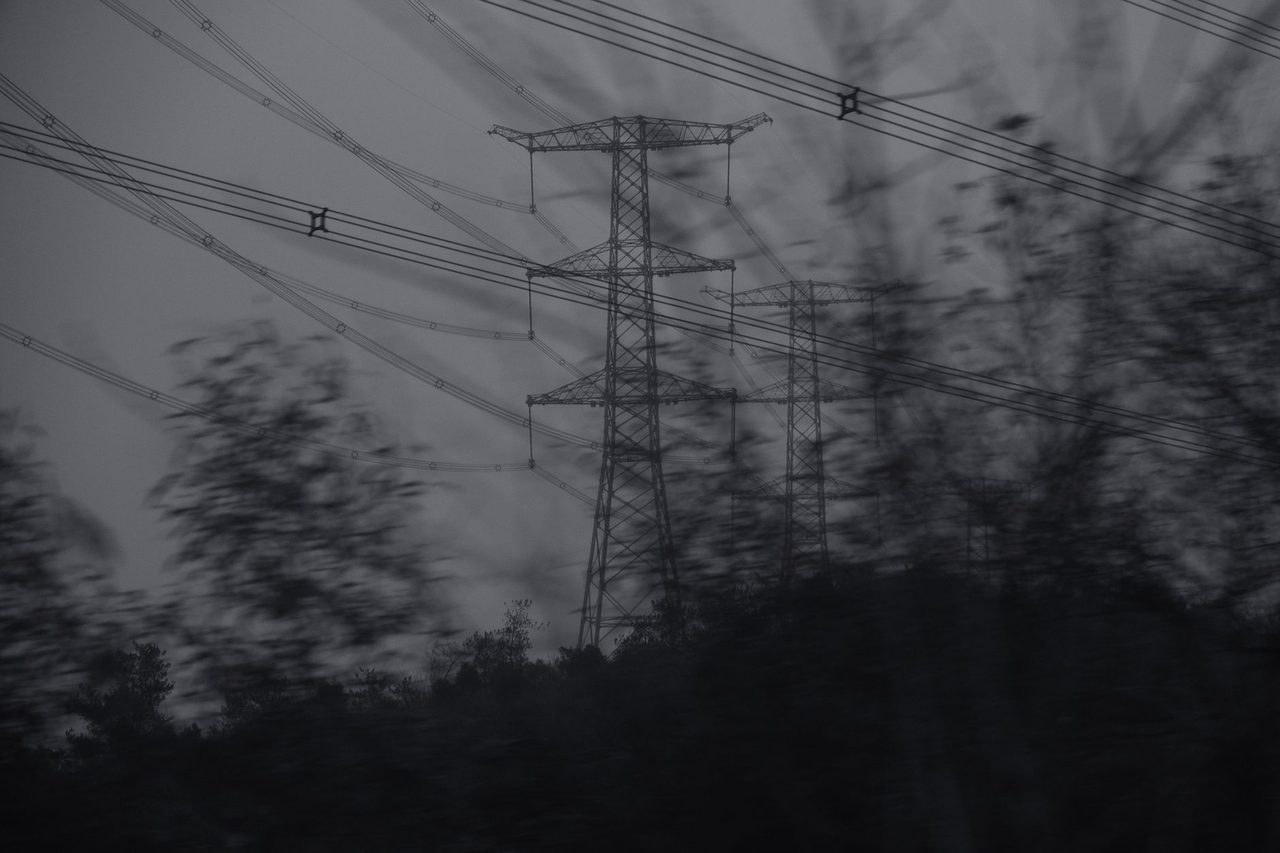
India’s transmission conversation in 2026 is no longer only about solar and wind evacuation. Battery energy storage systems, whether co-located with renewable plants or developed as standalone assets, are starting to change how ISTS connectivity is planned, how substations are configured, how grid-code compliance is demonstrated, and how lenders assess evacuation risk.
That shift matters because battery storage is moving from pilot-scale balancing support to mainstream capacity in SECI tenders, state tenders, RTC structures, ancillary services participation and C&I supply portfolios. A 100 MW solar plant with no storage and a 100 MW solar plant paired with a 100 MW/200 MWh BESS may look similar on a single-line diagram at first glance, but they behave very differently in scheduling, charging demand, fault contribution, ramping, auxiliary loads, transformer loading and power system response.
For developers, the wrong transmission concept can lock in avoidable capex, higher bay requirements, delayed connectivity approvals or poor operational flexibility. For lenders, weak transmission planning around BESS can undermine dispatch assumptions and DSCR resilience. For utilities and policymakers, the issue is broader: storage can reduce congestion in some corridors while creating new charging peaks and substation stress in others.
This article looks at transmission planning for BESS in India in 2026 from a practitioner lens: ISTS connectivity, grid-code implications, evacuation design choices, substation and bay requirements, key studies, timelines and indicative costs.
Why BESS changes transmission planning in India
Traditional renewable evacuation planning assumes a variable generator injecting power when resource is available. BESS breaks that one-directional logic. It can import power for charging and export power for discharging, often within the same day and sometimes with very steep ramps.
That creates three immediate transmission consequences:
- the point of interconnection must be evaluated for both import and export conditions
- transformers, bays, busbars and protection systems must handle bi-directional operation cleanly
- power-flow and dynamic studies must test charging coincidence, discharge peaks and mixed RE+BESS operating states
In India 2026, this is especially relevant for:
- co-located solar+BESS and wind+BESS projects bidding into firm and dispatchable renewable tenders
- standalone BESS connected to ISTS pooling stations or state transmission networks
- hybrid projects seeking tighter schedules and lower deviation exposure
- C&I portfolios using storage to shape supply against open-access load curves
In several cases, storage can improve effective evacuation utilisation. A solar plant exporting sharply between 10 am and 3 pm may be constrained by transmission capacity during peak irradiance. Adding BESS can shift part of that injection into evening hours, increasing delivered energy without proportionately increasing transmission infrastructure. But that benefit only materialises if charging windows, contracted demand assumptions, and transmission access rights are properly structured.
ISTS connectivity for standalone and co-located BESS
ISTS connectivity treatment for BESS in 2026 depends on project configuration, offtake structure and interconnection voltage. In practice, developers usually face one of three models.
- Co-located RE+BESS behind a common pooling substation
- Standalone BESS injecting to and drawing from ISTS/STU
- Hybrid projects with separate metering or distinct charging-source rules
For co-located projects, the biggest planning question is whether the evacuation system is sized to the renewable AC capacity, the inverter export limit, or a combined operational envelope. A 300 MW solar project with a 150 MW/300 MWh BESS may still evacuate through a 300 MW export ceiling if charging is largely from behind-the-meter solar. But if grid charging is allowed, import capability must also be secured and transformer thermal margins reassessed.
For standalone BESS, connectivity applications need much clearer definition of:
- maximum import MW
- maximum export MW
- charging source assumptions
- duration in MWh and cycle profile
- intended participation in energy, ancillary services or capacity-style obligations
- reactive capability across SOC bands where relevant
These details affect bay planning, metering configuration, protection settings and system studies. At many nodes, the import case may be as important as the export case. This is a notable departure from conventional RE connectivity applications where import is often limited to startup and auxiliary consumption.
Developers should also be careful about transmission-right assumptions. A battery that plans to charge from the grid during low-price hours and discharge during evening peak is not simply an evacuation asset; it is a bidirectional network user. That distinction can influence access arrangements, state versus central network coordination, and scheduling compliance.
Growthifye regularly sees early-stage projects underestimate these implications, especially when commercial teams finalise tender positions before engineering teams complete Connectivity & open access and interconnection scenario reviews.
Grid-code and study requirements that matter in 2026
BESS projects are not exempt from serious network studies just because they are inverter-based. In fact, because they are controllable and can switch modes rapidly, system operators often expect a clearer demonstration of dynamic performance.
Typical study scope in 2026 includes:
- load flow for import and export scenarios
- short-circuit analysis at interconnection bus and nearby substations
- transient stability and dynamic performance for disturbances
- voltage control and reactive capability assessment
- protection coordination for bidirectional power flow
- harmonic assessment where converter behaviour warrants it
- insulation coordination and equipment duty checks at EHV interfaces
For large projects, especially at 220 kV, 400 kV or above, Power system studies should examine multiple operating states, not just rated discharge. At minimum, developers should test:
- full charging during high renewable output in the region
- full discharge during evening peak
- simultaneous renewable export with partial battery charging
- low short-circuit strength conditions
- N-1 outage cases affecting evacuation path
Battery projects can improve local voltage performance and ramp control, but they can also increase operational complexity. Converter controls, plant controller logic and reactive dispatch philosophy must align with CTU/STU requirements and substation settings. If not, projects may face repeated query cycles during connectivity processing or witness-test stages.
Indicative study budgets in 2026 vary by size and voltage level. For utility-scale ISTS-facing projects, integrated grid studies by experienced consultants may range from roughly INR 15 lakh to INR 60 lakh depending on scope, model complexity and number of contingency cases. Projects with multiple pooling options, hybrid configurations or weak-grid interfaces may sit at the higher end.
Substation, bay and transformer design implications
One of the most common misconceptions is that adding BESS to a renewable project only changes the DC and inverter blocks. In reality, the substation concept often needs redesign.
Key design implications include:
- bi-directional metering and energy accounting architecture
- transformer loading checks for charging and discharging cycles
- busbar sizing for different operational envelopes
- additional feeder bays if BESS blocks are segregated from RE feeders
- revised auxiliary transformer sizing and black-start philosophy where applicable
- integration of EMS/PMS logic with utility dispatch and plant-level controls
At 220 kV and 400 kV substations, a co-located BESS may be tied through a common main transformer or through dedicated transformer bays depending on plant scale, operating philosophy and redundancy requirements. Dedicated arrangements cost more but can improve controllability, outage management and future augmentation.
Indicative 2026 capex impact varies widely, but developers should not assume it is trivial. For a utility-scale project, adding BESS-related EHV interface modifications, bays, metering, control integration and protection changes can add from a few crore rupees in simpler shared-bay arrangements to several tens of crore in more complex dedicated-bay or higher-voltage configurations.
For example:
- an additional 220 kV line bay may cost roughly INR 4 crore to INR 8 crore depending on utility specs and site conditions
- a 400 kV bay can often be materially higher, especially with GIS, redundancy and advanced control integration
- transformer augmentation costs depend on MVA rating, cooling class, fault levels and transportation constraints
This is where disciplined HV/EHV substation design becomes essential. Overdesign can damage project IRR. Underdesign can trigger later augmentation, thermal restrictions or utility non-acceptance.
Cost and tariff implications for developers and C&I portfolios
Transmission planning for BESS is not just an engineering exercise; it directly affects landed tariff and contracted flexibility.
For RE developers bidding into FDRE, RTC or peak-power structures, a better-designed BESS evacuation concept can:
- reduce curtailment risk
- improve annual delivery profile
- support stronger CUF-equivalent contracted performance
- lower imbalance exposure
- defer transmission augmentation in some cases
For C&I consumers procuring renewable-plus-storage through open access or group captive structures, BESS can improve time-shaping but may also introduce additional wheeling, banking, scheduling and demand-side considerations depending on the state and charging arrangement. If charging energy comes from the grid rather than captive renewable generation, the economics can change sharply.
By 2026, delivered tariffs for renewable-plus-storage supply to C&I buyers can vary significantly by state, scheduling model and storage duration. In many structures, the transmission design decision is one of the hidden tariff drivers because it affects:
- interconnection capex
- losses
- availability assumptions
- outage coordination
- import/export metering treatment
- future augmentation risk
Lenders are increasingly testing whether BESS revenue assumptions rely on network behaviour that has not yet been validated. If a project model assumes unrestricted off-peak charging but the node experiences repeated loading or voltage constraints, the downside is real. That is why transmission due diligence now needs to examine both system adequacy and dispatch realism.
Planning timelines, approvals and execution risks
In India, transmission timelines still have the power to make or break renewable project schedules. BESS does not remove that risk; in some cases it increases documentation and coordination requirements.
Typical risk points in 2026 include:
- incomplete connectivity applications that do not clearly define charging behaviour
- mismatch between tender assumptions and utility-approved operating envelope
- delay in finalising metering and telemetry architecture
- late-stage protection philosophy changes due to bidirectional flow
- transformer or bay redesign after study feedback
- control-system integration delays during commissioning
A realistic planning window for utility-scale BESS-linked transmission readiness can range from 6 to 18 months depending on voltage level, bay availability, upstream augmentation needs and whether the project is plugging into an existing pooling substation or developing a new EHV interface.
As a rough guide:
- study package and application preparation: 1 to 3 months
- utility review and query resolution: 2 to 6 months, sometimes longer
- bay or interconnection scope finalisation: 1 to 3 months
- equipment procurement and site execution: 6 to 12 months or more depending on voltage class
Projects that start transmission planning only after battery OEM selection are often already late. The better sequence is to freeze the interconnection philosophy early, then align battery block design, transformer sizing, EMS logic and contractual dispatch assumptions around that framework.
What developers, utilities and lenders should do now
In 2026, the strongest BESS projects are the ones treating transmission as a strategic design variable rather than a downstream compliance item.
Developers should:
- evaluate multiple charging and discharging use cases before applying for connectivity
- model import and export cases with realistic regional generation patterns
- test whether common or dedicated transformer/bay architecture is superior over asset life
- align EPC, OEM and transmission assumptions early
Utilities and policymakers should:
- standardise clarity on bidirectional connectivity documentation
- reduce ambiguity in metering, telemetry and scheduling treatment for storage
- prioritise storage-aware planning at congestion-prone renewable nodes
Lenders and investors should:
- diligence transmission rights and operational envelope, not just installed MW/MWh
- test downside cases where charging access is restricted or augmentation is delayed
- verify that grid studies reflect actual commercial operating strategy
Storage will play a larger role in India’s evening ramp, ancillary support and renewable firming over the next few years. But the value of BESS depends heavily on where and how it connects to the network. A battery placed at the wrong node, with the wrong bay concept or incomplete system studies, can underperform despite strong market fundamentals.
For sponsors and offtakers alike, the lesson is straightforward: bankable storage needs bankable transmission planning.
If you are evaluating a standalone or co-located BESS project, contact Growthifye’s advisory desk for support on transmission strategy, interconnection planning, Power system studies and execution-ready evacuation design.
Explore Growthifye's related capabilities
This analysis connects directly to our advisory practice: Power system studies · HV/EHV substation design · Transmission line engineering · Protection, control & SCADA.
About the author

Chief Executive Officer, Growthifye — With over 23 years in management consulting, Sudarshan has taken businesses from concept to scale — building and scaling new-age digital and energy businesses.
- 23+ years in management consulting
- EY alumnus
- Led large-scale BESS programmes, capital raises and advisory mandates
Want this analysis applied to your project?
Talk to our team

