GC Approval and Transmission Connectivity Changes for RE Projects in India 2026
By Sudarshan Karweer · sudarshan@growthifye.com · +91 84510 99371 (Call / WhatsApp) · 2026-08-29
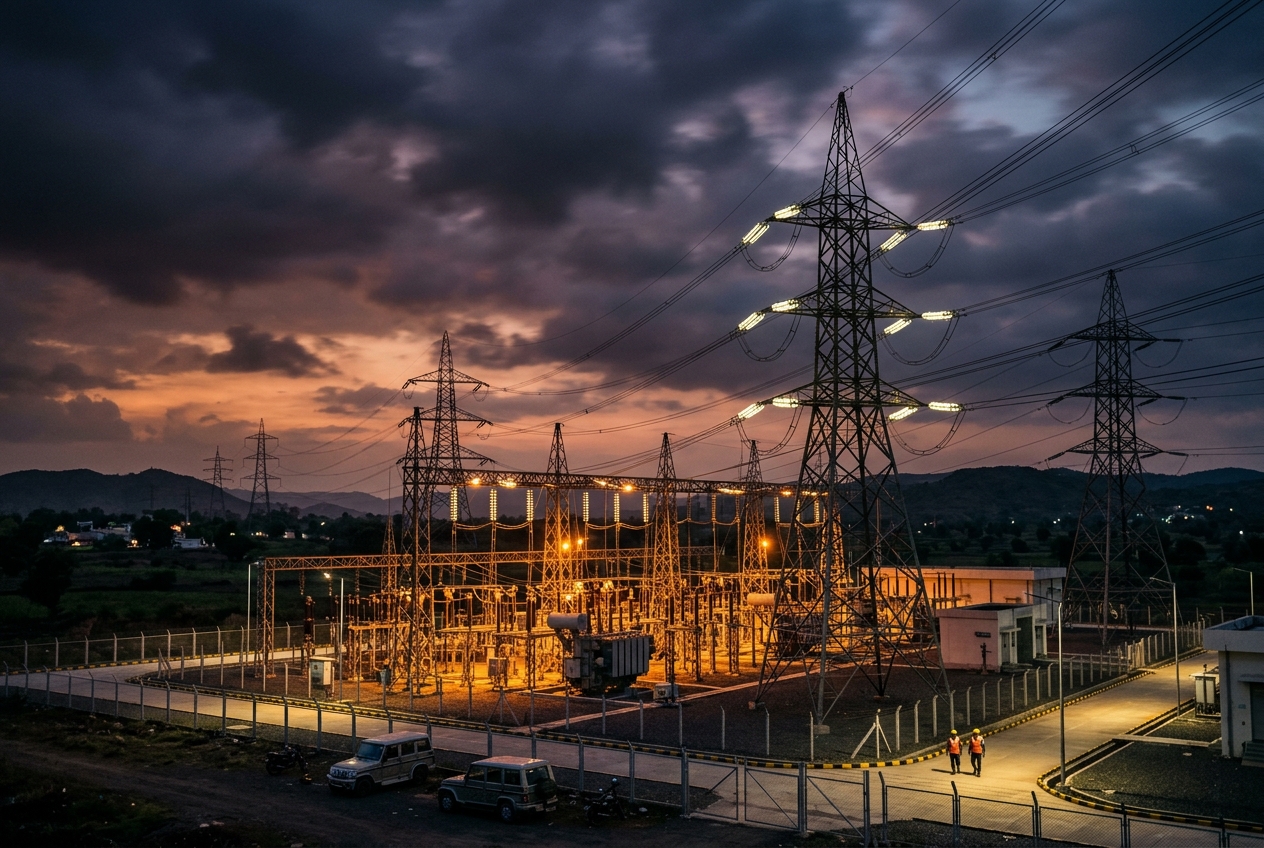
India’s renewable market has moved past the stage where transmission planning can be treated as a late-stage checkbox. In 2026, one of the most important yet under-discussed bottlenecks is GC approval discipline and its interaction with connectivity milestones, substation readiness, and lender conditions precedent. For utility-scale solar, wind, hybrid and storage-linked projects, the quality and timing of grid-related approvals increasingly determine whether tariff assumptions remain viable.
This matters across the value chain. Developers need bankable COD timelines. C&I consumers procuring power through open access need confidence that delivery risk is understood, not merely assumed. Lenders want documentary proof that the evacuation path is real, studies are complete, and grid-side dependencies are mapped. Utilities and policymakers need a process that allocates scarce network capacity to projects that can actually move.
This article focuses on a different transmission angle from typical evacuation or study discussions: how GC approval and associated connectivity evidence are becoming central to project bankability in India in 2026, what the process looks like in practice, where delays arise, and how developers can reduce approval-cycle risk.
What GC approval means in the 2026 RE project pipeline
In market practice, GC approval is used as shorthand for the formal approval chain around grid connectivity, technical studies, and network integration readiness that sits between project concept and actual energisation. Depending on whether a project is connecting to ISTS or a state network, the documentary stack can involve CTUIL, STU, the relevant transmission licensee, RLDC/SLDC interfaces, and utility engineering teams responsible for bay, protection, metering and communication integration.
In 2026, this approval chain is more demanding for five reasons:
- Larger project sizes are chasing finite transmission margins in high-resource states such as Rajasthan, Gujarat, Karnataka, Tamil Nadu and Andhra Pradesh.
- More hybrid and storage-linked projects require non-standard operating assumptions in load flow, fault and dynamic studies.
- Grid code enforcement has tightened, especially where renewable injections materially alter voltage profile, fault levels or ramping behaviour.
- Lenders now routinely ask for stronger evidence of connectivity readiness before major debt drawdown.
- Utility-side substations are facing execution stress due to bay congestion, land constraints, equipment lead times and interface coordination gaps.
For a 100 MW to 300 MW standalone solar project, weak approval sequencing can add 3 to 6 months of delay even where EPC progress is otherwise healthy. For a 300 MW to 1 GW hybrid or RE park-linked development, the slippage can be longer if studies, line routing, bay readiness and SCADA integration are not handled in parallel.
Why this has become a commercial issue, not just an engineering issue
In 2026, tariff sensitivity to schedule delay remains high. If a utility-scale project with a tariff in the range of about INR 2.45 to INR 3.20 per kWh slips by a quarter, the economics can deteriorate through multiple channels:
- IDC increase during construction
- delayed revenue commencement
- extension costs for land, security and site overheads
- PPA milestone stress or damages in some structures
- mismatch between module delivery, inverter availability and transmission readiness
- change in applicable transmission charges, losses or banking assumptions for open access structures
For C&I projects selling under medium-tenor structures, delay can also mean loss of the intended offtaker window. A consumer may have planned power replacement against a contracted tariff of roughly INR 4.00 to INR 5.50 per kWh delivered, but if connectivity is delayed, the buyer may continue with grid supply or source alternate open access power. That affects project pipeline certainty.
From a lender perspective, the issue is straightforward: a project without credible connectivity evidence is exposed to non-generation risk regardless of how advanced the plant construction may be. This is why approval packages are now examined alongside land title, permits, PPA enforceability and equipment supply contracts.
ISTS and STU pathways: where approval friction actually appears
The approval pathway differs depending on whether the project uses ISTS, intrastate evacuation, or a mixed arrangement. But in practice, friction concentrates in a few repeat areas.
First, developers often secure in-principle connectivity comfort without fully validating downstream requirements. A project may have a notional interconnection point, yet still lack clarity on:
- final bay allocation
- n- bus extension scope
- line terminal arrangement
- protection interface philosophy
- telecom integration requirements
- metering architecture
- remote control and data visibility expectations
Second, there is often an assumption that transmission utility scope will progress independently. In reality, bay extension, reactor placement, relay coordination, communication ports, and outage planning can all affect energisation timing.
Third, study submissions are frequently incomplete. Utilities increasingly expect consistency across the package, including single-line diagrams, plant models, inverter data, transformer sizing, reactive power scheme, short-circuit contribution and control philosophy. If these are updated piecemeal, review cycles restart.
Typical risk points by project type in 2026 include:
- ISTS-connected solar: queue management, bay readiness, and communication/protection interface delays
- wind projects: seasonal construction timing, collector-system revisions and dynamic model alignment
- hybrid projects: operating mode assumptions, BESS dispatch logic and reactive power behaviour
- open access projects on STU networks: substation congestion, approval sequencing with DISCOM processes and mismatch between commercial and technical milestones
For large projects, approval-cycle delay costs can be material. A 250 MW solar project facing a 4-month commissioning delay may see additional IDC and overhead impact in the range of INR 6 crore to INR 15 crore depending on leverage, EPC structure and site conditions. That excludes lost generation revenue.
What a lender-grade connectivity approval package should contain
In 2026, sophisticated developers are no longer presenting connectivity as a one-page approval letter. They are assembling a lender-grade package that demonstrates not just permission but executable readiness.
A strong package typically includes:
- connectivity grant or relevant interconnection approval documentation
- identified interconnection point with latest single-line diagram
- bay allocation status and utility correspondence on scope split
- status of transmission line route, if developer scope applies
- load flow, short-circuit and dynamic study outputs where applicable
- protection coordination philosophy and metering architecture
- SCADA/telemetry integration requirements and responsibility matrix
- implementation schedule with utility and developer interface milestones
- list of conditions attached to the approval and closure status of each condition
- capex estimate for grid-side and interface works
- risk register covering outages, utility dependencies and right-of-way issues
This is where firms with strong Power system studies and Protection, control & SCADA capability create real value. The issue is not merely producing study reports, but ensuring consistency between study assumptions, equipment procurement, and approval submissions.
Developers should also track whether the approved electrical design still matches procurement decisions. A late change in inverter rating, transformer impedance, collector topology, STATCOM sizing or BESS configuration can trigger revalidation. In congested networks, even seemingly minor technical changes may prompt utility queries.
Time and cost benchmarks developers should use in 2026
Although timelines vary by state and by project scale, practical market benchmarks for 2026 are useful for internal planning.
For a relatively standard utility-scale RE project with identified interconnection infrastructure already available:
- initial connectivity application to substantive technical response: 6 to 12 weeks
- detailed study/revision cycle: 4 to 10 weeks
- bay/interface engineering coordination: 6 to 16 weeks
- utility outage planning and final integration sequencing: 4 to 12 weeks
For projects where dedicated transmission line scope or major substation extension is required, these windows can extend sharply. A new EHV bay, bus extension, or associated interface work may push the practical connectivity-readiness period to 6 to 12 months, sometimes more where supply chain or statutory approvals intervene.
On costs, broad market ranges seen in 2026 for developer-side transmission interface items can include:
- evacuation line capex for EHV scope: approximately INR 1.2 crore to INR 2.8 crore per km depending on voltage level, terrain and RoW complexity
- bay and associated substation interface works: often INR 4 crore to INR 15 crore or higher depending on voltage level and utility scope split
- grid studies and approval support package: from several lakhs for simpler STU cases to well above INR 50 lakh for large, multi-technology projects with iterative modeling and multiple stakeholders
- communication, protection and metering interface scope: frequently underestimated, but can materially affect both capex and schedule
These are not universal tariffs or approved benchmarks; they are execution planning ranges. The key point is that developers who underbudget connectivity-interface scope often create avoidable lender concerns later.
Common mistakes that derail approval timelines
Across ISTS and state networks, the same mistakes keep recurring.
- Treating connectivity grant as equivalent to evacuation readiness
- Submitting inconsistent SLDs across utility, EPC and lender packages
- Freezing procurement before final study assumptions are accepted
- Ignoring utility outage windows required for bay tie-in or relay integration
- Underestimating communication and SCADA dependency for synchronisation
- Failing to map owner-scope versus utility-scope responsibilities in writing
- Not escalating design changes promptly after module, inverter or BESS revisions
A particularly expensive mistake is delaying transmission line engineering and substation interface detailing until after main plant EPC has mobilised. In 2026, interface design needs to move in parallel with plant design. If the project requires HV/EHV substation design support, protection interface review, and line routing coordination, those streams should begin well before financial closure.
This is also why serious sponsors are integrating Transmission line engineering with their financing and execution workstream rather than treating it as a post-award detail.
How developers, C&I buyers and lenders should respond in 2026
For developers, the practical response is to build a stage-gated transmission readiness plan. That means every month before COD should show status against approvals, studies, utility interfaces, equipment dependencies and energisation prerequisites.
For C&I buyers, especially those signing long-tenor open access arrangements, the question is not just whether the seller has connectivity, but whether the delivery path is executable on the promised timeline. Buyers should request evidence of interconnection progress and utility dependency mapping.
For lenders, the most useful discipline is to distinguish between:
- approval obtained
- technical conditions pending
- physical interface works underway
- utility-side readiness confirmed
- synchronisation prerequisites closed
These are not the same thing, and debt documentation should reflect that distinction.
For policymakers and utilities, the system-level need is greater transparency. Projects benefit when network capacity allocation, queue movement, approval conditions and interface responsibilities are visible and standardised. Faster processing matters, but clearer processing matters just as much. In a market adding large renewable volumes every year, approval opacity creates avoidable congestion in both execution and finance.
In short, transmission success in 2026 is no longer defined only by whether a project has an evacuation concept. It is defined by whether the project can demonstrate an evidence-backed path from connectivity grant to energisation. That path must withstand scrutiny from utilities, offtakers and lenders alike.
If you are evaluating a new RE project, refinancing an operating asset, or stress-testing COD risk on an under-construction portfolio, contact Growthifye’s advisory desk. Our teams support connectivity strategy, Power system studies, Protection, control & SCADA coordination, and lender-grade transmission diligence for utility-scale and C&I renewable projects across India.
Explore Growthifye's related capabilities
This analysis connects directly to our advisory practice: Power system studies · HV/EHV substation design · Transmission line engineering · Protection, control & SCADA.
About the author

Chief Executive Officer, Growthifye — With over 23 years in management consulting, Sudarshan has taken businesses from concept to scale — building and scaling new-age digital and energy businesses.
- 23+ years in management consulting
- EY alumnus
- Led large-scale BESS programmes, capital raises and advisory mandates
Want this analysis applied to your project?
Talk to our team