FDRE in India 2026: Wind-Solar-BESS Sizing, Tender Maths and Bankability
By Sudarshan Karweer · sudarshan@growthifye.com · +91 84510 99371 (Call / WhatsApp) · 2026-09-08
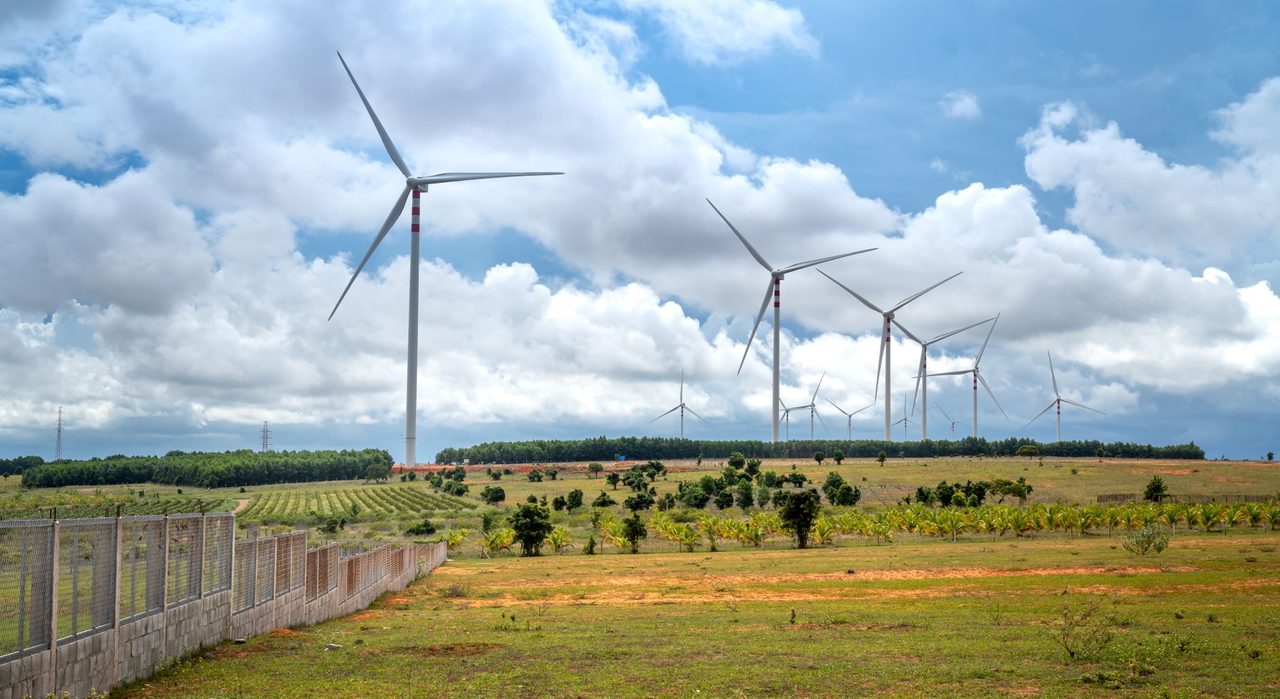
Photo: Quang Nguyen Vinh on Pexels
India’s firm and dispatchable renewable energy (FDRE) market is moving from headline ambition to execution reality in 2026. For developers, utilities, lenders and large power buyers, the core question is no longer whether hybrid renewable portfolios can supply firmer power. The real question is whether a given wind-solar-BESS configuration can meet tender obligations at a tariff that survives financing, operating variability and degradation over 20 to 25 years.
FDRE sits in a different bucket from plain vanilla solar, generic wind-solar hybrid and even some round-the-clock structures. It is a delivery product. That means project value is driven by how reliably the portfolio can deliver within contracted time blocks, deviation bands and annual energy commitments. In practice, that makes FDRE a modelling exercise first and an EPC exercise second.
This article sets out how Indian market participants should assess FDRE opportunities in 2026: resource sizing, storage duration, dispatch logic, tariff supportability, payment structures, curtailment, transmission, and the issues that matter most for lenders and offtakers.
What makes FDRE different from other RE tenders
The Indian tender landscape now includes standard solar, wind-solar hybrid, peak power, RTC, storage-linked RE and FDRE procurements. These are often discussed interchangeably, but they are not the same from a risk and economics standpoint.
FDRE generally requires the seller to supply power in a scheduled and more dependable profile than ordinary variable RE. Depending on the bid document, obligations may include:
- minimum annual or monthly availability
- fixed or semi-fixed hourly delivery windows
- contracted CUF bands
- penalties for under-injection against schedule
- tighter forecasting and scheduling requirements
- mandatory storage integration or evidence of firmness through portfolio design
For a developer, that means a 300 MW FDRE bid is not just a 300 MW generation asset. It may involve 500 to 900 MW of combined wind and solar, plus BESS sized to reshape output, manage ramps, reduce deviation, and preserve contracted supply during low-resource periods.
In 2026, several discoms and central agencies are increasingly preferring products with clearer firmness attributes because they reduce balancing burden and support evening demand growth. At the same time, they remain tariff-sensitive. This pushes the market toward portfolios that are engineered for just enough firmness, not maximum firmness.
The sizing problem: why FDRE starts with hourly data, not MW headlines
Many weak bids still begin with headline capacities and target CUF assumptions. Serious FDRE bids start with at least three datasets:
- 8,760-hour or finer solar generation profiles by site
- 8,760-hour or finer wind generation profiles by site, ideally multi-year corrected
- delivery obligation by block, month and year under the PPA or tender document
The objective is to find the least-cost combination of solar, wind and storage that can meet the delivery test with acceptable downside risk.
In Indian conditions, a practical starting range for FDRE portfolios in 2026 often looks like this:
- solar DC oversizing relative to interconnection: 1.3x to 1.8x depending on clipping economics and charging strategy
- wind share: high enough to provide night-time and monsoon support, often 35% to 65% of annual energy in firmer portfolios
- BESS duration: commonly 2 to 4 hours for shaping and deviation control, though some tenders or internal bankability standards may justify longer duration
A stylised example helps. Suppose a buyer seeks 250 MW FDRE with high evening reliability and annual CUF in the 40% to 55% range. A developer may evaluate portfolios such as:
- 350 MW solar + 250 MW wind + 250 MW / 500 MWh BESS
- 300 MW solar + 350 MW wind + 250 MW / 750 MWh BESS
- 450 MW solar + 250 MW wind + 250 MW / 1,000 MWh BESS
These can all deliver similar annual energy on paper. But they behave differently in monsoon cloud events, summer evening ramps, low-wind weeks and transmission congestion periods.
The right answer depends on five things:
- site-level correlation between wind and solar resources
- inter-state transmission access and curtailment history
- tender penalty design
- n- battery augmentation assumptions after year 8 to 12
- whether charging from grid is allowed, restricted or uneconomic after charges
In many Indian cases, developers discover that adding more solar alone lowers levelised energy cost but increases dependence on battery throughput and raises under-delivery risk in poor-weather evening windows. By contrast, adding better-quality wind often improves firmness more cheaply than extending BESS duration from 2 hours to 4 hours, especially when battery cycling economics are tight.
Tariff supportability in 2026: what the numbers must cover
FDRE tariffs in India remain highly sensitive to capital cost assumptions, transmission charges, battery replacement strategy and debt terms. There is no single bankable benchmark, but a realistic 2026 view should include the following building blocks.
Generation-side capex can vary widely by state, site quality and evacuation complexity. As a directional range in 2026:
- utility-scale solar capex may fall around Rs 3.0 crore to Rs 3.8 crore per MW AC equivalent depending on scope
- wind capex may fall around Rs 6.5 crore to Rs 8.5 crore per MW depending on turbine rating, logistics and hub height
- BESS capex at project level can vary materially by chemistry, duration, HVAC, fire systems, augmentation design and GST treatment, but 2-hour and 4-hour systems remain very different tariff propositions
What matters in FDRE is not standalone LCOE. It is delivered-cost adequacy under the contract.
For many 2026 bid models, the tariff must recover:
- blended RE capex and O&M
- battery capex plus augmentation reserve
- inverter and transformer loading strategy
- forecasting, scheduling and imbalance costs
- ISTS or state transmission costs where applicable
- land, pooling substation and evacuation capex
- working capital for payment delays
- debt service under realistic PLF and degradation cases
A common mistake is to price FDRE too close to vanilla hybrid tariffs while assuming optimistic battery life and minimal penalties. Lenders usually reject such cases unless the portfolio has unusually strong resource diversity or the contract offers compensating upside.
For discom and utility buyers, the relevant comparison is not just against solar or wind tariffs. It is against the cost of meeting residual peak demand, balancing conventional fleet, and buying short-term power during stress periods. As evening and early-morning deficits persist in many regions, a properly structured FDRE contract can compare favourably with fragmented procurement, even at a visible premium to simple RE.
Dispatch logic and BESS use: firmness is operational, not theoretical
In FDRE, storage is often overvalued in presentations and undervalued in operations planning. A battery does not create energy. It reallocates energy in time, controls ramps and protects schedule adherence. That distinction is crucial.
In operational terms, BESS in FDRE portfolios is usually used for four jobs:
- intra-day shaping from solar-heavy hours into peak blocks
- smoothing wind and solar variability to hold schedule
- absorbing excess generation that would otherwise be clipped or curtailed
- protecting against deviation penalties and availability failures
This means battery sizing should be based on dispatch duty, not headline enthusiasm for storage. For example:
- If the main requirement is evening shifting of solar, 2-hour systems may be enough where wind contributes at night.
- If the tender requires long continuous flat blocks, 4-hour systems may become necessary.
- If deviation penalties are steep but energy obligations are modest, power rating may matter more than energy duration.
Battery throughput assumptions must also be conservative. An FDRE battery that cycles aggressively every day to rescue poor renewable sizing may look efficient in year 1 but become expensive over the contract term once degradation, augmentation and outages are correctly modelled. In 2026, disciplined developers are increasingly building augmentation line items into base-case models rather than treating them as optional later fixes.
Another important issue is round-trip efficiency and auxiliary consumption. When tariffs are tight, losing 12% to 18% through charging-discharging and system auxiliaries materially affects annual delivered energy. This is especially important where contracted supply tests are measured at the delivery point rather than battery terminals.
Contract design, penalties and scheduling risk
The commercial success of FDRE depends as much on contract drafting as on plant design. Buyers and sellers should focus closely on the exact mechanics of performance testing.
Key clauses to stress-test include:
- annual CUF requirement and permitted band
- block-wise minimum delivery obligation
- treatment of force majeure and grid unavailability
- deemed generation or deemed availability relief
- curtailment compensation methodology
- forecasting responsibility and revision windows
- settlement of deviation charges and DSM-like exposures
- payment security, LC and late-payment surcharge
A portfolio that appears robust under average weather can become fragile if the contract penalises shortfalls in narrow time windows without adequate relief for grid events. This is why site selection and contractual risk allocation should be run together.
For lenders, one of the biggest concerns in FDRE remains mismatch between generation uncertainty and hard delivery obligations. If the PPA structure effectively turns a weather-linked asset into a quasi-capacity obligation without fair relief mechanisms, financing costs rise. Debt sizing becomes more conservative, DSCR cushions widen, and sponsor equity burden increases.
Developers should also pay attention to whether charging from grid is contractually permitted and economically sensible. In some cases, grid charging can rescue delivery compliance during extreme events. In others, banking restrictions, cross-subsidy surcharge, additional surcharge or settlement design make it uneconomic. This must be tested early, not after bid submission.
Grid integration, transmission and siting: where bankability is often lost
India’s FDRE opportunity is fundamentally linked to geography. The best solar and wind resources are not always co-located, and the best renewable resources are not always close to uncongested evacuation.
This makes transmission and siting one of the most underestimated bankability variables in FDRE.
Critical diligence areas include:
- substation loading and actual evacuation headroom, not just sanctioned capacity
- state-wise curtailment history and must-run enforcement quality
- seasonal wind-solar complementarity across candidate sites
- land aggregation risk for multi-node portfolios
- pooling strategy for hybrid scheduling and metering
- battery location choice: generation end, pooling substation or delivery-side node
There is no universal answer on co-location. A co-located BESS can capture clipped solar and simplify controls, but a differently located battery may offer superior network support or delivery reliability. The trade-off is between electrical efficiency, land and evacuation cost, scheduling simplicity, and grid-value capture.
For policymakers and utilities, this is where FDRE can evolve meaningfully in 2026 and beyond. Tenders that recognise locational diversity, realistic scheduling constraints and transmission bottlenecks will produce healthier tariffs than those that demand excessive firmness without enabling grid access.
What lenders and serious offtakers will look for in 2026
By 2026, most experienced financiers have moved beyond headline renewable-plus-storage excitement. They are asking sharper questions:
- Is the resource dataset bankable and independently validated?
- Has the seller modelled P90 or worse delivery cases, not just P50 energy output?
- Are battery degradation and augmentation costs fully funded?
- Does the contract provide adequate relief for curtailment and grid outages?
- Is the tariff high enough to withstand one bad wind year and one battery replacement shock?
- Are counterparties credible and payment security mechanisms effective?
For offtakers, the key issue is whether FDRE is solving an actual procurement problem. Buyers should avoid overpaying for firmness they do not need, but they should also stop benchmarking FDRE against standalone solar. A more useful comparison is against the avoided cost of peak procurement, backup diesel or gas use, balancing volatility and market purchases during scarcity periods.
The best FDRE projects in India will be those that match the contract to the real use case:
- evening-heavy discom demand support
- industrial load shaping for high-consumption consumers
- replacement of expensive short-term purchases
- integration of larger renewable portfolios with lower balancing stress
In short, FDRE is not just another hybrid label. It is a delivered-power product that demands integrated thinking across resource assessment, storage sizing, scheduling, transmission and contract design. In India’s 2026 market, the winners will not be the bidders with the lowest theoretical LCOE. They will be the sponsors whose hourly models, penalty assumptions and financing structure survive real operating conditions.
If you are evaluating an FDRE bid, portfolio sizing strategy, storage duration or lender diligence scope, contact Growthifye’s advisory desk for project-specific support.
About the author

Chief Executive Officer, Growthifye — With over 23 years in management consulting, Sudarshan has taken businesses from concept to scale — building and scaling new-age digital and energy businesses.
- 23+ years in management consulting
- EY alumnus
- Led large-scale BESS programmes, capital raises and advisory mandates
Want this analysis applied to your project?
Talk to our team