Battery Recycling and Second-Life BESS in India 2026: Economics, Policy and Risk
By Sudarshan Karweer · sudarshan@growthifye.com · +91 84510 99371 (Call / WhatsApp) · 2026-09-14
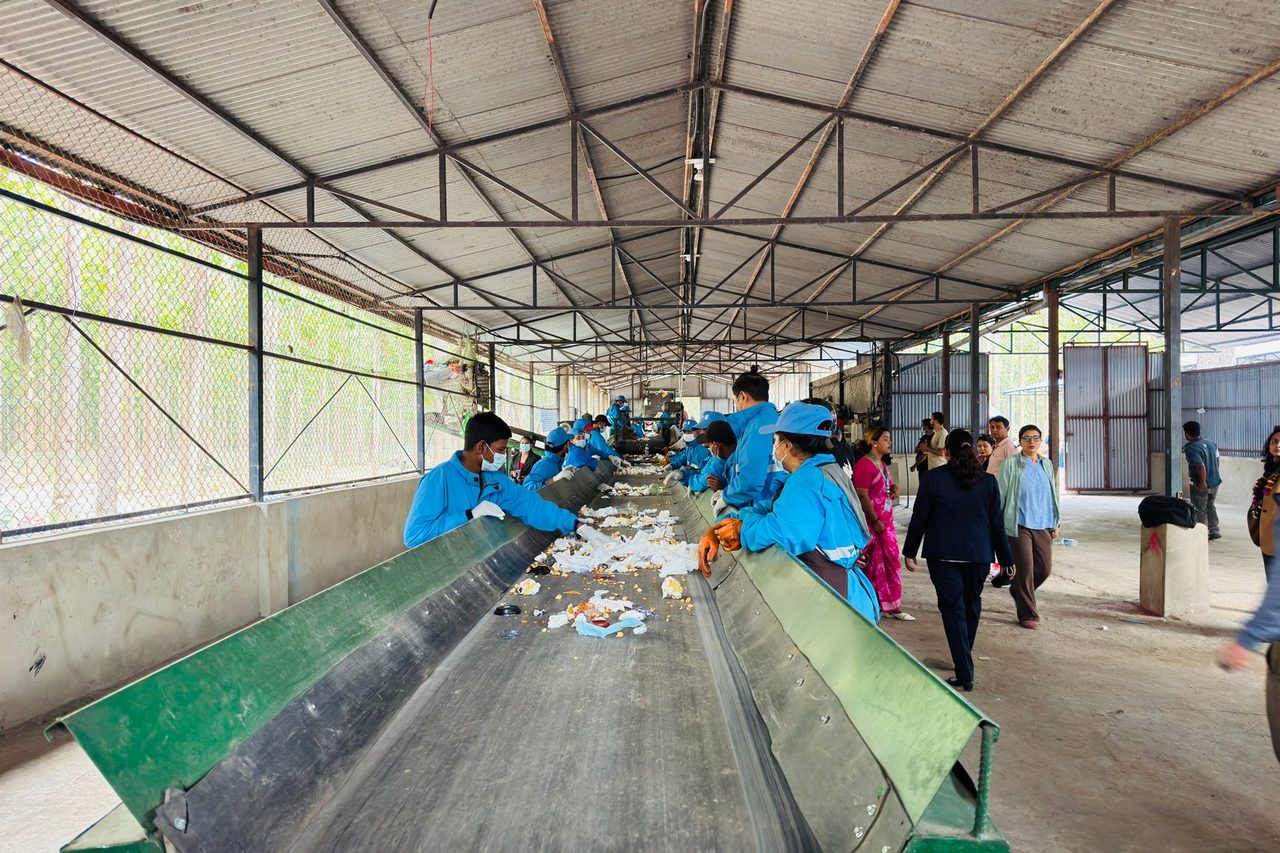
India’s battery storage market in 2026 is no longer just about capex, round-trip efficiency and tariff discovery. For developers, lenders, utilities and C&I consumers, one more issue is moving into the investment memo: what happens to the battery at mid-life and end-of-life. That question now affects bid pricing, OEM selection, warranty drafting, insurance, environmental compliance and residual-value assumptions.
In India, this is especially relevant because the storage market is scaling before a mature domestic recycling ecosystem has fully caught up. Large grid-scale lithium-ion systems are being contracted under SECI, NTPC, state tenders and utility procurement. At the same time, electric-vehicle battery volumes are starting to create feedstock for recyclers, and policymakers are tightening producer responsibility norms. The result is that battery recycling and second-life battery energy storage systems are shifting from a future theme to a bankability issue in 2026.
This article looks at the practical economics, policy framework, technical filters and commercial risks around battery recycling and second-life BESS in India.
Why end-of-life strategy now matters to BESS economics
For a utility-scale or C&I BESS project, the biggest financial conversations still start with capex, cycling assumptions, augmentation strategy and contracted revenue. But by 2026, offtakers and lenders are also asking four end-of-life questions early in diligence:
- Who owns end-of-life liability for cells, modules and balance-of-pack equipment?
- Is there a funded and enforceable take-back or recycling plan?
- Can residual value be counted in the base case, or only as upside?
- If repowering is needed in year 8 to 12, what happens to removed battery inventory?
These questions matter because battery disposal is not a minor O&M line item. Depending on chemistry, logistics distance, fire-safety protocol, pack condition and recycler recovery efficiency, the net end-of-life value can range from a disposal cost to a modest salvage benefit. In weakly structured contracts, that uncertainty sits with the project SPV. In well-structured contracts, it is partly transferred to the OEM, integrator or an approved recycler.
For merchant and tolling-linked BESS, the issue is sharper. If project returns depend on heavy cycling and accelerated degradation, mid-life replacement volumes become meaningful. Even in contracted systems, augmentation programs may create removed modules years before final project retirement. Those removed assets need a lawful and economical path.
India’s 2026 regulatory framework: EPR is no longer background noise
The core policy anchor is the Battery Waste Management Rules, 2022, along with subsequent implementation steps and CPCB compliance mechanisms. In practice, 2026 project stakeholders should track three things closely.
First, extended producer responsibility is becoming operationally important. Producers, including importers and manufacturers, are expected to ensure collection and recycling or refurbishment of waste batteries through registered entities. For BESS buyers, this means OEM and supplier diligence cannot stop at performance specs. You need clarity on EPR registration status, collection mechanism, recycling partner network and documentary traceability.
Second, digital compliance and record-keeping are getting more important. Developers and industrial users should expect more scrutiny around battery movement records, recycler registration, waste manifests and safe handling documentation. Informal disposal routes that may once have gone unchallenged are increasingly incompatible with lender ESG screens, utility procurement conditions and corporate governance standards.
Third, hazardous handling and transport compliance remains a practical bottleneck. A project in Rajasthan, Gujarat, Tamil Nadu or Karnataka may not have a recycler next door. Transporting damaged or degraded lithium-ion batteries requires approved packaging, trained handlers and emergency-response planning. These logistics can materially change the true end-of-life cost.
For lenders, the implication is straightforward: environmental compliance around battery retirement is becoming as relevant to diligence as land title, evacuation and EPC wrap quality. For utilities and C&I buyers, it is becoming a contract management issue, not just a technical afterthought.
Recycling economics: what numbers should developers use in 2026?
In India, recycling economics still vary widely because battery chemistry, pack format and recycler maturity are not uniform. Most utility-scale BESS projects continue to rely on LFP and, in some cases, NMC chemistry. Their recycling value profiles are different.
NMC batteries typically contain higher-value metals such as nickel and cobalt, which can improve recycling economics if recovery rates are strong and logistics are manageable. LFP batteries, increasingly common in stationary storage due to thermal safety and lower cost, usually have weaker intrinsic recovered-material value. That means the recycler’s economics depend more on scale, process efficiency, logistics and any producer-supported take-back arrangement.
As a rough 2026 working range for initial screening in India:
- Safe removal, packaging, temporary storage and compliant transport can add meaningful cost, especially for damaged inventory or remote sites.
- Net recycling value for LFP may be near zero or even negative at project level if logistics and handling costs are high.
- NMC may generate better salvage economics, but developers should still avoid assuming aggressive residual values in lender models.
- If the OEM contract includes a take-back clause with predefined terms, that can significantly improve certainty even if the headline salvage number is modest.
In practical financial modelling, a conservative approach is better:
- Treat residual value as upside unless contractually secured.
- Include a decommissioning and logistics reserve in lifecycle cost estimates.
- Stress-test scenarios with zero salvage value.
- Where augmentation is planned, model removed modules separately rather than burying them in generic replacement capex assumptions.
For Indian project finance, this matters because small per-kWh errors become material at scale. A 100 MWh system does not need a dramatic per-kWh miss for end-of-life assumptions to move equity IRR or DSCR in a noticeable way. That is why many lenders in 2026 are more comfortable when recycling responsibility is explicitly allocated and costed.
Second-life BESS: where it works, and where it usually does not
Second-life BESS refers to stationary storage systems built using batteries retired from their first application, most commonly EV batteries. The concept is attractive: lower upfront cost, circular-economy benefits and potentially useful service in less demanding applications. But the Indian market should be realistic about where second-life systems fit.
Second-life batteries are usually not ideal for high-availability, utility-contracted applications requiring tight performance guarantees, long duration assurance, predictable augmentation and straightforward lender acceptance. Heterogeneous cell histories, uneven state-of-health, data gaps and repacking complexity create risk.
Where second-life BESS can make more sense in India in 2026:
- Behind-the-meter peak shaving where performance requirements are softer
- Backup support for telecom, campuses or low-criticality industrial loads
- Renewable smoothing in pilot-scale or non-lender-financed applications
- Rural or community systems where low capex is prioritized over perfect performance consistency
- Demonstration projects supported by OEMs, research institutions or public programs
Where second-life BESS usually struggles:
- FDRE or RTC supply commitments
- Ancillary-services participation needing fast, repeatable response and measured availability
- Utility-scale projects with liquidated damages linked to performance shortfall
- Lender-financed assets with strict warranty and insurance requirements
- High-temperature sites where thermal-management discipline is critical
The technical challenge is not just lower remaining capacity. It is uncertainty dispersion. Two battery packs with the same stated state-of-health can behave very differently under cycling, temperature stress and power demand. That affects dispatch predictability and maintenance planning.
For this reason, second-life BESS in India should be viewed less as a direct substitute for bankable front-of-meter storage and more as a niche solution for selected use cases where lower capex can compensate for higher operational complexity.
Bankability, warranties and insurance: the real gating factors
In 2026, the biggest constraint on second-life storage is not conceptual appeal but contractability. Developers can usually make a technical pilot work. The harder question is whether an offtaker, insurer and lender will accept the risk profile.
For new batteries, bankability increasingly depends on:
- Named cell supplier and proven manufacturing pedigree
- Performance warranty with clear throughput and retention metrics
- Long-term service agreement with response obligations
- Augmentation roadmap tied to revenue model
- Fire detection, suppression and thermal propagation mitigation standards
For second-life batteries, each of these becomes harder.
Warranty structures are often shorter and more conditional. Insurers may demand higher premiums, lower cover limits or stronger operating controls. Lenders may haircut performance assumptions or decline leverage altogether unless the project is small, ring-fenced or sponsor-funded.
This does not mean second-life is unviable. It means bankability depends on disciplined screening:
- Traceable battery provenance and usage history
- Robust state-of-health testing protocol at pack and module level
- Conservative usable-capacity assumptions
- Tight thermal management and BMS integration
- Clear replacement strategy for underperforming units
- Contracts that align expected service with actual battery condition
For primary utility-scale BESS procurement, the more immediate bankability issue may actually be recycling rather than second-life reuse. Lenders increasingly want to know that end-of-life obligations are assigned to a creditworthy counterparty and backed by process clarity.
What developers, C&I buyers and utilities should do in tenders and contracts
Indian project stakeholders can materially reduce lifecycle risk by tightening tender specifications and commercial clauses now.
For developers and EPC buyers:
- Ask OEMs for explicit end-of-life responsibility matrix
- Require proof of EPR compliance and recycler tie-ups
- Specify documentation obligations for collection, transport and recycling certificates
- Clarify ownership of removed modules during augmentation
- Avoid unsecured residual-value assumptions in bid models
For C&I customers evaluating storage proposals:
- Compare lifecycle cost, not just quoted capex or tariff
- Ask whether replacement batteries will match original chemistry and form factor
- Review warranty exclusions tied to ambient temperature, cycling depth and operating window
- Understand who pays for compliant disposal at project retirement
For utilities and tendering agencies:
- Include minimum recycling-plan disclosure in RfS or bid documents
- Evaluate take-back structures as part of technical responsiveness
- Consider standardised reporting templates for augmentation and retirement inventory
- Encourage safety and traceability standards that reduce informal disposal risk
For lenders:
- Test base-case economics without residual-value benefit
- Review battery supply and recycling covenants together, not separately
- Ensure decommissioning obligations survive O&M and warranty transitions
- Examine whether insurance assumptions reflect chemistry and operating profile
These interventions are practical and low-cost compared with the downside from weak lifecycle planning.
Outlook for India: circularity will become a commercial differentiator
India’s storage market in 2026 is still primarily driven by tariff discovery, renewable integration needs, ancillary-services evolution and transmission constraints. But over the next few years, circularity and end-of-life management will become a competitive differentiator.
Three trends are likely.
First, OEMs and integrators with credible domestic recycling partnerships will gain an advantage in utility and C&I procurement. Buyers will prefer suppliers who can convert an uncertain future liability into a contractual process.
Second, LFP-heavy stationary fleets will force the market to confront recycling economics without relying on high cobalt or nickel recovery value. That should accelerate process innovation, reverse-logistics planning and domestic recycling capacity development.
Third, second-life deployments will continue, but mostly in segmented applications rather than mainstream utility-scale procurement. The winning models will be those that match battery condition to service requirement instead of forcing second-life assets into premium-performance obligations.
For Indian energy-market participants, the message is simple. Battery value is created not only at commissioning and during dispatch, but also at augmentation, repowering and retirement. The developers and offtakers who plan for that full lifecycle will produce more credible tariffs, fewer contractual disputes and better lender outcomes.
Battery recycling and second-life BESS are no longer side conversations for sustainability reports. In 2026, they are project-structuring topics with real implications for capex planning, compliance, insurance and bankability.
If you are evaluating a storage tender, a C&I decarbonisation plan, a lender diligence mandate or a lifecycle strategy for BESS assets, contact Growthifye’s advisory desk for project-specific support.
About the author

Chief Executive Officer, Growthifye — With over 23 years in management consulting, Sudarshan has taken businesses from concept to scale — building and scaling new-age digital and energy businesses.
- 23+ years in management consulting
- EY alumnus
- Led large-scale BESS programmes, capital raises and advisory mandates
Want this analysis applied to your project?
Talk to our team