ERP for Indian Renewable Energy 2026: Project-to-O&M Control, ROI and Rollout
By Sudarshan Karweer · sudarshan@growthifye.com · +91 84510 99371 (Call / WhatsApp) · 2026-09-15
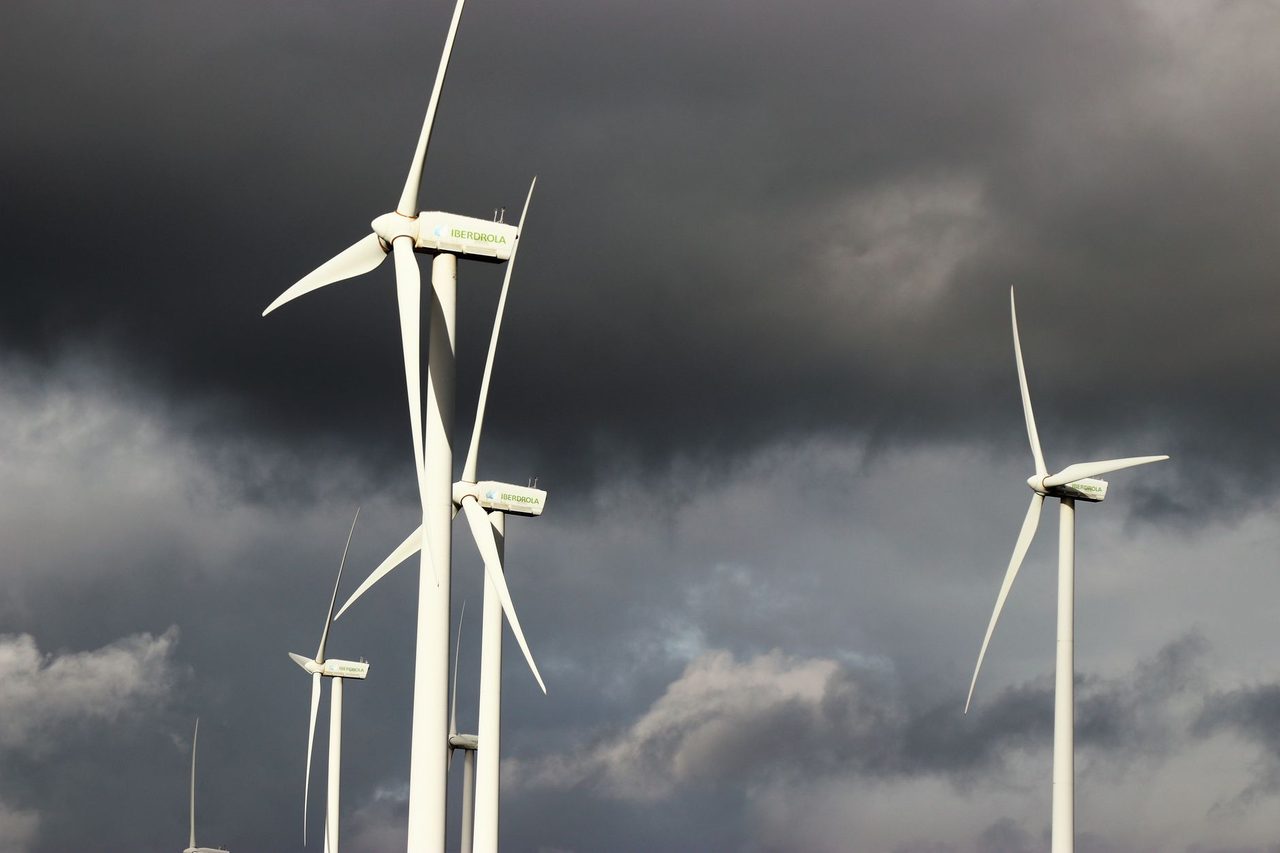
Photo: Expect Best on Pexels
India’s renewable-energy market in 2026 is no longer constrained only by module prices, transmission access, or tariff pressure. A growing operational bottleneck is fragmented enterprise data. Many developers, IPPs, C&I operators, utilities and hybrid project owners still run project execution in spreadsheets, accounting in standalone finance systems, procurement in email chains, and O&M controls in separate tools. The result is predictable: cost leakage, weak contract visibility, delayed claims, poor spares planning, audit friction and slower lender reporting.
For this reason, ERP for Indian renewable energy is moving from a back-office upgrade to a core control layer. The strongest business case is not “digitisation” in the abstract. It is tighter capex control during EPC, better working-capital discipline after commissioning, faster closure of monthly books, improved statutory compliance, and cleaner asset-level reporting across solar, wind, BESS, open-access and captive portfolios.
This article focuses on a topic distinct from APM, CMMS, analytics lakehouses and cybersecurity: how enterprise resource planning should be designed for Indian energy companies in 2026, what modules matter most, what ROI to expect, and how to roll it out without disrupting projects already under construction.
Why ERP matters now for Indian power and renewables
The Indian renewable business model has become structurally more complex.
- Utility-scale solar and wind assets are often spread across multiple SPVs
- C&I portfolios combine captive, group captive and third-party sale structures
- Hybrid projects must coordinate generation, storage dispatch and multiple contracts
- Transmission, land, evacuation and payment-security risks require tighter milestone tracking
- GST, TDS, MSME payment obligations, Companies Act controls and lender covenants create heavier compliance workloads
- ALMM changes, domestic-content conditions in some tenders, customs exposure and vendor concentration raise procurement complexity
- BESS projects add serial-number tracking, warranty governance and augmentation planning
At the same time, tariffs remain competitive. In many utility-scale tenders, every paise matters. For C&I consumers, open-access economics depend on accurately managing energy charges, wheeling, banking where applicable, cross-subsidy surcharge, additional surcharge, demand charges and losses. When margins are tight, administrative inefficiency becomes a financial issue.
An effective ERP gives management one version of truth across project development, EPC execution, inventory, contracts, finance, tax, fixed assets, O&M support and portfolio reporting. It also creates the control environment that lenders, auditors and strategic investors increasingly expect.
Where fragmented systems are costing money
In Growthifye’s market observations, the most common value leakage in Indian renewable organisations comes from process gaps rather than a single bad software choice.
Typical pain points include:
- EPC bill certification not linked to approved BOQs and purchase orders
- Vendor advances not reconciled cleanly against material receipts and work completion
- Contract amendments stored in email but not reflected in commercial baselines
- Spare parts issued from stores without asset or work-order linkage
- GST input tax credits delayed due to document mismatches
- Intercompany transactions across SPVs requiring manual journal entries every month
- Land lease, O&M and AMC payment obligations tracked outside the finance core
- Insurance claims, liquidated damages and warranty recoveries not followed through systematically
- Capitalisation of CWIP delayed by incomplete commissioning data
- Lender reporting packs compiled manually from finance, engineering and site teams
For a 500 MW to 1 GW portfolio, these issues can easily translate into 0.5% to 1.5% capex leakage during build-out and 1% to 3% avoidable overhead or working-capital drag during operations. On a Rs 2,500 crore to Rs 4,500 crore development pipeline, this is material. Even for a 50 MW to 100 MW C&I platform, delayed invoicing, tax mismatch and poor spare visibility can erode EBITDA and strain DSCR.
What an energy ERP should cover in 2026
An ERP for Indian renewables should not be treated as generic accounting software with a few custom forms. It should be designed around the full project-to-operations lifecycle.
Core process areas usually include:
- Project budgeting by site, package, contractor and cost code
- Procurement, RFQ, bid comparison, purchase order and vendor evaluation
- Inventory and warehouse management for modules, inverters, cables, structures, transformers and spares
- Contract management for EPC, BOS, O&M, land, transmission, logistics and service vendors
- Finance and accounting, including AP, AR, treasury, bank reconciliation and multi-entity consolidation
- Tax and statutory compliance, especially GST, TDS and e-invoicing workflows where relevant
- CWIP tracking, commissioning and fixed-asset capitalisation
- Lease and land payment administration
- Warranty, claims and retention-money tracking
- Budget versus actual reporting at package, site and portfolio level
- Board, investor and lender MIS
For operators with service teams or distributed assets, ERP should also connect with ERP & asset management systems so that procurement, stores, service contracts and maintenance spending align at asset level.
Integration points matter as much as core modules. In 2026, a practical target architecture often includes:
- ERP as the system of record for commercial and financial transactions
- SCADA or historian as source of operational data
- EAM/CMMS for work orders and maintenance planning where maintenance complexity is high
- Forecasting or scheduling tools for grid-facing revenue processes
- Document management for PPAs, drawings, guarantees, test certificates and statutory records
- Data & analytics platforms for portfolio dashboards, PPA analytics, cost intelligence and management KPIs
This architecture avoids overloading the ERP with time-series functions it is not built to handle while ensuring commercial control remains centralised.
ROI: where the numbers come from
Decision-makers often ask whether ERP delivers measurable returns beyond governance. In Indian renewables, the answer is yes, if scope is disciplined and process ownership is clear.
Indicative value drivers in 2026 include:
- 2% to 5% reduction in procurement cycle time through standardised approval flows and better bid comparison
- 0.5% to 1.5% capex savings from tighter package-level cost control and reduced duplicate or off-contract purchases
- 10 to 20 day improvement in month-end close for multi-SPV platforms with automated consolidation and accrual discipline
- 15% to 30% reduction in manual finance and project-control effort for reporting and reconciliations
- 5% to 12% reduction in inventory carrying costs with better visibility of site stock and central spares
- Faster GST credit realisation and fewer mismatches, which directly improve working capital
- Improved recovery of retention amounts, liquidated damages and warranty claims that otherwise remain uncollected
For a 300 MW solar-wind portfolio under construction with blended capex around Rs 3.5 crore to Rs 5.5 crore per MW depending on technology mix and evacuation scope, even a 0.75% control improvement can create savings of several crores. For an operating C&I portfolio, if ERP-enabled billing discipline, collections, spare controls and statutory compliance together improve EBITDA by just 0.5% to 1%, payback can occur within 12 to 24 months.
Software and implementation costs vary widely by user count, number of entities, workflow complexity and integration depth. In the Indian mid-market, a focused rollout for a growing developer may cost far less than the hidden annual cost of fragmented systems, external reconciliations and project overruns.
Key design choices for developers, C&I operators and utilities
The right ERP model differs by business type.
For renewable developers and IPPs:
- Prioritise project accounting, contract governance, CWIP, multi-SPV consolidation and lender MIS
- Track cost codes from development through commissioning
- Build controls for milestone-based vendor billing, bank guarantees, retention and claim management
- Ensure fixed-asset registers align with plant packages and tax depreciation requirements
For C&I energy users and captive operators:
- Align ERP with energy billing, internal cost allocation and open-access settlement workflows
- Capture energy sourcing contracts, wheeling and banking assumptions, and plant-wise landed power economics
- Integrate with procurement and maintenance for rooftop, captive solar, diesel-offset and storage assets
For utilities and DISCOM-linked renewable entities:
- Emphasise procurement governance, statutory audit trails, inventory discipline and project-package controls
- Design integration carefully with existing billing, outage, HR and regulatory systems
- Build role-based workflows to support large approval hierarchies without creating processing delays
For all segments, cloud deployment is increasingly viable in 2026, provided architecture, access control and residency requirements are reviewed properly. A Cloud migration approach can lower infrastructure overhead and improve scalability across geographically dispersed sites, but it must be aligned with cybersecurity and business continuity policies.
Rollout roadmap: what actually works in India
The biggest ERP failures in energy come from trying to do everything at once or copying a manufacturing template into a project-led business. A pragmatic rollout usually works better.
A proven sequence is:
- Process diagnostic: map current workflows, approval bottlenecks, data objects, statutory needs and reporting pain points
- Future-state design: define cost codes, project structures, chart of accounts, vendor master standards, tax logic and approval matrices
- Phase 1 go-live: finance, procurement, inventory, project accounting and basic reporting
- Phase 2: contract lifecycle controls, CWIP/fixed assets, treasury, claims, land-lease administration and advanced MIS
- Phase 3: tighter integration with EAM/CMMS, document systems, analytics and field mobility
Implementation success factors include:
- Strong master-data governance from day one
- Clear ownership between finance, projects, procurement, stores and IT
- Minimal customisation unless regulation or business model requires it
- Site-level training in Hindi and regional languages where needed for stores and project teams
- Early reporting prototypes so leadership sees value before final go-live
- Parallel-run planning for active projects where commercial commitments are already live
For many organisations, the highest-value advisory input is not vendor selection alone but IT strategy & roadmaps that sequence ERP against parallel initiatives such as data platforms, cybersecurity upgrades, PMO strengthening and portfolio expansion.
Risks to manage before signing the contract
ERP programmes fail for familiar reasons, and energy companies should address them upfront.
Major risks include:
- Poor data quality in vendor, material and project masters
- Excessive customisation that increases cost and weakens upgradeability
- No consensus on approval authority and delegation of power
- Underestimating integration effort with legacy finance, SCADA or HR systems
- Treating ERP as an IT project instead of a business-transformation programme
- Weak post-go-live support during quarter-end, year-end and statutory filing periods
Cyber risk should also not be ignored. Even though ERP is an enterprise platform rather than an OT control system, it holds commercially sensitive information on vendors, PPAs, banking, tax, payroll, contracts and asset values. Access management, audit logging, backup discipline, patching and segregation of duties should be built in from the start. This is where Cybersecurity planning intersects directly with business control.
What lenders and investors increasingly want to see
By 2026, lenders, private capital providers and strategic investors are paying closer attention to digital controllership. They do not only assess IRR, PPA quality and CUF assumptions. They also look at whether the operating platform can support disciplined growth.
A mature ERP environment helps demonstrate:
- Reliable project cost tracking and variation management
- Timely and auditable drawdown support documentation
- Cleaner fixed-asset records and depreciation schedules
- Better covenant reporting and DSRA visibility
- Faster audit closure and fewer qualification risks
- Portfolio-level transparency across SPVs and asset classes
For portfolios pursuing refinancing, platform sale, JV entry or rapid capacity expansion, this maturity can reduce diligence friction and improve management credibility. It may not change tariff outcomes, but it can absolutely influence perceived execution risk.
Final view for 2026
In Indian renewables, ERP is no longer just about bookkeeping. It is the transactional backbone that links development, EPC, procurement, tax, treasury, inventory, O&M support and lender reporting. The winning approach in 2026 is not the most feature-heavy implementation. It is the one that creates control over cash, contracts, capex and compliance while staying simple enough for business teams to actually use.
For developers scaling from tens of MW to multi-state portfolios, for C&I operators balancing energy economics with compliance, and for utilities modernising project governance, a well-scoped ERP can generate measurable ROI within one to two budget cycles. The priority is to start with process design, not software demos, and to align the rollout with business milestones already in motion.
If your organisation is evaluating ERP architecture, rollout sequencing, integration with existing energy systems, or an operating-model redesign, contact Growthifye’s advisory desk. We help energy companies turn enterprise systems into measurable commercial control.
Explore Growthifye's related capabilities
This analysis connects directly to our advisory practice: IT strategy & roadmaps · ERP & asset management systems · Data & analytics platforms · Cloud migration.
About the author

Chief Executive Officer, Growthifye — With over 23 years in management consulting, Sudarshan has taken businesses from concept to scale — building and scaling new-age digital and energy businesses.
- 23+ years in management consulting
- EY alumnus
- Led large-scale BESS programmes, capital raises and advisory mandates
Want this analysis applied to your project?
Talk to our team