Energy CMMS for India Renewables 2026: Work Orders, Spares, SLAs and ROI
By Sudarshan Karweer · sudarshan@growthifye.com · +91 84510 99371 (Call / WhatsApp) · 2026-09-12

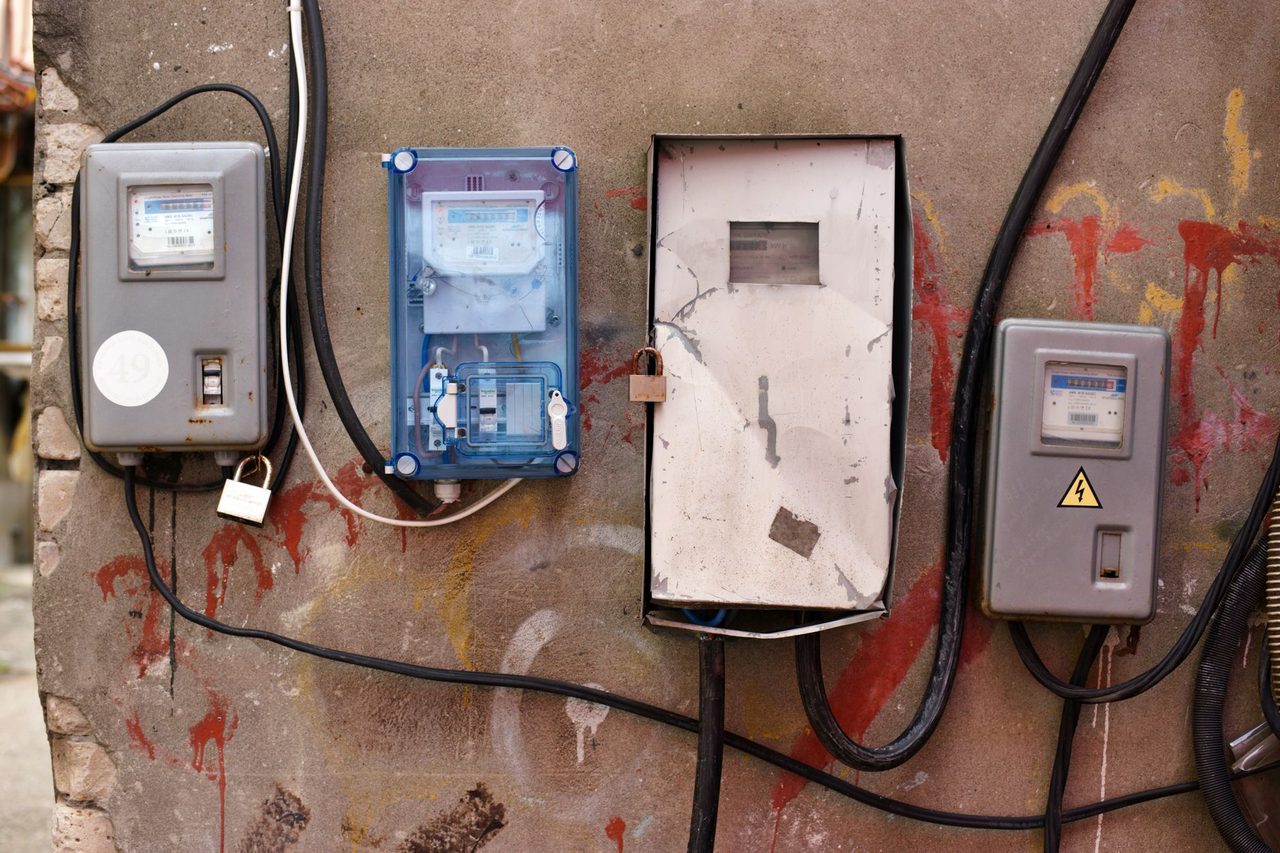
Photo: ThisIsEngineering on Pexels
India’s utility-scale and C&I renewable portfolios are now large enough that maintenance execution, not just plant design or tariff discovery, is deciding project IRRs. In 2026, many owners still have a fragmented operating model: alarms in SCADA, technician updates on WhatsApp, checklists in Excel, inventory in ERP or on paper, and SLA evidence assembled manually for investors, offtakers or lenders. That model does not scale.
A computerised maintenance management system, or CMMS, is becoming the practical digital layer between field operations and enterprise controls for solar, wind, hybrid and storage assets. It is narrower than a full ERP, more execution-centric than a generic ticketing tool, and often faster to deploy than a broad transformation programme. For Indian renewable operators dealing with geographically distributed sites, inverter and turbine OEM dependencies, thin O&M margins and strict availability commitments, CMMS is now a board-level reliability tool rather than just a maintenance app.
This article looks at the India 2026 case for CMMS in energy: where it fits, what use cases matter most, how ROI is actually realised, what a sensible rollout looks like, and what buyers should demand from vendors.
Why CMMS matters now in India’s renewable operating model
The economics are straightforward. Tariffs in Indian renewable projects remain tight, especially in older utility-scale bids. O&M teams are expected to maintain availability, respond faster, manage spares with less working capital, and produce audit-ready records across growing portfolios. At the same time, operating complexity has increased:
- Solar portfolios now span central inverters, string inverters, trackers, pooling substations and increasingly co-located storage
- Wind fleets often include mixed turbine platforms, ageing assets and harder-to-source spares
- Hybrid and RTC-linked projects have tighter dispatch expectations and less room for avoidable outages
- C&I open-access projects face stronger customer scrutiny on uptime, billing support and response SLAs
- Lenders and investors increasingly ask for evidence of maintenance discipline, not just top-level PR and CUF summaries
A 100 MW to 500 MW portfolio can easily generate hundreds of preventive tasks each month and dozens of corrective interventions across modules, inverters, HT equipment, evacuation infrastructure and balance-of-plant assets. When these are handled through email chains and spreadsheets, four problems appear quickly:
- delayed work-order closure
- weak root-cause history
- poor spares visibility
- unreliable reporting for management and counterparties
CMMS addresses these gaps by structuring the maintenance process end to end: asset registry, preventive plans, work orders, technician assignments, checklists, permits, spares issue, downtime coding, closure evidence and KPI reporting.
Where CMMS sits in the IT stack for energy companies
Many Indian energy firms ask whether CMMS is redundant if they already run ERP or EAM. In practice, the answer depends on maturity.
A full enterprise asset management platform can cover similar functions, but many companies have not configured it deeply enough for field execution. ERP systems often manage procurement, finance and stores reasonably well but are weak in mobile-first maintenance workflows. Generic field-service apps may help dispatch teams but do not provide asset hierarchy, maintenance plans or failure analytics that renewable O&M teams need.
CMMS fits well when the business needs:
- faster field adoption than a large ERP programme can deliver
- mobile work-order execution in low-connectivity locations
- standard maintenance templates across many sites
- structured breakdown coding and repeat-failure analysis
- integration with ERP for inventory and finance, without forcing all users into ERP screens
For many Growthifye clients, the practical architecture is a layered one:
- SCADA, historians and condition data provide operational signals
- CMMS manages maintenance planning and work execution
- ERP handles procurement, accounts payable, inventory valuation and financial control
- BI tools consolidate SLA, downtime, spares and cost analytics for portfolio management
This is why implementation should be led as part of a broader IT strategy & roadmaps exercise rather than as a standalone software purchase.
The highest-value use cases for solar, wind, hybrid and storage
Not every CMMS feature matters equally. In Indian renewables, the strongest value usually comes from six use cases.
1) Preventive maintenance compliance
A CMMS automates PM schedules by asset class, capacity block, season and OEM recommendation. For a 250 MW solar portfolio, that may include inverter PM, transformer inspection, breaker testing, tracker checks, thermography follow-up, module cleaning-linked tasks and weather-season readiness tasks.
The benefit is not just better planning. It is evidence. If an insurer, lender or offtaker questions outage causation or maintenance diligence, timestamped records matter.
2) Breakdown response and mean time to repair
Corrective work orders routed through mobile workflows help dispatch engineers faster, escalate based on severity and track actual response versus SLA. On sites where access roads, permits or OEM coordination delay restoration, even simple workflow discipline can shave hours from MTTR.
For C&I captive or third-party open-access assets, cutting outage duration has direct customer relationship value, especially where diesel backup costs for the buyer are high.
3) Spares planning and stock control
A recurring issue in India is overstocking low-rotation parts while still missing critical failure items. CMMS linked with ERP & asset management systems can classify critical spares, connect consumption to failure history and reduce emergency buying.
Typical examples include:
- inverter cards and fans
- string combiner protection devices
- tracker motors and controllers
- sensors and communication modules
- breaker auxiliaries
- wind pitch and yaw components for specific models
On a multi-site portfolio, better stocking can reduce both downtime risk and idle inventory carrying cost.
4) Contractor and OEM service governance
Many operators depend on AMC vendors, module cleaners, security agencies, line patrol teams or OEM service staff. CMMS creates traceability on who attended, what was done, whether required parts were used and whether closure met contractual standards.
This becomes especially useful in post-warranty environments, where owners need stronger performance management of external service partners.
5) Failure analytics and repeat-defect reduction
Without structured failure codes, operators cannot distinguish between nuisance alarms and economically material repeat failures. CMMS allows trend analysis by OEM, site, component, weather season, shift and intervention type.
In 2026, this matters because many portfolios now have enough operating history to support evidence-based reliability improvement rather than reactive firefighting.
6) Lender, insurer and management reporting
Quarterly asset reviews are still too often assembled manually. CMMS can generate consistent reports on:
- PM compliance
- open critical work orders
- recurring failures
- spare consumption
- response and closure times
- outage categories and lost-generation linkage
- contractor SLA adherence
For project-financed assets, better operational evidence can improve confidence in base-case generation assumptions and reserve planning.
India 2026 ROI: what numbers actually move
The ROI case for CMMS should not be built on vague “digital transformation” language. Buyers should model four measurable levers.
1) Downtime reduction
Assume a 100 MW AC solar project with a CUF around 24% in a good irradiance state. Annual generation is roughly 210 million to 220 million kWh. If maintenance process discipline reduces avoidable downtime by only 0.5% of annual generation, recovered energy could be roughly 1.0 to 1.1 million kWh.
At a realised tariff or value of Rs 3.0 to Rs 4.5 per kWh depending on PPA or open-access structure, that is about Rs 30 lakh to Rs 50 lakh per year in recovered value.
For wind or hybrid assets, the figure can be higher where outage timing overlaps high-wind or high-price periods.
2) Lower maintenance overhead and rework
If site engineers spend less time on manual reporting, duplicated data entry and unplanned trips due to missing parts or poor task preparation, operator productivity improves. Even in a modest portfolio, saving 2 to 4 engineer-hours per site per week adds up. Across 20 sites, that can mean 2,000 to 4,000 hours a year of redeployed capacity.
3) Working-capital optimisation in spares
A portfolio carrying Rs 3 crore to Rs 10 crore in maintenance inventory can often reduce non-critical excess stock by 10% to 20% once consumption patterns and criticality are visible. Even a 10% improvement on Rs 5 crore means Rs 50 lakh of inventory rationalisation, aside from lower write-offs for obsolete parts.
4) SLA and claims support
Where O&M contracts include performance deductions, response clauses or OEM claim windows, better records translate to real money. Missing evidence can mean lost recovery opportunities. Clean work-order history supports warranty claims, back-charge discussions and contractor scorecards.
In practice, a mid-sized renewable portfolio may spend from roughly Rs 20 lakh to Rs 1.2 crore on CMMS software, implementation, integration and mobility, depending on user count, complexity and whether it is bundled into wider Data & analytics platforms or ERP modernisation. Payback inside 12 to 24 months is realistic if downtime and spares are tackled seriously.
What buyers should specify before selecting a platform
The most common mistake is buying a generic maintenance tool without defining the operating model. In RFPs and vendor demos, Indian energy companies should insist on the following.
- asset hierarchy down to maintainable component level
- offline-capable mobile app for remote sites
- configurable preventive maintenance templates by asset class and OEM
- permit-to-work and safety checklist support where required
- time-stamped photo, video or signature evidence for closure
- criticality-based prioritisation of incidents and work orders
- failure codes and root-cause taxonomy relevant to solar, wind, BESS and substation equipment
- integration APIs with SCADA alerts, ERP, stores and BI tools
- spare reservation, issue and consumption capture
- multilingual usability if field teams require it
- audit logs and role-based access controls
- dashboards for availability, PM compliance, MTTR, repeated failures and contractor performance
Cybersecurity and hosting choices also matter. If mobile access, cloud hosting and third-party vendor connectivity are involved, the platform should align with internal Cybersecurity requirements, identity controls and data segregation policies. Energy companies should not create a field app convenience layer that opens new operational risk.
Rollout roadmap: how to avoid a failed CMMS programme
The technology is rarely the reason these projects fail. Poor master data and weak process ownership are.
A practical rollout in India usually follows five stages.
Stage 1: Scope and asset-register cleanup
Start with one asset class and a bounded portfolio, for example 300 MW of solar across 8 to 12 sites. Clean the asset hierarchy, naming conventions, location codes, serial numbers and maintainable units. If this step is rushed, reporting quality will collapse later.
Stage 2: Process design
Define how breakdowns are logged, approved, dispatched, executed, escalated and closed. Standardise PM frequencies, checklists, permit rules, severity definitions and downtime codes. Decide what must happen in CMMS versus ERP.
Stage 3: Integration and mobility
Connect user authentication, inventory references, vendor masters and core reporting. For selected alarms, decide whether SCADA events should auto-create notifications or simply assist triage. Do not automate every alarm into a work order; that creates noise.
Stage 4: Pilot with hard KPIs
Run a 10- to 12-week pilot with baseline metrics:
- PM compliance
- n- mean time to acknowledge
- mean time to repair
- repeat failure rate
- spares stock-out incidents
- open critical work orders older than SLA
Compare before and after at site level. Adjust workflows based on technician feedback, not just head-office assumptions.
Stage 5: Portfolio scale-up and governance
Once stable, expand by asset type and region. Establish monthly governance on master data quality, overdue work orders, exception reports and adoption. This is where Program governance matters. Without it, sites revert to old habits while headquarters assumes the system is working.
Strategic implications for lenders, utilities and policymakers
CMMS is not only an owner-operator tool. It also affects market confidence.
For lenders, stronger maintenance traceability improves operational transparency, especially in portfolios with refinancing plans, ageing equipment or multiple O&M counterparties.
For C&I buyers, CMMS-backed service reporting can improve trust in uptime commitments, outage communication and invoice support where availability guarantees exist.
For utilities and policymakers, better maintenance discipline in renewable fleets supports grid reliability indirectly. As RE penetration grows and hybrid plants become more dispatch-sensitive, operational outages become more consequential than before.
For developers expanding into storage, round-the-clock supply and merchant-linked structures, maintenance execution will become even more financial in nature. A missed component replacement or delayed breaker intervention can affect not just generation but dispatch windows, imbalance exposure and customer penalties.
That is why CMMS should be seen as a reliability control system for the business, not just a digitised logbook.
The bottom line for India 2026
If your renewable operations still depend on spreadsheets, messaging groups and retrospective reporting, the cost is already visible somewhere: avoidable downtime, excess inventory, weak SLA evidence, missed warranty recovery or management blind spots.
A well-implemented CMMS does not need to be a massive transformation to create value. But it does need disciplined asset data, integration with finance and stores, field-friendly workflows and executive governance. In India’s current market, the winners will be operators that treat maintenance data as a financial asset and a risk-control layer.
If you are evaluating a CMMS business case, target architecture or implementation roadmap for solar, wind, hybrid or storage assets, contact Growthifye’s advisory desk. We help energy companies define the operating model, technology fit and rollout plan with practical ROI and execution focus.
Explore Growthifye's related capabilities
This analysis connects directly to our advisory practice: IT strategy & roadmaps · ERP & asset management systems · Data & analytics platforms · Cloud migration.
About the author

Chief Executive Officer, Growthifye — With over 23 years in management consulting, Sudarshan has taken businesses from concept to scale — building and scaling new-age digital and energy businesses.
- 23+ years in management consulting
- EY alumnus
- Led large-scale BESS programmes, capital raises and advisory mandates
Want this analysis applied to your project?
Talk to our team