Energy Asset Performance Management Software in India 2026: APM, ROI and Rollout
By Sudarshan Karweer · sudarshan@growthifye.com · +91 84510 99371 (Call / WhatsApp) · 2026-09-09
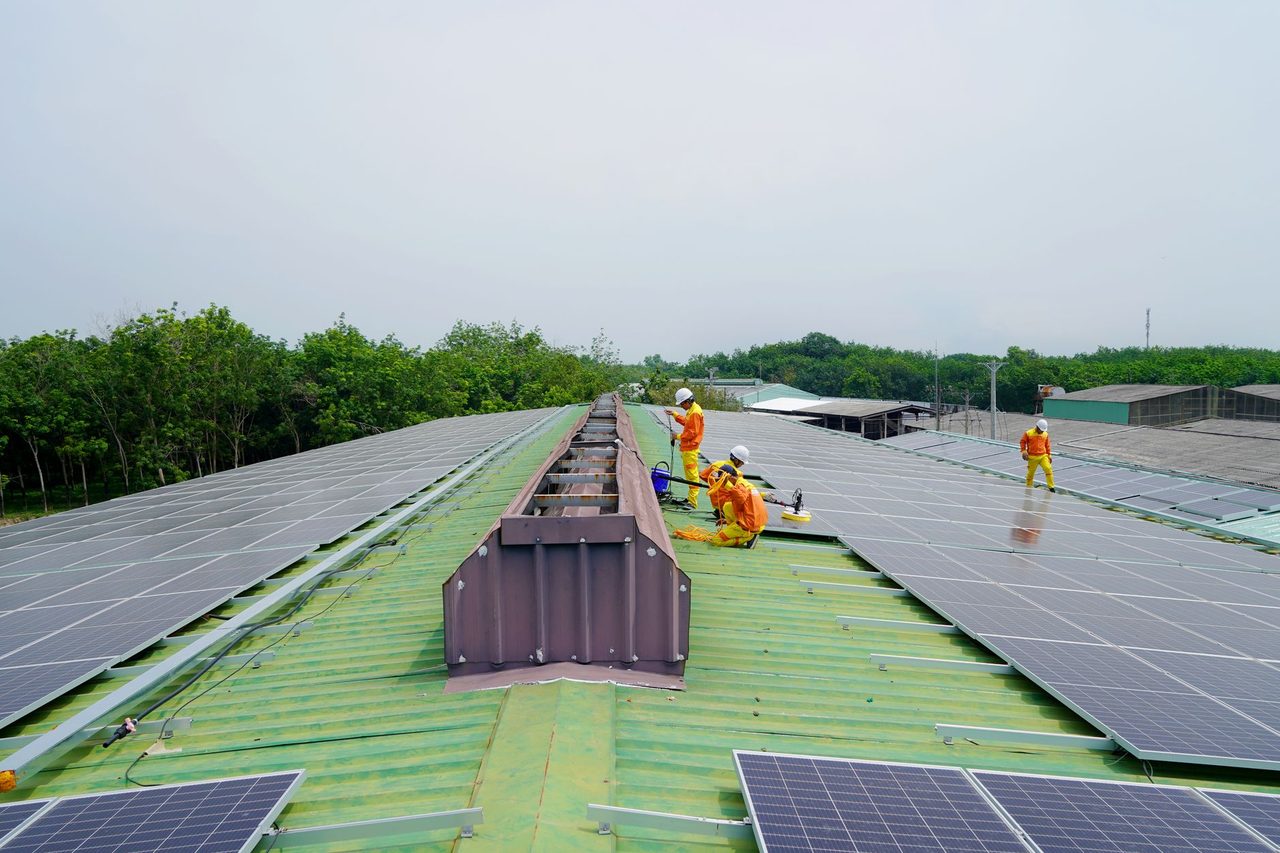
Photo: Trinh Trần on Pexels
India’s renewable and power sector has invested heavily in generation assets, evacuation systems, meters, substations, SCADA, ERP and O&M processes. Yet many portfolios still struggle with the same operating questions in 2026: which assets are degrading faster than expected, where are preventable failures forming, how much generation is being lost before alarms become actionable, and how can owners defend technical assumptions before lenders, insurers and offtakers?
This is where energy Asset Performance Management, or APM, is now emerging as a distinct software and operating layer for Indian energy companies. APM is not the same as SCADA historian infrastructure, an ERP/EAM suite, a digital twin programme or a generic analytics stack. It sits between raw operational data and maintenance or commercial decision-making, combining condition monitoring, failure-risk models, work-priority logic and asset-health scoring.
For Indian renewable developers, utilities, independent power producers and large C&I power consumers, APM has moved from “pilot technology” to an operations discipline with clear economics. On utility-scale solar, wind, hybrid, BESS and balance-of-plant assets, the business case is increasingly measurable in basis points of availability, avoided forced outages, better spare-parts planning, reduced emergency mobilisation and improved warranty or EPC claim recovery. For lenders and infrastructure investors, APM also improves confidence in operational controls and downside risk management.
This article explains what APM means in the Indian energy context in 2026, where it differs from adjacent platforms, how the ROI is built, what system architecture works, and how to roll it out without creating another dashboard nobody uses.
Why APM matters now in India’s 2026 energy market
Three structural shifts are pushing APM adoption in India.
First, the fleet is maturing. Many solar and wind portfolios commissioned between 2016 and 2022 are now old enough for meaningful component ageing patterns to appear. Inverters, trackers, switchgear, transformers, string combiner boxes, WTG subassemblies, protection systems and auxiliary equipment are producing enough operational history to support failure-pattern analysis rather than reactive maintenance alone.
Second, tariff pressure is real. Utility-scale solar discovered tariffs remain tight, often near levels where even a modest generation loss or a few days of avoidable outage can materially impact DSCR. In open-access and C&I structures, the commercial stakes are equally sharp because poor asset performance can disrupt savings against grid tariffs that commonly range around Rs 7 to Rs 11 per kWh for many industrial and commercial users, with higher effective costs in some states and time blocks. Every lost unit from poor maintenance is not just technical underperformance; it can erode contracted savings, banking assumptions and settlement outcomes.
Third, hybridisation and storage are increasing system complexity. Projects combining solar, wind and BESS need more than asset alarms. They need cross-asset performance logic: whether battery HVAC issues are raising degradation risk, whether inverter clipping is recurring under specific dispatch conditions, whether transformer hot-spot behaviour correlates with seasonal loading, and whether repeated curtailment masks a parallel equipment-health problem.
In this environment, traditional preventive maintenance calendars are too blunt. APM helps operators shift to risk-based and condition-based decision-making.
What energy APM actually includes
In practical terms, an energy APM platform typically combines six capabilities.
- Asset hierarchy and criticality mapping
- Condition monitoring from OT and inspection data
- Asset health scoring and degradation indicators
- Failure mode and risk models for critical equipment
- Work recommendation or maintenance prioritisation logic
- Performance and reliability analytics tied to business impact
For Indian renewables, the highest-value asset classes commonly include:
- Central or string inverters
- Power transformers and auxiliary transformers
- HT switchgear and breakers
- PV trackers and actuator systems
- WTG gearbox, generator, pitch and yaw systems
- Protection relays and substation assets
- Battery racks, PCS, thermal systems and fire-safety components
- Meteorological stations and revenue metering chains where data quality affects settlements
An APM stack ingests signals from SCADA, DCS, historians, vibration systems, thermal cameras, IV curve tests, drone inspections, weather feeds, CMMS/EAM work orders, spare-parts consumption, OEM service records and manual field observations. It then turns that into prioritised operating insight rather than just more data.
A simple example: a solar portfolio may show recurring inverter trips in summer afternoons. SCADA can tell you that trips happened. ERP/EAM can record repair tasks. APM adds the missing operational intelligence by linking trip patterns to internal temperature excursions, dust-driven derating, fan degradation, site ambient conditions, prior maintenance history and spare lead times. It can then rank which units need immediate intervention before peak generation blocks are lost.
India-specific use cases with the strongest ROI
Not every APM use case delivers equal value. In India, the best returns typically come from use cases tied to generation revenue, outage risk and heavy replacement costs.
Solar portfolios
For utility-scale solar, the most bankable APM use cases in 2026 are:
- Inverter failure prediction and derating analysis
- Tracker underperformance clustering by row, zone or terrain profile
- Transformer thermal stress and oil-condition alerts
- Repetitive string loss pattern detection
- DC-side anomaly detection from combiner, fuse and connector behaviour
- Soiling and cleaning optimisation when linked with yield and labour economics
In many portfolios, just 0.5% to 1.5% generation recovery can justify an APM programme if tariffs or avoided energy costs are meaningful. For a 100 MW solar plant generating roughly 180 to 210 million units annually depending on irradiation and losses, a 1% recovery may equate to 1.8 to 2.1 million additional units. At realised value of Rs 2.8 to Rs 4.5 per kWh depending on PPA, OA structure or internal C&I substitution value, that is roughly Rs 50 lakh to Rs 95 lakh per year before secondary benefits such as lower emergency maintenance and stronger availability outcomes.
Wind portfolios
For wind, APM often starts with gearbox, generator bearing, pitch system and converter risk monitoring. Because crane mobilisation, heavy component replacement and outage windows are expensive, even a small reduction in catastrophic failures produces outsized returns.
Typical value levers include:
- Earlier detection of bearing wear or lubrication issues
- Reduced false maintenance visits through better fault discrimination
- Improved spare stocking for high-failure subassemblies
- Better planning around low-wind windows
- Evidence for OEM discussions on repeated defects or warranty claims
Avoiding one major unplanned component failure in a mid-size wind fleet can offset a large share of annual software and implementation cost.
Substations, evacuation and utility assets
For utilities and private network operators, APM can focus on transformers, breakers, relays, capacitor banks and feeder performance. In India, where outage reliability and compliance expectations are tightening, transformer health monitoring and breaker maintenance optimisation are often the fastest route to value.
A single critical transformer failure can create direct repair or replacement cost, generation curtailment, SLA exposure and regulatory scrutiny. APM helps move from periodic manual review to continuous risk scoring using load, temperature, dissolved gas trends where available, switching behaviour and maintenance history.
Battery energy storage systems
As BESS scales in India through SECI, RTC, ancillary-service and C&I applications, APM is becoming necessary rather than optional. The concern is not only outage. It is cell degradation, thermal runaway risk, imbalance, HVAC dependency, auxiliary consumption and usable capacity drift.
Battery APM supports:
- State-of-health trend analysis
- Rack-level anomaly detection
- Thermal risk alerts
- Charge-discharge pattern diagnostics
- Capacity fade forecasting tied to dispatch strategy
For BESS owners, these insights affect both safety and revenue because dispatch performance, augmentation timing and warranty management all depend on high-quality operating evidence.
Building the ROI case: what boards and lenders want to see
In India, software business cases fail when they rely on generic “digital transformation” language. APM approval usually needs a site-by-site or fleet-wide financial model.
The strongest ROI framework uses five buckets.
- Recovered generation or avoided curtailment from faster issue detection
- Reduced forced outage hours and lower MTTR
- Lower major component failure incidence or better life extension
- Optimised spares and service logistics
- Better claim recovery from EPC, OEM or insurer due to stronger evidence trails
A realistic 2026 APM programme for a 500 MW renewable portfolio may be assessed against metrics such as:
- 0.4% to 1.2% generation uplift in priority assets or sites
- 10% to 25% reduction in forced outage hours for monitored equipment classes
- 5% to 15% reduction in emergency maintenance spend
- 10% to 20% improvement in maintenance planning efficiency
- 15% to 30% faster root-cause identification for recurring failures
Not every portfolio will achieve these levels immediately. Data quality, OEM access, site practices and team adoption matter. But when the use cases are tightly scoped, payback periods of 9 to 24 months are feasible, especially in fleets with recurring inverter, transformer or wind-turbine reliability issues.
Lenders and investors also care about softer but important outcomes:
- Better auditability of operating decisions
- Stronger downside-risk management for debt servicing
- Reduced dependence on a few site individuals for troubleshooting
- More credible life-cycle cost assumptions for refinancing or expansion
This is why APM increasingly belongs in enterprise-level IT strategy & roadmaps rather than as a standalone plant pilot.
Architecture and integration: what actually works
The most common implementation mistake is buying an APM tool before fixing data foundations and process ownership.
A practical India-ready architecture looks like this:
- OT data from SCADA, PLCs, relays, BMS, meters and historian systems
- Inspection and test data from thermography, vibration, IV curve tests, oil analysis and drones
- Asset master and work-order context from ERP & asset management systems
- Weather, dispatch and commercial context where relevant
- A central model layer for asset health, anomalies and risk scoring
- Workflow integration into maintenance planning and field execution
- Role-based dashboards for site teams, fleet O&M, reliability engineers, management and lenders where applicable
Cloud is increasingly preferred for analytics scalability, especially for multi-site owners, but architecture must align with cybersecurity rules, network segmentation and critical-infrastructure controls. For many operators, the right path is selective Cloud migration with on-premise or edge buffering for OT resilience.
Data governance is decisive. Before any AI or predictive model is deployed, the company should standardise:
- Asset naming conventions across sites and OEMs
- Event and alarm taxonomies
- Failure-code structures in maintenance records
- Timestamp synchronisation and data retention rules
- Ownership for data validation and model feedback loops
Without these basics, APM quickly becomes a noisy alerting engine.
Rollout roadmap for Indian energy companies
For most companies, the right rollout is phased, not enterprise-wide on day one.
Phase 1: Value discovery
Start with 2 to 4 high-value equipment classes across a limited portfolio. Use historical incidents to identify where hidden losses have been significant.
Typical entry points:
- Solar inverter fleets with repeated summer trips
- Wind turbines with recurring drivetrain alarms
- Transformer populations with ageing or loading stress
- BESS assets with thermal and balancing concerns
The target is not dashboard creation. It is a quantified baseline: downtime hours, failure frequency, energy loss, spare delays and maintenance cost.
Phase 2: Production pilot
Run live monitoring on selected sites for one operating cycle, often 3 to 6 months depending on asset type. During this period, tune alarm thresholds, test health-score logic and integrate maintenance workflows.
Success metrics should include:
- Number of actionable alerts vs false positives
- Hours from anomaly detection to field action
- Verified savings or avoided losses
- User adoption by reliability and site teams
Phase 3: Fleet standardisation
Once the use cases are proven, scale templates across sites and OEM variants. This is where Program governance matters. Decisions around model ownership, cyber architecture, support SLAs, OEM data interfaces and change management need central control.
Phase 4: Advanced optimisation
Only after core APM is stable should companies add more sophisticated analytics, including degradation forecasting, spare optimisation and portfolio benchmarking.
Key risks and how to avoid them
Indian energy companies should watch for five recurring pitfalls.
- Treating APM as only a data science project instead of an O&M operating model
- Ignoring maintenance master-data quality
- Overloading teams with too many use cases at launch
- Failing to define accountability for acting on alerts
- Underestimating OT connectivity and Cybersecurity requirements
The last point is especially important. APM expands the digital surface area between plant systems and enterprise users. Identity controls, remote-access rules, network zoning, patch discipline and vendor-access governance should be designed from the start, not after rollout.
Another common issue is misalignment with OEM contracts and warranties. If access to machine-level data, event logs or diagnostic codes is contractually limited, owners may not capture the full value of APM. New procurement and O&M agreements should therefore address data rights explicitly.
What decision-makers should do in 2026
If you are a renewable owner, utility, lender or large C&I operator evaluating energy software priorities, APM deserves a place on the shortlist when:
- Your portfolio is large enough that recurring technical losses are material
- You have repeated forced outages in the same equipment classes
- Site teams are overloaded by alarms without prioritisation
- Board or lender reporting needs better technical defensibility
- Major replacements or life-extension decisions are approaching
The correct question is not “should we buy APM software?” It is “which failure and underperformance risks are costing us most, and what digital-operating model will reduce them fastest?”
In 2026, the winners in India’s energy market will not be the owners with the most dashboards. They will be the ones that can connect operational data to financial outcomes, maintenance action and asset-life decisions with discipline. APM is increasingly the software layer that enables that shift.
If your organisation is evaluating an APM business case, target architecture or rollout model, contact Growthifye’s advisory desk. We help energy companies define practical deployment paths across Data & analytics platforms, ERP & asset management systems and operating governance.
Explore Growthifye's related capabilities
This analysis connects directly to our advisory practice: IT strategy & roadmaps · ERP & asset management systems · Data & analytics platforms · Cloud migration.
About the author

Chief Executive Officer, Growthifye — With over 23 years in management consulting, Sudarshan has taken businesses from concept to scale — building and scaling new-age digital and energy businesses.
- 23+ years in management consulting
- EY alumnus
- Led large-scale BESS programmes, capital raises and advisory mandates
Want this analysis applied to your project?
Talk to our team