Cross-State Open Access PPAs in India 2026: ISTS Waiver, Charges and Viability
By Sudarshan Karweer · sudarshan@growthifye.com · +91 84510 99371 (Call / WhatsApp) · 2026-09-15

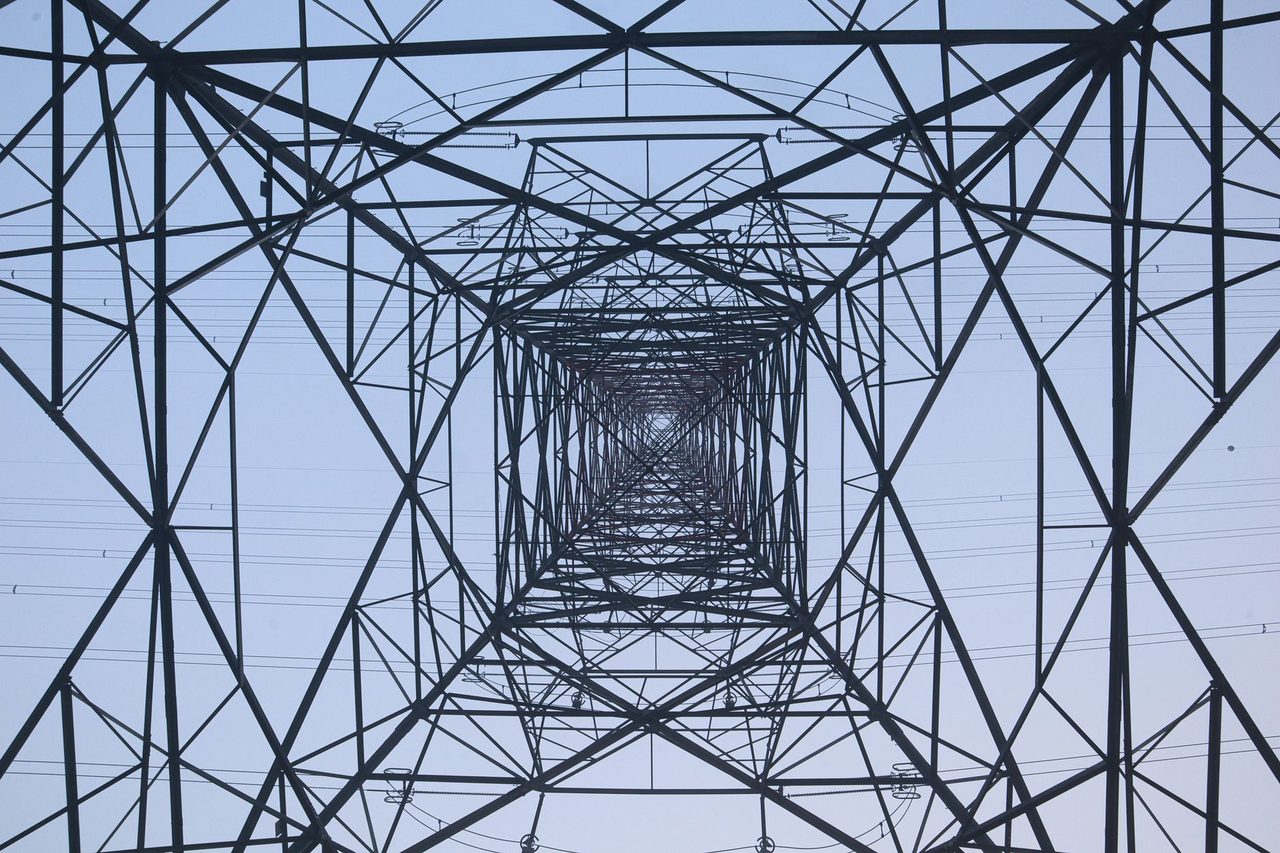
Photo: Михаил Крамор on Pexels
India’s corporate renewable market has spent the last two years discussing the same open-access themes: third-party versus group captive, banking, RPO treatment, landed-cost waterfalls and hybrid economics. In 2026, one topic deserves a sharper, standalone lens because it materially changes sourcing strategy for large electricity consumers: cross-state open access PPAs.
For many commercial and industrial buyers, the original appeal of inter-state renewable procurement was simple. Source power from high-resource states such as Rajasthan, Gujarat, Karnataka or Tamil Nadu; use larger project scale to obtain lower ex-bus tariffs; and rely on inter-state transmission system access to move energy to the consumption state. In practice, 2026 viability depends on a more complex stack: ISTS waiver eligibility, point of injection and drawal charges, state-level cross-subsidy surcharge and additional surcharge treatment, scheduling and balancing design, curtailment exposure, and whether the end-use load shape can actually absorb imported as-generated power.
This article focuses on that specific question: when does a cross-state open access PPA still make economic and contractual sense in India in 2026, and when is intra-state sourcing the better answer?
Why cross-state procurement is being reconsidered in 2026
There are four reasons cross-state procurement has re-entered boardroom discussions.
First, the spread in renewable resource quality remains meaningful. Utility-scale solar in western Rajasthan and parts of Gujarat can still deliver stronger CUF and lower generation variability than weaker-resource consumption states. Wind-rich corridors continue to matter for buyers seeking diversified hourly profiles.
Second, some consuming states have become less predictable on banking, OA approvals, or periodic surcharge revisions. When local policy friction rises, buyers revisit out-of-state supply even if wheeling distance is longer.
Third, larger inter-state projects can offer stronger counterparty quality. A 300 MW to 1 GW project platform backed by established sponsors and disciplined O&M is often easier for lenders and investment committees to underwrite than a smaller fragmented local portfolio.
Fourth, the maturing of green market procurement teams has changed buyer behaviour. Many large C&I users now compare multiple structures at once: rooftop, on-site captive, intra-state OA, inter-state OA, hybrid RTC sleeves and exchange-backed balancing. That makes cross-state a realistic sourcing option rather than a niche exception.
Even so, the mistake many buyers make is to compare only the generator tariff. In 2026, a Rs 2.70-3.20/kWh ex-bus inter-state renewable offer can end up less attractive than a Rs 3.40-4.10/kWh intra-state offer once the full charge stack is added.
The 2026 charge stack: what actually determines landed cost
For cross-state corporate PPAs, landed cost should be built from the injection point to the consumer meter rather than from the tariff quote outward. The main components are typically:
- Generator ex-bus tariff under the PPA
- Inter-state transmission charges, if not waived
- Inter-state transmission losses
- Intra-state transmission or wheeling charges in the consuming state
- State-end wheeling losses
- Cross-subsidy surcharge, where applicable
- Additional surcharge, where applicable
- SLDC/RLDC charges and scheduling-related costs
- Balancing or deviation pass-through, depending on contract design
- Standby or residual grid power cost for mismatch hours
For third-party open access consumers, cross-subsidy surcharge and additional surcharge remain the biggest swing items at the state end. In some states, combined CSS plus AS can add roughly Rs 1.00-2.50/kWh or more, sharply weakening the economics of imported renewable power. In other states or consumer categories, the burden is more manageable, especially for EHT industrial consumers with policy support for green procurement.
For group captive structures, the potential exemption from CSS and AS can significantly improve viability, but only if captive compliance is robust on both equity and annual consumption tests. A cross-state group captive setup that fails compliance can destroy expected savings in a single audit cycle.
Transmission losses also matter more than many term sheets imply. A buyer seeing a seemingly low tariff must ask whether the quoted energy is at the busbar, at the state periphery, or after assumed loss factors. A 3-6% aggregate loss impact across inter-state and state networks can shift effective delivered cost by Rs 0.10-0.25/kWh depending on tariff and consumption profile.
ISTS waiver: the first screening question, not the final answer
The interstate transmission system waiver framework remains central to cross-state RE economics in 2026. Market participants know that ISTS charge waiver support has historically improved the competitiveness of solar, wind and hybrid projects commissioned within notified timelines and conditions. But corporate buyers often overstate its benefit by treating waiver status as a complete answer.
In practice, three diligence questions matter.
- Is the project fully eligible for the applicable ISTS waiver under the prevailing central framework and commissioning timeline?
- Does the commercial model pass through the entire waiver benefit to the buyer, or is part of it embedded in sponsor margin assumptions?
- After accounting for state-end charges at the drawal location, is the net landed cost still superior to local procurement alternatives?
Suppose an inter-state solar-hybrid project offers power at Rs 3.05/kWh with effective ISTS charge waiver support. If the buyer’s consuming state imposes wheeling and losses worth around Rs 0.35-0.55/kWh and residual scheduling plus mismatch costs add another Rs 0.20-0.40/kWh, the delivered cost may still remain attractive at around Rs 3.60-4.00/kWh before standby dependence. But if third-party CSS and AS together add Rs 1.40/kWh, the structure can move to Rs 5.00+/kWh quickly, especially for loads with low daytime coincidence.
That is why Growthifye usually advises clients to evaluate inter-state options only after a disciplined end-state charge mapping exercise and meter-level Demand & ToD analysis. Without that, ISTS waiver discussions remain superficial.
Curtailment, scheduling and mismatch risk are underpriced in many bids
Cross-state PPAs are not just about transmission cost. They are also about operational controllability.
Intra-state procurement generally offers better local visibility on outage coordination, state dispatch behaviour and practical follow-up with SLDC, discom and field-level stakeholders. Cross-state structures introduce another layer: RLDC interface, injection-state operating patterns, and the realities of moving variable energy across networks before it reaches the consumer.
Curtailment remains a live issue in 2026, particularly in high-penetration renewable corridors during low demand periods or local congestion events. Contract language matters. Buyers should examine:
- Whether deemed generation is payable in any curtailment scenarios
- Whether grid unavailability is a seller risk, buyer risk or shared risk
- Whether the scheduling coordinator is appointed by the developer or buyer
- How DSM or balancing charges are allocated
- Whether compensation for forecast error is embedded in tariff or passed through separately
For solar-heavy cross-state supply, mismatch against consumer load profile can be severe if the buyer runs significant evening or night operations. This is where many procurement teams overestimate savings. A nominal 50% renewable replacement based on annual energy may translate into much lower hourly displacement of grid drawal. The buyer then continues purchasing expensive non-solar power during peak periods while paying for contracted renewable energy in surplus daytime blocks that cannot be fully consumed.
This issue is not solved by tariff negotiation alone. It needs profile-based Sourcing strategy and, in many cases, a portfolio approach combining multiple procurement instruments. In some cases, an inter-state wind-solar hybrid can reduce mismatch materially. In others, a smaller intra-state deal aligned to actual load shape creates higher realised savings despite a higher quoted tariff.
Which buyers are best suited to cross-state open access in 2026?
Cross-state PPAs are most viable for a specific subset of consumers.
The first category is large RTC-like industrial loads with stable drawal and limited concern over daytime absorption. Steel processing, chemicals, paper, cement grinding, data-intensive operations and certain continuous manufacturing profiles can often absorb as-generated renewable power better than batch-oriented loads.
The second category is multi-site corporates with aggregated demand and energy management sophistication. Where consumption can be pooled across facilities or procurement decisions are centralised, imported renewable energy can be allocated more efficiently.
The third category is buyers in high-tariff states where industrial grid power remains expensive enough that even after delivery charges, inter-state renewable supply retains a clear savings cushion. If blended grid power is around Rs 7.50-10.00/kWh for an HT consumer, a delivered renewable cost in the Rs 4.00-5.50/kWh range can still create a compelling case.
The least suitable buyers are usually those with:
- Low annual PLF and highly peaky consumption
- Significant weekend shutdowns without flexible scheduling
- Small contracted demand that cannot justify transaction complexity
- Uncertain captive compliance capability if group captive is proposed
- Plants located in states with punitive end-use surcharge treatment for OA consumers
For these buyers, intra-state deals, on-site solutions, or a layered portfolio with shorter-tenor market purchases may be more prudent.
A practical viability framework: compare alternatives on one common basis
In 2026, sophisticated buyers should avoid debating cross-state versus intra-state using selective examples. Use one comparable framework across all options.
At a minimum, compare:
- Delivered Rs/kWh by time block, not just annual average
- Percentage of actual hourly load served by contracted RE
- Residual grid purchase cost after RE integration
- Curtailment-adjusted net energy delivery
- Policy-change sensitivity, especially on state charges
- Approval timeline and commissioning certainty
- Counterparty and payment security quality
- Exit and change-in-law protections
A useful working test for decision-makers is this: if a cross-state structure shows only a thin savings margin of Rs 0.20-0.40/kWh against the best intra-state alternative at base case, it is probably not robust enough. A single surcharge revision, lower-than-expected coincidence, or curtailment episode can eliminate that value. Buyers should typically seek a stronger risk-adjusted cushion unless non-price goals such as capacity scale, multi-state standardisation, or internal decarbonisation timelines justify the structure.
This is also where Competitive developer selection becomes important. Developers differ significantly in how they model losses, curtailment assumptions, settlement methodology and pass-throughs. Two bids that appear close on tariff can be very different on true landed economics.
What lenders, developers and policymakers should note
For lenders, cross-state C&I PPAs require more than sponsor-level comfort. Credit assessment should test whether the buyer’s delivered-cost advantage survives realistic charge and profile scenarios. If projected savings are too narrow, offtaker stickiness in stress periods may weaken.
For developers, the message is straightforward: sell delivered economics, not headline tariff. Corporate buyers in 2026 are increasingly capable of unpacking transmission, surcharge and balancing assumptions. Transparent bid formats with state-specific charge mapping will convert better than simplified tariff-only pitches.
For policymakers and utilities, cross-state OA remains an important market efficiency tool. It allows renewable resources to be used where they are strongest and supports industrial decarbonisation at scale. But if end-use charges become too opaque or unstable, procurement shifts from efficient long-term contracting toward shorter-tenor tactical purchasing. That is not ideal for system planning or investment confidence.
A more predictable framework on surcharge methodology, open-access processing and scheduling treatment would reduce avoidable friction without undermining legitimate utility cost recovery. In particular, consistency in treatment of large green industrial loads can support competitiveness while preserving transparent network compensation.
The 2026 bottom line for corporate buyers
Cross-state open access PPAs can absolutely work in India in 2026, but only in the right contexts. They are strongest where high-resource generation, eligible ISTS benefits, manageable state-end charges and compatible load profiles combine to create clear delivered-cost savings with acceptable operational risk.
They are weakest where procurement teams focus on quoted tariff, ignore time-of-day coincidence, or assume that transmission waiver alone guarantees competitiveness. In many cases, the winning decision is not “inter-state versus intra-state” in absolute terms, but a portfolio split: some local supply for operational fit and approvals certainty, combined with selective cross-state procurement where scale and resource quality justify it.
The correct question is therefore not whether cross-state OA is cheap. It is whether it remains cheaper after every loss, surcharge, scheduling friction and mismatch cost is counted at the consumer meter.
If your team is evaluating cross-state corporate PPAs, tariff benchmarking alone is not enough. Contact Growthifye’s advisory desk for project-specific support on charge mapping, risk screening, PPA design and landed-cost viability assessment.
Explore Growthifye's related capabilities
This analysis connects directly to our advisory practice: Demand & ToD analysis · Sourcing strategy · Competitive developer selection · PPA structuring & negotiation.
About the author

Chief Executive Officer, Growthifye — With over 23 years in management consulting, Sudarshan has taken businesses from concept to scale — building and scaling new-age digital and energy businesses.
- 23+ years in management consulting
- EY alumnus
- Led large-scale BESS programmes, capital raises and advisory mandates
Want this analysis applied to your project?
Talk to our team