BESS VGF in India 2026: Bid Economics, Sizing Strategy and Bankability
By Sudarshan Karweer · sudarshan@growthifye.com · +91 84510 99371 (Call / WhatsApp) · 2026-09-16

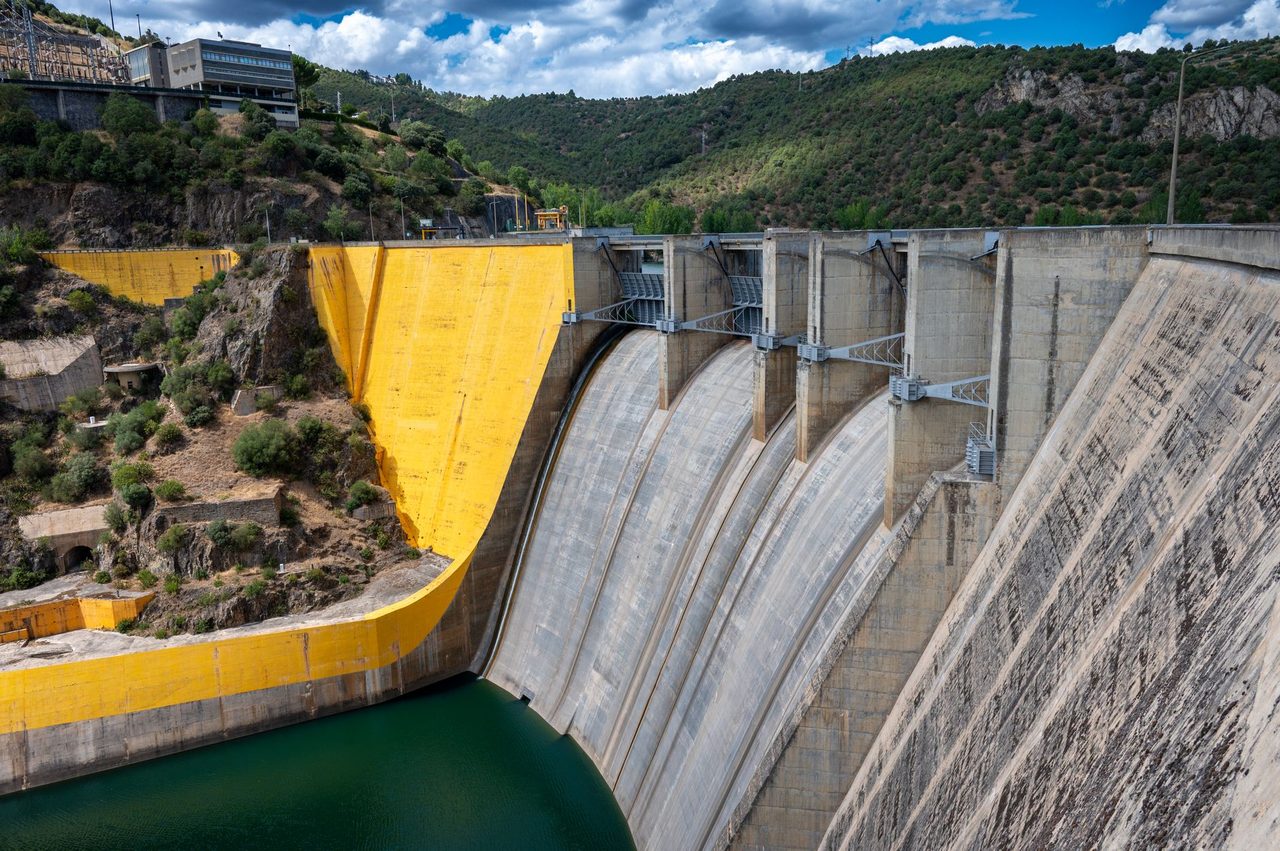
Photo: Jan van der Wolf on Pexels
India’s battery energy storage system market has moved into a new phase in 2026. The first wave of discussion was about whether storage would become relevant. The second was about standalone versus co-located business models. The current phase is more practical: how viability gap funding, tender design, degradation assumptions, interconnection choices and payment security shape real project returns.
For developers, utilities, lenders and large commercial and industrial buyers, the key question is no longer whether BESS is needed. It is how to size and structure projects so that subsidies, tariffs and operating strategies actually convert into a bankable asset. That is especially true in India’s VGF-backed storage tenders, where an apparently attractive support mechanism can still produce weak equity returns if the project is mis-sized or the bid is too aggressive.
This article looks at BESS VGF in India in 2026 from a practitioner’s lens: what VGF is trying to solve, how developers should approach bid economics, where sizing goes wrong, and what lenders will scrutinise before debt is sanctioned.
Why VGF matters for BESS in India in 2026
Standalone storage in India still faces a core commercial challenge. In many use cases, the system value created for the grid is real, but the monetisation framework is incomplete, delayed or split across multiple beneficiaries. BESS can reduce peak procurement costs, provide balancing, defer grid upgrades, improve renewable integration and strengthen reliability. Yet a single offtake contract often captures only part of that value.
That gap is exactly where viability gap funding has become important.
Under central and state-backed programs, VGF is intended to bridge the difference between the cost of deploying storage and the tariff that discoms or other offtakers can realistically accept. In practical terms, VGF lowers upfront capital burden and allows developers to quote lower tariffs for battery availability or energy delivery services.
In 2026, VGF-backed tenders are relevant because:
- Discom appetite for flexible capacity has increased, especially in solar-heavy states with steep evening ramps
- RTC and FDRE procurement has highlighted the cost of underestimating firming requirements
- System operators are paying closer attention to fast-response assets for congestion management and balancing
- Battery prices have moderated versus 2022-23 peaks, but project-level costs remain highly sensitive to duty, PCS, transformers, fire safety systems, HVAC, augmentation and financing terms
- Lenders remain cautious on pure merchant exposure, making contracted VGF-backed projects more financeable than speculative storage builds
The result is a tender environment where VGF is not just a policy incentive. It is a structuring tool that changes bid strategy, debt sizing and the acceptable risk allocation between developer and buyer.
How VGF changes bid economics
A common mistake is to treat VGF as a simple capex rebate and stop the analysis there. In reality, VGF affects at least six linked variables:
- Quoted tariff or availability charge
- Debt requirement and debt service coverage
- Equity IRR sensitivity to degradation and augmentation
- Competitive bid headroom
- Minimum contract tenure needed for recovery
- Residual risk if actual dispatch differs from tender assumptions
Consider a simplified 2026 example for a two-hour standalone BESS project. Assume a 250 MW / 500 MWh system contracted under a long-term utility tender. Depending on technology selection, imported content, augmentation strategy and evacuation scope, all-in project cost can still vary materially, often in the broad range of Rs 2.4 crore to Rs 3.3 crore per MW for a two-hour system, with project-specific variation beyond that range. On an energy basis, many market participants still underwrite projects using effective installed costs around Rs 1.0 crore to Rs 1.5 crore per MWh depending on duration, integration scope and reserve margins. That spread alone can decide whether a bid is investable.
If VGF covers a meaningful percentage of eligible capex, the tariff can compress substantially. But the key issue is what the tender allows and what the contract actually pays for. Is the remuneration based on:
- monthly availability of contracted MW
- discharged energy at a fixed tolling rate
- a composite capacity-plus-energy structure
- deemed availability with dispatch by the procurer
- developer-scheduled cycling obligations
These distinctions are not cosmetic. They determine degradation risk, auxiliary consumption risk, charging energy pass-through and imbalance exposure.
For example, an availability-linked structure with capped annual throughput generally supports better financing than a structure where the developer must absorb uncertain cycling dictated by the offtaker without adequate augmentation compensation. A low tariff can look attractive at bid stage but become fragile if annual throughput, round-trip efficiency and end-of-life capacity obligations are not aligned.
The sizing question: why duration is not the same as economics
In Indian tenders, two-hour systems have become common reference points, but that does not mean two hours is always economically optimal.
The right duration depends on what problem the battery is solving.
If the use case is evening peak support for a discom with solar-heavy procurement, the battery may need to cover a three- to four-hour window with high certainty during summer months. If the use case is ancillary support, fast frequency response and short-duration balancing may dominate. If it is renewable firming, the correct duration depends on renewable oversizing, forecast error, curtailment risk and allowable contract deviation.
Developers should test sizing against at least these factors:
- contracted power block and dispatch window
- guaranteed annual availability
- annual cycles assumed in revenue model
- expected round-trip efficiency in Indian ambient conditions
- augmentation year and capex provision
- minimum state of health required over contract life
- charging-source restrictions
- grid outage and auxiliary consumption assumptions
A two-hour battery that looks cheap on day one may be more expensive in levelised terms than a 2.5-hour or three-hour configuration if the tender penalises under-delivery in later years. Conversely, over-sizing duration can destroy returns if throughput payments do not compensate for underutilised energy capacity.
In 2026, the best bids are increasingly coming from teams that integrate dispatch modelling, degradation simulation and contractual analysis instead of relying on a headline Rs/MWh capex benchmark.
The contract clauses that decide bankability
From a lender’s perspective, VGF does not automatically make a project safe. Debt providers in 2026 are examining whether the support mechanism is actually matched by a financeable contract.
The most important clauses include the following.
1. Payment security
If the offtaker is a state discom or state agency, payment discipline remains central. Developers should examine whether there is:
- letter of credit coverage
- escrow or payment security fund support
- surcharge for delayed payment
- termination compensation with debt protection
- clear invoicing treatment for availability versus energy charges
A VGF-backed project with weak payment security can still struggle to achieve acceptable debt pricing.
2. Charging energy treatment
Who pays for charging energy? If the developer must procure charging power, from where, at what tariff, and with what banking or open access treatment? If the offtaker supplies charging energy, what happens during non-availability of that energy source?
This issue can materially affect net revenue. In some structures, an underappreciated charging-cost assumption can wipe out margin.
3. Degradation and augmentation obligations
Many contracts specify minimum deliverable capacity or availability over 10 to 12 years or longer. That sounds standard, but lenders will want precision on:
- reference testing methodology
- allowed degradation trajectory
- augmentation timing flexibility
- treatment of cell replacement costs
- whether higher dispatch by the procurer accelerates wear without compensation
In storage, poorly drafted degradation clauses are equivalent to hidden merchant risk.
4. Change in law and tax pass-through
Battery projects remain exposed to customs, GST interpretation, safety-code changes and interconnection requirements. A bankable contract should clearly address pass-through for material regulatory changes.
5. Performance guarantees and liquidated damages
LD regimes should be strong enough to enforce delivery but not so aggressive that a single heat-wave event, prolonged grid outage or dispatch anomaly creates unmanageable downside. Lenders look closely at annual caps on liability, cure rights and force majeure language.
Bid strategy in 2026: where developers are overreaching
The most aggressive bids in Indian storage have often been driven by one of four assumptions:
- battery prices will continue falling fast enough to rescue thin bid margins
- augmentation can be deferred longer than realistic dispatch patterns allow
- financing will become cheaper after award even if contract risk remains unchanged
- actual operating duty will be lighter than the tender technically permits
These are risky assumptions.
By 2026, serious counterparties are asking for more rigorous bid models. A disciplined developer should run downside cases for:
- cell replacement cost inflation
- lower-than-expected round-trip efficiency at site temperature conditions
- higher auxiliary load due to cooling and fire-safety systems
- stricter grid-code compliance equipment
- dispatch concentration in a few high-stress months
- delayed VGF disbursement
- commissioning slippage affecting COD-linked revenue start
The winning tariff is not the success metric. Reaching financial close without post-award restructuring is the real test.
For utilities and policymakers, the lesson is equally important. If tender design pushes bids below sustainable levels, the sector may see delays, change requests, or weaker long-term asset performance. Good storage procurement should reward realistic augmentation plans, transparent dispatch assumptions and robust performance standards rather than just the lowest visible tariff.
What C&I buyers and utilities should learn from VGF tenders
Even if a commercial and industrial buyer is not bidding in a central storage tender, VGF-backed projects offer useful benchmarks.
First, they show how storage value is being priced in India. Availability charges, cycle assumptions and duration preferences in public tenders create market reference points for private contracts.
Second, they highlight the importance of use-case discipline. Many C&I consumers are exploring BESS for peak shaving, backup replacement, demand-charge management, renewable smoothing and power-quality support. But these applications should not be bundled casually. A battery sized for diesel offset may not be economically optimal for tariff arbitrage, and a system sized for short backup events may not deliver value for multi-hour evening peak management.
Third, they demonstrate why technical diligence matters before procurement. Seemingly small choices around DC block sizing, inverter loading, transformer redundancy, HVAC design, EMS logic and fire suppression can shift delivered project economics significantly over a 10-year life.
For utilities, the takeaway is that storage procurement should be tied to a clearly defined system need. If the objective is peak shifting, congestion relief, renewable firming or ancillary support, the bid structure should reflect that need directly. Vague or overly broad dispatch rights create pricing inefficiency and financing friction.
A practical checklist before bidding or financing a VGF-backed BESS project
Before submitting a tariff or approving credit, market participants should work through a practical diligence list:
- Is the use case clearly defined: peak support, firming, balancing, reserve, or multi-service?
- Does the contract pay for availability, energy, or both?
- Who bears charging-energy cost and scheduling risk?
- What annual throughput is assumed in the base case and downside case?
- Is augmentation included explicitly in the financial model?
- Are ambient temperature and HVAC loads based on actual site data?
- Is interconnection scope fully captured, including bay extension, protection systems and reactive power requirements?
- Are VGF eligibility, disbursement milestones and documentation conditions fully understood?
- Is payment security sufficient for the proposed leverage?
- Are termination payments adequate to protect outstanding debt?
- Are warranties aligned with contractual performance obligations?
- Is the bidder relying on unrealistic future capex decline to justify the quoted tariff?
In 2026, this level of discipline is no longer optional. As the Indian market scales, the difference between a bankable storage asset and a distressed one is increasingly determined before procurement orders are placed.
VGF can make BESS projects viable, but only when policy support is matched by rigorous sizing, realistic dispatch assumptions and lender-ready contracts. For developers, that means resisting the temptation to bid on optimism alone. For offtakers and policymakers, it means structuring tenders that capture the real grid value of storage without pushing risk into corners where it later returns as delay, underperformance or refinancing stress.
If you are evaluating a VGF-backed battery project, storage tender participation, or lender diligence for BESS in India, contact Growthifye’s advisory desk for a project-specific assessment.
About the author

Chief Executive Officer, Growthifye — With over 23 years in management consulting, Sudarshan has taken businesses from concept to scale — building and scaling new-age digital and energy businesses.
- 23+ years in management consulting
- EY alumnus
- Led large-scale BESS programmes, capital raises and advisory mandates
Want this analysis applied to your project?
Talk to our team